In the last blog, we looked at moral relativism which teaches that all moral systems are equal. In other words, if I think it’s immoral to pick my nose in public but you think it’s okay, then I have no right to criticize you for your public nose-picking. Of course, public nose-picking isn’t the problem. It’s when we get to more important issues like abortion, war, murder, and such. Then moral standards truly become an issue. Is there an absolute standard, or as philosophers like to call it, an objective standard for morality?
Greg Koukl of Stand To Reason (str.org) tells the story of asking people at random whether it was wrong to torture babies for the fun of it. He often got a response something like, “Well, I wouldn’t do it myself, but I don’t know if I could call it ‘wrong'”. This should be frightening to us all. Someone’s moral standard is so low as to not condemn the torturing of infants for no reason than sadism is terrifying.
So, the question arises, “From what source, then, do we get our moral standard?” There are only three major possible sources.
- Personal standards – Someone’s moral standard is one they’ve set for themselves. Some might think so long as it’s not hurting anyone, it’s moral, or whatever benefits me is moral. Ted Bundy, the serial killer, used to discuss what he was about to do to his victims before killing them. His argument was that personal moral standards were all he had to go by, and since his standard was that it was okay to kill someone if it benefited him, even if it was just to make him happy, it was moral. This of course, would cause chaos as we all live by our own standards.
- Cultural or societal standards – Cultural standards are that a culture or society can set its own moral standards. It’s more than just saying, “What’s legal is what’s moral.” It’s more what is tolerated is moral. We see this in the United States today. We believe all moral standards should be tolerated. Of course, the definition of “tolerance” has been changed from allowing a particular standard to exist to acceptance then allowance, and now to endorsement. Morality based on a society or culture would mean we would need to accept Nazism since it was a cultural and societal norm. Abortion has become this in our American culture today. Because it is accepted by many is not evidence of morality. Killing babies for your own personal freedom is destructive to our society. We value each other less as life becomes cheap.
- A Higher Source – We need to seek morality from a higher source, and evidence shows that that Higher Source has proved to be that moral standard. Certain universal/objective moral standards exist. Every culture on earth sees torturing infants for the fun of it as immoral. From the lowly isolated tribesmen to the great industrial countries, it is held to be immoral to torture babies for the fun of it. This standard was not inherited from other cultures. The isolated tribes believed it long before modern man touched their cultures. So, where would this universal moral standard come from? From some outside Source able to influence all morally sensitive creatures on earth.
So, there are objective/absolute standards. We cannot successfully create our own either as individuals or as a society. For people to exist successfully, moral standards agreed upon by all except the deviants must be adhered to. We cannot be the highest moral entities since morality cannot rest upon us. To believe we are would be more than presumptuous, it would be self-deluding. There is a Source higher than man which sets the moral standard.
Since objective moral standards are, by nature, an organization of values, then we must believe moral standards come from an Agency and have not risen accidentally. That Agent need not be omnipresent, omnipotent, etc., but It must just be at a higher level than we are and able to heavily influence all mankind as a whole.
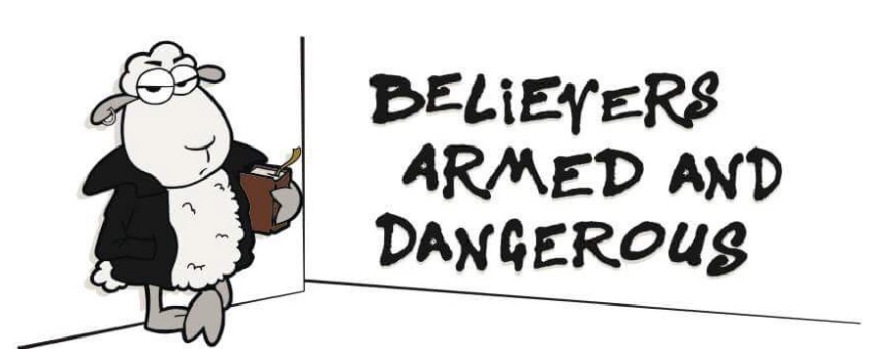
 Believers Armed and Dangerous