
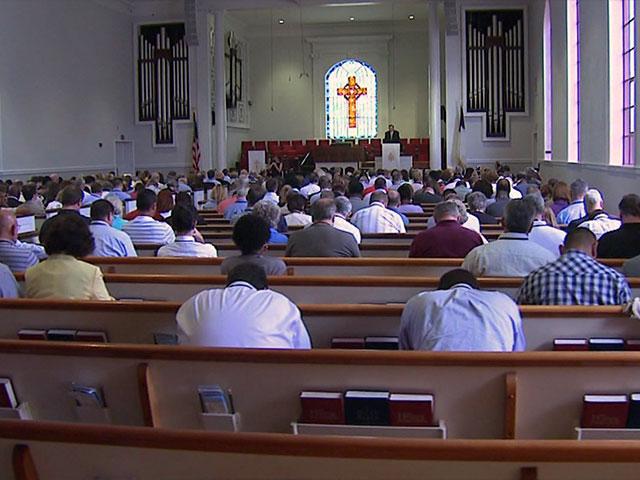
A friend and I were discussing how our church is governed. Like just about everything in the church, disagreement on this issue can range from friendly differences to people leaving the church or even to church splits. The latter should never be.
So, why do some churches govern differently from others? For some, it’s tradition. With others, it’s just a matter of efficiency. Some see a command in Scripture. But, what does the Bible teach about church government? We’ll look at that, but first let’s look at three major forms of church government today. There are variations, but these are the three major general forms:
Congregational
First is the congregational form. This is sometimes called the “Lynch Mob” form of church government, the congregation as a whole votes on just about everything that goes on in the church from the type of carpet to times of service. I’ve been in congregational meetings where discussion of how many flowers should be on the alter dragged on and on.
The pros and cons for this form are that: everyone is involved. Since all decide, everyone has skin in the game. Everyone, or at least the majority, wants the church programs to succeed and will work to make It so. This can draw church members closer together and create more of a family atmosphere especially in smaller churches. The drawback is also that everyone is involved, so it often takes a long period of time to get things done as well as major decisions like paying to repair a copier is often run by the congregation. Even with all this, the pastor normally makes the everyday decisions. The pastor is responsible to the congregation in this form.
Presbyterian
Secondly, we have the Presbyterian form. “Presbyter” simply means “elder,” and these churches are run by a board of elders making pretty much all decisions regarding the church. The pastor is regarded as a teaching elder and seldom has any more say on board decisions than any other board member.
The congregation has little or nothing to say about how the church is run other than, perhaps, the election of these elders. In some churches, the pastor appoints the elders. The budget may be voted on by the congregation as well. The pros of this are that major decisions do not require a congregational vote, smaller things are handled immediately, and ideally these decisions are made by spirit-filled and spiritually mature men. The pastor has less pressure and is able to accomplish more. Among the drawbacks are the fact the pastor has no direct “skin in the game” at various ministries within the church. Since the entire board makes the decisions, the board responsibilities rest on the board and are often divided up among individual elders to oversee specific portions of the church ministries. The senior pastor is responsible to the board of elders unless he is to be removed. Then it normally goes to a congregational vote, but not always.
Episcopal
The third form is the pastor-run church, often called the “Moses” model. In this form, all ministries are run past the senior pastor for his approval. He makes the final decisions on pretty much all major issues facing the church. While he may seek counsel in his decisions, the final responsibility falls on him.
The pros and cons are that the pastor has “skin in the game” for everything that goes on in the church. He knows how every ministry is run and who is running it. New ministries are promoted by the pastor since it is he who is responsible for the success or failure of that ministry.
The pastor, as you can see, carries a heavy load with this form of government. Also, the pastor must be a fine man, mature in the faith and spirit led. Otherwise the church can fall into error. The pastor must be open and transparent to others in the congregation who can guard against error.
With all three forms, there is often a hierarchy above the local church that keeps tabs on it. Many, like most Sothern Baptist churches, however are autonomous. To protect themselves against error, they belong voluntarily to local associations of So. Baptist churches who keep an eye on each other. That association has no real authority, but if a church is removed from the association, it doesn’t help that church’s reputation in the community.
I said I would give you scriptural evidence for the biblical model for church government. Well, actually, all three I’ve mentioned appear in Scripture. The church came together to vote for the office of elders in Acts 6:1-4 (Congregational). The church at Jerusalem formed a council of elders and apostles to decide how to deal with Gentile believers in Acts 15:6 (Presbyterian). In Titus 1:5, Paul directs Titus, the senior pastor at the church in Crete, to appoint elders. This indicates Titus and Titus alone, was in authority over the church there (Episcopal).
So, all three forms of church government can be seen in Scripture. These examples in Scripture are just that – examples. A specific command is not given to form a particular type of government in Scripture. It is left to the local congregation.
So, don’t get yourself in a snit because you don’t like the form of government your church holds to. So long as the pure Word is taught, people are ministered to, and error is addressed, you are in good hands. After all, as a wise man once asked me, “Who’s church is it, Mike?” The answer, of course, is Christ’s church.
 Believers Armed and Dangerous