
Someone once said there are two mistakes Christians make in talking about the devil, thinking of him too much or not thinking of him enough. This might be a good time to take a brief look at who he and his minions are.
He’s known by several names including “Lucifer,” “the devil,” “Satan,” and the “Accuser of the Brethren.” If you would like to see a description of Lucifer, there’s one in Ezekiel 28:11-19 where he’s described as the “King of Tyre.” Demons are sometimes described as princes of various areas such as in Daniel 10:12 when a demon is identified as the “prince of the kingdom of Persia” and Michael the archangel is called “one of the chief princes in verse 13. So, we see the demons and angels have rankings and seem to have responsibilities over particular geographical areas.
We can also see this ranking in both the demons and angels when we look at verses such as Ephesians 3:10 where we see “principalities and powers” mentioned in heaven. Then later in the same book (6:12), the same terms are used for demonic powers. So, angels and demons have rankings. But, back in Ezekiel 28, Satan is not a prince but a king. He doesn’t actually seem to be called the “Prince of Darkness” anywhere in Scripture, but He is called the prince of the power of the air.
One common misunderstanding is that Satan and God are equal, two powers fighting for control of the earth. Certainly there is a battle, but the sides are far from equal. This is made clear in Mark 1:24 where demons ask Christ if it’s time for Him to destroy them yet. In Matthew 8:28-32, demons beg for Jesus not to punish them and ask if they might possess a nearby herd of pigs. In asking and then obeying Jesus, we see they are certainly submissive to His authority. Satan is no different. In the book of Job, especially the first chapter, we see Satan can do nothing that God has not approved. He’s a created being. He is powerful but finite. He is brilliant but not omniscient.
There is an old legend of John Calvin waking up one night and seeing Satan himself standing at the foot of Calvin’s bed. Calvin said, “Oh. It’s just you,” and rolled over and went back to sleep. There’s a great truth in that legend. Satan is powerful, but greater is He Who is in us (1 John 4:4).
Some think Satan’s goal is to destroy the world, taking as many souls with him as possible dragging them deep into sin, and there is a lot of truth in this. Satan is interested in souls. He seeks after souls, but I think he’s as happy with a cultist or atheist who leads a wonderfully happy life but is lost because he doesn’t know Christ as he is with drug pushers, human traffickers, and mass murders.
God’s desire is to make heaven as full as possible and hell as empty as possible. Satan’s is just the opposite.
True, Satan wants people to be separated from God, but he gives special gold stars for those who drag others with them. The lost going door-to-door trying to drag others into their deception get honorable mention in Satan’s book as much as pimps might by driving others away from God. But, it’s not just that.
You might wonder why Satan’s so busy messing with your life and mine. We already have the Spirit of God in us. We can’t lose that. It’s because he’s interested in keeping us from spreading the Truth. He wants us so distracted plugging up leaks in our lives that we neglect our service to Christ. As Walter Martin used to say, “For Satan, the next best thing to a lost soul is a sterile Christian.” If Satan can keep us from doing God’s will, he’s happy.
Don’t get me wrong. Satan is much more powerful than we are. Even Michael the archangel in Jude 1:9, would not accuse the devil of wrongdoing, but said “The Lord rebuke you!” An archangel, the greatest and most powerful of angels, didn’t dare rebuke Satan himself but turned to the Lord to do that. The cool thing is we have the same option. If Satan comes after us, we can call on Jesus to rebuke him.
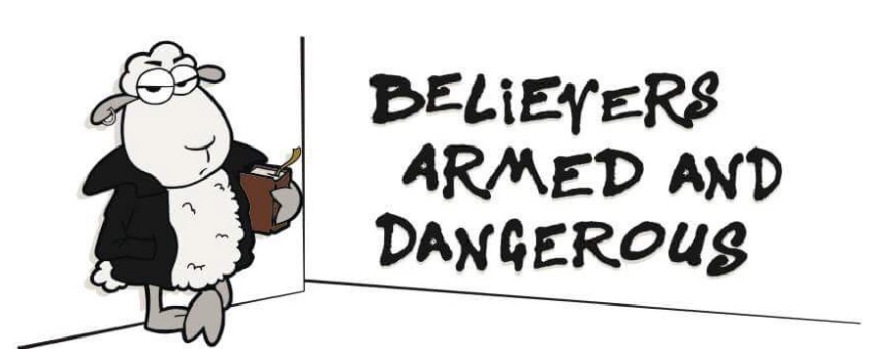
 Believers Armed and Dangerous