The Bible is not a book. It’s a library of 66 ancient documents written by more than 40 authors over 1500 years. All those books by all those authors, over all that time, and they all testify to a personal experience with the same God of the universe Who wants a personal relationship with us.
How do we know the Bible we hold in our hands is reliable? After all, it’s been around for thousands of years. Maybe it has been altered. It’s been through translation after translation, copies upon copies. How do we know what we have is accurate?
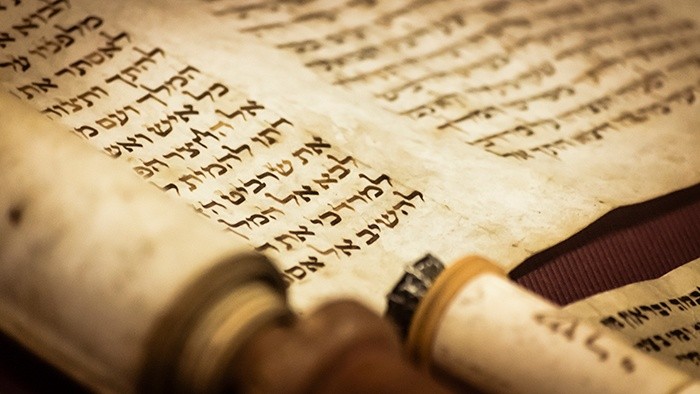
What Christians call the Old Testament has been around for a long time. In 1946/47 the Dead Sea Scrolls were found. These are copies of the Old Testament books (except Esther) copied around the time of Christ and are 1,000 years older than our next earliest copies of the Old Testament books. The funny thing is though these copies are nearly 1,000 older, they read almost exactly the same as the more recent ones. Why is that?
The Old Testament scribes had a job. That job was to copy the books of the Old Testament, and they took it very seriously. Tradition tells us the scribe would sit at his worktable with the document he had just copied and his copy. He would count the letters in the original and the copy. If they both didn’t have the same number of letters, the copy was destroyed. If they had the same number of letters, then the scribe would stretch a string across the copy from corner to corner making an “X”. He would do the same with the original. If the strings didn’t cross at the same letter, the copy was destroyed.
When copying the text to a new document, if the scribe came across the Tetragrammaton, the divine name, he could not write the name until he had taken a bath, put on freshly laundered clothing, used a new pen and new ink. Then he could write the divine name. Verses like Isa. 44:6 contain the divine name twice, so it took some time to copy some of these verses.
As you can imagine, this method produced an extremely accurate set of copies. This same method resulted in the Dead Sea Scrolls matching so well to the later copies.
The Bible, Old and New Testaments, are not in chronological order. The Old testament is set in sections. The first five books, the books written by Moses, are called the Pentateuch. The next section is the historical books, Joshua through Esther. Then come the poetic books, Job through Ecclesiastes. After Ecclesiastes come the Major Prophets, Isaiah through Daniel. And, last of all are the Minor Prophets Hosea through Malachi. The Minor Prophets are in no way minor as to content, they’re just shorter than the Major Prophetic books. Also, the oldest book in the Old Testament comes close to the middle of the Bible, the book of Job. Some scholars even believe Job may have come with Noah on the ark.
There are 39 books in the Protestant Old Testament. While the Jews use the same books we do, they are in a different order. The Catholics have more books in the Old Testament than the Jews or the Protestants since seven additional books were added to the Catholic Old Testament at the Council of Trent in the sixteenth century. They now have 48 books in their Old Testament. Protestants call these additional books The Apocrypha (meaning “spurious”), and are not seen by Protestants as inspired.
The Old Testament was written for us all. It is the same God presented. Some would disagree and say the Old Testament presents a harsh and wrathful God while the New Testament presents a kind and gentle God. Some think the Father is the God presented in the Old Testament but the Loving and gentle Son is the one given prime placement in the New.
The Father is very active in the New Testament. Jesus could do nothing without the Father directing and working through Him (John 14:10). And, Jesus is very much the God of the Old Testament. He even tells the Pharisees He is the God of the burning bush (Ex. 3:14; John 8:58).
Why is this important?
Our God is the same yesterday, today, and forever. He is unchanging, immutable (Mal. 3:6). We learn much about our God from the Old Testament: His love for His people, among which are His concern for individuals, His justice, and His mercy.
Christians need to understand what the Old Testament is, how it was handed down, and have confidence in the reliability of God’s Word.
Next Week: The New Testament
 Believers Armed and Dangerous