
Truth From Where?
In the first half of John chapter 7, Jesus had been trying to straighten out some of the misconceptions people had about who He was and where He came from. The whole passage speaks of assumptions the people had made of Jesus, so I’d like to look at those misconceptions as how we look at truth and where we find it. Maybe we’ll look at our own misunderstandings of Scriptures because we assume facts not in evidence. But, first, since we’re looking at truth, I’d like to talk about how we know something is true.
There are two main theories of truth: the Correspondence Theory and the Coherence Theory. The Correspondence theory says that if anything corresponds directly to Reality – in the Christian’s view, the reality God has created – then it is considered true.
The second theory, the Coherence Theory, is less dependable. It states if something we hear coheres with what we already believe to be true, it’s true. The reason this is less dependable is because the sources can be wrong, but if what they say coheres with what we already believe, we’ll accept it as true.
Let’s look at this. In the passage below, the Pharisees had sent guards to arrest Jesus, but came back empty handed:
John 7:45-49 (ESV) The officers then came to the chief priests and Pharisees, who said to them, “Why did you not bring him?” 46 The officers answered, “No one ever spoke like this man!” 47 The Pharisees answered them, “Have you also been deceived? 48 Have any of the authorities or the Pharisees believed in him? 49 But this crowd that does not know the law is accursed.”
Notice the position the Pharisees have taken here. They see themselves as the final authority on the Law. Whatever they say goes. To entrust the people to Jesus, God incarnate, is foolish in their eyes. They are the standard of truth, not the Law itself.
The fact the people usually depended on the Pharisees and chief priests to tell them what Scripture says is an example of the Coherence Theory of truth. They are not seeking truth from the original source but from what others say the original source teaches. No matter how often the teachers speak truly about the Bible, what they say is never going to be as accurate as the original source itself, Scripture.
A major example of this in the west is that most people have turned to their favorite news network to find what to believe as true. No matter how often that particular network might get their stories wrong or even are shown to have purposely misled their viewers, so long as what the network says is in line with what the viewers already believe, they will continue to watch. By the way, much of what the viewers believe came from that network in the first place whether right or wrong.
This happens in cults as well. Jehovah’s Witnesses, for instance, have a governing body which tells them what the Bible says. They direct their followers to verses that seem to support their views but are most often misrepresented or taken out of context. The teachings of this governing body change periodically. Sometimes these changes are dramatic – until 1954, for instance, Jehovah’s Witnesses were told to worship Jesus just as they worshiped the father. Today they are told they will be disfellowshipped (excommunicated) if they do so. Strangely, these changes are supported by out of context passages, and their followers are told the governing body was wrong before but are now correct. The average Jehovah’s Witnesses will simply nod his head, say “Yes I see that now,” smile as the “new light” is distributed to the congregation, and accept it without question.
Why is this important?
Christians are not immune to this problem. We believe some things because we’ve always heard they are true. How many wise men were there at Jesus’ birth? Well, the Bible says nothing of the wise men coming when Jesus was born but a little later when Joseph and Mary had their own home. The Bible also does not mention how many wise men there were only the description and number of gifts.
We get these assumptions and misunderstandings from accepting the words of others just as the rank and file Jew did the teachings of the Pharisees. But, we have the Word right there waiting for us, ready for us to pick it up and read. We also have the author available and ready to guide us through the Word. The assumptions come when we trust others. The original source is always the finest source.
Jesus prayed for us in John 17:17 Sanctify them in the truth; your word is truth. For the Christian, there in only one certain source for accurate and flawless truth, the Bible.
The finest pastors are very good at dispensing the truth, but the finest pastors will also tell you to check what they say against the Bible for they are mere mortals and subject to the same errors as the Pharisees.
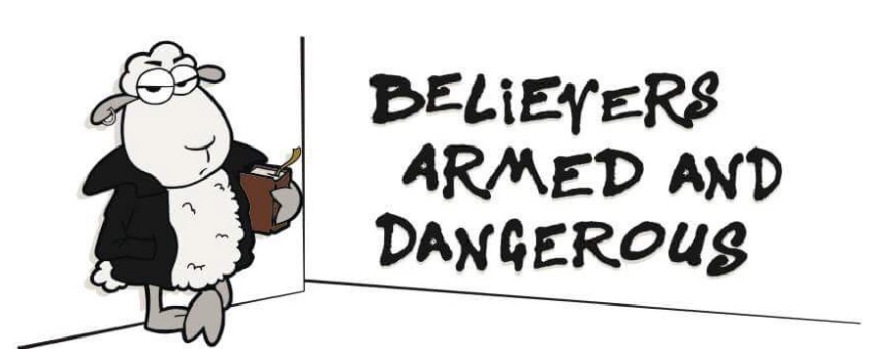
 Believers Armed and Dangerous