2 Cor. 13:5-6 Examine yourselves, to see whether you are in the faith. Test yourselves. Or do you not realize this about yourselves, that Jesus Christ is in you?—unless indeed you fail to meet the test! I hope you will find out that we have not failed the test.
I was reading this passage the other day and thought I’d look into it a little deeper. It turns out Charles Spurgeon, the wonderful 19th century preacher, had given an excellent sermon on it. I’m going to use his general outline for this blog post.
The passage is a part of Paul’s firm address to the Corinthian church. The last time he visited them, they apparently questioned his qualifications as an apostle and wondered if his life matched up to what he was preaching. After clearing up much of their erroneously accusations, he turned the table on them and said “Examine yourselves!” It was a sort of “Get the log out of your own eye” moment. So, I thought this was a good command for us to followas well: examine ourselves! Spurgeon had four examination areas:
As a schoolboy: Just as a schoolboy might look over what he has studied to make sure he has the answers for the coming test, we should do the same. Do we know enough of the faith to answer questions when we are tested? Paul tells us to prepare for such tests:
2 Timothy 2:15 (NKJV) Be diligent to present yourself approved to God, a worker who does not need to be ashamed, rightly dividing the word of truth.
We should be prepared for the coming tests. Testing in school has four purposes. Of those, three can apply to our faith:
- To show the teacher what we know – This doesn’t matter in our study. God knows how we’re doing.
- To show us what we know and how far we have progressed – This is a reason for our testing at times. Sometimes it’s for our benefit to show us how far we’ve come. A friend was hiking with another Christian friend and a non-believer. On their way back to the car, my friend asked the non-believer if he had ever considered asking Jesus into his life. The answer was gruff and strong: “No! And, I don’t expect to do so before I get to the car.” The other Christian smiled and said to my friend, “That was for you to know you’ve grown to where you were willing to ask.” We see progress in many ways.
- We are tested to prepare us for a pop quiz. The other day, I was in my Chiropractor’s office and the conversation somehow turned from cracking my neck to God and the purpose of the church. “Why not just worship in the woods close to God?” he asked. I told him the Church offers many benefits, fellowship, helping others through tough times they have faced by telling of how you came through the same trials, teaching, etc. These pop quizzes come up out of the blue and often enough that we need to be prepared for them.
- Finally, tests like these are to prepare us for the “Final” when we stand before Jesus hoping to hear Him say “Well done!”
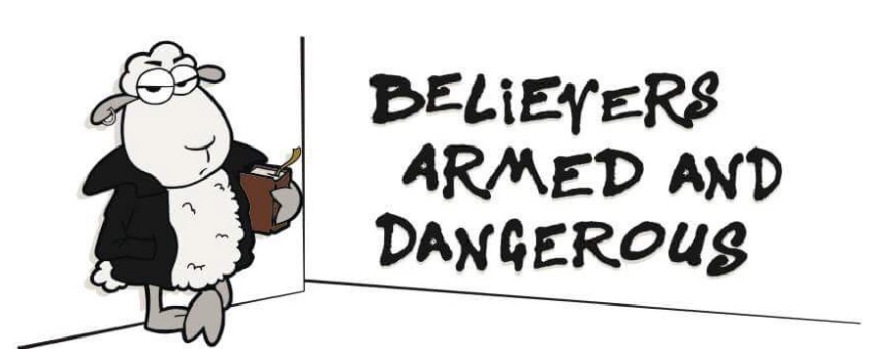
As a soldier: Before a soldier goes into battle, he needs to check his equipment: is his weapon in good condition, does he have all he needs to face the battle? In the full armor of God listed in Ephesians chapter 6, only the Word of God is an offensive weapon. We need to keep the “sword of the Spirit” sharp and handy when facing a battle, and we will face battles.
Jude 3 (NASB) Beloved, while I was making every effort to write you about our common salvation, I felt the necessity to write to you appealing that you contend earnestly for the faith which was once for all delivered to the saints.
“Contend earnestly for the faith” means to put up a good fight for the faith.
As a witness: If we were placed in a witness box in a court of law and asked to explain clearly what it is that constitutes the faith Paul speaks of, could we do it? Could we answer a stranger’s questions of how that faith functions, its finer points, what it all means? When I teach, I asked all the students to learn the lessons not just to their satisfaction but to learn them well enough to be able to explain them to others. We need to be able to do this in situations outside of church.
1 Peter 3:15 (NASB) but sanctify Christ as Lord in your hearts, always being ready to make a defense to everyone who asks you to give an account for the hope that is in you, yet with gentleness and ereverence;
As a mapmaker: This one sounds strange, I know, but think about it. If we are going to examine our hearts, we need to know them as well as a mapmaker knows a particular region: all the valleys, rivers, hills, mountains, cities, etc. Do we know our hearts this well? Are we even brave enough to look for the dark portions or the portions we’ve locked away from sight? If we are to open our heart to God’s cleansing, we need to give it all to Him.
Ps. 51:10 (ESV) Create in me a clean heart, O God, and renew a right spirit within me.
Why is this important?
Socrates said “The unexamined life is not worth living.” Paul says pretty much the same thing in a Christian context. If we as Christians refuse to examine ourselves, our walk, our beliefs, our faith, we can be drawn away by every wind of doctrine.
 Believers Armed and Dangerous