The Samaritans

The Samaritans

John 4:9 (ESV)  The Samaritan woman said to him, “How is it that you, a Jew, ask for a drink from me, a woman of Samaria?” (For Jews have no dealings with Samaritans.)

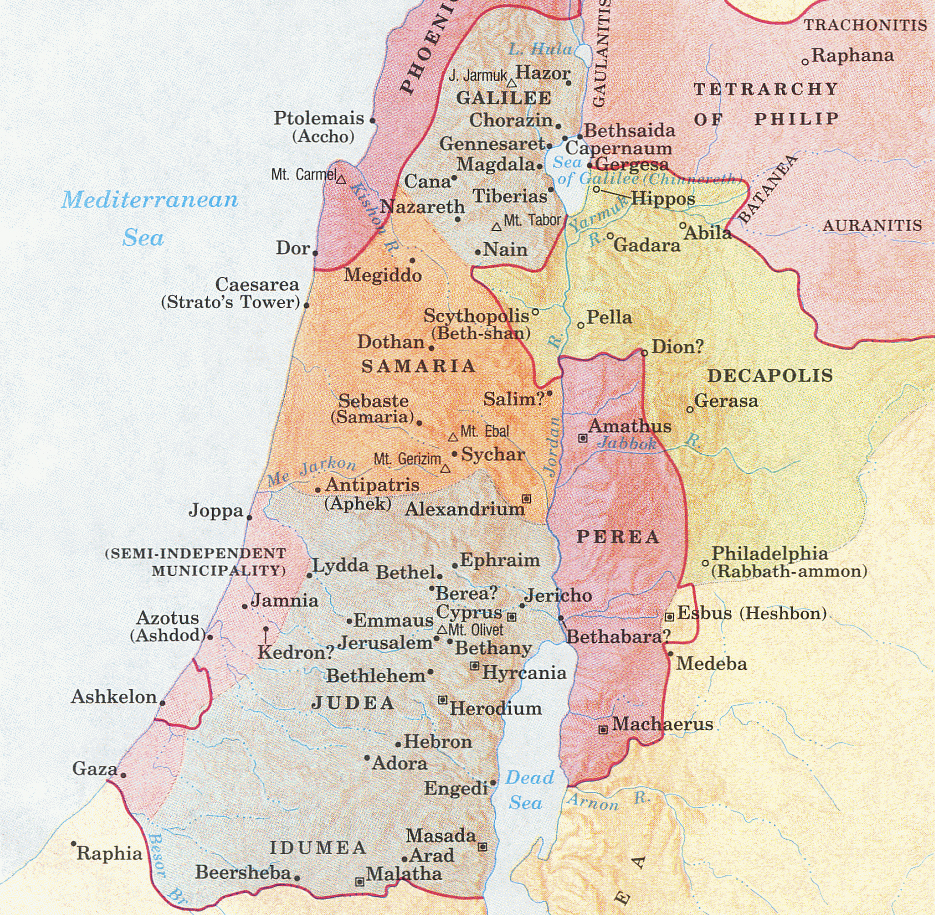
Samaritans.  Why do you suppose the Jews has no dealings with Samaritans?  I remember being told Samaritans were some sort of mixed race, part Jewish, and so were shunned by the Jews.  I thought it would be good to look into these people and see why the Jews truly didn’t like them.  Here’s what I found:

  •  The Jews’ issues with Samaritans began way back in 2 Kings chapter 17 where the Israelites of the Northern Kingdom of Israel jumped into idolatry with both feet.  As a result, God allowed the Assyrians to conquer the Northern Kingdom of Israel.  It was the practice of the Assyrians to relocate/scatter those they had conquered to other parts of their kingdom.  This kept the captives from reuniting and forming a force to overthrow the Assyrians.  Pretty smart!

So, the Jews were moved out of northern Israel. Then Assyrians and other captives were moved into an area of the Northern Kingdom known as Samaria.  Now these guys started worshiping their pagan gods as they always had, but lions had multiplied in the area and started killing some of these folks off.  Their pagan priests thought this was because they were ignoring the God of Israel (Many ancient people thought gods were local, only gods of a specific area), so they brought a Israelite priest back to Samaria to teach them about Yahweh.

The Samaritans then did not worship Yahweh alone but simply added Him to their pantheon of gods. 

  • The Samaritans later built a temple to Yahweh on Mount Gerizim and claimed it as the true temple of Yahweh rather than the Jerusalem Temple.  The woman at the well in John 4:20 mentions this.
  • After the Jews of the Southern Kingdom were held captive in Babylon (c. 587-539 b.c.), Cyrus, the King of Babylon, said they could return to Jerusalem to rebuild the temple and gave them resources to do so.  The Samaritans offered to help in the construction, but the Israelites suspected they wanted some of the money given them by Cyrus and refused their help.  This built animosity between the two peoples.
  • Nehemiah 6:1-14 tells us the Samaritans made it extremely difficult to complete the rebuilding of the temple by Nehemiah and the Israelites.  This made the Jews even more upset with the Samaritans.
  • Samaria then became a refuge for the criminals of Judea.  The Samaritans gladly welcomed them to their community.  Criminals angry and running from the law of Judea added to the animosity of the Samaritans.
  • The Samaritans only accepted the books of Moses and discounted the poetic books and the prophets.
  • Lastly, during the Maccabean Revolt that ended about a century and a half before the scene of Jesus and the woman at the well, the Samaritans took the side of the enemy of the Jews.

Why is this important?

There were lots of reasons for the Jews to hate the Samaritans.  We all have people we don’t like, people who have a history of hurting us or others.  How should we deal with these folks?  Look at how Jesus did this:

In John 4:4, we’re told Jesus “had” to pass through Samaria.  There is a lot of significance to that word “had.”  It means “necessary.”  Jesus had another way to go from Judea to Galilee.  Going through Samaria was not the only option.  It was necessary for Jesus to go through Samaria because He needed to talk with this one woman and, because of their conversation, many in her town were brought into the kingdom.

We hold grudges, we have biases, we have people in our lives we just don’t like.  Joyce Landorf called the annoying people in our lives “Irregular People.”  Jesus showed us in John chapter 4 there is no excuse at all for the Christian to treat anyone, anyone at all, differently.  For the Christian there is neither slave nor free, male nor female, Jew nor Greek.  When we treat people poorly because of our prejudice or because they just annoy us, we are in sin and need to turn to God for forgiveness.

Jesus concern for the Woman at the Well was not about earthly prejudice. It was about eternal freedom.

Spiritual Warfare

The Bible tells us we are in a battle against spiritual forces anxious to dull our Christian life.  Someone once said “To Satan, the next best thing to a lost soul is a sterile Christian.”  Satan wants us to be sterile, prevented from showing the world the Christ we know and love.  In Ephesians 6:22-20, God has listed six items of spiritual armor we can use to succeed in this battle:

1.The Belt of Truth – It is important to know the one true God of the Bible.  There are others which are called gods, but there is only one true God (1 Corinthian 8:5-6).  One important definition of “truth” is anything that corresponds to reality.  Truth is consistent not chaotic.  When we run into inconsistency, we need to test what’s being said or taught by the Word of Truth (2 Tim. 2:15).

2. The Breastplate of Righteousness – Our righteousness comes from Christ alone.  Our relationship with Him through prayer and reading His Word is paramount to our lives.  In this way, we seek His righteousness (Matthew 6:33).  James 5:16 says there is power in the prayers of the righteous.  That word for “power” means “a strength which can overcome.”  Our righteous prayers can overcome the enemy and his followers.

3. Shoes are the Gospel of Peace – We need to know God well enough to hold the peace of God within us.  His Spirit fills us and brings us this peace (John 14:27).  I love this.  Isa. 26:3 gives us some insight into staying calm, at peace, in the midst of the battle:

       You keep him in perfect peace whose mind is stayed on you, because he trusts in you.

So, we need to keep our minds on our Backup.  He “has our six.”

4. Shield of Faith – The Bible tells us with just the faith of a mustard seed we can move mountains (Matthew 17:20).  Our confident belief shields us from attacks of the enemy.  It is what protects us from the shots taken by the enemy, and there are shots taken at us all day and every day.  We need to cling to our faith, cover ourselves with our faith if we wish to survive this battle.

5. Helmet of Salvation – To step into battle without your helmet is a deadly choice.  We must have the salvation given by Jesus to stand against evil.  We must be His children (2 Thessalonians 3:3)  I watch a lot of old World War II movies, and one thing the soldier always keeps close besides his rifle is his helmet.  The assurance of our salvation enables us to stand our ground.  It insures God is standing with us in the battle and will protect us.  Our minds need protection.  They are the most vulnerable battlefield. 

6. Sword of the Spirit – This is the Word of God.  Jesus, when He was being tempted by the devil, used Scripture to fend off Satan himself (Matthew 4:1-11).  We have the same power and the same Word Jesus used.  Much of what the devil uses to come after us is temptation to sin.  Reciting from memory 1 Corinthians 10:13, out loud if necessary, is a good defense against the devil’s temptations.  It will help get your heart right and your mind off the temptation.

I’d like to note here the obvious.  The Sword is the only offensive weapon in the list.  The others are for our protection.  The Word of God is our assault weapon.  We need to practice its use, keep it sharp in your mind, and always keep it close at hand.

Why is this important?

We Christians face spiritual warfare daily.  Knowing how to keep the enemy at bay helps us to stand unmoved against the schemes of the devil.  God has given us armor to use in our striving against the devil.  I know people who physically “put on the armor” daily, people who have been in the battle, have scars from it, and know the value of each piece.

God’s Expectations

Matt. 25:34-40 (ESV)  Then the King will say to those on his right, ‘Come, you who are blessed by my Father, inherit the kingdom prepared for you from the foundation of the world. 35 For I was hungry and you gave me food, I was thirsty and you gave me drink, I was a stranger and you welcomed me, 36 I was naked and you clothed me, I was sick and you visited me, I was in prison and you came to me.’ 37 Then the righteous will answer him, saying, ‘Lord, when did we see you hungry and feed you, or thirsty and give you drink? 38 And when did we see you a stranger and welcome you, or naked and clothe you? 39 And when did we see you sick or in prison and visit you?’ 40 And the King will answer them, ‘Truly, I say to you, as you did it to one of the least of these my brothers, you did it to me.

What does God expect of us as Christians?  Most of us pray and read our Bibles regularly.  We attend church and give money to God’s work.  We may even share our faith with someone at work or, at least they know we’re Christians.  What does God fully expect of us, though?  Is this all?

In Matthew chapter 25, Jesus gives us three parables about expectations, His expectations of us.  He tells the Parable of the Ten Virgins, then the Parable of the Talents, and last of all, He speaks directly about His expectations of His people when He returns at the final judgment.  He expects us to have reached out to our fellow man.

I found this quote on expectations at the Billy Graham site and thought it was great: “What God expects, and all God expects, is that we dedicate completely all of our talents and gifts to Him.”

“All our talents and gifts,” that’s a tall order, isn’t it, but so true.  Anything less is to set aside God as a secondary priority where we pray, give, go to church, and read our Bible as more of a daily habit to which we dedicate very little of our time.

This whole subject got me to thinking of time and just what God always expects of us.  Here are twelve “alwayses” I found: we are to always fear God (Deut 5:29), always obey Him (Deut. 11:1), always set the Lord before ourselves (Ps. 16:8), Give thanks for your fellow Christians always (1 Cor. 1:4), always abounding in God’s work (1 Cor. 15:58), give thanks always (Eph. 5:20), we will not be ashamed but courageous (Phil. 1:20), Rejoice in the Lord always (Phil. 4:4), always speak graciously (Col. 4:6), always seek to do good to everyone (1 Thess. 5:15), always fulfill your ministry (2 Tim. 4:5), and always be prepared to defend the faith and answer questions (1 Peter 3:15).

Why is this important?

There are other expectations such as giving, church service we need to work on as well.  Don’t get discouraged, though. Like so many things God asks of us, this list is impossible to fulfill, we’ll never be able to remember, let alone, do all these things.  How can God expect this of mere humans?  It turns out there are a couple of more alwayses that apply: Jesus is always with us (Matt. 28:20), and He always leads us (2 Cor. 2:14).  He is the power behind us as we seek to fulfill His alwayses. The Spirit that lives within us will produce these things the more we yield to His will.

There’s a story about John Wesley, the founder of the Methodist Church. When he was asked how much he prayed every day, he said he prayed three hours on a normal day but for five hours on a busy day.  Let prayer be the start and continual priority of your day, and you’ll be surprised how much God can do through you to further His kingdom.  God works through His children. Pay attention, and you will recognize many of the alwayses appearing in your life as you seek the heart of God.

Work with What You Have

John 3:26-27 (ESV)  And they came to John and said to him, “Rabbi, he who was with you across the Jordan, to whom you bore witness—look, he is baptizing, and all are going to him.”John answered, “A person cannot receive even one thing unless it is given him from heaven.

Years ago, I used to listen to the Tim and Al Morning Show on KBRT, a Christian talk radio station in Los Angeles.  Tim had a very primitive view of Christianity.  He took the Bible at face value, and I loved him for it.  One morning Tim called other local Christian radio stations asking them to advertize his show on their stations and he would do the same for their shows.  Tim thought Christians should work together for the good of God’s kingdom.  He was flatly and universally turned down.

Something else Tim did was to call massage parlors in the Los Angeles area with a Bible quiz.  He would ask a few Bible questions of the prostitutes or pimps who worked there always ending with “Who created the universe?”  If they got it wrong, he would prompt them until they came up with the correct answer.  Having answered the question, there won a Christian CD and a Bible which would be sent to them. This way, Tim was able to cause lost soles to think about divine things and place a Christian CD and a Bible in their hands.

Since KBRT was a Christian station, Tim had a fairly narrow listenership, yet he wanted to do all he could with what God had given him.  I think we see this same attitude in John the Baptist in the above passage.  We also see the wrong way for God’s servants to act.

In the passage above, John’s disciples think this is a competition. Jealousy and pride flare up.  They show loudly and clearly their resentment of Jesus’ ministry as it grows in size and importance compared to John’s.  They call Jesus “he who was with you across the Jordan, to whom you bore witness.”  They just couldn’t bring themselves to speak even His name.

John then gives us the proper response in verse 30:  “He must increase, but I must decrease.”

As I was a young Christian teacher, I had dreams of teaching thousands. In my mind, I was going to be a big deal.  That’s the pride of life in case you missed it (1 John 2:16).  That was the same attitude displayed by John’s disciples. We think we’re all that and a bag of chips. “We’re the ones God is using. Who does that guy think He is?”

John knew his place, that he was there to magnify our Lord and not himself.  For some of us this is a really tough lesson to learn but true.  Who we are and how much we are used by God is not for us to say.  If God is going to use us, He will use us as He wills and not how we want. Remember it is hard for Him to use us with a prideful attitude. Usually the one standing in the way is us, so if you’re wondering why God isn’t using you, you might look in a spiritual mirror.

John was happy with diminishing numbers.  So long as God was using Him, he looked at what God had given him and did his best to glorify God, not himself.  This is a hard lesson for us to learn.  We want desperately to serve God in a big way no matter what God wants.  We look at the twelve disciples of Jesus and realize by the end of the third century ten percent of the Roman World was probably Christian.  We want to make a mark like that.

Why is this important?

Ed Kimball was a simple Sunday School teacher, who in 1858 led a Boston shoe clerk to give his life to Christ. The clerk, Dwight L. Moody, became an well known evangelist.

 In 1876, D. L. Moody brought to Christ a student named J. Wilbur Chapman after an evangelistic meeting.

Several years later, Chapman, engaged in YMCA work, employed a former baseball player, Billy Sunday, to do evangelistic work. Sunday’s ministry grew, and he ended up sharing the gospel with 80 to 100 million people before his death in 1935.  In 1934, Sunday held a revival in Charlotte, N.C.

A group of local men were so enthusiastic afterward that they planned another evangelistic campaign, bringing Mordecai Ham to town to preach. During Ham’s revival November 1, 1934, a young man named Billy Graham heard the Gospel and yielded his life to Christ.

Hundreds of millions of people heard the words of Christ because God used a Sunday School teacher who simply allowed God to use him with what little position he had to talk with a shoe clerk.

I’ve never taught thousands.  The largest Sunday School class I’ve taught has been 55, the smallest was 2, but I have seen God change lives.  So long as I present myself to God for His use in His work, I shouldn’t feel any more blessed or teach with any less zeal in either case. 

“He must increase, and I must decrease.” 

It should be tattooed on our foreheads.

The Book of Mormon

When Mormon missionaries come to our door, they would like to leave us with a copy of the Book of Mormon and ask us to pray for God to tell us if it is true.  The goal is to have a confirming “burning in the bosom.”  But what is this book they’ve handed you, this “Second Testament of Jesus Christ” as they call it?

The book itself is a story of two bodies of Old Testament Jews who travelled to the Americas.  The first group left just before the time of the Tower of Babel in Genesis chapter 11.  and sailed, it is supposed, to the west coast of South America.  The second group led by a man named Nephi, left about 600 b.c., just before the Babylonian captivity of the Jews, and perhaps landed on the east coast of North America.

When Nephi died, his group split into two tribes, the Nephites and the Lamanites, who grew to great civilizations and who fought with one another until about 400 a.d. when the unrighteous Lamanites wiped out the Nephites.  The last surviving Nephite, Moroni, was the last of a series of historians who had written all this down on gold plates.  Moroni buried these plates on a hill known as Cumorah in modern day New York.  To punish the Lamanites for their ungodliness, God turned their skin dark and they are ancestors of Native Americans.

In 1823, this same Moroni, now as an angel, supposedly came to Joseph Smith in his bedroom to tell him of the gold plates and where they were buried which happened to be near Smith’s house.  Joseph went to the location and dug finding the plates.  Moroni would not allow Joseph to take them, though, for another three years.

Then Joseph allegedly translated these plates he said were written in Egyptian into the Book of Mormon.  Remember, in the early 1800s Egyptian culture and language was of great interest throughout the world.  The Rosetta Stone from which we discovered how to translate Egyptian hieroglyphics, was discovered in 1799.  Hieroglyphics were very much a mystery to most of the West then.  Egyptian could be represented as saying anything the “translator” wanted them to say.  The story that the angel Moroni took the plates back after Smith “translated” them helped keep any doubters from proving Smith wrong.

How he did the “translation” is interesting, but first we need to know Joseph Smith had, by this time, a reputation as a treasure hunter using a seer stone, a stone which was placed in his hat, he would then place his face into the hat and divine where the treasure might be by observing the stone.

Here is a description of how Joseph “translated” the Book of Mormon from an eyewitness of the time:

“Joseph Smith would put the seer stone into a hat, and put his face in the hat, drawing it closely around his face to exclude the light; and in the darkness the spiritual light would shine. A piece of something resembling parchment would appear, and on that appeared the writing. One character at a time would appear, and under it was the interpretation in English. Brother Joseph would read off the English to Oliver Cowdery, who was his principal scribe, and when it was written down and repeated to Brother Joseph to see if it was correct, then it would disappear, and another character with the interpretation would appear. Thus the Book of Mormon was translated by the gift and power of God, and not by any power of man.” (David Whitmer, – An Address to All Believers in Christ )

Why is this important?

You might ask who David Whitmer was and how can he make stuff like this up.  If you have a copy of the Book of Mormon handy, you’ll find Mr. Whitmer listed as one of the Three Witnesses who testified to the genuineness of the Book of Mormon and that it is true.  He was one of the early movers and shakers in the Mormon movement and was quite well aware of how the Book of Mormon was produced.

Is this how the Bible was produced, by someone putting a hat over their face and looking into a stone for translation? of course not.  The Bible was written in known languages still handed down today.  The civilizations and geographical locations found in the Bible are found and still being found.  There are no artifacts in the Americas supporting the Book of Mormon, quite to the contrary.  The Hill Cumorah, the site where Smith claimed the gold plates had been buried is also the sight of the final and greatest battle between the Nephites and Lamanites.  Millions of men supposedly died in these battles, yet no artifacts have been found there, in the surrounding area, or any area for that matter to support the claims of the Book of Mormon.  The Smithsonian has actually prepared a form letter for all those inquiring about the historicity of the book.  Nothing which supports the Book of Mormon has ever been discovered.

Cult Terms and Definitions

Have you ever had a conversation with someone, and they just don’t seem to understand the terms you’re using or you don’t understand theirs?  A classic example of this is in the brilliant classic comedy skit by Abbott and Costello, Who’s on First

With Cults, one of the methods they use is to redefine terms to suit their beliefs.  Let’s use the Mormon’s Mormon Article of Faith to to demonstrate this. It reads: “We believe in God, the Eternal Father, and in His Son, Jesus Christ, and in the Holy Ghost.”

To the average Christian, this seems to describe the Biblical Trinity pretty well. After all, we believe in the nature of the one true God (Isa. 44:6) there are three distinct Persons: the Father (Gal. 1:1), the Son (Heb. 1:8), and the Holy Spirit (Acts 5:3,4).

But, to the Mormon, “God the Eternal Father”  means something very different.  They have redefined the terms to match what they teach.  They believe the Father (Elohim), the Son(Jesus), and the Holy Ghost are three separate gods. 

The god the Mormons call the Father or Elohim is an exalted man who was just like you or I, but over time, he was able to rise to the point of godhood and became god over the planet earth.  All male Mormons seek to attain godhood just like Elohim.  So, the Mormon definition of “Father” is not quite what the Bible teaches.  To the Jehovah’s Witnesses, “God the Eternal Father” is the only Person of the godhead.

His Son, Jesus Christ to the Mormon means a spirit child born to Elohim, who preexisted then became truly the physical offspring from sexual relations between God the Father – an exalted man remember – and the Virgin Mary.  The Mormons don’t believe Jesus was conceived of the Holy Spirit as the Bible teaches (Luke 1:35).

To Jehovah’s Witnesses, “His Son, Jesus Christ”  is also redefined.  The son to them is the first and greatest creation of God the Father.  The son was the creator of all other things as Michael the archangel.  Then the Father destroyed him, took his essence and placed it in Mary’s womb.  As a result, Jesus was born as a perfect man but only as a man.  At the crucifixion, Jesus died and ceased to exist for three days.  On the third day Jesus was recreated as Michael the Archangel as God the Father remembered him and now sits as a secondary being to God the Father.

Holy Ghost  to Mormons means a personage of spirit, a third god of the godhead.  To the Jehovah’s Witnesses, the Holy Spirit is nothing more than God’s active force, not a Person at all but God’s power.

Even the word “Trinity” is redefined in Mormonism as three Gods one in purpose.  They deny the Christian/biblical definition as do the Jehovah’s Witnesses who deny the Trinity is a biblical doctrine at all.

Why is this important?

So, we can see how something which sounds like what we believe can mean something very different. When we talk with cultists or anyone who disagrees with our beliefs, it is extremely important to make sure we agree on terms and definitions.  As with Abbot and Costello, non-agreement on terms can lead to deep confusion and misunderstandings.

6 Traits of a Cult

Since we’ve looked at cults on this blog over the years.  we thought it might raise the awareness of readers who are in a cult to recognize some of the traits common to what Dr. Walter Martin used to call “non-Christian cults”/ I think the term sounds a little awkward but it is a good way to differentiate those cults which claim to be Christians from those that do not.  This post will only address some traits of non-Christian cults.

Aristocentric:  Cults are usually aristocentric which means they are not only the sole body of the saved but are superior to others outside the group.  We often hear “I’m so proud to be a part of [insert cult name here].”  While the Bible teaches pride is a sin, they feel better than others.  They might not say so, but we can see it in their actions and condescending attitude when discussing their faith.

Slights to the Bible:  Non-Christian cults cannot allow the Bible to stand by itself or it would expose the cult’s errors.  They must add other authorities to the Bible, authorities which are taken as more reliable than Scripture.  For Jehovah’s Witnesses, it is the Watchtower Organization itself and their publications.  I have heard of Jehovah’s Witnesses who pray before reading their Watchtower Magazine that they might be worthy of the truth God is about to express to them through this magazine.

JWs have also printed their own Bible which has been changed to align with their teachings.  A Christian organization aligns it’s doctrine with the Bible not the other way around.

Mormons have as their eighth article of faith: “We believe the Bible to be the word of God as far as it is translated correctly; we also believe the Book of Mormon to be the word of God.”  This tells the Mormon the Bible can’t be fully trusted but the Book of Mormon can.  As a result, the Bible takes a back seat.

Centered around someone’s interpretation:  For Mormons, Joseph Smith has told them what the Bible says and has produced his own “New Translation of the Bible.”  To show how this works, here are three “translations”. The first is the English Standard Version – a scholarly translation of John 1:1, then Smith’s translation of the same passage, and lastly the Jehovah’s Witnesses’ New World Translation:

John 1:1 (ESV)  In the beginning was the Word, and the Word was with God, and the Word was God

John 1:1 (Smith’s) “In the beginning was the gospel preached through the Son.  And the gospel was the word, and the word was with the Son, and the Son was with God, and the Son was of God.”

John 1:1 (NWT)  “In the beginning was the Word, and the Word was with God, and the Word was a god”

Cannot be questioned

A non-Christian cult’s leadership will either not allow the doctrine to be questioned or will treat the questioner as unspiritual or a troublemaker.  Questioning the Watchtower doctrine can get you disfellowshipped (excommunicated) from the group.  This means other JWs are not allowed to be friends with you including family even within a household.

One woman I spoke with was studying with JWs and was about to join.  The elders of the group told her to divorce her husband if he refused to join.  I think this is rare, but JW elders carry a lot of authority over the rank and file.

Mormons are a little looser in their discipline of questioners, probably because so much of their hidden past is now on the internet for all to see.  Many cultist remain in the group because of this shunning.  They are called PIMOs (Physically in but Mentally Out).  They stay to prevent losing their family and friends.

No outside research:  This is very true of the Jehovah’s Witnesses.  They can, again, be cast out of the group for looking into the organization through outside sources.

Why is this important?

Many trapped in cults do not realize they are.  They are lost and following an organization or individual who is more interested in power and/or money than the well being of the rank and file.  The Governing Body of Jehovah’s Witnesses live a luxurious lifestyle as do Mormon high leadership.

I’ve limited this post to just Mormons and Jehovah’s Witnesses because they are the most public in America.  We see them on street corners and at our doorsteps.  But, these traits are common to all cults along with denying the basic doctrines of the Christian faith: the deity of Christ, His bodily resurrection, the Trinity, and salvation by grace alone.  A group needs only to call itself Christian but deny any one of these, and they qualify as a non-Christian cult. These traits are common through the cults, however.

Some good news is God is using the internet to draw people away from these deceptive groups and toward His Son.  Now a person can sit alone in their home and research their group if they have doubts.  No one is the wiser, so they don’t risk discipline from the leadership.

Pray for these people and love them.  They are people Jesus loves and died for.

Mormonism’s Great Apostasy

“I was answered that I must join none of them, for they were all wrong; and the Personage who addressed me said that all their creeds were an abomination in his sight; that those professors were all corrupt; that: they draw near to me with their lips, but their hearts are far from me, they teach for doctrines the commandments of men, having a form of godliness, but they deny the power thereof.”  (Pearl of Great Price – Joseph Smith, 1:19)

According to Mormon (LDS) founder, Joseph Smith, the above quote comes directly from Jesus in a vision where God the Father and Jesus spoke directly to him in 1820 telling him to join none of the Christian churches because they were all corrupt.

The “gauntlet,” therefore, was thrown down not by Christians to Mormonism but from Mormonism to Christians.  They claim the true Christian church became corrupt shortly after the death of the apostles, and the church’s power was removed by God:

“Following the death of Jesus Christ, wicked people persecuted and killed many Church members. Other Church members drifted from the principles taught by Jesus Christ and His Apostles. The Apostles were killed, and priesthood authority—including the keys to direct and receive revelation for the Church—was taken from the earth. Because the Church was no longer led by priesthood authority, error crept into Church teachings. Good people and much truth remained, but the gospel as established by Jesus Christ was lost. This period is called the Great Apostasy.”   (Quoted from the LDS website

Then, Mormons believe, the true church was restored in 1820 when God the Father and Jesus reestablished it through Joseph Smith.

But, you might say “Wait.  We have the New Testament written by the apostles at the time, and there is no reason to believe the church today has lost what it taught there,” and you would be right.  To get around this, the Bible is the least trusted of the Mormon holy books.  To show this, let’s look at the eighth LDS Articles of Faith:

“We believe the Bible to be the word of God as far as it is translated correctly; we also believe the Book of Mormon to be the word of God.”  So, if the Bible says something to contradict the other three sacred books, it is considered to be incorrectly translated.

Look what Jesus says about this.  First the early teaching of the Church:  Matt. 24:35 (ESV)  Heaven and earth will pass away, but my words will not pass away.  So, the idea of a Great Apostasy is counter to Jesus’ own words.  The message of the New Testament has not been lost and never could be.

The thought of a Great Apostasy also means the true Church ceased to exist for the centuries from just after the apostolic times until 1820 when it was restored through the Mormon prophet, Joseph Smith,  Jesus has an answer for that as well:

Matt 16:18 (ESV)  And I tell you, you are Peter, and on this rock I will build my church, and the gates of hell shall not prevail against it.

Jesus Himself said His word would not pass away nor would the church He established.  Of course, the Mormon might claim these passages have been mistranslated.  The King James was the best known and most commonly read English Bible Translation in Joseph Smith’s time so there might have been room for some doubt.  It was a little hard to understand even in that day.  Today there are nearly a thousand Bible translations into English.  None of these present the Mormon gospel of many Gods, the priesthood, temple endowments, or salvation by grace along with works.  We know what the Bible truly says.  The translation is not corrupt.

Why is this important?

We need to understand well the Mormons teach not a reformation of Christianity but a restoration.  They teach we all believe a false gospel, are members of a corrupt church, are all following the commandments of men and, of course, that only they have the truth.

The Christian Gospel is simple.  It is salvation through faith by grace alone through Christ’s work on the cross.  It is when someone adds something to that simple gospel that that the gospel becomes corrupted.  Jehovah’s Witnesses tell us we need the Bible plus the Watchtower’s publications, and works.  Mormonism teaches the Bible is not enough, in fact it’s not reliable for accurate teachings.  We need it plus the Book of Mormon, Doctrine and Covenants, and the Pearl of Great Price for the true teaching of God plus works.  This waters down the true Gospel enough to deceive and draw sincere people away from the truth.

Our Mormon friends, neighbors and family are wonderful sincere people.  They are, however, sincerely deceived.  They have a false gospel brought to them by the angel Moroni passed on by Joseph Smith telling them to go after other gods. The Bible warns of this too:

Gal 1:6-8 (ESV)  I am astonished that you are so quickly deserting him who called you in the grace of Christ and are turning to a different gospel— not that there is another one, but there are some who trouble you and want to distort the gospel of Christ. But even if we or an angel from heaven should preach to you a gospel contrary to the one we preached to you, let him be accursed.

Deut. 8:19-20 (ESV)  And if you forget the Lord your God and go after other gods and serve them and worship them, I solemnly warn you today that you shall surely perish. 20 Like the nations that the Lord makes to perish before you, so shall you perish, because you would not obey the voice of the Lord your God.

God has warned us to flee from such doctrines.

Grace and Mormonism

2 Nephi 25:23 (Book of Mormon)  23 For we labor diligently to write, to persuade our children, and also our brethren, to believe in Christ, and to be reconciled to God; for we know that it is by grace that we are saved, after all we can do.

Mormon theology, grace requires works, “all we can do,” to reach the ultimate heaven.  Some groups calling themselves Christian teach works are necessary for salvation while the Bible teaches works have nothing to do with salvation. They are the result of a new life in Christ. 

An article by Bruce R. Halen on the Brigham Young University website plainly lays out the Mormon stand:  “The LDS doctrine that salvation requires both grace and works is a revealed yet commonsense reconciliation of these contradictory positions.”

So, the Mormon doctrine of grace is that it must be accompanied by works.  There are quite a number of works required for this exaltation, earning the highest level of heaven (remember the Mormon heaven has three levels).  For a list of at least 15 required works, see here.

What does the Bible say about works and grace?

Eph. 2:8-9 (ESV)  For by grace you have been saved through faith. And this is not your own doing; it is the gift of God, not a result of works, so that no one may boast. 10 For we are his workmanship, created in Christ Jesus for good works, which God prepared beforehand, that we should walk in them.

Works are not required for salvation but are the natural result of salvation, of the Holy Spirit living within us.  Paul makes this even more clear in his letter to Titus:

Titus 3:4-5 (ESV)  But when the goodness and loving kindness of God our Savior appeared, he saved us, not because of works done by us in righteousness, but according to his own mercy, by the washing of regeneration and renewal of the Holy Spirit,

I should address one more Bible verse often misused by Mormon missionaries and theologians to try and prove works are needed:

James 2:17 (ESV)  So also faith by itself, if it does not have works, is dead.

This seems pretty clear, don’t you think?  Faith requires works.  One of the most important things to remember when someone brings up a single verse to prove their point is to read that verse in the context surrounding it.

The book of James was written to believers not to non-believers, and it was written as an instruction manual.  James is saying our faith should produce works, and if your faith does not produce works it is dead, you are separated from God.  Look at the full paragraph:

James 2:14-17 (ESV)  What good is it, my brothers, if someone says he has faith but does not have works? Can that faith save him? 15 If a brother or sister is poorly clothed and lacking in daily food, 16 and one of you says to them, “Go in peace, be warmed and filled,” without giving them the things needed for the body, what good is that? 17 So also faith by itself, if it does not have works, is dead.

James is speaking to “my brothers” to show how a Christian’s faith should be obvious in the works it produces.  When a body dies, the body does not cease to exist but is still there.  There are just no signs of life.  The body and spirit have been separated.  Likewise, when the spiritual life shows no signs of life, no outward expression of the God that lives within, that spirit has been separated from God.  It didn’t cease to exist.  The faith is still there.  The person has allowed it to go dormant.

Why is this important?

Often examining the beliefs of others against what we know to be true strengthens our faith.  It clarifies exactly what God has taught us.  Paul writes that it is actually a good thing there are divisions among us even in the church. 

1 Cor. 11:18-19 (ESV)  For, in the first place, when you come together as a church, I hear that there are divisions among you. And I believe it in part, 19 for there must be factions among you in order that those who are genuine among you may be recognized.

How much more do we learn from those who are as far afield at we can see the Mormons are?

There are four major doctrines of the historic Christian Church: the deity of Christ, His bodily Resurrection, the Trinity, and salvation by grace alone.  If a group calls themselves “Christian,” these are the standards by which we measure such a group.  If they deny even one, they are not to be included in the historical church. Mormons deny all save the bodily resurrection of Jesus.

Mormonism and Salvation

We need to point out something before we continue with this series.  Mormon missionaries will often ask the homeowner to pray about the Book of Mormon.  They depend on that person to feel a “burning in the bosom” to confirm the truth of the book.  This isn’t the Christian approach to truth.  Christianity isn’t based on an emotional response or praying to find truth.  Christianity is based on fact, proven truth claims made in the Bible.  Christians are to base what they believe on the Bible alone.  It is our standard of truth.  Hopefully this blog has shown that over the past six years. 

We don’t pray if we should cheat on our taxes or should shoplift a pack of gum.  We know it’s wrong because the Bible tells us it’s wrong.  Under the same principle, we don’t pray if the Book of Mormon is correct.  We look to the Bible to see what it says.  That’s why this blog includes Scripture to show the Bible teaches something much different than what we see in Mormon doctrine.

This week we’ll look at the Mormon view of salvation, but first let’s look at the biblical view so we can compare Mormon doctrine to what we already know to be true in the Bible.

Eph. 2:8-9 (ESV)  For by grace you have been saved through faith. And this is not your own doing; it is the gift of God, not a result of works, so that no one may boast.

Titus 3:5 (ESV)  he saved us, not because of works done by us in righteousness, but according to his own mercy, by the washing of regeneration and renewal of the Holy Spirit,

Mormons teach first that we preexisted, we were God’s spirit children before we were born into a physical body. Our life here on earth is judged, and after we die there are two levels of salvation.  The first is salvation from judgment which is covered by Jesus’ sacrifice.  Pretty much all of us get this.  We are raised physically at the judgment and enter into one of the three levels of the Mormon heaven.  The very evil folks like murders are cast into outer darkness because Jesus’ blood was not enough to cover their sins, but their sins can be paid for by the individual shedding his own blood.

“. . . Joseph Smith taught that there were certain sins so grievous that man may commit, that they will place the transgressors beyond the power of atonement of Christ.  If these offenses are committed, then the blood of Christ will not cleanse them from their sins even though they repent.  Therefore their only hope is to have their own blood shed to atone, as far as possible in their behalf.”  (Mormon Doctrine by Bruce R. McConkie –  member of the Mormon Quorum of the Twelve, Bookcraft Books, Salt Lake City, UT p. 93)

This is why the firing squad is an option for execution in Utah and now in Idaho, a heavily Mormon state (a bill allowing for a firing squad was just signed there in March 23, 2023).  The Mormons teach there are sins too evil even for Jesus’ blood to pay for them.  This is not what the Bible teaches.

1 John 1:7 (ESV) But if we walk in the light, as he is in the light, we have fellowship with one another, and the blood of Jesus his Son cleanses us from all sin. 

The Bible, our standard for spiritual truth, says there is no sin Jesus’ blood cannot cover.  The limited atonement of Mormonism teaches against the Bible’s clear doctrine. 

Mormon men believe they can become gods on the same level as the Father and Jesus upon their death.  They believe this because they believe there are many gods and you can become one if you are a right-living Mormon male.

 “Then shall [right living Mormons] be gods, because they continue; then shall they be from above all things because all things are subject unto them.  Then shall they be gods, because they have all power and the angels are subject unto them.”  (Doctrine and Covenants 132:20 – one of the Mormon Scripture)

Why is this important?

Mormons, as a rule, are very fine and moral people, but Mormonism itself is a perversion of the true gospel of Christ.  They often present themselves as the true Church of Jesus Christ (Latter Day Saints).  We need to know how and why their teachings differ from biblical Christianity in order to share the truth with our Mormon friends and family and to protect ourselves and others from false teachings.

1 Thess. 5:20-21  (ESV)  Do not despise prophecies, but test everything; hold fast what is good.

I expect this to be a short series on Mormonism over the next few blogs.