
How are the Lost Saved?

I once asked my pastor what exactly someone needed to do to be saved from his sin.  His response was “Why don’t you look into it and get back to me.”

This wasn’t a harsh remark.  He knew me pretty well and knew if I did my own research it the result would be more meaningful and more memorable.

I spent a week or so considering some problems with my question.  “What of people who can neither speak nor hear?”  They may not know an actual language.  Can they be saved?  What of people who lay dying, slipping away and at the last moment decide to give their lives to Christ without being able to speak?”

I finally settled on the thief on the cross as my primary example.  He didn’t say a “Sinner’s Prayer.”  He just asked Jesus to remember him when He came into His kingdom.

There are three facets to the thief’s request, though.  He knew he was a sinner and needed to repent, so he recognized Jesus as Lord and knew He would rise to set up His kingdom.  But, I don’t think the thief’s statement saved him.  I believe he was saved before he said it.  It was his acceptance of the truth and change of heart that opened heaven’s gates to him.

Romans 10:9 says “because, if you confess with your mouth that Jesus is Lord and believe in your heart that God raised him from the dead, you will be saved.”  The thief did both of these.  His repentance is implied.. 

Jesus said we also need to repent in Mark 1:14,15 Now after John was arrested, Jesus came into Galilee, proclaiming the gospel of God, 15 and saying, “The time is fulfilled, and the kingdom of God is at hand; repent and believe in the gospel.”

So, most adults need only repent, confess Jesus as Lord, and believe God raised Him from the dead.  But what about others?

For children, I believe there is an age of accountability.  Isaiah hints at this in chapter 7, verse 16: For before the boy knows how to refuse the evil and choose the good, the land whose two kings you dread will be deserted.  Many believe Paul also hinted at it as well in Romans 7:9: “ I was once alive apart from the law, but when the commandment came, sin came alive and I died.”

So, it may be we are not responsible for our sinful acts before we are old enough to recognize them as sin and as rebellion against God.  At what age might this be?  I don’t think there is a specific age.  I think it’s just a matter of how conscious the individual is of sin.

The next point I’d like to address follows naturally from this: what about special needs children and adults.  What if they cannot understand the concepts of sin, salvation, repentance?  I believe the same rule of accountability applies no matter what the age. 

And what about people who’ve never heard the gospel?  What about them?  Paul addresses this in Romans 1:20 :For his invisible attributes, namely, his eternal power and divine nature, have been clearly perceived, ever since the creation of the world, in the things that have been made. So they are without excuse.

Those who have never heard the Gospel are still accountable for what they can see in creation.  From creation we can recognize God as greater than this universe, a God of order and beauty, a God who provides and thus cares for us, and much more.  Salvation is available to those who would only look.

Why is this important?

The requirements for salvation are dependent on if the individual is capable of understanding the Gospel or if they have ever heard the Gospel.

When it comes down to the absolute essentials, Romans 14:11,12 brings the message home.  We are all responsible to God and will be required to give Him an account of ourselves for what we know:  “As I live, says the Lord, every knee shall bow to me, and every tongue shall confess to God.” So then each of us will give an account of himself to God.”

We can’t let people fool us into believing in an unloving god who rejects those who haven’t heard or haven’t understood.  Our God loves us all.  It is our hearts which need to turn to Him.  He is already reaching out to us.

Redemption

When I was a kid, we had Blue Chip and S&H Green stamps.  You were given these when you bought groceries, and when you had collected enough stamps, you could redeem them for merchandise at Redemption Centers.  I think these are a good example of how redemption, the idea of just payment to receive something valuable, works.

Ruth’s final chapter exhibits redemption in the time of the Judges.  In the first three chapters, we’ve seen Ruth married one of Naomi’s sons.  Naomi’s husband died as did her sons died in Moab.  Ruth, a Moabitess, returned with Naomi to Bethlehem.   She had gleaned in the field of  of a relative to Naomi, Boaz, and performed a simple rite of submission at his feet. This started a chain of events leading to Ruth and Naomi’s redemption.

The process of redemption was taken care of solely by Boaz.  Boaz was not the next in line with rights to the land of Elimelech, Naomi’s dead husband.  There was a closer relative, a “redeemer” who had the right.

Boaz wanted the land and along with it, Ruth as his wife.  But, being a righteous man, he went through the process of offering the purchase of the land to a closer relative.  Once the man refused, Boaz was free  to buy it.  As a result, Boaz did so and married Ruth resulting in a son, Obed, the grandfather of David the King.

So, some of the lessons here are that God is perfectly willing to take gentiles into His family as we see Him demonstrating this in Peter’s vision (Acts 10:13-17, 28).

My biggest take away, though, is the parallel to the story of our redemption.  Naomi and Ruth as widows were in dire straits.  There was no man to work and keep the household funded.  The widows’ lives would have been meager, lives of struggle and hunger.  They needed someone to step in and save them. As we did before we met Jesus.

Boaz, looked favorably upon Ruth as a fine and deserving woman and upon Naomi as a widow who needed a provider.  He became the bridegroom once he paid the necessary price to gain a wonderful bride, Ruth.  This part of the story reminds me of Jesus’ parable:

Matt. 13:44  (ESV)   “The kingdom of heaven is like treasure hidden in a field, which a man found and covered up. Then in his joy he goes and sells all that he has and buys that field

Boaz was willing to pay the price necessary to gain Ruth as his wife.  Jesus is also the Bridegroom who paid a great price in order to gain His bride, the church (Eph. 5:25-32).

We know Jesus is the Bridegroom since when He was asked why His disciples didn’t fast, He responded:

Mark 2:19 (ESV)   And Jesus said to them, “Can the wedding guests fast while the bridegroom is with them? As long as they have the bridegroom with them, they cannot fast.

Why is this important?

The story of Ruth is a wonderful, even romantic, story of two people who become husband and wife through God’s providence.  It is also a wonderful description or type of the wonder of God’s Son taking His bride as well.  Just was Ruth was redeemed, so are we redeemed by our Redeemer.

Gal 3:13,14 (ESV)  Christ redeemed us from the curse of the law by becoming a curse for us—for it is written, “Cursed is everyone who is hanged on a tree”— 14 so that in Christ Jesus the blessing of Abraham might come to the Gentiles, so that we might receive the promised Spirit through faith.

As with the parable of the treasure in the field, Jesus paid it all to gain His bride.

Providence

“Providence” is a word we through around as Christians without understanding what it means.  It’s an act of God through the use of natural or practical things such as a surprise check in the mail, A great result to a major surgery, stepping off the curb just as a car crashes into the island where you were just standing.  God provides, but non-Christians cannot see it as God’s working.

In Ruth Chapter 3, we see God’s providence in the life of Ruth.  Ruth, being originally a Moabite but now considered a Jew by marriage, has to be prompted to follow both local tradition, and the Law of Redemption (Lev. 25:25 f).

Ruth is told by Naomi to go to Boaz, a wealthy landowner, as he’s sleeping after a day’s work.  She is to lay at his feet, pull his covering over her and wait.  In the middle of the night, Boaz wakes up. Sees her there, and recognizes her.  They go back to sleep, but in the morning, Boaz gives Ruth six measures of barley, and tells her he would take it from there.  I’m not sure Ruth is aware of any of what was going on, but it appears from the rest of the book, this was some sort of marriage proposal combined with an offer for Naomi’s land.

When an only son dies and leaves no male heir, his land may be purchased/redeemed by his nearest male relative if the widow is willing to sell.  Once that nearest relative redeems the property, he must also redeem the widow who owns the property and act as the original owner toward the widow.  The firstborn male child of the widow then becomes the rightful owner of the land. 

In our story, Naomi’s husband, Elimelech, died first leaving the legal ownership of the land to his oldest son.  Rugh must have been married to the oldest since she has some rights in all this.

These customeare a little confusing to us, but the purpose of the law was to keep the land in the same family.  So, a male relative who would buy Naomi’s land would be required to have marital relations with Ruth and produce an heir.  That heir would be legally the child of Ruth and her dead husband, his heir and owner of Elemelech’s land.

Now the process begins as we’ll see next week in the final chapter of Ruth.  God had provided the law and local customs to bring about the marriage of Boaz and Ruth through “purely human efforts.”

God wanted to bring a Moabitess into the genealogies of both David and Jesus to show us even gentiles are welcome in the family of God.

Why is this important?

God provides for us in so many ways.  Maybe he’s stalled our car or kept it from starting to keep you from a danger on the highway.  Maybe he’s provided us with a unique testimony that makes it possible for us to speak to a unique group of people.  Or, maybe we’re God’s providence for others: the guy sitting next to us at the park, on a bus, in an airport.  He may be hurting and needs a kind word and a Savior to heal his heart.  We both receive God’s providence and are God’s providence.  Stay ready.  He may use us or bless us , or both.

Character

 Do nothing from selfish ambition or conceit, but in humility count others more significant than yourselves. 4 Let each of you look not only to his own interests, but also to the interests of others.  (Phil 2.3,4)

When I was a young man, book stores and libraries had a large section called “Character Development.”  I don’t see that today.  Most of the books under “Character Development” on Amazon are Christian books.  With the loss of absolute truth and absolute moral values, our society sees no need.

This week I’d like to look at the character found Ruth chapter 2.  There are two main individuals in this chapter, Ruth and a wealthy land owner named Boaz who is related to Naomi, Ruth’s mother in-law, and therefore related to Ruth.

The two women are widows.  They are in need of food, so as is the custom, the poor are allowed to glean from the fields of grain in the area.  Sometimes they are driven off by greedy landowners sometimes the women are even attacked.  It is often a dangerous task, but Ruth, a strong young woman, is willing to take the chance in order to provide for her mother in-law and herself.

Ruth was respectful and a hard worker.  Boaz asked who she was when he saw her gleaning in his field.  His foreman said, “She said, ‘Please let me glean and gather among the sheaves after the reapers.’ So she came, and she has continued from early morning until now, except for a short rest.”

Boaz was impressed both with her work ethic and her courtesy in asking first before gleaning.  Gleaning was a right.  He was also aware of how she had left her people in Moab to join Naomi in a strange land and how she had taken care of Naomi.

There was a lot of work to gleaning.  You spent the day “harvesting” the grain the workers missed, then you needed to beat out the grain from the husks before it could be roasted and eaten.  Ruth put in an extremely long and difficult day.

Boaz asked her to stay in his field to glean, and he told his men to watch over her.  He told them to leave grain in her path and even let her take grain from the sheaves they had harvested if she wanted.  This was so she could gather more and provide well for Naomi and herself.  Boaz respected Ruth and Naomi’s situation.  He saw the dedication and hard work of the young woman and had high regard for her.

As a result, Ruth took home an ephah (more than six gallons) of grain at the end of the day as well as some baked grain Boaz had given her after he invited her to lunch with him and the other workers.

Naomi, seeing an opportunity, saw the favor Ruth had gained in the eyes of Boaz and thought of how Ruth might gain a rich husband.  But that’s for next week.

How is this important?

People hear things about us.  They see how we act in difficult times and judge us accordingly.  We get a reputation.  Both Ruth and Boaz were people of high degree.  They both had excellent reputations and responded to the same character traits in others. 

As we see in Phil. 2:3,4, we Christians are to look out for the interests of others as Boaz did for Ruth and Naomi.  We are to help who we can with what we can. 

God has shown us in this chapter of Ruth character matters both in those in need and those who are not.

During the Depression, the crime rate in the U.S. did not rise.  Though there was widespread poverty, the character of the average American was high.  They didn’t want something for nothing.  They felt the pain of their neighbor.

God tells us to give to the poor.  This builds character in the giver, it builds gratitude in the recipient, and it does not create entitlement.  The recipient depends on others and is expected to fend for himself as soon as possible.  I believe this is God’s plan.

We need to watch our character.  Feed it with good wholesome nourishment.  We need to be more like Ruth and Boaz.

Whining

This week, I’ve been reading the book of Ruth.  I keep seeing myself in the first chapter in the person of Naomi.  Now don’t think she doesn’t have reason to whine.  She had been moved from her homeland of Israel to the pagan land of Moab.  She had lost her husband, her two sons were weak.  In fact her sons were named Mahlon – which means “sickly,” and Chilion, “pining.”

In Hebrew, many times the name of the individual describes a characteristic.  This is true with Sickly and Pining.

After the family’s arrival in Moab, Naomi’s husband, Elimelech, died.  Naomi then told Sickly and Pining to find wives which they did.  Then the sons died.  Now we have three widows stuck in a very patriarchal society with no means of support.

Life for widows without family ties was horrible.  Israelite widows were, by law, invited to just a few public feasts each year and could glean the fields during harvest.  Other than charity, that was their meager means of support. Gleaning is the process by which the poorer in the Israelite society could gather enough grain from the left overs after the harvest to live.  The Mosaic Law required the harvesters to leave the borders of the fields unharvested for just this purpose, a workfare arrangement.

So, Naomi heard things are better back in Israel and heads home.  The two daughters in-law follow, but Naomi sees no way for them to prosper in their current situation and tells them to return to the Moabites.  They all share their sorrows and weep over their common misfortune, then separate.  Pining’s wife goes home to Moab, but Sickly’s wife, Ruth, loved Naomi and expressed this in her the famous quote: For where you go I will go, and where you lodge I will lodge. Your people shall be my people, and your God my God. 17 Where you die I will die, and there will I be buried. May the Lord do so to me and more also if anything but death parts me from you.”  (Ruth 1:16b, 17)

So, the two poverty stricken widows head to the other side of the Dead Sea back toward Israel.

Naomi, by this time, is feeling pretty darned sorry for herself, and there is good reason.  When she gets back to Israel to the small village of Bethlehem, everyone is wondering about her.  “Is this Naomi?” they ask.  “Naomi” means “delight,” by the way, so depressed and saddened Naomi tells the town to stop calling her “delight” but to call her Mara, “bitter,” because God, she thought, had dealt very bitterly with her.

Over the following three chapters, we see God’s hand in all that happened.  God used Naomi and the death of the family’s men to bring Ruth to Israel where He had plans for her to marry Boaz.  Ruth would be the mother of Obed.  Obed was the father of Jesse, the father of David the King, the ancestor of Jesus, the Messiah and King of Kings. Ruth is even mentioned in Jesus’ genealogy in Matthew 1:5. What an honor to be used.

Why is this important?

When I was a kid, we used to have a song that started “Nobody loves me, everybody hates me, I’m going to eat some worms.”  Sometimes that attitude creeps into our hearts still, doesn’t it?  We look around at our current situation and think, “Boy, God is angry with me for some reason,” but what is really happening is God is moving a few things into position to accomplish His will.

God never promised us happiness.  He promised us Joy.  Joy is the conscious understanding God is in charge no matter what’s going on in our lives.  Naomi forgot that.  Don’t be like Naomi.

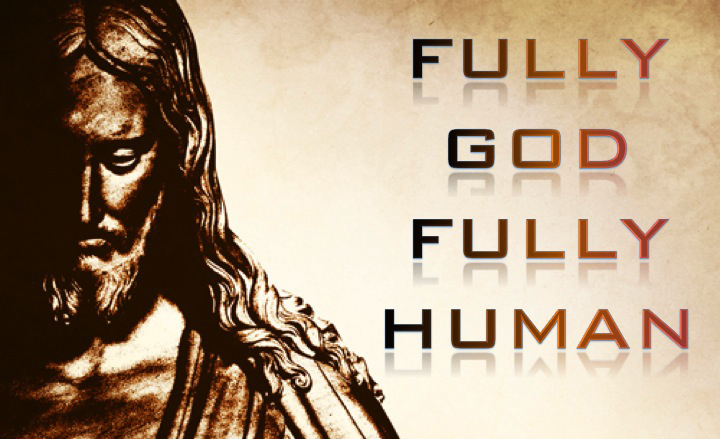
Fully God Fully Human

John 5:18 This was why the Jews were seeking all the more to kill [Jesus], because not only was he breaking the Sabbath, but he was even calling God his own Father, making himself equal with God.

I’ve been looking at this verse a lot this week as I discuss it with some people online.  You know how it is.  The more you look at a passage of Scripture, the more you see.  We’ve been talking about Jesus’ natures, how He is both God and man.  This verse shows both natures side by side.

Jesus is called the Son of God 45 times in the New Testament and by everyone from Satan himself to Jesus’ personal claim to the title.  Demons, Jews, His disciples, even an angel call Him the Son of God acknowledging His divinity.

In John 5:18, the Jews saw a man before them, and He is a man, but that man claimed God was His Father which, according to John, also requires that He is equal with God.

So, the Jews got angry at the apparent blasphemy and wanted to kill Jesus. 

Lev. 24:36   Whoever blasphemes the name of the Lord shall surely be put to death. All the congregation shall stone him. The sojourner as well as the native, when he blasphemes the Name, shall be put to death.

We see this issue for the Jews repeated here:

John 10:31-33  The Jews picked up stones again to stone him. 32 Jesus answered them, “I have shown you many good works from the Father; for which of them are you going to stone me?” 33 The Jews answered him, “It is not for a good work that we are going to stone you but for blasphemy, because you, being a man, make yourself God.

And Jesus, after they had earlier (John 5:18) recognized his claim of equality with God, then in John 10:33, they accuse Him again, he didn’t deny it but doubled down saying the claim is proven through His works:

John 10:36,37  do you say of him whom the Father consecrated and sent into the world, ‘You are blaspheming,’ because I said, ‘I am the Son of God’? 37 If I am not doing the works of my Father, then do not believe me;

Why is this important?

The title “The Son of God” in the New Testament is loaded with meaning.  It is the powerful claim that Jesus and the Father are equal in nature.  This did not go over well with the Jewish leaders nor does it go over well with those who wish to deny Christianity and its claims.

I know I point to Philippians chapter two maybe too often but only because the passage is so important concerning Who Jesus is.

Phil. 2:5-8  Have this mind among yourselves, which is yours in Christ Jesus, 6 who, though he was in the form of God, did not count equality with God a thing to be grasped, 7 but emptied himself, by taking the form of a servant, being born in the likeness of men. 8 And being found in human form, he humbled himself by becoming obedient to the point of death, even death on a cross.

Jesus’ claim to be equal with God (the Father) is clarified here.  He existed in the same form as the Father before He emptied Himself of His glory (John 17:5), this included the use of His divine attributes, and took human form.  Jesus was and is both human and divine.

Though God by nature, Jesus became voluntarily submissive to the Father.  He is inferior currently in position or rank.  Apparently this was necessary for God’s plan to be accomplished.

We as Christians, need to understand well the two natures of Christ.  He took on human form so He might pay the ultimate price for our sins, yet He never ceased to be God.  Had He been able to do that, there would have been a time with the trinity would not have existed.

There isn’t a lot of application to this posting.  But, a better understanding of the God we serve is always a new arrow in our quiver of defenses.

What About Cain’s Wife?

Where did Cain’s WIfe Come From?

Occasionally I hear questions like this or “Can God make a rock He cannot move,” or “If God made everything, who made God,” and others.  Usually, the questioner is trying to stumble a Christian. He’s not looking for a real answer.  But since we all hear these at one time or another, let’s look at some answers.

“Where did Cain’s wife come from?”  The argument usually goes something like this: “All there were were Adam, Eve, Cain, and Able, right?  Well, the Bible says after Cain killed Able, he fled to the land of Nod and knew his wife.  How does that work?”  This is pretty easy to answer.  The questioner is just a Bible illiterate: The days of Adam after he fathered Seth were 800 years; and he had other sons and daughters. 5 Thus all the days that Adam lived were 930 years, and he died (Gen 5:4–5).

So, Cain married a sister.  Now you might say, that’s terrible, marrying his sister, but remember there wasn’t anyone else around.  

Incest was not a sin until the Mosaic Law (Lev. 18:1-18) probably because the gene pool was pure enough not to do damage until then.

Sarah was Abraham’s half-sister, and he married her.  Remember Abraham feared death and told King Abimelech Sarah was really his sister.  Then Abimelech almost had relations with Sarah before realizing she and Abraham were husband and wife.  Abraham confesses to Abimelech and apologizes then sort of makes light of the situation “Besides, she is indeed my sister, the daughter of my father though not the daughter of my mother, and she became my wife.”  (Genesis 20:12) So, incest was not prohibited until Moses.

“If God can do anything, can God make a rock He cannot move?”  Boy, they’ve got us there, don’t you think?  There are a few things God cannot do.  He can’t learn since He is omniscient.  He can’t sin since He is holy. He also can’t do things that are logically impossible.  Since God is omnipotent, there is no logical thing He cannot create within the boundaries of His nature.  If God is omnipotent (infinitely powerful), then He can create a rock the size of the universe.  Can He move that rock?  of course.  But, since we’re dealing with infinite values here, it is logically impossible for a rock God cannot move to exist.  So, the problem is in the question, not in our faith in God’s power. The answer is “Logically, there can be no such thing as a rock God cannot move.”

“If God made everything, who made God?”  I hear this most often.  There are two good answers to this.  I’ll give the short one first:  No one made God, but if someone did, it wouldn’t matter because God made you.  You are not responsible to God’s maker, but you are answerable to your maker.

The Second answer is a little more philosophical.  In the law of cause and effect, everything that begins to exist has a cause.  God did not begin to exist and so has no cause (no maker).  So this is a category error.  The questioner is confusing finite beings with an infinite being.

One of my favorite questions is “How can you be sure Jesus really died and really rose from the dead?”  David Hume (18th century philosopher) said about this that “extraordinary claims require extraordinary proof.”  That seems to be at the center of the question.  But, that’s not true, at least not in this case.  All we need is a person trained in confirming the death of crucifixion victims to prove Jesus was really dead, and we have that in the centurion.  And we need someone expert in knowing if someone is later alive.  We all qualify in that regard as did the disciples:

36 As they were talking about these things, Jesus himself stood among them, and said to them, “Peace to you!” 37 But they were startled and frightened and thought they saw a spirit. 38 And he said to them, “Why are you troubled, and why do doubts arise in your hearts? 39 See my hands and my feet, that it is I myself. Touch me, and see. For a spirit does not have flesh and bones as you see that I have.” (Luke 24:36-39)

While Jesus’s resurrection was miraculous, the proof of it was simple.

Why is this important?

We get asked a lot of silly questions at times, and even though the idea is to trip us up, it’s best to answer the question when we can.  That will make it more unlikely the question will be asked again by that person, maybe of some who might be stumbled by it.

Besides this, we are told to be ready to give an answer to everyone who asks (1 Peter 3:15).

Witnessing is Hard

19 Go therefore and make disciples of all nations, baptizing them in the name of the Father and of the Son and of the Holy Spirit, 20 teaching them to observe all that I have commanded you. And behold, I am with you always, to the end of the age.” (Matt. 28:19-20 – “The Great Commission”)

Man.  That Great Commission really sticks with us, doesn’t it.  Most of us get a little nervous, or even downright frightened, sharing our faith.  Maybe if we understand a few things first, it might help.

Rule #1 and the only rule, “Sharing should be done in love, not as a duty.”  Something a lot of us don’t understand is it’s not our job to save people.  You heard me right.  It’s our job to tell people.  What happens next is the Holy Spirit’s job:

So neither he who plants nor he who waters is anything, but only God who gives the growth. (1 Cor. 3:7)

So, it is God’s plan to share.  Then it’s God’s job to save.  He does this in a number of ways, but to simplify it, we are just to share and leave the rest up to Him.  You never know where you are along the chain for the lost person.  You might be the first person ever to tell them about Jesus.  You might be the one who God uses to support something he’s already heard, or you might be the one God has chosen to be involved in leading him to Christ.

I’ve always been struck by the fact God works on the heart of the non-believer.  He puts him in a situation where he can hear the gospel from one of us.  He puts the words in our mouth.  The Holy Spirit persuades the person of the truth of the gospel, and he’s saved.  The odd part is God gives us credit for what He did and barely involved us.

Most people reading this are looking for an easier way to share their faith.  The way I see it, different situations need different tactics.  Standing in an elevator with someone who sounds interested means you can’t tell him of God’s saving you from drugs and a murder rap, how the doctors told you your child would be born with a major handicap but was born without defect after days of prayer.  In other words, a ten second witness is all that is possible.  The guy will probably be gone in a few moments.  So practice a short witness: “You know, Jesus changed my life when I turned it over to Him.  The good news is I know He will do for you what He’s done for me.  Just ask Him.”  And, that’s it.  Maybe something even shorter is all you can share.

The most stressful times is sharing with lost family and friends.  You might need to provide a much longer message.  Maybe you do want to remind them of how Jesus got you off drugs and the miracle child you hold in your arms. Practice something so when the moment comes, you’re not caught flat-footed.

There are a lot of reasons for us to withdraw from sharing:  maybe we don’t really believe Christianity is true, maybe we feel unworthy or guilty, or we struggle with doubt.  Maybe we’re afraid they’ll ask a question we can’t answer.  There are scores of reasons not to witness, but there is one good reason to witness.  God told us to.

Why is this important?

I read the other day 95% of all Christians never lead someone to Christ.  That’s a sad statistic if true.  The growth plan of Christianity is a “pyramid  scheme.”  We tell someone about Jesus, they tell two friends, then each of those folks tell two friends, and before you know it, the whole earth is saved.  It is estimated there are 2.3 billion Christians alive on earth right now.  The total world population is approaching 8 billion.  That means if each Christian could introduce four people to Christ in their lifetime, the whole world would be saved very quickly.  That’s just at the top of the pyramid.  The reality would be much faster since the new converts would invite new converts of their own.

God tells us to do this.  There’s really no way around it.  The people I have been allowed to lead to Christ were all either one on one or in a church setting.  Currently, I witness a lot on social media.  I have the time, and I don’t run into a lot of lost people in my daily life.  Also, in my area, there are a lot of Christians.  I sometimes ask check-out clerks if I can pray for them about anything.  I’m surprised how many tell me something on their hearts.  What are they going to do if they get angry over my offer, yell at me in front of a store full of people?

Don’t sell yourself short.  After all, Jesus said “I am with you always to the end of the age,” so you’re not in this alone. Ask someone to church, share your faith, Just take the step.  God will honor it.

Is God With You?

God With Us

12 Behold, God is with us at our head, and his priests with their battle trumpets to sound the call to battle against you. O sons of Israel, do not fight against the Lord, the God of your fathers, for you cannot succeed.”  (2 Chron. 13:12)

This passage was written at a moment when Israel was going to battle against Judah.  Abijah, the king of Judah at the time, tells the Israelites they can’t win because God is with Judah.

Now I’m sure both sides believed their gods were with them.  Israelites has turned from God and sought after other gods.  Judah had stood firm under Abijah and were strong in their belief God was with them.

As Christians, we often wonder if God is with us in what we do or want to do.  Sometimes we feel as though our prayers don’t reach past the ceiling. We feel alone, cold, dry. As a result, we start to doubt our path or even our relationship with God. We want that emotional high, that closeness, we sometimes feel with our Lord. Somehow, emotion equates with closeness in our minds, but is that so?

The United Pentecostal Church is a cult.  They ordain their pastors simply by the standard of apparent personal anointing.  As a result, they have had some pastors who have not reached puberty before being ordained.  They also have not been careful to test the teachings of the pastors against the Word. So long as the pastor raises great emotional response in the congregation during the service the requirements have been met. The result is an emotion based organization without God.

Emotion is a good thing in its place.  How can we not be elated if God touches our soul?  However, dependence on emotion or experience rather than God’s Word is not of God.  We’ve all had times when we are overwhelmed by God’s presence during worship, study, or prayer.  God will certainly bless us in this way at times. But, is that emotion something to seek in place of God’s Word and clear instruction as an indicator of God’s presence in our lives? No. We seem to need both, but God’s Word, of course, is the ultimate standard.

So, this leads us to how we can know if God is with us.

The disciples walked, talked, ministered, and prayed with God Himself in flesh for three years.  Were they always on an emotional high?  Probably not.  Our God is a practical God.  He has given us instructions to follow if we want to stand in His will.  Yet we often seek other means. Paul tells us “16  aAll Scripture is inspired by God and profitable for teaching, for reproof, for correction, for training in righteousness; 17 that the man of God may be adequate, equipped for every good work.” (2 Tim. 3:16)

So, if we ask if God is with us on our current path, waiting for an emotional validation is foolish when He has given us a standard by which to test our direction.

If we can’t find direction in Scripture that precisely addresses our question, we need to ask ourselves “Does this glorify God?”  If the answer is “yes,” we should push on in that direction until or unless God closes a door.

God can speak to us in any number of ways: dreams, visions, personal prophecy, the advice of others, and more.  But, the standard is always to look to God’s Word before stepping out.  Is it God’s will?  Does it glorify God? Is God with us?

Why is this important?

6 And they passed through the  aPhrygian and Galatian region, having been forbidden by the Holy Spirit to speak the word in  cAsia; 7 and when they had come to Mysia, they were trying to go into Bithynia, and the Spirit of Jesus did not permit them; 8 and passing by Mysia, they came down to Troas. 9 And a vision appeared to Paul in the night: a certain man of Macedonia was standing and appealing to him, and saying, “Come over to Macedonia and help us.” 10 And when he had seen the vision, immediately we sought to go into Macedonia, concluding that God had called us to preach the gospel to them.  (Acts 16:6-10)

Here is a wonderful example of God’s direction.  Paul asked himself, “What can I do to glorify God?  Let’s go preach the gospel in Asia.”  God said He wanted Paul elsewhere, so He closed doors then gave direction.  God’s Word did not tell Him where He was to go, just that Paul was to go.

We often wonder if God is with us in what we are trying to do.  If we are trying to please Him and do His work, He is with us.  If He wants us somewhere else, He will direct us there.  The old saying Is true: “God can’t steer a parked car.”  We need to be moving for God to direct us.

As Christians, the emotional touch of God is not as often as we would like. Some will think their faith is dead or, at lest dry, if they don’t get that shot of emotion often. That’s just not how it works. Feeling no emotion, feeling dry, or alone are not indicators God is not active in your life. Are you praying? Are you studying your Bible? Are you serving?

We can never rest our faith on emotion.  Feelings can distract and sometimes misdirect.  We have a standard.  Let’s stand on that, God’s Word.

Decision Guidelines

With what shall I come before the Lord, And bow myself before the High God? Shall I come before Him with burnt offerings, With calves a year old?

Will the Lord be pleased with thousands of rams,Ten thousand rivers of oil?Shall I give my firstborn for my transgression, The fruit of my body for the sin of my soul?

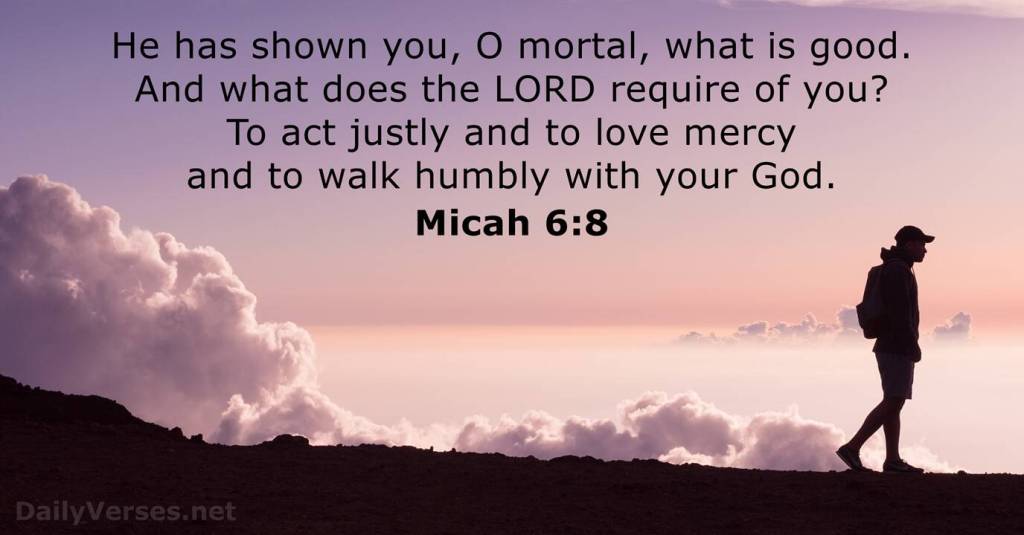
He has shown you, O man, what is good; And what does the Lord require of you But to do justly, To love mercy, And to walk humbly with your God?  (Micah 6:6-8)

I looked at this passage this week and thought of last week’s blog about the two commands Jesus gave us: to love God and love our neighbor.  This is a lot like that.  God is giving us three general guidelines by which to live our lives.  They are really tests, standards, against which we can examine our actions.

We are always wondering what we should do in this situation or that.  When someone tells us “Read your Bible.  It will tell you what to do,” we get frustrated.  We end up in the sacrifices of Leviticus or the genealogies of Matthew or Luke and don’t see a path to take.  We still need a guide.  Well here it is.  Mark the page, put in a posted note, or memorize verse 8. 

When we’re stuck on a decision or facing a storm and are unsure of what to do, the guidelines here are meant to help us.  We need to ask ourselves “Is what we want to do just, is it merciful, and am I walking humbly enough with God to have a clear view of what He wants done – and what He doesn’t?”  Pair these three with the two Jesus gave us, and we should be able to handle anything:

“Should I move in with my girlfriend?” – Does that honor God?

“Should I reach out to my hurting friend?” – Isn’t that loving your neighbor?

“I know I shouldn’t cheat on my taxes, but I need the money” – Is that acting justly?

“Can I pass up a homeless man without reaching out to him?” – We are to love mercy.

“I’m just so proud I was able to share Christ with someone I want to tell everyone what I did” – Walk humbly. 

Jesus told us to love God and love others.  Here, the Holy Spirit through Micah is telling us to calm down if our decision fits under these three categories, we’re on solid ground.  God isn’t looking for the sacrifices listed in verses 6 and 7.  Our God is a God interested in our hearts.

God often told His people in the Old Testament it was their hearts He was after, not the Law.  Yes, God required the sacrifices and festivals, but what He really wanted was willing obedience.  God knew the Law wouldn’t do the job.  Men are too flakey.   Paul tells us the Law was our tutor or schoolmaster to give us a moral basis for the coming New Covenant:

But before faith came, we were kept under guard by the law, kept for the faith which would afterward be revealed. 24 Therefore the law was our tutor to bring us to Christ, that we might be justified by faith. (Gal 3:23,24)

Why is this important?

God hasn’t changed.  He wants our obedience.  He’s given us simple guidelines to apply to all decisions.  We are without excuse.

We shouldn’t get so wound up in our troubles that we lose sight of God’s instructions.  Just remain calm, act justly, love mercy, and walk humbly with God.  He’s got this.