The Cup

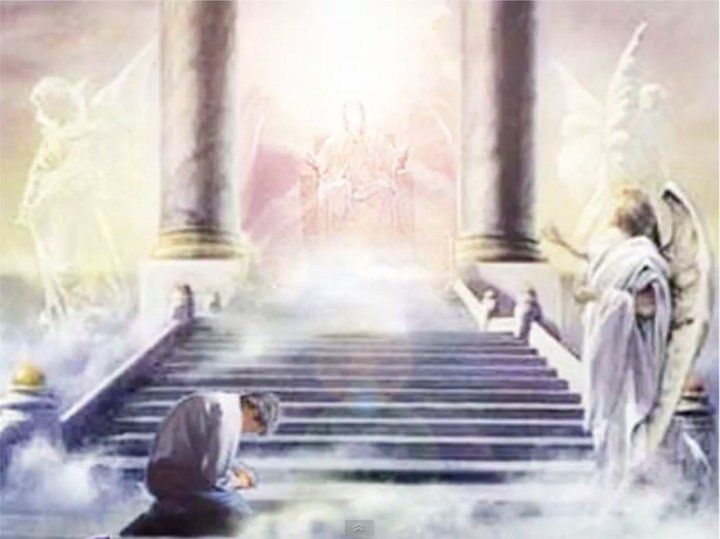
Usually, when Christians speak of “the cup” we’re talking about the communion cup.  I’d like to look at another cup, though, the cup Jesus spoke of in the Garden (Matt. 26:39):

And going a little farther he fell on his face and prayed, saying, “My Father, if it be possible, let this cup pass from me; nevertheless, not as I will, but as you will.”

I have always just believed He was speaking of the torturous death He was about to face, the scourging and crucifixion, but now I think there’s more to it. 

I’m not sure Jesus was terrified of crucifixion. The Bible seems to tell us He wasnt.  Look at Mark 10:32-34:

32 And they were on the road, going up to Jerusalem, and Jesus was walking ahead of them. And they were amazed, and those who followed were afraid. And taking the twelve again, he began to tell them what was to happen to him, 33 saying, “See, we are going up to Jerusalem, and the Son of Man will be delivered over to the chief priests and the scribes, and they will condemn him to death and deliver him over to the Gentiles. 34 And they will mock him and spit on him, and flog him and kill him. And after three days he will rise.”

Here, Jesus and His disciples are on their way to Jerusalem just before Passion Week.  According to the passage, Jesus was fully aware of what was in store for Him.  But, note in verse 32 Jesus is ahead of the disciples.  He’s not timidly heading for the crucifixion He will face.  He’s not hanging back.  He was going to Jerusalem ahead of everyone else to pay the price for you and me. 

In Hebrews 12:2, we’re told Jesus faced the cross because of the joy that was set before Him. That joy was the result of the sacrifice He offered for our salvation.  So, I don’t think a Roman scourging and crucifixion were all that Jesus was speaking of when He speaks of the cup in the garden.

During that same conversation in Mark chapter 10, Jesus tells the disciples they will share in the cup He will drink from:

39 And they said to him, “We are able.” And Jesus said to them, “The cup that I drink you will drink, and with the baptism with which I am baptized, you will be baptized,

I believe this cup and baptism speak of His execution, of a martyr’s death.  But, I believe there is something else in the cup that was only for Jesus Himself, the wrath of God.  In the Old Testament, God’s cup is often a cup of wrath (Isa 51:17)

The effect of God’s wrath can be widespread, even universal (Jer. 25:15 and 51:7).  So, that wrath is for all sin universally.

Why do I think God’s wrath is involved?  Hab. 1:13a, speaking of God, says, You who are of purer eyes than to see evil and cannot look at wrong. God cannot look upon evil.

So, in Mark 10, if Jesus is speaking of the cup He is about to drink – and it seems He is – then the portion of the cup the disciples would share is what He just described to them, a martyr’s death.  I believe Jesus had a deeper more dreadful portion He needed to face, the breaking of His relationship with the Father.

In the Garden, we’re told Jesus asked for the cup to be taken from Him if possible.  He then told the Father His will should be done.  It is then that Jesus sweats “great drops of blood”(Luke 22:44).  This is a rare condition called hematidrosis and is caused by incredible stress. 

On the cross, Jesus says “My God, My God, why have you forsaken me?” (Matt. 27:46).  When Jesus took on the sins of the world, past, present, and future, the Father had to turn away from Him and execute His wrath on Jesus.  He couldn’t look upon sin, and His response to sin is His wrath. Jesus had never felt separation from the Father before. It was excruciating.

Speaking about this, the Billy Graham organization says this:  “But in reality His words point to something far different. They point to the fact that when Jesus died on the cross, all our sins—without exception—were transferred to Him. He was without sin, for He was God in human flesh. But as He died all our sins were placed on Him, and He became the final and complete sacrifice for our sins. And in that moment He was banished from the presence of God, for sin cannot exist in God’s presence. His cry speaks of this truth; He endured the separation from God that you and I deserve.” (https://billygraham.org/story/did-god-abandon-jesus-on-the-cross-billy-graham-answers/)

In an earlier blog post I talked about the fact that God isn’t just loving, He is love personified.  God is love (1 John 4:8).  So, as with all God’s attributes, God’s love is infinite, Jesus’ love for the Father was and is infinite as well.

Think of the person who you love most.  Now think of how you would feel if that person not only turned from you, deserted you, but also brought their wrath fully upon you.  In an infinitely greater sense, that is what Jesus felt on the cross, the desertion and fury of God the Father upon Jesus Who carried the sins of us all.

I believe that is the cup Jesus wanted to be removed, desertion of the Father from their close relationship and facing the Father’s anger due to the sin Jesus assumed on our behalf.  This was the greater sacrifice.

Why is this important?

I’ve tried to convey how much God loves us by showing how much Jesus, God the Son, sacrificed for you and for me.  It wasn’t just taking on the form  of a man when He was previously in the form of God.  It isn’t even His physical sacrifice for our sins.  It is the fact the Father turned from the Son and brought His wrath to bear on the Sin Bearer.

While this wasn’t the purpose of Jesus’ sacrifice, it was the greater Personal consequence of taking our sins upon Himself, and He did it willingly.

That’s how much God loves you.

Thought Filters

In philosophy, there is a term: “a priori assumptions.”  An a priori assumption is a very basic belief we hold usually without empirical evidence.  These are beliefs we use as filters to view the world.

I am a retired photographer, so I’ll use a photographic example.  In photography we have a No. 25 filter.  It is a deep red filter.  It’s so red that it filters out all other colors.

A priori assumptions are like my No. 25 filter.  They filter out the things that don’t match the filter’s standard.  Atheists have an atheist filter.  They view the world through the a priori assumption there is no God.  As such, when we speak to them about God, their filter springs into action and tells them we must be wrong.  What we’re saying doesn’t make sense because it doesn’t make it through their filter.

We have the same issue with cults.  There are Mormon filters, Christian Science filters, and Jehovah’s Witness filters.  There are also Muslim filters, Hindu filters, etc.  When I tell a Jehovah’s Witness Jesus is God, they think, “That can’t be true.  My filter, my a priori assumption, doesn’t match that idea.”  And, so it’s rejected.

We Christians are no different.  We have a Christian filter.  We look at the world through the Bible and see sinful acts.  We look at drunkenness, drugs, adultery, and so on, and see those as sins.  Sin in our own lives, though, clouds that filter.  It makes it harder to see the temptations we face as sinful.  It makes it easier to yield our will to them, so we need to keep our filter clean.  We need to confess our sins daily.

At this point, it would be good to talk a little about what truth is.  Truth is whatever corresponds to reality.  This is called the Correspondence Theory of Truth.  There are others.  Another is called the Coherence Theory of Truth.  It says that something is true only if it matches, coheres to, what we already accept as true.  Believe it or not, this is how we’ve arrived at most of what we think is true.

We believe Donald Trump was elected President of the United States in 2016 because we were told by someone, usually several people that we trust, so we believe it as true.  Most of us didn’t experience it firsthand.  We heard it from someone we trusted and it matched what we already believed.

Many of our a priori assumptions are from hearsay.  That JW I spoke of earlier, she believed I was wrong when I said Jesus was God because someone she trusted told her so, the Watchtower Organization.  Because she trusts them, she turns over her worldview, her filtering, to them.

This sounds foolish, but we all do this.  I believe the Bible is true.  I’ve examined it, checked it out historically, internally, and externally.  I am convinced it is true and base my worldview on it.  Now, the Bible is my filter through which I view the world.  When I run into others who disagree, I believe they’re wrong because they disagree with what I  believe to be true.  Still, what I believe came mostly from someone else: historians, theologians, apologists, philosophers. 

There are other evidences I rely on such as my personal relationship with Christ, my experiencing His presence, and our interaction, but others claim they’ve had the same experience.

Along with this, God has a filter as well.  He has a “Jesus” filter He uses when He looks at His children.  Though we may have sin in our lives, though we are unworthy of standing in His presence, the Father holds up His filter and sees only Jesus when He looks at us.  Jesus has cleansed us of all sin.  We are perfect in the Father’s eyes, through His filter.

Why is this important?

Why I think this is something we need to understand as Christians is we experience the filters of others standing in the way of their accepting Christ.

You cannot often logically argue a person out of a position they have come to illogically.  In other words, when we talk with an atheist, a cultist, or someone of another religion, we are telling them things that simply cannot pass through their filter.

What can pass through their filter is the Holy Spirit.  We can plant an idea and water that idea, but it is God who can overcome the rejection of that idea: 

I planted, Apollos watered, but God gave the growth. So neither he who plants nor he who waters is anything, but only God who gives the growth.  (1 Cor 3:6-7)

Gratitude

Psalm 30:12 You have turned for me my mourning into dancing;

you have loosed my sackcloth

and clothed me with gladness,

12      that my glory may sing your praise and not be silent.

O Lord my God, I will give thanks to you forever!

When I was a kid, the last thing my mother would say before I left to attend a birthday party, stayed over at a friend’s, or if I had received a gift was “Don’t forget to say ‘please’ and ‘thank you.’”  I needed to show appreciation, gratitude to those favoring me with something special.

Gratitude is expressed all over the Bible.  In the New Testament the word translated as gratitude is eucharistia from which we get our English word Eucharist and means praise, thanksgiving, and gratitude.  Communion, the Eucharist, is a remembrance of the sacrifice Christ made for us and to remind us to be grateful for that sacrifice.

Author and radio talk show host, Dennis Prager, has rightly said “All happy people are grateful. Ungrateful people cannot be happy. We tend to think that being unhappy leads people to complain, but it’s truer to say that complaining leads to people becoming unhappy.”

Much of the unhappiness we see in our country today is caused by a lack of gratitude.  We’re not thankful for what we have.  We think it’s the norm to have two cars, a house, TV, electricity, running water, work.  We should be thankful for all of this.  Who should we thank?  Ah!  There’s the rub.  If we have no God, we have No One to thank for all that we have.  So, gratitude goes unexpressed.  We then start to believe we are responsible for what we have.

But, can we actually think deep down that we deserve any of what we have.  People in third world countries love their families no less.  They often work harder than we do, yet they don’t have the things we do.  Why not?  They’re often more deserving.  On top of that, very often, they are happier than we are.  So, if their happiness doesn’t come from things, things must not bring happiness.

God tells us to be thankful for what He has supplied for us.  That thankfulness, that gratitude, is what makes people happy.

God expects us to act the same way my mother expected me to act, to be grateful.  We’re His children.  Before I knew Him, I used to ask myself “Who does God think He is that we should praise Him for eternity?”  It seemed like a pretty boring eternity to stand before God and thank Him until the end of time.  I feel differently now.

You’ve probably seen in some past blog posts that I’ve been tracking down God’s actions in my life, how I came to meet my wife, how I came to know Him, why we moved to Arizona, and so forth.  The more I track down His actions, the more grateful I am to Him for what He’s done.  I recommend this as a good exercise for us all.

I think an appreciative  heart should be the natural state of Christians.  We should be grateful for all God has done for us.  Our Christian walk along with the joy it brings is enough to be eternally thankful for, but on top of that, we have eternal life with Him.

Why is this important?

As Christians, especially American Christians, we become too involved in the things we have or want more than the in Giver of all things.  Paul and Mary give us good examples of how we should act in times of trial.

2 Timothy 4:18  18 The Lord will rescue me from every evil deed and bring me safely into his heavenly kingdom. To him be the glory forever and ever. Amen.

Luke 1:46-49f  46 And Mary said,

“My soul magnifies the Lord,

47         and my spirit rejoices in God my Savior,

48     for he has looked on the humble estate of his servant.

For behold, from now on all generations will call me blessed;

49     for he who is mighty has done great things for me,

and holy is his name.

These people don’t seem unhappy at all.  Their joy is in the Lord, and one source of that joy is in the gratitude and thanks they show to the Giver of all good things.  So, if life isn’t treating you fairly, if you can’t seem to pay the bills, or you’re just down in the dumps, remember some of the very last words Paul penned were praises in the certainty he was about to be executed.  Mary, and unmarried pregnant young woman subject to scorn, praised God joyfully.  Want a day filled with joy?  Start praising God and thanking Him for all He has done and promises to do.  Things will start looking up.

Hope

Christian hope is a central point of our faith.  But, what exactly is hope?  Hope for the Christian is not the sort of hope we had as children at Christmas.  We hoped for a doll or a toy truck.  The hope for the Christian is the expectation of a certainty.  We await the fulfillment of God’s promises.

It’s interesting that the Greek word for hope is only used as a noun or verb in the New Testament.  It is never used to describe something else, “Hopeful,” “Hoping,” etc.  Hope is something in itself for the Christian.

So, just what is the Christian hope?  Our hope is both present and future.  Our Christian walk should display an attitude of hope, of a certainty that Christ will come back for His own, that we are the children of a king and should act according to His commands.  It is the Holy Spirit within us Who does this for us.

Cullman, in his book Christ and Time, says “Thus Christian hope has both already and not-yet dimensions.”  Our hope of Christ’s return produces a holy life in its expectation.  We live a life of godliness because we know our Savior will either take us home or will come for us.  With that in mind, the Christian joyfully walks the narrow path.

Paul describes this duality of hope like this:

Titus 2:11-13  For the grace of God has appeared, bringing salvation for all people, training us to renounce ungodliness and worldly passions, and to live self-controlled, upright, and godly lives in the present age, waiting for our blessed hope, the appearing of the glory of our great God and Savior Jesus Christ,”

So, our hope in Christ’s return and for the salvation of others teaches us, trains us, to resist temptations and live a godly life.

“But,” as the TV salespeople say, “there’s more.”  Our hope is not limited to a godly life here on earth.  Our hope is in the certainty of eternal life with Christ in His dwelling place, heaven.  The better we understand God, Who He is and the sort of Being He is, the more we can understand the sort of place in which a pure, holy, and loving God would dwell.  And, He is going to share that place fully with us.

John 14:1-2   Let not your hearts be troubled. Believe in God; believe also in me. In my Father’s house are many rooms. If it were not so, would I have told you that I go to prepare a place for you? And if I go and prepare a place for you, I will come again and will take you to myself, that where I am you may be also. And you know the way to where I am going.”

Our hope as Christians is not simply in Christ’s return but also in the certainty of living eternally with Him in His kingdom.

Why is this important?

The Christian life is not a sort of club membership.  We don’t gather together to exchange recipes or book recommendations.  The Christian life is one of dedication to the One who provides our hope.  He is there to comfort us when we hurt, uplift us when we fall, strengthen us in our weakness.  In this way, He confirms the reality of our hope.  He is here with us showing us we will soon be there with Him.

1 Cor. 15:19-22  “If in Christ we have hope in this life only, we are of all people most to be pitied. But in fact Christ has been raised from the dead, the firstfruits of those who have fallen asleep. For as by a man came death, by a man has come also the resurrection of the dead. For as in Adam all die, so also in Christ shall all be made alive.”

45 Years Ago

This blog post will be much more personal than past ones.  Last night was the 45th anniversary of my meeting the Lord Jesus Christ.

I had grown up in an abusive home.  Someone who should have taught me to love and trust them was the one who hurt me instead.  This isn’t my story alone, and I’m not looking for sympathy, just understand I was broken as a young adult.

In 1968, God introduced me to a girl who could teach me to love and trust.  He did that so I could later (7 years later) learn to love and trust Him.  God works that way sometimes.  He may not transform you immediately.  He shares His work with His children.  He includes them as a parent enjoys their children helping and learning.

Even after seeing love and trust in this young woman, when it came time for me to yield to God’s tenacious pursuit of my soul, I fought against Him.  I had someone in control of my life before, and it didn’t turn out well.  Now He wanted me to turn control of my life over to Him.  He spent much of 1975 trying to persuade me, but I wanted nothing of it.  Finally, He made it crystal clear to me exactly what the consequence of rejecting Him was, and I reluctantly turned control of my life over to Him at Calvary Chapel in Costa Mesa the evening of October 16, 1975.

When I got off my knees, I felt sick to my stomach.  What had I done giving my life over to someone I didn’t even know?  I wish I could go back and tell that 28 year-old what joys he was in for.

Over the years God has seen me through trials, through times of discipline, exhortation, and rebuke.  He has also put His arms around me when I was low, reminded me of His past work in my life when doubt crept in, and blessed me beyond measure in the people He has brought into my life and the family He gave me.  My life has been filled with God’s grace and love.

When Christians say “God changed my life,” it often falls on deaf ears.  The non-believer can’t accept the real change deep down would come from something so simple. It’s the heart that changes.  While my life was characterized by fear, aloneness, and distrust, today my life is filled with the love of God, confidence in Him to guide me through the tough times because I’ve seen Him do it again and again.  I never have felt alone since that day in October. God has always been there.

Why is this important?

A friend told me recently the world’s most desperate need isn’t food, or money, or anything this world has to offer.  What the world needs most is forgiveness.  That forgiveness was offered to that young man 45 years ago and he took it.  The result is peace in the knowledge someone has control of my life I love and trust absolutely.

That forgiveness is available to anyone who asks for it and is always available.  That forgiveness changes lives.

Does God Exist?

Psalm 14:1a  The fool says in his heart, “There is no God.”

I’m sure I’ve referred to God’s existence and the reasons for our belief a number of times, but I can’t find a blog post that addresses the topic directly.  Maybe that’s because it can become very involved.  Huge volumes have been written on the subject, but I’ll try to give some of the more basic arguments here to keep it short. 

First there’s the cosmological argument for God’s existence.  Cosmological is one of those big philosophical words, but it simply means everything which began to exist has a cause.  Aristotle looked around at things moving: leaves pushed by the wind, the motion of the planets, people pushing carts, and saw lots of things move.  He also saw that all things that move seem to have a mover, a cause for their motion.  He concluded, then, that there must be an “Unmoved Mover” something which started everything else in motion. 

It’s just a sort of unbroken chain.  I have parents, so they must have had parents who also had parents, etc.  Aristotle knew, though, that logically, you cannot cross an infinite number of events, so the chain needs to have an end, a source.  Thomas Aquinas said that Source was God.  So, the fact that things have a cause, that the universe didn’t just appear out of nowhere by itself is evidence of a Creator, an Unmoved Mover.

A second argument is called the Teleological argument.  It says that complex things with a purpose have a designer.  A fellow named William Paley gave a good explanation of this.  He said if we’re walking across a field and come across a pocket watch and have never seen one before, we instantly recognize someone made this thing.  It moves with the time of day, it contains a complex mechanism; it must have a producer, a designer.  Paley then applied this to creation.  We see man, for instance, who is complex with parts with a purpose.  Our bodies imply a Designer and not chance.

There’s a story about Isaac Newton, a Christian by the way, that is a good example of this.  He was trying to share that God designed all things while his friend told him it was all a result of chance.  Newton built an orrery (I had to look it up), a mechanical model of the solar system which moved the planets in relation to one another.  When his friend saw it, he marveled.  “Did you build this?” his friend said.  “No,” said Newton.  “It just came together from a bunch of parts I had on the table.” 

The point was made.  Things just don’t come together and form purposeful objects.  Even when we walk through the forest and come upon a circle of rocks, we know that simple orderly assembly isn’t an accident.  Someone arranged them, designed the circle.  It’s the same with the universe.  It is very orderly, so orderly in fact that we have discovered laws which rule it, the laws of physics and mathematics.  The more complex an object, the less likely it came to exist by chance.  This order and complexity point to a Designer.

I was in a group on FaceBook talking with other Christians and a guy entered the group introduced a friend.  The first fellow was a known atheist in the group.  The second was a sort of trainee.  The first guy asked if anyone could answer a question the second couldn’t answer.  I asked “Why is there something rather than nothing?  After all, the odds of something existing without a creator are infinitesimal to the point of impossibility.  The very idea of ‘something’ would need to come into the mind of whatever produced it.  So, where did it come from, where and Who is that Mind?”

The second guy struggled and struggled without success.  Finally the first atheist asked, “Does someone have an easier question?”

The possibility of nothing existing is so great that philosophers often call God a “Necessary Being.”  Nothing can exist unless something eternal exists to bring it about.

Why is this important?

Understanding the arguments for the existence of God are important for a couple of reasons.  Because these arguments are convincing, they are useful in easing doubt in the minds of Christians who might doubt God’s existence from time to time.  They are also useful in convincing others who do not believe in God. 

See also, Who Made God? and Faith and Science for additional information.

Dealing with Doubt

Last week I talked about doubt, what it is, how some doubt is sinful and some not.  A natural follow-up would be how to handle doubt, at least the sinful sort, so that’s what I’m going to attempt here.

Most of the doubt I’ve faced in my Christian walk has been related to the teachings of our faith and whether they are true.  That may just be me, but there may be someone out there facing some of the same doubts I did.  I’ll address my approach to these doubts first.

My first doubt was if God exists.  You can’t really go to the Bible to answer this since if God doesn’t exist, the Bible is irrelevant.  Whether God exists is not so much a theological issue as it is a philosophical one, and there are many arguments in favor of God’s existence.  A simple one is that God is what philosophers call a “Necessary Being.”  If God doesn’t exist, you really have no answer for why anything else exists.  Now, if the “God doubt” enters my head, I think “Necessary Being” and the doubt goes away.

I just went back through my 174 previous blog posts, and I was surprised I have nothing directly on the existence of God.  Stay tuned.  Doubtless that will be next week’s topic.

All the other doubts I’ve had over doctrines and practices in Christianity I have researched and settled them pro or con to my satisfaction through Bible study.

The serious doubts we face are seldom doctrinal, though.  Those doubts usually concern how or if God is working.  “Is God going to help me make my BMW payment this week?”  “Will God protect my wife while I’m away?” “Can I really do what God has asked?”  That sort of thing brings doubt.

I need to insert here that sometimes God doesn’t provide for the wants we have or have had and borrowed money to get.  He hasn’t promised to do that.  He also isn’t responsible or shouldn’t be expected to bail us out of our poor stewardship.  He may be telling you to live more modestly.

David faced doubts in his life.  He dealt with them by reflecting on the things God had already done, the promises God had fulfilled in his life, then turned his eyes to God.  As a result, his doubts were eased or eliminated:

Psalm 143:3–6 (ESV): For the enemy has pursued my soul; 

he has crushed my life to the ground; 

he has made me sit in darkness like those long dead. 

 4  Therefore my spirit faints within me; 

my heart within me is appalled. 

 5  I remember the days of old; 

I meditate on all that you have done; 

I ponder the work of your hands. 

 6  I stretch out my hands to you; 

my soul thirsts for you like a parched land.

I like to follow David’s example.  Should I doubt, I just replay for myself the spots God has gotten me out of, the promises He has kept, the needs He has filled, and the times He has prepared me to do the things He’s asked that were outside my skill set.

It also helps to dig into the Word and see how God has been dealing with the needs of folks for thousands of years.  Read His promises and how He fulfilled them.  After all, He’s the same today, yesterday, and forever.

One more doubt that used to hang over me was if I was saved.  God dealt with this in me through a dream decades ago.  I dreamt Jesus was coming back, and instead of hiding from him as a lost person would, I was standing, waving, and shouting “Here I am.”  Jesus stopped in mid-air and said to me, “You wouldn’t be excited if you weren’t my child.”

True, God doesn’t often speak to us in dreams.  The point, though, is are you excited about Jesus’ return?  If you’re frightened, you need to reread John 3:16 and commit your life to Christ to be sure.  Salvation is turning control of our lives over to Him, not just belief.

Why is this important?

This is important because doubt can stand in the way of your Christian walk.  As James says, “. . . the one who doubts is like the surf of the sea, driven and tossed by the wind.”  Our walk suffers, our relationship with Christ suffers, if our faith isn’t firmly grounded.

Doubt is a common experience.  It comes not from God but from our flesh and from the enemy.  Don’t let it sidetrack you.  Fight, pray, remember.  God is always here reaching out to us especially in these times.

Doubt

In the first chapter of James, he describes the man who doubts what God has said and promised as “like the surf of the sea, driven and tossed by the wind.  Let not that man expect that he will receive anything from the Lord being a double minded man unstable in all his ways.”

From that we might expect God’s reaction to our doubts will be quick and severe.

I did a little research, though, on the Greek word used for “doubt,” diakrino, in the passage and found other places this word is used.  At the tomb when the women entered the tomb not finding a body, they were “perplexed.”  This is the same Greek word.  They were not judged for their lack of understanding.  In fact the angel told them not to be afraid. Their doubt, perplexity, was not sin.

At Pentacost, the disciples spoke in tongues to the crowd, and the crowd was confused.  The word for doubt is translated as “confused” here.  Confusion can be a form of doubt yet not sin.

Doubt which seeks an answer, a resolution for the doubt, perplexity, or confusion is honored in Scripture.  In Acts 17:10f, the Bereans were called “noble” not for their doubt but for seeking to belay that doubt through evidence.

In John 20:26-29, Jesus didn’t condemn Thomas’ doubt that He was risen.  He presented evidence to alleviate Thomas’ doubts.  He did the same for the other disciples in Luke 24:36-49 and used the evidence He presented to help the disciples understand the Scriptures.

Doubt is not always a bad thing, then.  Someone once said doubt is the first step to understanding.

I think the important thing here is what we do with doubt.  I doubted the gospel until I was convinced of its validity.  After that, I doubted nearly every major doctrine in the faith.  That doubt, though, drove me as it did the Bereans to seek the resolution to those doubts.  The result was a stronger faith founded on evidence.

Jude 22 says we are to have mercy on those who doubt.  If doubt truly is the first step to understanding, then I can see why God has such a special place in His heart for doubters.

Why is this important?

In Luke 7:18-23, John the Baptist was beginning to doubt Who Jesus was.  John was in a prison awaiting execution.  He wanted to make sure what he believed was true, so he sent messengers to Jesus asking if He were truly the Messiah.  Down deep, John knew He was.  He had seen the Holy Spirit descend on Him at His baptism.  He had heard the very voice of the Father saying “This is My beloved Son in Whom I am well pleased.”  He had told others Jesus was the Lamb of God Who takes away the sins of the world.  But, doubt was arising in his heart.

Jesus’ response is interesting.  He performed miracles in the presence of John’s messengers then sent them back to John with evidential confirmation that He was the Messiah.

John sought confirmation.  He was not dwelling on doubt, he was not giving in to his doubt.  He was seeking confirmation for what he already believed was true.

When we doubt we have not yet sinned.  It is when we dwell on the doubt without seeking to resolve it that it becomes sin.  It is similar to how James described temptation earlier in that same first chapter.  Temptation is not a sin in itself but can lead to sin.  There are steps involved.  James says we are first tempted, but when we dwell on the temptation until it becomes desire.  It is that desire to yield to the temptation that becomes sin.  In the same way, yielding to our doubts gives birth to sin.  We are to resolve our doubts, not yield to them.

Tenacity

Tenacity

Galatians 6:9 (ESV)
9  And let us not grow weary of doing good, for in due season we will reap, if we do not give up.

Some weeks are harder for us than others.  Sometimes even those in ministry get tired once in a while.  I taught an adult Bible class for over 35 years every week.  I probably averaged fewer than two Sundays off per year.  I have to confess I sometimes had taken on too much and didn’t feel like preparing a lesson or even getting up to teach that lesson.  We can just get burned out at times.

Once in the classroom, though, I was energized and thrilled to see the happy faces of my friends learning the concepts I was presenting.

Certainly those in ministry need a break.  God created a day of rest for us for just that reason. Tenacity is something that needs recharging.

The years I served on the elder board of a church, I got to see the job of a pastor.  I’ve seen it, and I don’t want it.  Pastors spend long hours preparing their messages for mid-week and Sunday.  A pastor friend of mine told me he spent an hour of study for every minute of his sermon.  That means a typical 45 minute sermon took more than an average workweek.  And that’s just Sunday’s message.  For many churches, there is also a mid-week service and other duties on top of that.

A few years ago I asked my pastor how many hours he spent preparing for Passion Week.  He had a Wednesday study to do, a Good Friday service, plus Easter Sunday’s message to prepare for.  In addition to those hours of preparation, he had the sick to visit, marriages to counsel, and home life to attend to.  As I’ve said, I’ve seen the job, and I don’t want it.

The pastors I’ve had over the years have all understood the value of taking time from the pulpit.  They need to unwind.  They need time away. This isn’t a sign of weakness. It provides energy to pursue the ministry with vigor.

This goes for the average ministry volunteer as well.

Back when I was a pretty new Christian, my wife and I volunteered for anything we were asked.  After a few years, this became so burdensome we left the church to get out from under the pressure.  Though we loved our church and the people there, I thought it unspiritual to just say “no.”  I was so wrong.

My wife and I discussed the issue and resolved to take it slower. We returned to that church a year or so later with a new attitude.  We had made a pact that we would only volunteer for things after prayer and then only if we felt God leading us to that ministry.  What a total relief!  Our whole view of ministry changed and so did our effectiveness.

Why is this important?

Bruce Wilkinson in his book The Seven Laws of the Learner tells a story of a time when he needed to fire an employee.  He figured the woman was fully aware she wasn’t fulfilling her duties and could be easily persuaded to “fire herself” if he just asked her about how her job was going.

He did that, and the woman enthusiastically recited a series of duties she was performing and loved every minute of it.  Wilkinson said he wanted to give her a raise after hearing her.  He snapped back to reality, though, and explained to her that he was glad she was doing all those things, but it wasn’t what she was hired to do.

Do we really want to stand before God with a list of things we’ve done for Him that doesn’t match the list He had for us?

Christians who want to please God and others in the church, might take on too much.  We want to do all we can to serve God, but are we taking regular breaks and doing only what we should?  We could be robbing someone of a blessing if we do their job. We could even be neglecting the ministry God has called us to do.  We need to be careful we do only what God has asked of us and leave the rest for those God has called for the other tasks.  That way, we can continue to do our jobs effectively, consistently, and tenaciously.

His Lordship

John 20:28 (ESV)
28  Thomas answered him, “My Lord and my God!”

There is a controversy among Christians today concerning what it means to be a Christian.  Do we just believe that Jesus is God?  Is that all it takes, or is there more?  Or do we need to make Him Lord of our lives?  This is called the “Lordship Controversy.”

The Greek word for “Lord” Thomas used in John 20:28 is kurios and means lord, master, and even owner.  “Sure,” someone might say, “That was Thomas.  He was an apostle.  They turned their lives over to Christ.  Their’s was a super heavy commitment.  We’re not required to have that sort of relationship with Christ, are we?”  Let’s see.

Those who argue against lordship will often point to Acts 16:31 “And they said, ‘Believe in the Lord Jesus, and you will be saved, you and your household.’”  “So,” they say, “only belief in Jesus is needed for salvation.”  Pisteuo is the Greek word there for “believe,” and it means to believe, but is belief all that is involved.  Is a simple belief enough to assure one’s salvation?  The Greek word can mean a variety of things from simple belief something is true to belief that is so strong, so deep, that someone would commit their whole life to that belief.  Which sort of belief is Acts 16:31 talking about?

The story surrounding Acts 16:31 is about the Philippian jailer.  The verses following show that he didn’t just accept the message was true.  He acted on it.  He was baptized, and rejoiced in his newfound faith.  His life had been changed. 

What sort of belief changes our lives?  Is it just acceptance of a truth, or is it a belief so strong it forces us to commit to that truth?

In Acts 8, we are introduced to an interesting character in Church history, Simon Magus, Simon the magician.  According to the passage, Simon believed and was even baptized (vs 13), but was his life changed? Verses 18 through 23 of Acts 8 tell us in fact Simon’s life was not changed.  He had not truly made that commitment required for a life changing relationship with Christ.

Our churches have people in their pews who have accepted the gospel as true but never acted on that truth, never committed their lives to Christ.  I know because I attended church and counted myself as a Christian for five years before I was shown a commitment was needed, and my life changed.

Why is this important?

Matthew 7:21-23 (ESV)
21  “Not everyone who says to me, ‘Lord, Lord,’ will enter the kingdom of heaven, but the one who does the will of my Father who is in heaven. 22  On that day many will say to me, ‘Lord, Lord, did we not prophesy in your name, and cast out demons in your name, and do many mighty works in your name?’ 23  And then will I declare to them, ‘I never knew you; depart from me, you workers of lawlessness.’

Matthew 7:21-23 should be the scariest verse in Scripture.  Certainly, it speaks of cultists and followers of false religions, but I think it is speaking to some in the church today as well.  God doesn’t want them to rest on a mere acceptance of the gospel as true.  He wants them to act on it.

When I was in this situation, I didn’t think there was something more than just belief.  If you have belief without commitment, church is a club of likeminded members.  It’s not much different than the Elks or Masons.  God wants more than that for us.  He wants a personal relationship with each and every one of us.

If you are only holding a belief that Jesus is God and Savior but have not committed your life to that truth, like Simon the Magician you are still lost.  A Christian is not someone who is independent of God.  We are God’s servants, God’s property.  We are not our own.  We have been bought and paid for.  Something to think about.

1 Corinthians 6:19-20 (ESV)
19  Or do you not know that your body is a temple of the Holy Spirit within you, whom you have from God? You are not your own, 20  for you were bought with a price. So glorify God in your body.