Easter Wars!

Easter is the holiest day on the Christian calendar.  But, did you know there were times when even Easter represented conflict in the church.  There was a great disagreement in the early church on what was to be celebrated and when.

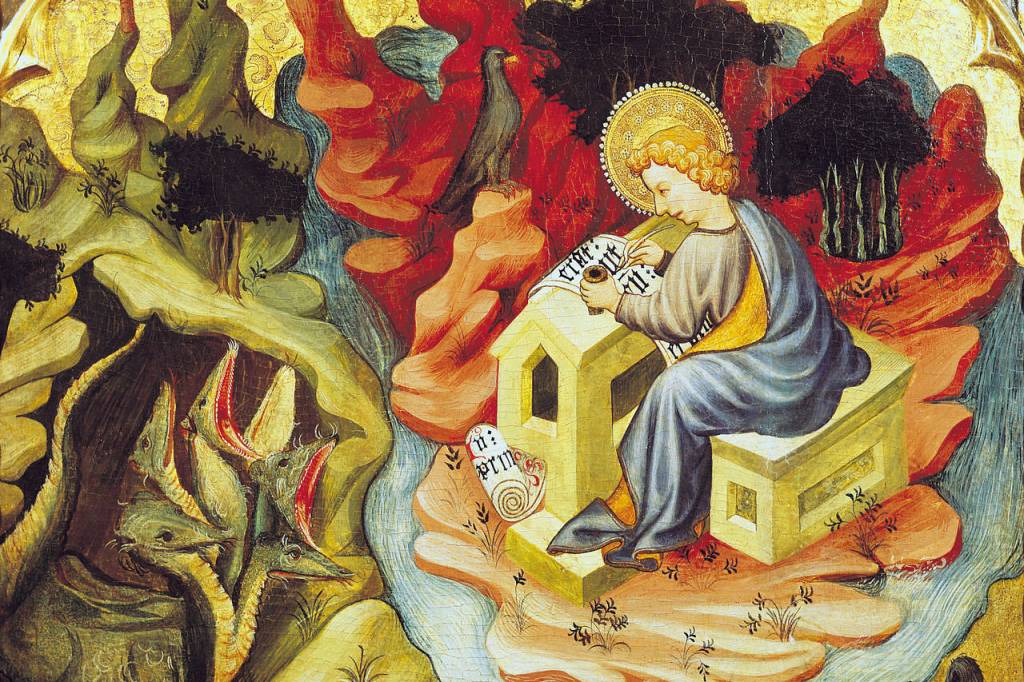
Very early on, the churches in the East identified with the Apostle John.  After all, John spent most of his time around Jerusalem, Ephesus, and on the island of Patmos.  Jesus died on Passover, and that was the emphasis of John’s celebration.  The Eastern churches followed this practice celebrating Passover no matter on what day of the week it fell.

The Western church looked to Peter and Paul as their examples since they were icons of the Western churches.  Peter and Paul were said to have emphasized Christ’s resurrection the first Sunday after Passover since Christ rose on a Sunday.  As a result, the Eastern and Western churches seldom celebrated on the same day nor did they celebrate the same thing.  The Eastern churches celebrated Christ’s ultimate sacrifice on our behalf.  The Western churches celebrated His glorious resurrection.  This difference in practice caused each side to argue for the virtue of their own view.

At first, both sides used the Jewish calendar to arrive at a date for Passover.  As the church as a whole grew to be anti-Semitic, the use of the Julian calendar replaced the Jewish calendar, so the Passover dates were often miscalculated.

Now we need to remember the Eastern and Western churches were not divided at the time but were seen as one body.  So, these differing views grew into a division of serious proportions within the body.  In 154 a.d., Polycarp, a disciple of the Apostle John, traveled to Rome to try and persuade the Bishop there that the Eastern Passover celebration should be the universal observance.  The Bishop of Rome, Anicetus, disagreed, and the two sections of the church continued with their own celebrations for years each confident the other was wrong. 

Eventually, tempers flared, and around 195 a.d., Victor, Bishop of Rome at the time, wanted to excommunicate the entire Eastern Church over the issue of Easter.  He called them heretics.  Synods were held and letters sent to bishops in the West asking for advice and consent.  Ireneaus, Bishop of Lyon in Gaul, wrote Victor asking him to be reasonable.  The consensus of the Western bishops was sympathetic with Irenaeus’ opinion.  Victor decided to back off, and the matter was tabled. 

In 325 a.d., a council was called at a town in Asia Minor, Nicaea.  Many things were settled there including the calculation for Easter.  Years prior to the council the church had thrown out the Jewish way of calculating Passover and decided to arrive at it themselves.  The calculation is the one given above.  Easter would be celebrated the first Sunday after the first full moon after the Spring equinox.  The Eastern practice of celebrating Good Friday as the holiest day ended.  Easter was now universally to be celebrated on a Sunday.  Of course, the new calculations depended on the Julian calendar.  But, that didn’t put an end to the issue.

Near the end of the sixth century, missionaries to Britain saw the churches there were calculating the date for Easter using a new calendar, the Gregorian calendar.  The Western church liked and adopted this new method of dating while the Eastern churches continued with the practice of using the Julian calendar as they do to this day.  Once again, the two sides would often celebrate on different dates.

In 1054, the Eastern and Western churches split becoming the Catholic and Orthodox Churches.  They didn’t split over the Easter controversy but over the Bishop of Rome getting too big for his britches. 

The Eastern Orthodox churches continue use of the Julian calendar for their calculation.  As a result, the dates of Easter are usually different East to West.  In 2024, for instance, the Catholics and Protestants will both celebrate Easter on March 31st while the Orthodox will celebrate it on May 5th.  The following year both will celebrate it on the same day.

Why is this important?

It is important for us to understand it really doesn’t matter exactly the date of Christ’s death or the date of His resurrection.  The important thing is that He gave His life for us and rose again showing His power over death.

I think this also shows us we can have differences in churches and still be one body.  True, the East and West eventually split, but it was over a fleshly issue, a power grab, not over doctrine.  There are major doctrines which must be agreed upon: the trinity, the bodily resurrection of Christ, salvation by grace alone, and the deity of Christ.  There are also doctrines where we can differ.  A popular saying among theologians goes like this, “In essentials unity, in non-essentials, liberty, but in all things, charity.”  I think that’s a principal we can live by.

The Incarnation – a History

Philippians 2:6-8 (ESV)
6, [Jesus], though he was in the form of God, did not count equality with God a thing to be grasped, 7  but emptied himself, by taking the form of a servant, being born in the likeness of men. 8  And being found in human form, he humbled himself by becoming obedient to the point of death, even death on a cross.

Jesus is both God and man.  We call this doctrine the Incarnation and it has been argued since the first century.  Early converts wanted to understand how all this works.  Back then, there were and still are lots of different ideas about it.

Gnosticism, a false belief rampant in the first few centuries of the church, held that God is Spirit, that spirit is good, but material things like humans are bad/evil.  So, if Jesus was God, He could not have a physical body or He would have been evil.  Jesus couldn’t die on the cross since He was not physical in the first place.  This belief can be traced back before Christ to the Greeks who’s religious views taught matter was evil but spirit was good.

Ebionism (Judaizers), another false belief, was also very familiar to the early church.  Paul describes the Judaizers in Galatians 2:4,12.  One of their beliefs was that Jesus was just a man who died a horrible death.  He was not God, just a great teacher.  Sound familiar?  We still hear this today.  The problem is one would need to reject the New Testament and much of the Old to justify this.  That makes it a little awkward in Christian circles to say the least.

Some believe Jesus was just a physical body and the spirit of the Son indwelled it as a driver indwells an automobile.  The body was nothing but a vehicle for God’s Spirit to use for 33 years then leave as it was about to be nailed to the cross.  These folks usually divide the Christ or Son from Jesus.  They believe Jesus died on the cross but the Christ, the Son, did not.  The consequence would be God did not pay the sacrifice, a senseless body did.

Still others believed Jesus was a great man and either at His baptism or at His crucifixion He received the divine Christ spirit and became God’s Son.  This is called Adoptionism.  The Man Jesus became divine as a reward for His good life.  He then died,rose, and was brought into heaven as God’s divine Son.

The Arians, heretics who arose in the third century, believed Jesus was not really God but God’s greatest creation, a sort of lieutenant god. Since God couldn’t be involved with matter, He used Jesus to create the material universe.  This solved the problem posed by the Greeks and their belief that God could not relate to anything physical.   

So, there are lots of odd ideas out there.  Most of these views appear fairly early in the history of the church.  The current evangelical/orthodox view was always understood but settled upon officially by the end of the fourth century when the church came together to denounce these false teachings and even cursed some who supported them.

The biblical view of the incarnation is that Jesus is wholly divine and wholly human.  Josh McDowell put it this way, “Jesus is divine as if He were never human and as human as if He were never divine.” Paul says in Philippians chapter 2, God the Son, second Person of the trinity, emptied Himself (of the use of His divine attributes) and took on human form.  He became obedient to the Father to the point of death on the cross.

Some would ask, “How could He be both human and God?  Isn’t that contradictory?”  We’re talking about natures here.  One can have more than one nature.  Just as a blue ball can have a round nature and a blue one at the same time, Jesus can be God and man at the same time.

Why is this important?  God the Son has a human nature.  He has been tempted just as we have:

Hebrews 2:18 (ESV)
18  For because he himself has suffered when tempted, he is able to help those who are being tempted.

As a human, He was tempted and faced the trials and tribulations every man has and then some.  There are other benefits for us, though.  He now has been in both worlds, that of God and that of man, so he can mediate for us.

1 Timothy 2:5 (ESV)
5  For there is one God, and there is one mediator between God and men, the man Christ Jesus,

There is much more to the incarnation than just an interesting Christian doctrine.  It reaches right down to the foundation of our salvation and our relationship with God.

Hebrews 12:2 (ESV)
2  looking to Jesus, the founder and perfecter of our faith, who for the joy that was set before him endured the cross, despising the shame, and is seated at the right hand of the throne of God.

We are that joy.

The Bible – Its History

Joshua 1:8 (ESV)
8  This Book of the Law shall not depart from your mouth, but you shall meditate on it day and night, so that you may be careful to do according to all that is written in it. For then you will make your way prosperous, and then you will have good success.

The neat package of books we hold in our hands we call the Bible has not always been accepted as we see it today.  And the fact is, of course, that the Bible is not a book but a library of 66 ancient documents written by over 40 authors spanning more than 1500 years.

For much of the first century, the early church had the apostles as their authorities on doctrine.  They were easily accessible since they were scattered all over the empire.  If there was a major dispute over a doctrine, the church need only to seek out an apostle to settle the issue.  As a result, while many churches had letters from apostles or copies of those letters, most saw them as instructional instruments within the local assembly.  By 70 a.d., though, all but one apostle, John, was dead.  Heresies were knocking at the doors of churches and sometimes settling into those churches.  What could the bishops use as an authority now to refute these heresies?  They rightly decided to settle on the writings of the apostles as the final authority.

Like today, though, heresies back then could be supported by Scripture passages taken out of context.  One of the favorite passages for these heretics was 1 Cor. 15:50 I tell you this, brothers: flesh and blood cannot inherit the kingdom of God, nor does the perishable inherit the imperishable.”  

The Gnostics (early church heretics) believed Jesus was not physical, His body was just an illusion, so they used this verse to support that Jesus was not flesh and blood.  The Judaizers and Arians believed Jesus was not God but just a good man.  They used this verse to support their view He could not be God.  So, not only did we need the teachings of the apostles, we needed all the teachings of the apostles.  How do we know which books represent their teachings, though?  There were dozens of documents present in the church at the time.  Which ones were to be followed?

One early Gnostic, Marcion (84-160 a.d.) put together the first canon, a list of books he saw as authoritative.  He believed Christianity was too Jewish and claimed the only inspired books were ten of Paul’s epistles – he left out the Pastoral Epistles – and kept an edited version of Luke where he removed all Old Testament references. 

In response to Marcion’s canon, the orthodox church began to make their own lists.  So far as we know, the first list of authoritative books by the orthodox church was the Muratorian Canon (c. 170).  It included 22 books of the New Testament plus two other early documents, the Epistle of Barnabas and the Shepherd of Hermas.  The Shepherd was accompanied by a warning that it was to be read for instruction but was not to be considered an apostolic writing.

So, the idea of a canon began late in the second century.  In the years following, other lists appeared, adding other accepted books such as 1 Peter and Hebrews as the church grew.  In 369, Athanasius produced the canon list we use today.  That canon was officially agreed upon by the Council of Carthage in 397.  Even at that council, the agreement was that the canon had been settled prior to the council’s meeting, just not officially.

The Old Testament was agreed upon over time by the church.  Our agreed upon books are taken from the Septuagint which was a Greek translation of the Old Testament translated at least 50 years and perhaps 200 years before Jesus was born.  The church did throw out the Old Testament apocrypha, in the Septuagint, though, believing them to be uninspired.

The New Testament books settled on by the church were not just picked out of a hat.  By the end of the fourth century, the church had tests to retain inspired books and exclude the non-inspired books.

The first test was that of apostolic authority, was the book written by or linked to an apostle?  Luke, Mark, and Jude were not written by apostles although they did have apostolic authority.  Luke was Paul’s constant companion as was Mark with Peter.  Jude was the brother of both Jesus and James the Just who is identified as an apostle in Gal. 1:19.

The second test was if the church had recognized the book as divinely inspired over the previous three and a half centuries.

The third test was if the book carried the power of God.  Were people saved due to its contents?

So, the Book we hold in our hands today and call the Bible went through a lot of history, a lot of testing, and even a lot of battles to reach our hands in the form we have now.

Why is this important?

The history of the Bible shows it has been examined and tested over centuries to be sure the books it contains are indeed God’s Word.  When we pick it up today, we can be assured it transmits faithfully the teachings of the apostles (Acts 2:42) and the teachings and words of Jesus Himself.  All this appears in a library of ancient books inspired by the Holy Spirit.  For more information on the transmission of the New Testament from the first century to us, please check out this blog post.

Christian Approach to Plagues

Wow.  Plagues.  What’s a Christian to do?

Matthew 25:36 (ESV)
36  I was naked and you clothed me, I was sick and you visited me, I was in prison and you came to me.’

In 250 a.d., during the first year of the Great Persecution that took the lives of perhaps thousands of Christians, Cyprian’s Plague broke out in the Roman Empire and lasted twelve years.  It was called “Cyprian’s Plague because Cyprian, bishop of Carthage, historically was the first to describe it.  At the time, the population of Rome was fewer than a million people.  5,000 people a day were dying in the city at the plague’s peak.

Romans fled the city.  Because of the great Roman highway system and efficient maritime commerce, the plague spread like wildfire.  Within weeks, the plague had reached the city of Alexandria in Egypt.  Here is a description of the scene in that city given us by its Bishop, Dionysius:

“[The pagans] thrust aside anyone who began to be sick, and kept aloof even from their dearest friends, and cast the sufferers out upon the public roads half dead and left them unburied and treated them with contempt when they died.” 

The plague we face today, the Coronavirus, is not so severe as this, but we can draw instruction from the Christians in Alexandria and Rome concerning how they dealt with a spreading plague.  Dionysius continues:

“Very many of our brethren, while in their exceeding love and brotherly kindness, did not spare themselves, but kept by each other, and visited the sick without thought of their own peril, and ministered to them assiduously and treated them for their healing in Christ, died from time to time most joyfully . . . Drawing upon themselves their neighbors’ diseases, and willingly taking over to their own persons the burden of suffering of those around them.”

That’s radical Christianity!

Because of the way Christians ministered to the sick of Rome and the rest of the Roman Empire during this period, much of the general public’s view changed from hating the Christians to a sense of gratitude.  During this time, the percentage of Christians increased for a couple of reasons.  First, more Christians survived the plague because of their care for each other, and many non-believers became Christians, attracted to a self-sacrificing faith whose members were willing to die in order to help them and their loved ones.

The Council of Nicaea (325 a.d.) just 12 years after the Edict of Milan which made Christianity legal in the Roman Empire, commanded a hospice to treat the sick and injured be built in every city large enough to contain a cathedral.

The first Christian hospices and hospitals were more than what we see today.  They ministered to the sick, of course, but they also provided shelter for the poor and homeless as well as for Christian pilgrims.

The first true hospital was built by Basil, Bishop of Caesarea, about 369 a.d.  His hospital was just one of several buildings which together included the hospital to tend the sick, a rehabilitation unit, and workshops for training those with no occupational skills.

Within two hundred years of Basil’s hospital, hospitals had become a common part of monasteries.  By the beginning of the Reformation, there were 37,000 Benedictine monasteries that cared for the sick.  Prior to the Christian hospices and hospitals, there is no evidence of such establishments functioning solely on gifts and volunteer workers.

The Christian role when people are in need and hurting is not to hide away or run from the peril.  We are to seek ways we can aid the sick and dying.  If you have an elderly relative or friend, call them to check on them and brighten their day.  Many schools are closed and parents are desperate for child care.  We can volunteer to watch the kids for neighbors while they are at work.  We can write to nursing home residents, hospital patients, veterans’ homes.  We can put our light on a lampstand and not hide it under a basket.  A friend of mine has assembled prayer groups to pray for those in need.  Let’s not let our light hide from the world under a basket but shine on a lampstand.

Death

2 Corinthians 5:8 (ESV)
8  Yes, we are of good courage, and we would rather be away from the body and at home with the Lord.

The issue of what happens when we die and where do we go are age-old questions.  Are we reincarnated?  Just we just cease to exist? Or, will we spend eternity in a particular place?

Peter Marshall, Chaplin to the US Senate 1946 until his death in 1949, described death to a class of midshipmen at the US Naval Academy in December 7th, 1941, the day Japan attacked Pearl Harbor.  He told a story of a young boy who had an incurable disease and was going to die.  His mother had just finished reading to him of the Knights of the Round Table and how many had died in a battle.  Marshall’s story continued:

“As she closed the book, the boy sat silent for an instant as though deeply stirred with the trumpet call of the old English tale, and then asked the question that had been weighing on his childish heart: “Mother, what is it like to die? Mother, does it hurt?” Quick tears sprang to her eyes and she fled to the kitchen supposedly to tend to something on the stove. She knew it was a question with deep significance. She knew it must be answered satisfactorily. So she leaned for an instant against the kitchen cabinet, her knuckles pressed white against the smooth surface, and breathed a hurried prayer that the Lord would keep her from breaking down before the boy and would tell her how to answer him.

“And the Lord did tell her. Immediately she knew how to explain it to him.

“Kenneth,” she said as she returned to the next room, “you remember when you were a tiny boy how you used to play so hard all day that when night came you would be too tired even to undress, and you would tumble into mother’s bed and fall asleep? That was not your bed…it was not where you belonged. And you stayed there only a little while. In the morning, much to your surprise, you would wake up and find yourself in your own bed in your own room. You were there because someone had loved you and taken care of you. Your father had come—with big strong arms—and carried you away. Kenneth, death is just like that. We just wake up some morning to find ourselves in the other room—our own room where we belong—because the Lord Jesus loved us.”

“The lad’s shining, trusting face looking up into hers told her that the point had gone home and that there would be no more fear … only love and trust in his little heart as he went to meet the Father in Heaven.”

The Christian’s view of death is like that.  We are strangers here, sojourners, residents but not citizens.  We don’t belong here but look forward to going home some day.  But what of those who are not Christians?  What happens to them?

Sadly, Jesus Himself tells us in one sentence, in one verse in Matthew, what will happen to us all:

Matthew 25:46 (ESV)
46  And these will go away into eternal punishment, but the righteous into eternal life.”

This should break our hearts as Christians, the fact that denying Christ will bring eternal punishment.  The question often arises at this point how a loving God would punish people with eternal torture.

The answer is pretty simple.  God is holy.  How holy is He?  The Book of Job describes His holiness as greater than the glory of the universe.  In fact, compared to God’s holiness, the universe is dirty:

Job 15:14-15 (ESV)
14  What is man, that he can be pure? Or he who is born of a woman, that he can be righteous?
15  Behold, God puts no trust in his holy ones, and the heavens are not pure in his sight;

God cannot allow non-holy beings into his company.  There are requirements for righteousness in order for us to enter into God’s presence.

Romans 8:3-4 (ESV)
 For God has done what the law, weakened by the flesh, could not do. By sending his own Son in the likeness of sinful flesh and for sin, he condemned sin in the flesh, in order that the righteous requirement of the law might be fulfilled in us, who walk not according to the flesh but according to the Spirit.

So, Christians, by giving their lives to Christ and relying on His finished work, have fulfilled the righteous requirements of the Law and can enter into Christ’s presence.  Those who have not relied on His work cannot.

This isn’t a condemnation of the lost.  The lost are already condemned as being unholy.  It is a plan for their salvation, the rescuing of sinners, the unrighteous, through a system of sacrifice satisfied by God’s Son.  That is the price paid, the gift offered to everyone, but sadly too few take advantage of it.

According to Ephesians 2:8-9, everyone can be saved from the eternal punishment Jesus talked about.  In fact, He came for just that reason.  God is loving and gracious.  In fact, the Bible says, “God is Love.”  He seeks out those who don’t know Him.  I know He did with me.  I ran from Him, but He never gave up on me.  He wanted me and was tenacious in His pursuit.

If you don’t know Christ, the simple solution is to accept His gift, take Him up on His offer, yield to His plan for your life.  I can guarantee it’s better than your plan.  We will all live forever though physical death will come.  It is up to each of us to decide where we will spend the eternity afterward.

Does God Change His Mind?

Does God Change His Mind?

Believe it or not, I hear this question more from Christians than I do non-believers.  Before I was even a Christian, I attended a Bible study where the leader said God changed His mind and quoted Jonah 3:10.  It bothered me for years, especially after I became a believer.  I guess deep down I believed if God is all knowing, what would cause Him to change His mind, but then Jonah 3:10 would come back to me.

I had settled that passage in my mind years later and was fine with it.  But, recently, I was confronted with 1 Chronicles 21:15, and the problem reared its ugly head once more.  Here are the verses so you can see what I mean:

Jonah 3:10 (ESV)
10  When God saw what they did, how they turned from their evil way, God relented of the disaster that he had said he would do to them, and he did not do it.

1 Chronicles 21:15 (ESV)
15  And God sent the angel to Jerusalem to destroy it, but as he was about to destroy it, the LORD saw, and he relented from the calamity. And he said to the angel who was working destruction, “It is enough; now stay your hand. . . . ”

 At first blush, these two passages do seem to say God does change His mind, but let’s look a little deeper at the verses.

God’s nature is to forgive those who repent. He shows this in both passages. The word translated “relent” in each verse is naham and is most often translated “comfort” in the sense of comforting yourself.   So, God’s love is involved here.  You see this in the way the NIV translates the verses:

Jonah 3:10 (NIV)
10  When God saw what they did and how they turned from their evil ways, he had compassion and did not bring upon them the destruction he had threatened.

1 Chronicles 21:15 (NIV)
15  And God sent an angel to destroy Jerusalem. But as the angel was doing so, the LORD saw it and was grieved because of the calamity and said to the angel who was destroying the people, “Enough! Withdraw your hand. . . .”

God isn’t inconsistent, He is compassionate.  He grieves over needing to correct His children.  He has compassion over those who repent.  God is love, and His actions whether in discipline or in forgiveness come from love.

There is also a message here for us.  The 1 Chronicles passage points this out beautifully.  If we read the context we see that God will strike those who do not repent but will forgive those who do.  David saw the Angel of the Lord (Jesus) standing between heaven and earth (vs. 16).  He stands there for us still:

1 Timothy 2:5 (NIV)
5  For there is one God and one mediator between God and men, the man Christ Jesus,

Jesus stands between heaven and earth for us to plead the compassion of God on us sinners.

Now, on to the idea itself that God changes His mind. Let’s ask this, “If God is perfect, all-knowing, and all-good and were to Change His mind, would He change it for something better?” Well, no. If God is perfect and all-knowing, He would have already done what is best. “Could He change His mind to do something worse?” No. God is all-good. He could not choose something worse. So, just in what we know of God, it is illogical to think He could change His mind.

I hope this helps to clarify the idea that God might change His mind.  He doesn’t.  God is consistent, unchanging, and immutable.  When He promises something, He does it.  Fortunately, one of His promises is for eternal life to those who repent and turn to Him as their Lord.

Humanism v Christianity

Judges 17:6 (ESV)
6  In those days there was no king in Israel. Everyone did what was right in his own eyes.

The society we live in and most of the Western world accepts secular humanism as its standard worldview.  They reject Christianity as outmoded, “holier than thou,” bigoted, and basically too restricting.  I’d like to look at the difference between the two and the consequences of each.

Secular humanism is based on man, humans.  Humanists believe humans are the ultimate authority for morality, social structure, and legal issues.  Morality is defined Either by society rule or individual choice.

I took a marketing class years ago, and the instructor told us that business ethics is based on current law.  Whatever was legal was ethical.  I asked if that was true of 1950 America.  I said, “There are people in this room of different races and sexes.  In 1950, we could pay them less because of those traits.  Was that ethical?” I continued.  “Then came along moral crusaders, Reverend Martin Luther King and Simone de Beauvoir who told us race and sex didn’t matter.  It is the content of our character that counts.  If the law of the time were correct, then we should have expunged Rev. King and Ms. De Beauvoir from society.  Would that be ethical?”  The instructor said, “I have to teach what’s in the text book.”  That’s Secular Humanism, the belief that morals can change with society.  I spoke up again and told the class that morality cannot be subjectively based or it has no basis at all.  True morality requires an objective standard.

Some humanists would tell us humanism is based on the society.  What society agrees upon should be the standard.  As with my marketing instructor, we can see this fails as society changes usually for the worst.  Another humanist might say it is the individual who sets the moral standard for himself.  Then of course we would have to empty the jails as they are full of people who believe their desires overshadow yours.

Christianity is based on the teachings of the Bible.  We have a foundation upon which we stand morally.  What could be wrong with that? The question arises, though, that Christians have killed millions of people over the centuries, so how moral could it be?  There are two points I’d like to make on that.  The first is that Christians may have murdered people, but that is not Christianity.  The two can be separated since Christians, being human, can do horrible things when misguided.  The Bible didn’t teach Christians to kill millions.

My second point on this is to address the millions killed.  The New York University history department did a study in the 1950s to see how many people had been killed by Christians in all the wars, the Inquisition, etc.  The number they came up with was fewer than 4,000,000.  That is a troubling number, it’s true.  But let’s look at another number.  The number of people murdered in just the past century by secular humanists who disregarded any authority higher than their own.  Just five men, five humanists, Lenin, Stalin, Kruschev, Mao, and Pol Pot are responsible for the murders of more than 100,000,000 people, their own people.

So, just on a purely rational basis, we should reject humanism.  But, I’m afraid it’s here to stay, at least for awhile.

Moral relativism is a consequence of secular humanism.  Moral relativism is the belief that there is no true moral standard.  We can do what we want.  We see this today, of course.  Greg Koukl, the founder and head of Stand to Reason, did a survey asking people if torturing babies for the fun of it was wrong.  One of the answers he received was “I wouldn’t do it, but I’m not sure I could say it was wrong.”  When there is no foundation for morality, there is no morality.

Moral relativism is provably fallacious.  If moral relativism is the superior moral standard, then it cannot be true.  Moral relativism states there is no superior moral standard.  It’s self-refuting.  Most philosophy departments at our universities have stopped teaching it for that reason, but it continues to spread through society.

My major concern is for the children of families who instill objective moral standards at home, but those children are continually taught their parents are wrong, that there is no moral standard.  To believe it is foolish and puritan.  As adults, we can think these things through.  We can arrive at a moral standard we want to live by.  Our children are not equipped to think critically, and most public schools no longer try to teach them to do so.

The consequence of a Christian worldview is people reaching out to those in need, a dedication to a better society, and a life pleasing to God. Humanists will say they are capable of the first two of those three, but why? They have no reason to help others except it makes them feel good. There is no standard, no basis in humanism to help others or create a better society.

Christian parents and grandparents need to equip themselves to address this plague.  We need to teach our children and grandchildren why this type of thinking is wrong.  We can do this by familiarizing ourselves with what humanism is and why it cannot stand on its own.  Humanism requires a public unwilling or unable to think these issues through to their logical conclusions.  Let’s you and I get started educating ourselves today.

Pitfalls in Bible Study!

In earlier posts, I’ve shared some ways to study the Bible (topical method, abcd method, Character study, word study, paraphrase method). In this post, I’d like to look at some of the ways NOT to study the Bible.

As I’ve said previously, reading the Bible is in some ways like reading the daily newspaper.  God uses stories and figures of speech to make His points.  The problem is when we take everything in the Bible as absolutely literal and try to dig deeper in areas where it is not called for.  Isaiah 55:12, for instance, says “the trees shall clap their hands.”  Trees don’t have hands.  This is a metaphor, a figure of speech.  To try to do a Bible study on trees clapping their hands will end in frustration and maybe even in error.

Bible critics even use these figures of speech to say the Bible doesn’t make sense.  Isaiah 11:12 says Judah would be gathered from, “the four corners of the earth.”  The critics point to this passage and say the Bible is claiming the earth is flat.  Of course, this is just foolish.  Again, it’s just a figure of speech.

The pitfalls arise when Christians take these figures of speech literally.  I have read odd expositions on God’s promise to Abraham in Genesis 32:12 that his offspring will be like the sand of the sea.  The writers explain how many grains of sand exist on the earth and argue that’s how many offspring Abraham would have.  Some argue Jesus will return when that number is reached.  But, is that the meaning of the passage?  Isn’t it saying the number would be so high we can’t count it?

If the number of Abraham’s offspring equaled the number of grains of sand of the sea, it would also equal the number of widows in Jer. 15:8, the number of birds in Ps. 78:27, and the amount of grain mentioned in Genesis 41:49.  The operative word in all these passages is “like.”  The number is “like” or “as” the sand of the sea.  These passages are using similes, exaggerations to make a point. 

How many times have we heard someone say that in prophecy a day equals a thousand years since with God, a day is as a thousand years (2 Peter 3:8)?  I hear this all the time.  The rest of the verse say a thousand years is like a day to God.  So, do they cancel each other out?  No.  Again, the operative word is “as” or “like” here.  The verse is just saying time for God is not like it is for us.

Another pitfall in Bible study is the parable.  Jesus used a lot of parables in His teaching: The Parable of the Sower, the Parable of the Pearl of Great Price, the Parable of the Prodigal Son, the Good Samaritan.  Parables are stories making one point and one point only.  In the Parable of the Sower, Jesus is telling us our hearts need to be ready in order to accept the gospel.  In the Parable of the Pearl of Great Price, He says we should be willing to give up everything to gain the kingdom of God.  In the Parable of the Prodigal Son, He tells us even those who have fallen far away from God can be restored gladly by the Father.  And, in the Parable of the Good Samaritan, He tells us everyone is our neighbor.

Bible study is rewarding and exciting.  Sometimes we will find a nugget of truth and start to dig deeper.  We follow a vein of gold until we hit a Mother Lode of treasure in God’s Word.  When this happens, we are so thrilled we want it to happen again and again and again.  Sometimes, we seek out those veins when they simply aren’t there.

To read the Parable of the Good Samaritan, for instance, and try to mine a deeper truth than the simple direct meaning of the passage can lead us into all sorts of errors.  We want to make something of why the priest passed the injured man.  Why a priest?  Why did he cross the road to the other side?  What do priests wear?  If he had been a scribe, would he have acted that way?  When we do this, we miss the point is trying to explain: “Love your neighbor, and everyone is your neighbor.  Act like it.”

When we major on the minors of life and of Bible study, we can lose our way.  If you want to dig more deeply into God’s Word, there are plenty of places to do that.  Start with the Sermon on the Mount, Peter’s sermon in Acts chapter 2, or work through Romans chapter 8.  Don’t start digging where the treasure is obviously right there on the surface for all to see. 

Trust but Verify


Acts 2:42 (ESV)
42  And they devoted themselves to the apostles’ teaching and the fellowship, to the breaking of bread and the prayers.

Years ago George Will had published a new book of Baseball statistics.  During his conversation with Johnny Carson on the Tonight Show, he had spouted from memory what seemed like hundreds of statistics.  Finally, Johnny said, “I could never remember all those numbers” to which Will replied, “That’s why I wrote them down for you.”

Before the apostles died, they left us a robust body of teachings.  The New Testament is an instruction book, not just a spiritual guide.  Paul’s letters to Timothy and Titus give us the basis for running a church, for instance.  But, people think they know better sometimes and start making things up as they go along.

By the beginning of the second century, the church at Corinth was having trouble.  The younger folks in the church had overthrown the older leadership and began to run the church “their way.”  Clement, a disciple of the Apostle John and Bishop of Rome, wrote a letter to them saying the bishops (pastors) had been appointed by the Apostles. So, we should understand the authority of the bishop of Corinth was based on the fact the apostle who appointed him thought he was qualified.

At the time, there was a major force within the church, the Gnostics, fighting the teachings of the Apostles.  The Gnostics taught Jesus wasn’t really physical, that He was a sort of phantom.  They took a verse out of context from the writing of an apostle to support this:

1 Corinthians 15:50 (ESV)
50  I tell you this, brothers: flesh and blood cannot inherit the kingdom of God, nor does the perishable inherit the imperishable.

“So,” they taught, “If physical men cannot inherit the kingdom of God, Jesus couldn’t be physical.” 

Another group at the time, the Judaizers (Ebionites) taught that Jesus was only a man, not God.  Funny thing was they used the same verse to say since Jesus is a man and not a spirit, He can’t be God and inherit the kingdom.

What the church did at this point was shameful.  They went to Clement’s letter and decided the bishops in the church had the authority to rule these two heresies as wrong.  The heretics, though, used Paul’s words too and claimed theirs was apostolic teaching as well.  They made the same claim the church did.  Hmmm.  What to do.

Rather than going to what was recognized as Scripture at the time, the church decided to go back to Clement’s letter. They interpreted it as saying not only was the authority of the apostles passed down through the bishops, but the bishops’ authority was passed on through the bishops those bishops appointed as well.  That stopped the heretics in their tracks.  They could no longer claim apostolic authority since their teachings were contradicted by the bishops of the time.  The church smiled, crossed its arms, and said, “So, there!”

What also happened here was the church began to accept church tradition, the teachings of men, over what the Bible had to say.

The three things the church drew from Clement’s letter, Clement never meant:  Firstly, since Clement was Bishop of Rome, the church at Rome now had the authority to settle disputes and therefore was of a higher rank than all other churches.  Secondly, authority equal to Scripture was now entrusted to the bishops of the church (apostolic authority).  And, thirdly, this apostolic authority was handed down from bishop to bishop as they were ordained (apostolic succession).  The church now had a second source of authority alongside of the Bible, its bishops.  Later, a third source of authority would be added, “Ex cathedra” (“From the Chair”), where the Bishop of Rome, the Pope now, could sit in St. Peter’s Chair and pronounce something to be infallibly true even if it wasn’t in the Bible.  The most recent example of this was on November 1, 1950 when Pope Pius XII pronounced the assumption of Mary into heaven as dogma.

Don’t think I’m blaming the Catholics for this problem.  This was all settled upon long before Luther and Calvin stepped into the arena.  My point is that we drift far away from God’s Word when we begin to accept what we are told by men.  True, God has put godly men in pulpits and other teaching positions who accurately and honorably represent Him and teach His Word clearly.  The good ones tell us to check what they teach.

When we start to believe what men tell us without first looking into what God has said, we are setting ourselves up for trouble.  Like George Will, God has written all this down so we can see what the full truth is.  When Paul and Silas came to Berea from headquarters and taught about our Lord, the Bereans received it but checked it out:

Acts 17:11 (ESV)
11  Now these Jews were more noble than those in Thessalonica; they received the word with all eagerness, examining the Scriptures daily to see if these things were so.

Our response to the teachings of men should always be the same.  Receive but check it out.  “Trust but verify.”

Examples and Commands

So, I’m talking with some friends the other day, and the topic came up on how deacons should be chosen in a Christian church.  According to Acts chapter six, deacons were chosen by the people as directed by the Apostles.  They were voted on by the congregation.  The argument then came up that deacons should be voted on in our church since it was right there in Scripture how deacons are chosen.

This is really a fairly common mistake.  Something is done in Scripture by a Christian leader or even Christ Himself, and we decide it’s a command.

What we really need to do is see the Bible, in a way, like the local newspaper.  Sometimes, newspapers are just telling you how something happened.  Just because it happened that way, doesn’t mean we need to make it happen that way.  In my church, deacons are chosen by the pastor.  That’s fine.  If Acts chapter 6 tells us they did it another way, we don’t need to do it that way.  We aren’t commanded to follow their example.

We do need to do things we are commanded to do such as communion and baptism.  Those aren’t optional.  But, things like how church governments are run, how churches are run, is pretty much up for grabs so long as no one disobeys a command of God.

We have lots of examples of things in Scripture that are no more than just that, examples.  For instance, Jesus had a group of 72 followers that He broke into pairs and sent them out to evangelize:

Luke 10:1 (ESV)
1  After this the Lord appointed seventy-two others and sent them on ahead of him, two by two, into every town and place where he himself was about to go.

So, why aren’t we arguing that we can’t evangelize unless we gather 72 people and divide them into pairs?  You get the point.  Commands are different from examples in Scripture just as they are in the newspaper.

If you’re wondering how to tell the difference between the two, commands and examples, commands are said directly:

Matthew 28:19-20 (ESV)
19  Go therefore and make disciples of all nations, baptizing them in the name of the Father and of the Son and of the Holy Spirit,
20  teaching them to observe all that I have commanded you. And behold, I am with you always, to the end of the age.”

Examples are just part of the narrative.  As an example of an example, there are three types of church government mentioned in Scripture.  There’s an implied congregational form (Acts. 6) where the congregation votes on everything.  In Acts 20:28, we see implied the Presbyterian form where the church is run by a board of elders, and in 1 Timothy, we see an example of an Episcopal form of church government where the Pastor is in charge.  None of those are commanded forms of government, just examples.

Jesus, however, told us we should observe communion (1 Cor. 11:23-25).  He told us to be baptized (Matt 28:19-20).  These are commands, not suggestions or examples.

So, next time someone tells you need to wear a robe because Jesus did or walk everywhere, or you name it, ask them where is that commanded in Scripture.  You’re life will be much less complicated and freer in Christ.