
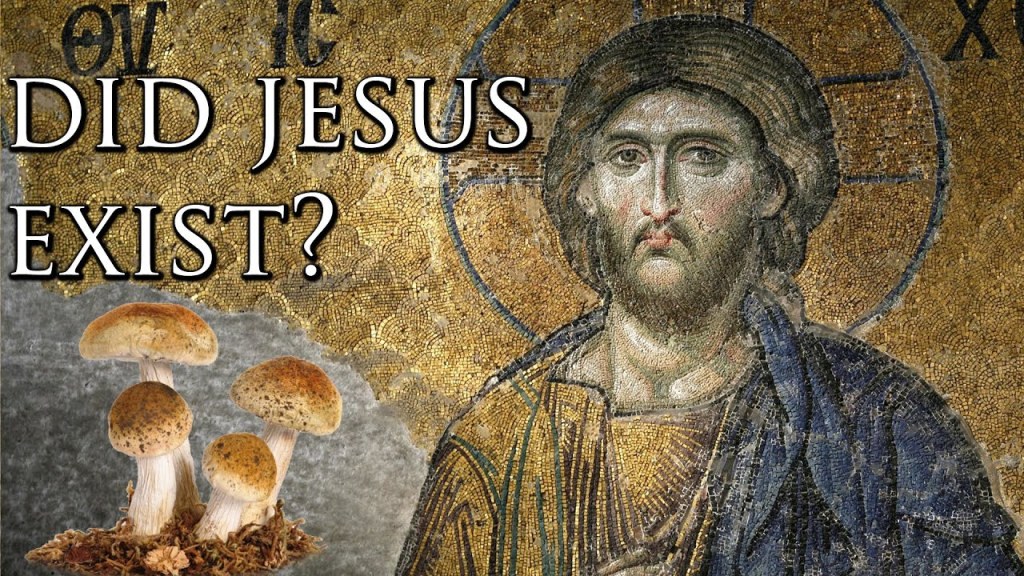
Did Jesus Exist?

Like you, I’m sure, I’ve had folks tell me I can’t even prove Jesus ever existed.  The first couple of times I heard this, I was caught flatfooted.  I didn’t know what to say.  It seemed so obvious to me that Jesus is a real historical figure, I couldn’t believe anyone doubted it at that level.  People do, though, so let’s look at some of the evidence for Jesus’ existence:

The New Testament:  Of course we have 27 historical documents that speak of Jesus of Nazareth in a lot of ways.  He is man, God, Messiah, example, friend, etc.  Of these 27 books, all but four – Luke, Acts, Hebrews, and Jude – were written by eyewitnesses to the resurrected Jesus, and we’re not sure about the writers of Hebrews and Jude.  They may have seen Him as well.

Extrabiblical Writings.  Here is a list of ancient historians and philosophers who mention Jesus Christ (this list is taken from Excavating the Evidence for Jesus: The Archaeology and History of Christ and the Gospels by Titus M. Kennedy PhD): 

Flavius Josephus  “At this time there was a wise man called Jesus, and his conduct was good, and he was known to be virtuous. Many people among the Jews and the other nations became his disciples. Pilate condemned him to be crucified and to die. But those who had become his disciples did not abandon his discipleship. They reported that he had appeared to them three days after his crucifixion, and that he was alive. Accordingly, he was perhaps the Messiah, concerning whom the prophets have reported wonders. And the tribe of the Christians, so named after him, has not disappeared to this day” (Antiquities 18.63-64, ca. AD 93 Agapian version).

“Festus was now dead, and Albinus was but upon the road; so he assembled the Sanhedrin of judges, and brought before them the brother of Jesus, who was called Christ, whose name was James” (Josephus, Antiquities 20.200, ca. AD 93).

Tacitus  “Hence to suppress the rumor, he falsely charged with the guilt, and punished with the most exquisite tortures, the persons commonly called Christians, who were hated for their enormities. Christus, the founder of the name, was put to death by Pontius Pilate, procurator of Judea in the reign of Tiberius; but the pernicious superstition, repressed for a time, broke out again, not only through Judea, where the mischief originated, but through the city of Rome also” (Tacitus, Annals 15.44, ca. AD 116).

Suetonius   “Since the Jews constantly made disturbances at the instigation of Chrestus, he expelled them from Rome” (Suetonius, Divus Claudius 25, ca. AD 121).

Pliny the Younger   “[ T] hey were in the habit of meeting on a certain fixed day before it was light, when they sang in alternate verse a hymn to Christ as to a god…” (Letter to Emperor Trajan, ca. AD 112).

Lucian of Samosata  “He learned the wondrous lore of the Christians, by associating with their priests and scribes in Palestina… they still worship, the man who was crucified in Palestina because he introduced this new cult into the world… denying the Greek gods and by worshipping that crucified sophist himself and living under his laws” (Lucian, Passing of Peregrinus 11-13, ca. AD 166).

Celsus: “For he represents him disputing with Jesus, and confuting him, as he thinks, on many points; and in the first place, he accuses him of having ‘invented his birth from a virgin,’ and upbraids him with being ‘born in a certain Jewish village, of a poor woman of the country, who gained her subsistence by spinning, and who was turned out of doors by her husband, a carpenter by trade, because she was convicted of adultery; that after being driven away by her husband, and wandering about for a time, she disgracefully gave birth to Jesus, an illegitimate child, who having hired himself out as a servant in Egypt on account of his poverty, and having there acquired some miraculous powers, on which the Egyptians greatly pride themselves, returned to his own country, highly elated on account of them, and by means of these proclaimed himself a god’” (Origen quoting Celsus, The True Word ca. AD 176, in Contra Celsus 1.28).

Why is this important?

Believe it or not, there are millions of people in the world who doubt even the physical existence of the historical Jesus (the man born in Bethlehem) let alone the Jesus of faith (the miraculous Jesus Who walked on water).

How wide spread is the view of the Mythicists, people who deny Jesus existed?  Bart Ehrman, in an interview of his book Did Jesus Exist? The Historical Argument for Jesus of Nazareth, Bart Ehrman, historian and professor of religious studies at the University of North Carolina Chapel Hill, said this in an 2012 interview on NPR: “It was a surprise to me to see how influential these mythicists are,” Ehrman says. “Historically, they’ve been significant and in the Soviet Union, in fact, the mythicist view was the dominant view, and even today, in some parts of the West – in parts of Scandinavia — it is a dominant view that Jesus never existed.”

Even widely recognized publications such as the Washington Post have printed at least one article shedding doubt on the very existence of Jesus: Did historical Jesus really exist? The evidence just doesn’t add up. By Raphael Lataster 12/18/2014.


Did Jesus Force The Disciples Into Trials

Many of us believe when we’re facing a tough patch it’s because of poor decisions or sin in our lives, but sometimes it isn’t. Sometimes God puts us there.

Let’s look at the Gospel of John chapter six, specifically the story of Jesus walking on the water.  John’s description of the miracle is a little shorter than those in Matthew and Mark.  So, I went to Mark’s gospel to get a fuller picture, and what a picture.

My favorite portions of Scripture are those which tell us things about Jesus’ personality, His nature, how He thinks, and Mark 6:45-51 says a lot:

45 Immediately he made his disciples get into the boat and go before him to the other side, to Bethsaida, while he dismissed the crowd. 46 And after he had taken leave of them, he went up on the mountain to pray. 47 And when evening came, the boat was out on the sea, and he was alone on the land. 48 And he saw that they were making headway painfully, for the wind was against them. And about the fourth watch of the night he came to them, walking on the sea. He meant to pass by them, 49 but when they saw him walking on the sea they thought it was a ghost, and cried out, 50 for they all saw him and were terrified. But immediately he spoke to them and said, “Take heart; it is I. Do not be afraid.” 51 And he got into the boat with them, and the wind ceased. And they were utterly astounded, 52 for they did not understand about the loaves, but their hearts were hardened.

In verse 45, the word “made” means exactly that: Jesus forced them into the boat to sail to Bethsaida which was just up the coast  from where Jesus had just fed the 5,000 men.  It was not until evening that the disciples were to head for Capernaum (Mark 6:47 cf John 6:17)

The disciples were having a terrible time in the storm rowing to the other side of the Sea of Galilee.  In fact the word translated “painfully” in verse 48 is the word used to describe the torments of hell (Matt. 8:29; Mark 5:7).  So, Jesus’ disciples where having more than just a miserable time rowing across the sea.

A couple of other verses tell us how tough this journey was.  John 6:19 tells us they had only rowed about three or four miles when Jesus came by them walking on the water.  This was probably a 27 foot boat that held 17 people if needed. The ruins of such a boat dated to this time were found at the Sea of Galilee in 1986. This boat could only be rowed by four men at a time, so it was tough going in such a storm.

Verse 48 above tells us it was the “fourth watch” when Jesus came by.  The Romans divided the night into four three-hour watches: six p.m. to nine, nine to midnight, midnight to three a.m., and three to six.  So, the disciples had been rowing most of the night.  It was after three in the morning, and they had only made it three or four miles since evening.  Here I’d like to say “Hooray for the disciples” who stuck to is for so long. 

The most fascinating verse in this passage to me, though is, of course,verse 48.  Jesus was going to pass the disciples by even though they were in a torturous situation.  In fact, as we saw in verse 45, Jesus forced them into this.  He wasn’t meaning to do anything to help them?  The text seems to say “no.”

Why is this important?

From this, I get that sometimes Jesus puts us in extremely situations as He did with Job, and like this example with the disciples, He isn’t going to get us out of it unless we invite Him to. 

Let’s look at a couple of other verses before we conclude:

Again in verse 48 we see that Jesus kept His eye on them all the time.  When we face storms in our lives, God’s eyes are never diverted from us.  He keeps a close watch on us.  We also see in this same verse that the storm ceased once Jesus was in the boat with the disciples.  It hadn’t stopped when Jesus was walking on the water or when the disciples were doing their best to follow Jesus’ orders.  It stopped when they invited Him in.  Had they not invited Him in, I think He would have allowed them to suffer on their own.

Our storms are just like that.  Our own efforts are not enough, but the effects of the difficulties in our lives can cease once we invite Jesus into the boat. Yes, the difficulties themselves can continue, but the calm arrives with Jesus.

So, why would Jesus force the disciples to go through this and why do we need to do the same sometimes?  The text doesn’t say directly, but I think the same event as it is recorded in Matthew can help with this:

Matt. 14:33  (ESV)  And those in the boat worshiped him, saying, “Truly you are the Son of God.”

Storms in our lives point us to God.  Reliance on Him to “save the day” and seeing that salvation brings us to the only conclusion we can see, that He is the Son of God (God the Son –  John 5:18) and to fall on our knees and worship Him. If we just don’t get it, He will force us into situations that cause us to arrive at the same conclusion the disciples came to.

Honest Differences

Acts 15:38-39 (ESV)  38 But Paul thought best not to take with them one who had withdrawn from them in Pamphylia and had not gone with them to the work. 39 And there arose a sharp disagreement, so that they separated from each other. Barnabas took Mark with him and sailed away to Cyprus,

Sometimes I write things for which there are honest disagreements in the church.  I personally think disagreement is a good thing since it forces some folks, including me, to read more deeply or research more fully.

The concern of many who have contacted me after I post such a subject is that there might be divisions caused within the church.  If that’s true, the burden must fall on those who decide to leave or fight because of what someone else believes rather than seek an honest and peaceful resolution.  Paul tells us to test all things in his closing remarks to the Thessalonian church:

1 Thess. 5:19-21 (ESV)  Do not quench the Spirit.  Do not despise prophecies, but test everything; hold fast what is good.

This passage assumes there are things to test.

But what do we do if people disagree?  Jesus tells us we are to keep peace with our brothers:

Matt. 5:23-24 (ESV)  So if you are offering your gift at the altar and there remember that your brother has something against you, 24 leave your gift there before the altar and go. First be reconciled to your brother, and then come and offer your gift.

The best way to resolve these differences is through the method the Jews in Berea pursued:

Acts 17:10-11 (ESV)  The brothers immediately sent Paul and Silas away by night to Berea, and when they arrived they went into the Jewish synagogue. 11 Now these Jews were more noble than those in Thessalonica; they received the word with all eagerness, examining the Scriptures daily to see if these things were so.

What better way to arrive at the truth?  Scripture is the standard of Christian conduct and belief.  There is no other true source for the final word.

Why is this important?

If we still can’t arrive at an agreement with another and we attend a Bible believing church, our disagreement is probably not on a major doctrinal issue such as salvation or another central issue within our faith. 

It may be a pride issue with us being unwilling to accept the sound view of others.  Remember the church has had 2,000 years to go over the Bible and what it teaches.  It has been questioned millions of times from within the church and without.  Our constant study of Scripture should prepare us to see the truth in the views of others and perhaps the faults in our own. Chances are very high the disagreement has been addressed many times before.

Yes, there are some fairly large differences within the church which can cause dissension: Calvinism vs Traditionalism, Eternal Security, Old Earth vs. Young Earth, etc.  I’m sure I disagree on these with friends that I respect in their Christian walk and see as very knowledgeable biblical teachings.  That’s okay.  We can disagree.  It’s when we decide to push our views to the point of causing dissension in the church that we sin.  In fact that is something God hates:

Prov. 6:16-19 (ESV)  There are six things that the Lord hates, seven that are an abomination to him haughty eyes, a lying tongue, and hands that shed innocent blood, a heart that devises wicked plans, feet that make haste to run to evil, a false witness who breathes out lies, and one who sows discord among brothers.

So, if you have a doctrinal disagreement with another Christian, and it’s causing a rift between you, go to them with Bible in hand and do your best work it out.  If needed, seek church leadership for insight.  The point is, we can differ in finer points of understanding so long as we don’t cause division.

Eternal Security

Jude 24 (ESV)  Now to him who is able to keep you from stumbling and to present you blameless before the presence of his glory with great joy,

Years ago I was sitting in the steam room at a gym when two men started a conversation about eternal security, whether once saved we were always saved.  I jumped into the conversation and asked if the eternal life Jesus promises in John 3:16 began when we accepted Him or when we die.  Both men said it began when we accepted Him.  John the apostle agrees in 1 John 5:13:

(ESV)  I write these things to you who believe in the name of the Son of God, that you may know that you have eternal life.

So, my next question to the men was “If we have eternal life and God can take it away or we lose because of sin, was it really eternal or life just until our next sin?”  The steam room went silent.

There are a number of passages used by those who would deny eternal security for the believer, but because of space, I will only address the most common one here:

Heb. 6:4-5 (NASB)  For in the case of those who have once been enlightened and have tasted of the heavenly gift and have been made partakers of the Holy Spirit, and have tasted the good word of God and the powers of the age to come, and then have fallen away, it is impossible to renew them again to repentance,  bsince they again crucify to themselves the Son of God, and put Him to open shame.

This passage in Hebrews could describe even Judas who betrayed our Lord.  He was enlightened of the Gospel, tasted (but did not consume) the heavenly gift, and was a partaker of the Holy Spirit.  The word “partaker” here doesn’t mean this person received the Holy Spirit.  Here’s what Kenneth S. Wuest says in his Wuest’s Word Studies In the Greek New Testament:

“Thus the word signifies one who participates with another in a common  activity or possession. It is so used here. These Hebrews became participators in the Holy Spirit insofar as an unsaved person can do so, namely, in the sense that they willingly co-operated with Him in receiving His pre-salvation ministry, that of leading them on step by step toward the act of faith. He had led them into the act of repentance. The next step would be that of faith.”

So, Hebrews 6:4-5 in context does not mean you can lose your salvation.  It simply speaks of those who have come close but rejected the idea of receiving Jesus as their personal Savior and Lord.

As Jude says in the verse at the beginning of this post, it is God who is able to retain our eternal life for us.  It is He Who is able to keep us from stumbling, not us and not our actions.

Jesus Himself emphasizes this:  John 10:27-29 (NASB)  “My sheep hear My voice, and I know them, and they follow Me; and I give eternal life to them, and they shall never perish; and no one shall snatch them out of My hand. “My Father, who has given them to Me, is greater than all; and no one is able to snatch them out of the Father’s hand.

The term “no one” is absolute in Greek and means not one single thing or person can snatch us from the Father’s hand.  We are secure.

Why is this important?

First, of course, God makes promises and keeps them all.  He has promised eternal life and has sealed us in that eternal life by His Holy Spirit:

Eph. 1:13-14 (ESV)  In him you also, when you heard the word of truth, the gospel of your salvation, and believed in him, were sealed with the promised Holy Spirit, 14 who is the guarantee of our inheritance until we acquire possession of it, to the praise of his glory.

We need not worry about losing our salvation.  It is permanent, eternal, and sealed by God Himself.

Jesus’ Ransom

The word “ransom” in our everyday use usually means to pay for the release of a captive, and it can mean that in Scripture.  Jesus paid a ransom for us as captives of our sins:

1 Tim. 2:5-6 (ESV)  For there is one God, and there is one mediator between God and men, the man Christ Jesus, who gave himself as a ransom for all, which is the testimony given at the proper time.

There is an argument presented by some that if Jesus gave His body as a ransom for our sins and rose from the dead in that body, He must have taken back the ransom.  Taking back the ransom would then leave our sins unpaid for, so Jesus must have been raised as a spirit.

Actually, the logic here is valid.  It makes sense.  The issue is not with the conclusion, though, but with one of the premises: “Jesus gave His body as a ransom for our sins.”  Let’s look at this.

1 Cor. 11:23-24 (ESV)  For I received from the Lord what I also delivered to you, that the Lord Jesus on the night when he was betrayed took bread, 24 and when he had given thanks, he broke it, and said, “This is my body, which is for you. Do this in remembrance of me.”  Some older manuscripts have “which is broken for you.”  This, of course, is a record of Jesus breaking the bread the night before His crucifixion.  Those who believe Jesus rose as a spirit will sometimes use this verse to indicate it was His body which was given as a ransom, but is that what it says?  How was Jesus’ body given for us?  Isaiah has the answer to that:

Isa 53:5 (ESV) But he was pierced for our transgressions; he was crushed for our iniquities;

upon him was the chastisement that brought us peace, and with his wounds we are healed.

Jesus’ body was not given as a ransom but tortured for our transgressions.  Isaiah says nothing about a ransom or that Jesus’ body would be given to pay for our sins.  So the question arises “what is the ransom Jesus paid for us?

In Matt. 20:28 and Mark 10:45, we’re told Jesus gave His life for us.  Well, that’s not His body but the life within His body.  In 1 Tim. 2:6, as we’ve seen, Jesus gave Himself as a ransom, still no help.

What’s interesting about 1 Cor. 11:24 that we looked at above is that it is followed by vs. 25 which tells us what the covenant is truly based on:

In the same way also he took the cup, after supper, saying, “This cup is the new covenant in my blood. Do this, as often as you drink it, in remembrance of me.”

So, again, it is Jesus’ blood that is the sacrifice for our sins, for the new covenant, not His body.

This is probably why in Luke 24:39 Jesus presents Himself to His disciples describing His risen body as a body of “flesh and bone” rather than “flesh and blood.”  He had given His blood for us.

“ See my hands and my feet, that it is I myself. Touch me, and see. For a spirit does not have flesh and bones as you see that I have.”

Why is this important?

This morning I was talking with a friend and fellow teacher about the class on witnessing he’ll be leading soon.  He said apologetics seems to be a major part of our witnessing nowadays, and he’s right.  We as Christians need to know our stuff much better than we did 50 years ago when Christianity was more accepted by the population at large.  Our faith is challenged more now.

Having the answers for people who provide those challenges whether in social settings or with those who come to our doors is extremely important and even ordered by the Holy Spirit through Peter:

1 Peter 3:15 (ESV)  but in your hearts honor Christ the Lord as holy, always being prepared to make a defense to anyone who asks you for a reason for the hope that is in you; yet do it with gentleness and respect

Sin and Pain

Sin and Pain

Luke 13:1-5 (ESV)  There were some present at that very time who told him about the Galileans whose blood Pilate had mingled with their sacrifices. And he answered them, “Do you think that these Galileans were worse sinners than all the other Galileans, because they suffered in this way? No, I tell you; but unless you repent, you will all likewise perish. Or those eighteen on whom the tower in Siloam fell and killed them: do you think that they were worse offenders than all the others who lived in Jerusalem? No, I tell you; but unless you repent, you will all likewise perish.”

Sometimes we feel like we are hurting because of things we’re doing, things we’ve done in the past, or even our family history, and sometimes we’re right.  Look at what Jesus said to the fellow He healed at the pool of Bethesda:

John 5:14 (ESV)  Afterward Jesus found him in the temple and said to him, “See, you are well! Sin no more, that nothing worse may happen to you.”

Jesus certainly seems to imply it was the sin in this man’s life which brought about his condition.  But, it is always the sin in our lives that brings this to be?  Look at this passage just a few chapters later:

John 9:1-2 (ESV)  As he passed by, he saw a man blind from birth. And his disciples asked him, “Rabbi, who sinned, this man or his parents, that he was born blind?” Jesus answered, “It was not that this man sinned, or his parents, but that the works of God might be displayed in him.

So, it’s not always something in our lives that brings about pain.  Sometimes it’s so God can show Himself and His mercy to the world.  Because God is gracious, Jesus healed both these men.

The question then falls on the head Scripture above.  People were killed for no apparent reason.  Did the people who died in the earthquake that collapsed the Nimitz Freeway in 1989 die because of unconfessed sin?  I don’t think so.

!n 1775, an earthquake in Lisbon, Portugal, killed more than 12,000 people – some think as many as 50,000.  Many of these victims were in church at prayer for the observation of All Saints Day.  Were all these people killed because of a angry God taking vengeance on their sin?  Of course not.

The problem we see here is natural evil.  The fact we live in a fallen world:

1 Peter 4:12 (ESV)   Beloved, do not be surprised at the fiery trial when it comes upon you to test you, as though something strange were happening to you.

Why is this important?

We all face troubles:

Matt. 5:45b (ESV)  For he makes his sun rise on the evil and on the good, and sends rain on the just and on the unjust.   

Pain is caused by sin whether ours, or Adam’s, or someone else’s.  God uses suffering in our lives for many reasons.  Yes, one reason is discipline, but He also uses it to guide us, to teach us, even to show others how Christians act in the face of trials since we have God in our lives to encourage us.

Were God to make the Christian life perfect, we would see a lot of people seeking salvation but very few growing through the tough times and very few sincere conversions.  Our major periods of growth are usually in the valleys of life and not on the mountain tops.

So, if we are suffering now, we should look for any unconfessed sin in our lives, seek what God might be trying to teach us, and study His Word to seek His truth and guidance.

God’s Love

The reader who knows God well will probably laugh at any attempt to describe God’s love in mere words especially on an internet blog. I know it is futile, but I feel I need to try.

Maybe it would be good to attempt a description of the sort of Being God is.  Two of the foundational aspects of His nature is that He is spirit and He is love. 

He is greater, more powerful, than the universe itself since He created it and exists within and without it.  What level of power do you suppose God has to simply speak and all else that exists comes into being, yet He is mindful of you? 

Philosophy’s definition of God would is “That of which there can be nothing greater.”  In other words, if you can imagine some being greater than God, then that being would be God.

This solves a lot of issues in philosophy and theology as well: for God to be God, He would have to exist since a being is greater if it exists than if it doesn’t.  If God exists, then, He must be personal since a personal God is much greater than an impersonal god.  God must be powerful since a powerful God is much greater than a powerless one, and an infinitely powerful God is better still, and so on.  This is a form of what is called the ontological argument for the existence of God: God exists because a god who does not exist is unthinkable.

To continue this line and apply it to the subject at hand, a God who is loving is greater than one which is not.  An infinitely loving God is even greater, and a God who by nature is love itself is greater still: the greatest in fact. The God of the Bible is that God:

1 John 4:16 (ESV)  So we have come to know and to believe the love that God has for us. God is love, and whoever abides in love abides in God, and God abides in him.

How much does God love us, then?  I don’t think a human mind can comprehend how much God loves us.  He loves those who spit on His Son and wants them beside Him forever.  He loves those who torture His children and wants them to join Him in heaven fully forgiven and cleansed.

For, sin is like a mirror.  If we chip a mirror or shatter it it makes no difference.  We’ve still broken the mirror.  Sin is not something a holy God can dwell with, so He paid the price Himself.  He emptied Himself of His glory and came to earth to make that payment.

I’m not sure we can comprehend even that act.  To step from the throne of heaven and away from His godly glory and take lowly human form cannot be understood by man’s finite mind.  Love is for the Son to be separated from the Father, to have the face of the Father turn away from Him on the cross, and to break fellowship with Him for the first time in eternity in order to make it possible for us to dwell with Him forever.

God could have just gone on with time eternal, given up on us as sinful man, destroyed us as we deserved, and created a race of beings who would not turn away, but He didn’t.  He made a path for us all, we only need step onto it and follow it to everlasting life.

God’s love made it possible for Him to give us the ability to love Him freely.  Love isn’t love if it is forced, if it is part of our makeup.  Unlike God, our nature is hardly love, so God made allowances.  He didn’t destroy us and start over.  He offered us redemption because of His boundless love.

Why is this important?

John tells us he wrote down all that we needed to understand about God’s gift, that God had set forth a just plan to allow us to be received into His kingdom:

John 20:30-31 (ESV)  Now Jesus did many other signs in the presence of the disciples, which are not written in this book; but these are written so that you may believe that Jesus is the Christ, the Son of God, and that by believing you may have life in his name.

God’s love made salvation available to us all in the most universal way: we need only believe.  This means we’re not required to know great truths or understand secret mysteries, we don’t need to obey the Law to the letter or strive to clean up our acts.  God’s love says “come as you are.” Young children as well as college professors, educationally handicapped or geniuses come equally to heaven’s gates. We need only believe for God to give us life.

The best description of God’s love that I’ve ever seen was in a poem written on the wall of a cell in an insane asylum, though I’m sure the writer was hardly ill:

Could we with ink the ocean fill,
And were the skies of parchment made,
Were every stalk on earth a quill,
And every man a scribe by trade;
To write the love of God above
Would drain the ocean dry;
Nor could the scroll contain the whole,
Though stretched from sky to sky.

Can We Frustrate Jesus?

How We Frustrate God

Mark 8:14-21 (ESV)  14 Now they had forgotten to bring bread, and they had only one loaf with them in the boat. 15 And he cautioned them, saying, “Watch out; beware of the leaven of the Pharisees and the leaven of Herod.” 16 And they began discussing with one another the fact that they had no bread. 17 And Jesus, aware of this, said to them, “Why are you discussing the fact that you have no bread? Do you not yet perceive or understand? Are your hearts hardened? 18 Having eyes do you not see, and having ears do you not hear? And do you not remember? 19 When I broke the five loaves for the five thousand, how many baskets full of broken pieces did you take up?” They said to him, “Twelve.” 20 “And the seven for the four thousand, how many baskets full of broken pieces did you take up?” And they said to him, “Seven.” 21 And he said to them, “Do you not yet understand?”

I’ve been studying John chapter six, the feeding of the five thousand in particular, and it occurred to me Jesus did nothing but feed the people and leave.  This seemed odd to me since miracles in the Bible are almost always done to either endorse the person God is using to perform the miracle or the message he carries.  John mentioned neither of these.  God often uses the “odd” things I run across in my studies.  I pursued it.

The simple answer is that Jesus did teach the people. We see this in another passage in Mark describing the same miracle:

Mark 6:34 (ESV)  When he went ashore he saw a great crowd, and he had compassion on them, because they were like sheep without a shepherd. And he began to teach them many things.

During my research, though, I discovered the passage in Mark chapter eight above.  It mentions the miracle of feeding the five thousand but in a little different light. I thought there might be more to learn here, and there certainly is.

How often do we hear a promise of God and treat it with unbelief.  This one, for instance:

Eph 4:19-20  (ESV)  And my God will supply every need of yours according to his riches in glory in Christ Jesus. 20 To our God and Father be glory forever and ever. Amen.

The disciples knew Jesus could multiply the bread if need be.  They had seen Him do it, yet they argued about what to do about the bread.  I see myself so much in this.  I look at the problem before me rather than the Problem Solver beside me.  From the initial passage above, it seems Jesus was getting a little frustrated by the disciples looking at worldly solutions to life’s little problems, and missing a meal was a little problem.

Jesus wanted them to see the greater picture, the evil the Pharisees were teaching.  I think this was a lesson Jesus repeated often to the disciples, but it hadn’t sunk in yet.  There they were looking at material problems again.  “Do you not yet understand?” may be an indication of Jesus’ frustration with these guys.

Why is this important?

How often do we stare aimlessly at some physical problem when Jesus is asking “Do you not yet understand?”  Our job is not to major on the minors but to deal with spiritual problems, the teaching of others, uplifting and encouraging others, sharing the gospel with others, in short: loving others.  Instead, we’re looking at short term problems of this world rather than eternal consequences.  Though God knows in advance all we will do, it may still not set rightly with Him that we hear His promises to provide but don’t really apply them to our everyday lives.

Can We Frustrate God?

Mark 8:14-21 (ESV)  14 Now they had forgotten to bring bread, and they had only one loaf with them in the boat. 15 And he cautioned them, saying, “Watch out; beware of the leaven of the Pharisees and the leaven of Herod.” 16 And they began discussing with one another the fact that they had no bread. 17 And Jesus, aware of this, said to them, “Why are you discussing the fact that you have no bread? Do you not yet perceive or understand? Are your hearts hardened? 18 Having eyes do you not see, and having ears do you not hear? And do you not remember? 19 When I broke the five loaves for the five thousand, how many baskets full of broken pieces did you take up?” They said to him, “Twelve.” 20 “And the seven for the four thousand, how many baskets full of broken pieces did you take up?” And they said to him, “Seven.” 21 And he said to them, “Do you not yet understand?”

I’ve been studying John chapter six, the feeding of the five thousand in particular, and it occurred to me Jesus did nothing but feed the people and leave.  This seemed odd to me since miracles in the Bible are done to either endorse the person God is using to perform the miracle or the message he carries.  John mentioned neither of these.  God often uses the “odd” things I run across in my studies to teach me. I pursued it.

The simple answer is that Jesus did teach the people according to another passage about the miracle in Mark:

Mark 6:34 (ESV)  When he went ashore he saw a great crowd, and he had compassion on them, because they were like sheep without a shepherd. And he began to teach them many things.

During my research, though, I discovered the passage in Mark chapter eight above.  It mentions the miracle of feeding the five thousand, so I thought there was more to learn here.  There certainly is.

How often do we hear a promise of God and treat it with unbelief.  This one, for instance:

Eph 4:19-20  (ESV)  And my God will supply every need of yours according to his riches in glory in Christ Jesus. 20 To our God and Father be glory forever and ever. Amen.

The disciples knew Jesus could multiply the bread if need be.  They had seen Him do it, yet they argued about what to do about the bread.  I see myself so much in this.  I look at the problem before me rather than the Problem Solver beside me.  From the initial passage above, it seems Jesus was getting a little frustrated by the disciples looking at worldly solutions to life’s little problems, and missing a meal was a little problem.

Jesus wanted them to see the greater picture, the evil the Pharisees were teaching.  I think this was a lesson Jesus repeated often to His disciples, but it didn’t sink in.  There they were looking at material problems again.  “Do you not yet understand?” may be an indication of Jesus’ frustration with these guys.

Why is this important?

How often do we stare aimlessly at some physical problem when Jesus is asking “Do you not yet understand?”  Our job is not to sit on our hands but to deal with spiritual problems, the teaching of others, uplifting and encouraging others, sharing the gospel with others, in short: loving others.  Instead, we’re looking at short term problems of this world rather than eternal consequences of obeying the God we serve.  Though God knows in advance all we do and will do, it may still not set rightly with Him that we hear His promises to provide but don’t really listen or apply them to our lives.

Exegesis vs. Eisegesis

Exegesis and Eisegesis are a couple of interesting words, and as Christians we face them almost daily.  Exegesis is to critically and analytically draw information from a text.  For Christians this applies most readily to Scripture.  Our goal should be to look at a passage as closely as possible from God’s point of view: what does He mean to say to the reader in this passage?

Eisegesis is reading into a text something that isn’t there.  This can be pretty much any text, but for us, we’ll look at how this can mess up our understanding of Scripture.  We do this all the time by carrying our preconceived notions with us when we want to interpret a passage of the Bible.

In our last blog we looked at some of the books that help keep us from making the “eisegesis” mistake.  Let’s look at some easy methods of making sure we’re analyzing and not personalizing.  The goal in Scripture study is to be objective, to see what the passage actually says, not to make it say what you want it to say.

How do we guard against reading our own view into a passage?  There are some basic methods that will help us keep looking for God’s instruction rather than our own confirmation.  As is true for every time we pick up our Bibles, we should pray.  We have the Author available to us to tell us what Scripture says.  We’d be fools not to take advantage of this.

When studying, you must also use a peer reviewed word-for-word translation of the Bible.  The Living Bible or even the New Living Translation will not give you the words of the original text.  The Living Bible, for instance, is a paraphrase.  The author is just telling the story as best he can.  The New Living Translation is a thought-for-thought translation.  It is great for reading the story but for direct study of a passage, it has little value.  Word-for-word translation such as the NASB, ESV, KJV, and NKJV are excellent for study.

Read the context of the passage and how it relates to the verses you’re trying to understand.  Many of the biggest mistakes we can make come from ignoring the context and taking a verse out of context.  Here is one of my favorite examples:

“Christ said, ‘Be still and know that I am God.’  Be still and know that you are God, and when you know that you are God, you will begin to live Godhood, and knowing Godhood, there is no reason to suffer.” (Meditations of Maharishi Mahesh Yogi, p. 178)  This Bible quote is actually taken from Ps. 46:10 and is said by God Almighty Lord of Israel to assure His people and has nothing to do with our attaining godhood.

This is a pretty drastic example, but I wanted to show how someone can read something that isn’t there in order to support their own view.  Now look at this one:

1 Cor. 15:50 (ESV)  I tell you this, brothers: flesh and blood cannot inherit the kingdom of God, nor does the perishable inherit the imperishable.

This one is not so easy.  Is Paul telling us we won’t have bodies in heaven?  Well, no.  1 Cor. 15 is speaking almost exclusively about our bodies.  If this is the context – our bodies – what can the Holy Spirit, speaking through Paul, mean?  We need to see how or if the term “flesh and blood” is used elsewhere in Scripture.  Does it always mean our physical bodies?

It turns out the term “flesh and blood” only appears four times in Scripture (Matt. 16:17; 1 Cor. 15:50; Eph. 6:12; and Heb. 2:14).  The first verse in this list, Matthew 16:17, says, And Jesus answered him, “Blessed are you, Simon Bar-Jonah! For flesh and blood has not revealed this to you, but my Father who is in heaven.

Jesus wasn’t talking about physical flesh and blood but about sinful man here.  If we apply this to 1 Cor. 15:50, it makes perfect sense: “Sinful man will never inherit the kingdom of God.”  This is because we need to ask Jesus to take on that sin for us, so we can stand before God faultless (Jude 24).

So, by comparing the passage we don’t understand with the rest of Scripture, we have arrived at a logical conclusion.

Asking someone we trust about the passage should always be a last resort.  It is up us to do the work ourselves with the requested guidance of the Holy Spirit.  He is without error or the chance of error.  Even the greatest human Bible expert would never claim they are.

Why is this important?

God tells us we are to be diligent workers of the Word of God, handling it accurately:

2 Tim. 2:15 (NASB) Be diligent to present yourself approved to God as a workman who does not need to be ashamed, handling accurately the word of truth.

God is anxious for us to study His Word and get it right.  Never think Scripture is some big impenetrable code book.  God has made it simple enough for a child to understand what is needed and complex enough to keep the greatest scholars busy probing it for thousands of years.  He picks us up from where we are and uses His Word to take us where He wants us to be.