
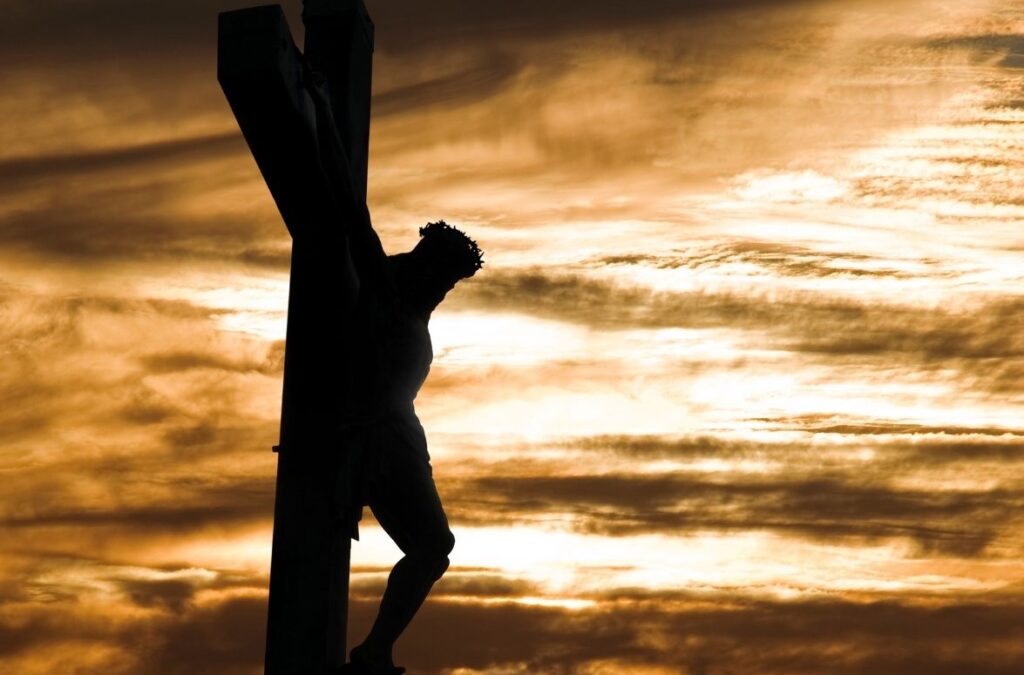
Deity of Christ (In John)

Rom. 10:9 (ESV)  because, if you confess with your mouth that Jesus is Lord and believe in your heart that God raised him from the dead, you will be saved.

One of the beliefs required for Salvation according to Romans 10:9 is to believe Jesus is Lord.  This isn’t just saying we must just believe He existed, or that we must make Him Lord of our lives, but we must believe and agree that Jesus is the Lord God. 

Lately I’ve been studying  the prologue of the gospel of John.  In that prologue, John explains the things he will prove in his gospel, the deity of Christ being first among them.  I’d like to share some of what John tells us about the deity of Jesus. John begins with the very first verse in the very first chapter:

John 1:1 (WSV)  In the beginning was the Word, and the Word was with God, and the Word was God.

Here, John identifies a Person called the “Word,” Who we understand to be Jesus according to verse 14:

John 1:14 (ESV)  And the Word became flesh and dwelt among us, and we have seen his glory, glory as of the only Son from the Father, full of grace and truth.

So, the Word is God and Jesus is the Word, therefore, Jesus is God.

John also tells us in chapter 5 verse 18 that in calling Himself the Son of the Father, Jesus was claiming to be equal with God:

John 5:18 (ESV)  This was why the Jews were seeking all the more to kill him, because not only was he breaking the Sabbath, but he was even calling God his own Father, making himself equal with God.

Then in chapter 8 and verse 58, Jesus was having a long drawn out argument with the Jewish leaders about who He is.  At the end of the chapter, He makes this statement:

John 8:58-59 (ESV)  Jesus said to them, “Truly, truly, I say to you, before Abraham was, I am.” 59 So they picked up stones to throw at him, but Jesus hid himself and went out of the temple.

They picked up stones to kill Jesus because He used the divine name, “I Am.”  Jesus was telling them He was the very God who spoke to Moses from the burning bush:

Ex. 3:13-14 (ESV)  Then Moses said to God, “If I come to the people of Israel and say to them, ‘The God of your fathers has sent me to you,’ and they ask me, ‘What is his name?’ what shall I say to them?” 14 God said to Moses, “I am who I am.” And he said, “Say this to the people of Israel: ‘I am has sent me to you.’ ”

The punishment for blasphemy was stoning, so the Jews were about to stone Jesus for what they believed was blasphemy.  We see this more clearly later in John chapter 10:

John 10:33 (ESV)  The Jews answered him, “It is not for a good work that we are going to stone you but for blasphemy, because you, being a man, make yourself God.”

The Jews clearly saw what Jesus was saying. He was claiming to be God Himself, but they didn’t believe Him.

The final passage I’d like to share is John 20:28-29 where Thomas, the tough-to-convince Thomas, identifies Jesus as his God:

John 20:28-29 (ESV)  Thomas answered him, “My Lord and my God!” 29 Jesus said to him, “Have you believed because you have seen me? Blessed are those who have not seen and yet have believed.”

If Jesus were not God, it was incumbent upon Him to rebuke Thomas for blasphemy.  Instead, Jesus confirmed Thomas’ statement.

Why is this important?

Many deny Jesus is God Himself.  They say He is a great teacher, a great man, but never God Himself. 

C. S. Lewis in his book, Mere Christianity, said  “You can shut Him up for a fool, you can spit at Him and kill Him as a demon; or you can fall at His feet and call Him Lord and God. But let us not come up with any patronising nonsense about His being a great human teacher. He has not left that open to us. He did not intend to.”

Jesus really is Who He claimed to be, He is the one true God in the Person of God the Son, second Person of the Trinity.


Light & Darkness

John 1:3-5 (ESV)  All things were made through him, and without him was not anything made that was made. In him was life, and the life was the light of men.The light shines in the darkness, and the darkness has not overcome it.

We began a study here in the first chapter of John on December 3 and would like to continue with that.

The prologue of John, the first 18 verses, lays the foundation for all that comes afterward.  We saw the first two verses spoke of Jesus’ preexistence, that there has never been a time when the Word (Jesus) did not exist.  He is the Son, second Person of the eternal God, Yahweh.

Now I’d like to continue with the next three verses.  Verse 3 tells us Jesus is the Creator and nothing was made by any Other.  This is very similar to Colossians 1:16-18:

 For by [JESUS] all things were created, in heaven and on earth, visible and invisible, whether thrones or dominions or rulers or authorities—all things were created through him and for him.And he is before all things, and in him all things hold together.And he is the head of the body, the church. He is the beginning, the firstborn from the dead, that in everything he might be preeminent.

John along with Paul, the writer of Colossians, are both telling us Jesus is God, the Creator of all things.

Verse 4 of John chapter 1 supports verse 3 to show in Jesus alone was life.  He created life itself and created creatures like you and me with that life.  And the fact that life [Jesus] was the light of men tells us beforehand Jesus is the light of the world, that He is bringing a new light not clearly seen in the Old Testament.  This is the gospel, the new contract (testament) God is making with man.  No longer will we be under the Law but under grace.

Jesus Himself says this later in John’s gospel:

John 9:5 (ESV) As long as I am in the world, I am the light of the world.

He also tells us He has turned this responsibility over to us.  We are to be the light now (Matt. 5:14).  It is our job to spread the light every chance we get.

Next is John 1:5 – The light shines in the darkness, and the darkness has not overcome it.  Did you know light is something and darkness is nothing; it is the absence of light. 

“Photography” is a word meaning light drawing.  Digital sensors or photographic film will not record darkness.  It is absent.  The photographer “draws” only with the light reflected by the object.  For us to refuse the light Jesus gives is to stand in darkness, to not see the subject, the truth, the light.

Why is this important?

To understand the very nature of God is the ultimate quest for man.  The God we have living within us carries that light and we can share that light to ignite a candle in another so to speak.

In a totally dark room, a candle can be lit and the darkness cannot affect that candle.  The flame, however, brings light that can be measured anywhere in that room.  It drives darkness from the room.  That small light, like the light in each of us, touches every part of the room.  No longer is there darkness, and the closer you get to the candle, the brighter the light.

In photography we have what’s called The Inverse Square Rule.”  It says light increases exponentially the closer you get to the source.  If you measure the light from a candle from 10 feet, the light will be four times brighter in half that distance or nine times brighter in one third the distance.  The closer we bring someone to Jesus, the closer Jesus comes to them.  The clearer they can see Him.  It’s exponential.

Jesus has told us we are the light of the world.  When we stand in the midst of darkness, it is His light in us that can drive darkness away.

Man and the Birds

John 14:8, 9 (ESV)  Philip said to him, “Lord, show us the Father, and it is enough for us.” Jesus said to him, “Have I been with you so long, and you still do not know me, Philip? Whoever has seen me has seen the Father.

Broadcaster Paul Harvey used to tell a wonderful story, a parable really, each year on his last broadcast prior to Christmas.  I’ve always loved the story and thought it would be fitting to post it this day before Christmas for your pleasure:

The man to whom I’m going to introduce you was not a scrooge, he was a kind decent, mostly good man. Generous to his family, upright in his dealings with other men. But he just didn’t believe all that incarnation stuff which the churches proclaim at Christmas Time. It just didn’t make sense and he was too honest to pretend otherwise. He just couldn’t swallow the Jesus Story, about God coming to Earth as a man.

“I’m truly sorry to distress you,” he told his wife, “but I’m not going with you to church this Christmas Eve.” He said he’d feel like a hypocrite. That he’d much rather just stay at home, but that he would wait up for them. And so he stayed and they went to the midnight service.

Shortly after the family drove away in the car, snow began to fall. He went to the window to watch the flurries getting heavier and heavier and then went back to his fireside chair and began to read his newspaper. Minutes later he was startled by a thudding sound…Then another, and then another. Sort of a thump or a thud…At first he thought someone must be throwing snowballs against his living room window. But when he went to the front door to investigate he found a flock of birds huddled miserably in the snow. They’d been caught in the storm and, in a desperate search for shelter, had tried to fly through his large landscape window.

Well, he couldn’t let the poor creatures lie there and freeze, so he remembered the barn where his children stabled their pony. That would provide a warm shelter, if he could direct the birds to it.

Quickly he put on a coat, galoshes, tramped through the deepening snow to the barn. He opened the doors wide and turned on a light, but the birds did not come in. He figured food would entice them in. So he hurried back to the house, fetched bread crumbs, sprinkled them on the snow, making a trail to the yellow-lighted wide open doorway of the stable. But to his dismay, the birds ignored the bread crumbs, and continued to flap around helplessly in the snow. He tried catching them…He tried shooing them into the barn by walking around them waving his arms…Instead, they scattered in every direction, except into the warm, lighted barn.

And then, he realized that they were afraid of him. To them, he reasoned, I am a strange and terrifying creature. If only I could think of some way to let them know that they can trust me…That I am not trying to hurt them, but to help them. But how? Because any move he made tended to frighten them, confuse them. They just would not follow. They would not be led or shooed because they feared him.

If only I could be a bird,” he thought to himself, “and mingle with them and speak their language. Then I could tell them not to be afraid. Then I could show them the way to safe, warm…to the safe warm barn. But I would have to be one of them so they could see, and hear and understand.”

At that moment the church bells began to ring. The sound reached his ears above the sounds of the wind. And he stood there listening to the bells – Adeste Fidelis – listening to the bells pealing the glad tidings of Christmas.

And he sank to his knees in the snow.

Handling Difficult Passages

Worried man reading the Holy Bible.

2 Peter 3:15,16  And count the patience of our Lord as salvation, just as our beloved brother Paul also wrote to you according to the wisdom given him, 16 as he does in all his letters when he speaks in them of these matters. There are some things in them that are hard to understand, which the ignorant and unstable twist to their own destruction, as they do the other Scriptures.

As Christians and Bible students, we can come across things in our study that we just can’t grasp.  They are hard to understand.  Even Peter had trouble with passages his fellow Apostle, Paul, had written.  If Peter had a tough time understanding parts of Scripture, what are we supposed to do?

There are some ways that will help us in our quest.  First, pray.  God the Holy Spirit moved holy men of God to write the Bible (2 Tim. 1:21), so we can turn to Him to help us understand.  After all, having the Author right there to instruct us is a benefit few have with other written works.  The Holy Spirit asks us to do this.

Jeremiah 33:3  Call to me and I will answer you, and will tell you great and hidden things that you have not known.

We also need to read things in context.  The Bible is the best commentary on itself.  Sometimes verses taken out of context are confusing and can lead to a bad interpretation of the verse. 

Matt. 27:5  And throwing down the pieces of silver into the temple, he departed, and he went and hanged himself.

Luke 10:37c  And Jesus said to him, “You go, and do likewise.”

This was a silly example, but you can see how people can be misled.  We need to read the verses before and after the verse that confuses us.

If the verse is still a puzzle to you, look at the cross references in most modern Bibles.  Those will lead you to other passages that might be helpful.

If you know how to use an exhaustive concordance like Strong’s or Young’s, you can use that to help resolve an issue with a difficult verse.  If you don’t know how to use an exhaustive concordance, it’s really not very difficult and not very expensive.  The concordance itself usually has instructions in the front of the book.

Commentaries can be helpful but are a step away from Scripture itself.  You’re dealing with someone telling you what God said.  The methods above have kept you in Scripture making them a safer bet.  I use commentaries, don’t get me wrong.  I use a commentary or two at the end of my study to see if I’ve made an obvious error someone else more learned than I had spotted.

My way of buying commentaries is to look first at the publisher.  There are a lot of publishers out there that will print just about anything.  Also, look online at reviews of various publishers and authors.  Some are wonderful. 

Jameson, Fausett, and Brown have a good solid basic commentary of the whole Bible.  I like Barnes Notes for the New Testament.  The Expositors Bible Commentary is excellent but expensive and large.

Why is this important?

Whether we understand Scripture or not is extremely important.  It is God’s main way of speaking to His children.  If we misunderstand something, we can pass along poor doctrine.  Scripture itself speaks against that.

God wants us to stay close to Him.  Study is a great way to do that.  When we study deeply into a particular verse or passage, God blesses us with so much more than we expected.  Study and you will hear God’s voice.

Hell

The word “hell” certainly appears in Scripture but doesn’t always mean the place of eternal torment.  The English word “hell” is often translated from three different words, one in Hebrew and two in Greek.

Sheol is the word usually translated as “hell” in the Hebrew of the Old Testament.  Sheol is a very general word and is used as just the resting place of the dead, not as the grave but where spirits dwell after physical death.  The word describes the place where both the righteous and unrighteous dwell (See Isa. 38:10 and Numbers 16:33 for comparison).

Hades is one of the Greek words often translated as “hell.”  Like sheol, hades is a general term meaning the state between death and physical resurrection.  We see this best defined by Jesus’ story of the rich man and Lazarus in Luke 16:19-31.  In verses 22 and 23, we get a brief description of what this hades is like:

Luke 19:22, 23   The poor man died and was carried by the angels to Abraham’s side. The rich man also died and was buried, and in Hades, being in torment, he lifted up his eyes and saw Abraham far off and Lazarus at his side.

Both the rich man and Lazarus are here and can see each other.  The righteous Lazarus is in a place of privilege, at Abraham’s side.  The unrighteous rich man is tormented but can communicate with Abraham.  Verse 26 tells us there is a great chasm separating the two areas of Hades, the Abraham’s area and the area where the unrighteous are punished.

Some believe this is a parable of Jesus and as a parable the facts and description of Hades are not accurate.  I don’t think so.  There are some commonalities in Jesus’ parables we don’t see here.  The major one is the fact Jesus never used names in His parables but did in other stories.  He also never used unrealistic situations in His parables.  They weren’t fairy stories but actual situations to which He applied spiritual lessons.  We don’t see this here.

Hades is where God has sent angels when they sinned.  They are in chains there in gloomy darkness until the judgment:

2 Peter 2:4   For if God did not spare angels when they sinned, but cast them into hell and committed them to chains of gloomy darkness to be kept until the judgment

Ephesians 4:8, 9 tells us Jesus descended then led captives to heaven.  The early church believed this to have been Hades where Jesus during the time His body was in the tomb; went to Hades, preached to the lost explaining the prophecies of old had been fulfilled in Him, and led the righteous from the side of Abraham to heaven:

Therefore it says, “When he ascended on high he led a host of captives, and he gave gifts to men.” (In saying, “He ascended,” what does it mean but that he had also descended into the lower regions, the earth?)

One line of the Apostles Creed says “He descended into hell [Hades].”  This may be a reference to that early belief.

Gehenna is the second Greek word often translated as “hell.”  This is a reference to the valley of Hinnom, a place of Jewish apostasy, their celebration and worship of the false gods Chemosh and Molech took place (1 Kings 11:7).  King Josiah converted it into a place where dead bodies were thrown and burned, an example of eternal fire for the lost:

2 Kings 23:13, 14  And the king defiled the high places that were east of Jerusalem, to the south of the mount of corruption, which Solomon the king of Israel had built for Ashtoreth the abomination of the Sidonians, and for Chemosh the abomination of Moab, and for Milcom the abomination of the Ammonites. 14 And he broke in pieces the pillars and cut down the Asherim and filled their places with the bones of men.

Gehenna is different from Hades in that it is clear Gehenna is solely a place of punishment and fire:

Matt. 5:22  But I say to you that everyone who is angry with his brother will be liable to judgment; whoever insults his brother will be liable to the council; and whoever says, ‘You fool!’ will be liable to the hell [gehenna] of fire.

Jesus uses the idea of eternal punishment by fire when speaking of the future of the lost:

Matt. 3:12  His winnowing fork is in his hand, and he will clear his threshing floor and gather his wheat into the barn, but the chaff he will burn with unquenchable fire.”

Matt. 25:46  And these will go away into eternal punishment, but the righteous into eternal life.”

Why is this important?

A story is told of how famous evangelist and founder of Moody Bible Institute and Moody Publishers, D. L. Moody, ran into an old seminary friend.  They talked about old times until Moody asked “How’s your theology?”  His friend replied, “Oh, I don’t believe in hell anymore.”

Moody became very agitated and poked his finger into the man’s chest pushing him against the wall.  “Who can turn,” Moody said, “Who can turn from telling the lost of what awaits them should they deny the free gift of God?”

The gospel is not just about what the saved are headed to.  The gospel is also about what we are saved from.

In the Beginning was the Word

John 1:1-5 (ESV)  In the beginning was the Word, and the Word was with God, and the Word was God. He was in the beginning with God. All things were made through him, and without him was not any thing made that was made. In him was life, and the life was the light of men. The light shines in the darkness, and the darkness has not overcome it.

Can you imagine the upheaval of both the Jewish and Greek belief systems when this statement was made?  It must have been earth shaking.

Look at the word “Word.”  The Jews knew the “Word” as the Word of God (1 Sam. 9:27, 16:23).  So, when John started his gospel with the fact the Word was in the beginning, the idea was one deeply seated in Judaism.  It was nothing new for them.

The Greek word translated “Word” is the word logos.  In Greek philosophy, the Logos was understood to be the force that regulated the universe, kept the sun rising and setting, brought the seasons, and such.  So, the Greeks also felt comfortable with the beginning of verse one of John’s gospel.

When John tells us the Word was with God the Jews and Greeks were still nodding their heads in agreement. It’s when John says the Word was actually God and then was with God that stunned both cultures, the Jews more than the Greeks.  For a first century Jew to think God was more than one Person was unthinkable even though some Old Testament writers implied to this.

Isa. 44:6 says: Thus says the Lord, the King of Israel and his Redeemer, the Lord of hosts:  “I am the first and I am the last; besides me there is no god.  He names two Persons “the Lord the King of Israel” is one.  “His Redeemer, the Lord of hosts” is another.  In both places “Lord” is the divine name, the Tetragrammaton.  So, it looks like Isaiah knew God was more than one Person.  I just doubt the first century Jews did.

John makes it clear just who the Word was.  In verse 14, He says “And the Word became flesh and dwelt among us, and we have seen his glory, glory as of the only Son from the Father, full of grace and truth.”  The Word was Jesus.

At 2 Chronicles 6:18, Solomon, when dedicating of the temple, said this: “But will God indeed dwell with man on the earth? Behold, heaven and the highest heaven cannot contain you, how much less this house that I have built!”  This is a fascinating question to ponder.  John puts it to rest, though, with a resounding “Yes!”

John continues to tell us of Jesus’ divinity.  Not only was the Word God, He was the Creator of all things in verse 3.  Verse 4 tells us Jesus was life and the life was the light of men.  The fact Jesus was the life relates to verse 3 where He created all living things.  And, He was the light of men.  Light is important for us to recognize things, to understand things more clearly, and to illuminate what is true and what is not, what is right and what is wrong.  Jesus as our Light did that.

Why is this important?

John’s gospel was written late in the first century, well after all the other apostles were martyred.  He had seen what needed to be added to Matthew, Mark, and Luke’s accounts to make it clear just who Jesus was, to complete the message.  Only about 10% of what John writes can be found in the other gospels.  He wanted to make it clear exactly who Jesus is and was.  John says so himself:  John 20:30 (ESV)  Now Jesus did many other signs in the presence of the disciples, which are not written in this book; 31 but these are written so that you may believe that Jesus is the Christ, the Son of God, and that by believing you may have life in his name.

You might wonder how being the Son of God is the same as Jesus being God since we are all children of God (John 1:12).  Jesus is the only, unique, one of a kind, Son of God.  John tells us exactly what Jesus meant when He told the Jews God was His Father:  John 4:18 (ESV)  This was why the Jews were seeking all the more to kill him, because not only was he breaking the Sabbath, but he was even calling God his own Father, making himself equal with God.”

Jesus is every bit equal with the Father and the Holy Spirit.  John gives us a clear and obvious demonstration of this.  Let us never think differently

John the Apostle

John 19:25-27  but standing by the cross of Jesus were his mother and his mother’s sister, Mary the wife of Clopas, and Mary Magdalene. 26 When Jesus saw his mother and the disciple whom he loved standing nearby, he said to his mother, “Woman, behold, your son!” 27 Then he said to the disciple, “Behold, your mother!” And from that hour the disciple took her to his own home.

Of the four gospels, John is the one written to everyone in general.  Matthew was written to the Jews to show Jesus as their Messiah.  Mark was written to the Romans who were always in a hurry, so Mark often says “immediately” or “after this” to tell the fast paced story of Christ.  Luke was written to the Greeks, but John was written to the masses.

Some say John is the greatest book ever written, and I think it probably qualifies.  The Bible is certainly the greatest collection of ancient documents, and John condenses the message of all 66 books, 1,189 chapters, 31,102 verses, and 783,137 words down to one verse containing 24 words.  Quoting Jesus: “For God so loved the world, that he gave his only Son, that whoever believes in him should not perish but have eternal life.”

This is God’s message to mankind, a description of how God has opened the doors of heaven to all would accept His Son.

The other three gospels have a very different view than John’s.  The first three gospels are called the synoptics (common view).  John stands by itself.

John began his life as a fisherman by trade, he and his older brother James.  All the disciples but John were martyred by 70 a.d., but not John.  According to Tertullian (155 to 220 a.d.), the Romans attempted to execute John by placing him in boiling oil but to no avail.  Since that didn’t work, they exiled him to the isle of Patmos where he stayed until the Roman governor who sentenced him died, and he was allowed to return to Ephesus.

John wrote five books: His gospel, three epistles, and Revelation. 

In his gospel, he identifies himself only as “the disciple that Jesus loved,” and not much more.    That’s not odd since none of the gospels identify the writer.  They aren’t letters but biographies, so no salutation is needed.  Luke includes a salutation to Theophilus, but many think this is a literary device.  “Theophilus” means “God lover” and may well be addressed to anyone searching for the truth.  John is also the only gospel writer who does not list the 12 disciples.

Only Matthew mentions himself in his gospel.  Mark, Luke, and John do not.  This leads me to think the title John chose to identify himself, “the disciple whom Jesus loved,” was not an arrogant title but a testimony of awe just as you and I must be in awe to think God chose us and loves us unconditionally.

Since the gospel writers are not identified as the writers, you might ask how we came to know who wrote John.  Irenaeus tells us John wrote this gospel.  “Who the heck was Irenaeus?”  Irenaeus was Polycarp’s disciple, and Polycarp was John’s disciple.  We believe Polycarp was John’s disciple for about 20 years.  Maybe once the other apostles had died, John sought to train up those who would take his place. Ignatius was another of John’s disciples.

 John must have stayed in the eastern Mediterranean.  He tells us that Jesus gave him the charge of watching over Mary until she died (John 19:26,27).  So, John took that charge seriously and stayed around Jerusalem until Herod persecuted the Christians there (41-44 a.d.).  Then, it looks like he and Mary fled to Ephesus where tradition says Mary died as did John much later.

Why is this important?

The more we learn about God’s people including Jesus’ disciples, the more we can look at our own lives as Christians.  The better we understand John, the better we can understand his gospel and, therefore, the Christ of Whom he speaks.

Jesus in the Old Testament

Last week I mentioned the trinity is rarely indicated in the Old Testament, but Jesus does appear a number of times there.  Maybe we could look at just one of those instances.

First, I’d like to go to Hebrews chapter 1 and verse 5:

For to which of the angels did God ever say, “You are my Son, today I have begotten you”? Or again, “I will be to him a father, and he shall be to me a son”?

Since both the First Person of the Trinity and Second Person are equal, taking on the relationship of Father and Son changes the ranking.  At this point in history, probably at creation, the second Person of the trinity became submissive to the first.  As a result, Jesus was sometimes sent by the Father to do His work.  We see this in the New Testament when the Father sent Jesus to save us:

1 John 4:14 (ESV)  And we have seen and testify that the Father has sent his Son to be the Savior of the world.

So, now that we’ve established that Jesus is submissive to the Father and can be sent implying Jesus is sometimes used as a messenger, we need to understand this in no way lessens Jesus’ divine nature, only His rank.

The word for “messenger” in Scripture, both in the Old and New Testaments, is often translated “angel.”  So, when Steven speaks of an angel appearing in the burning bush before Moses, we know it was not an angel, an angelic being, but Jesus Himself, God the Son, sent by God the Father..

Acts 7:30 (ESV)  “Now when forty years had passed, an angel appeared to him in the wilderness of Mount Sinai, in a flame of fire in a bush.”

  We know this because Jesus Himself claimed to be that messenger in John 8:58:

John 8:58 (ESV)  Jesus said to them, “Truly, truly, I say to you, before Abraham was, I am.”

“How is that Jesus claiming to be the One in the burning bush?” you might ask.  Let’s look at the burning bush scene in Exodus:

Exodus 3:13, 14 (ESV)  Then Moses said to God, “If I come to the people of Israel and say to them, ‘The God of your fathers has sent me to you,’ and they ask me, ‘What is his name?’ what shall I say to them?” God said to Moses, “I am who I am.” And he said, “Say this to the people of Israel: ‘I am has sent me to you.’ ”

Here, Jesus identifies Himself as the God of Moses’ fathers, Yahweh.  He also tells the people to call Him by His name “I Am.” So, God establishes His name is “I Am.” Now back to Jesus and John 8:

John 8:58,59 (ESV)  58 Jesus said to them, “Truly, truly, I say to you, before Abraham was, I am.” 59 So they picked up stones to throw at him, but Jesus hid himself and went out of the temple.

Jesus used the diving name, and the Jews saw this as blasphemy.  They took up stones to kill Him as is the punishment for blasphemy. 

Lev. 24:16  Whoever blasphemes the name of the Lord shall surely be put to death. All the congregation shall stone him. The sojourner as well as the native, when he blasphemes the Name, shall be put to death.

There is another place where Jesus uses the divine name and gets a reaction from the Jews. Remember when the Temple guards came to arrest Jesus?  They asked for Jesus of Nazareth and He said “I am He?”  The truth is the “He” is not in the Greek.  What Jesus did was identify Himself with the divine name:

John 18:6 (ESV)  When Jesus said to them, “I am,” they drew back and fell to the ground.

That’s why the Jewish guards drew back and fell to the ground.  One more point:  In Luke 21:8, Jesus is speaking and warning His disciples of false prophets to come:

Luke 21:8 (ESV)  “See that you are not led astray. For many will come in my name, saying, ‘I am [he]!’ and, ‘The time is at hand!’ Do not go after them.

Here again, the translators inserted the “he” after Jesus identifies Himself as the I Am thinking it would help sentence flow.

Why is this important?

Some look at Jesus as not fully God or as a sort of lieutenant god.  But Jesus is fully God and fully equal with the Father (John 5:18).  He was active throughout the Old Testament as the Father’s Messenger yet still as the God of Israel.

Where’s the Holy Spirit?

When we read the Bible we see the Father identified as God in Galatians 1:1 and lots of other places. Jesus is identified as God in Heb. 1:8, and also in several other passages, but where’s the Holy Spirit? 

Galatians 1:1  Paul, an apostle—not from men nor through man, but through Jesus Christ and God the Father, who raised him from the dead

Hebrews 1:8  But of the Son he says, “Your throne, O God, is forever and ever,”

Why don’t we know as much about Him? Peter speaks of the Holy Spirit as God in Acts 5:4,3, but other than this, we have nowhere where the Holy Spirit is directly called God:

Acts 5:3,4  But Peter said, “Ananias, why has Satan filled your heart to lie to the Holy Spirit and to keep back for yourself part of the proceeds of the land? While it remained unsold, did it not remain your own? And after it was sold, was it not at your disposal? Why is it that you have contrived this deed in your heart? You have not lied to man but to God.

So, the question is why doesn’t Scripture tell us more about the third Person of the Godhead?

I think the answer is twofold.  First of all, Jesus tells us to be perfect as the Father is perfect:

Matt 5:48  You therefore must be perfect, as your heavenly Father is perfect.

How do we become perfect? By following His commands.  So, following His commands makes us like Him.  He wants us to be like Him by doing this. 

Isa. 66:2b  But this is the one to whom I will look: he who is humble and contrite in spirit and trembles at my word.

So, to use a little logic here: God wants us to be like Him.  He wants us to be humble, therefore God is humble.  That’s a hard idea, that the God who created all things simply by speaking would be humble.

Let’s take that as the premise of our discussion, though.  The Holy Spirit is God just as much as the Father and Son are God.  If God is humble then it follows the Holy Spirit is humble.

The Bible is written to magnify the Father and the Son.  They are the ones about Whom the Holy Spirit writes, not so much about Himself.

Some folks also ask why we don’t see the three Persons in the Old Testament.  God is just “God.”  We don’t see the three Persons distinctly presented. 

I was also asked recently if the Old Testament Jews were trinitarians.  That is a really good question.  I don’t think most were, but we do see the trinity indicated a few times in the Old Testament: Genesis chapters 18 & 19; Amos 4:11; Isa. 44:6, and others.  So, Moses, Amos, and Isaiah were trinitarians, but I don’t think it was a commonly held belief.  After all, belief in the trinity is not necessary for salvation, only confessing with your mouth that Jesus is Lord and believing in your heart God raised Him from the dead is necessary (Rom. 10:9)

Why is this important?

The Holy Spirit is often ignored or paid less attention to compared to the Father and the Son.  We don’t want to forget all the things He does and how He works in us.

The three Persons of the Trinity were not obvious in the Old Testament because all they needed to believe in was God.  He is their salvation.

Ps. 17:7  Wondrously show your steadfast love, O Savior of those who seek refuge from their adversaries at your right hand.

To the Israelites, God was understood in a general way.  He was their Savior, He was the one they prayed to, He was their hope. “God is one.”  Then in the New Testament, we find this great Savior of theirs came to earth to dwell with men:

Acts 4:11, 12  This Jesus is the stone that was rejected by you, the builders, which has become the cornerstone. 12 And there is salvation in no one else, for there is no other name under heaven given among men by which we must be saved.”

A better understanding of God creates a better relationship with Him, our Lord and Savior. 

To learn more about the Holy Spirit and some of the places He’s mentioned in Scripture, look here.

Benefits

Eph 1:3 (ESV)  Blessed be the God and Father of our Lord Jesus Christ, who has blessed us in Christ with every spiritual blessing in the heavenly places,

On January 11, 1967, I raised my hand that took the Oath of Service to join the Navy.  I had committed to six years of service including reserve time. 

From 1966 through 2017, I paid into Social Security, but the major benefits I’ve received were not from my time in the Navy, not since I retired.  No, the major benefits I’ve received have been mine since the evening of October 16, 1975 when I knelt down at a meeting at Calvary Chapel Costa Mesa and committed my life to Christ.

The sort of benefits you and I have received since we committed our lives to Christ are partially laid out in the book of Ephesians.  The list is so long, there would not be enough room in this post to contain them.  I thought, though, I might offer a partial list: 

We were chosen by God before the foundation of the world. Though we met God at a particular time like October 16, 1975, God has always known us and that we would be His.

He has made us holy and blameless before Him. By the sacrifice of His Son, we will stand before the Father as pure and sinless as Christ Himself.

In His love, He predestined us for His adoption.  I’ve mentioned the Roman and Greek forms of adoption before.  In both traditions of adoptions, the Father paid the price – a fee, he made all the arrangements.  He presided at the ceremony.  At the end of the ceremony, the child needed only to call the prospective father, “Daddy.”  That was it.  Nothing more was needed, and the newly adopted child could never be disowned.  A natural child could, but not an adopted one.  We are God’s once He adopts us.  We can never lose our salvation.  This was done through Jesus Christ, the price that was paid to adopt us.  Our adoption was according to the purpose of His will. 

God the Father has blessed us in “the Beloved,” Jesus.  In Him we have redemption through His blood.

We have the forgiveness of our trespasses, “according to” the riches of His grace.  “According to” is an interesting phrase.  One of he best ways to understand this might be with a story: Two millionaires were playing Golf together.  At the end of their game, one man gave a twenty dollar tip to his caddy.  The other offered to pay his caddy’s mortgage.  The first gave from his riches.  The second gave according to his riches.  The gift of God to us is vastly greater than anything we can imagine or expect. 

It is according to His infinite grace that He has lavished on us in all wisdom and insight.

He has made known to us the mystery of His will, according to His purpose. He has let us in on the secrets not revealed until now. His purpose is explained and fulfilled in Jesus Christ as a plan for the fullness of time. This plan was to unite all things in heaven and things on earth.

We have obtained an inheritance, the same inheritance as His Son because we have been adopted as co-heirs with His Son for all of eternity.

We were sealed with the promised Holy Spirit once we heard the gospel of our salvation and believed in Jesus.

This Holy Spirit sealed us to guarantee our inheritance until we acquire it.  This is done solely to the praise of His glory.

Why is this important?

Though I do appreciate the benefits I get from the Veterans Administration as a reward for offering my life to the service of our country, and I appreciate the benefits I receive after depositing a portion of my wages into Social Security all my working life, the greatest benefits I or anyone can receive come with their commitment to Christ.

1 Cor. 15:14, 19 (ESV)  And if Christ has not been raised, then our preaching is in vain and your faith is in vain . . . If in Christ we have hope in this life only, we are of all people most to be pitied.

The fact Jesus rose bodily from the grave is the best document event in ancient history.  Because He has risen, all the benefits mentioned above plus many many more listed in Scripture, are ours.  To become a Christian is simple.  All that is needed to gain all the benefits is to commit your life to Him. To receive the benefits for this simple act is totally mind blowing.