Judge Not?

Matt. 7:1-3 (ESV)  “Judge not, that you be not judged. For with the judgment you pronounce you will be judged, and with the measure you use it will be measured to you. Why do you see the speck that is in your brother’s eye, but do not notice the log that is in your own eye?

We hear this passage quoted more often by non-believers than by fellow Christians.  It’s usually shared with us when we point to some sort of sin or evil deed, some behavior the Bible speaks against.  So, are we really not supposed to judge?  Is that what Jesus is saying here?  Are there times when judging is allowed or even commanded?  Let’s see.

Matt. 7: 15-16a (ESV) 5 “Beware of false prophets, who come to you in sheep’s clothing but inwardly are ravenous wolves. 16 You will recognize them by their fruits.

This is interesting.  Within just a few verses, Jesus tells us not to judge then gives us the criteria for judging false prophets.  Can there be differences in how we are to judge?

In verse one, Jesus is speaking against judging people as unworthy because of sin in their lives.  That is God’s job, not ours.  We are to love them and point them toward the gospel with our words and deeds.

However, there are practices and beliefs that can damage the Christian or the church as a whole.  False prophets are attractive to some but can do damage to Christians who are distracted by them and may even fall and become followers.  The majority of new cult members are previous church attenders.  Someone came to their door or at work and convinced them of a lie.  Jesus tells us to watch out for these folks and tells us how to spot them: we’ll know them by their fruit.

What fruit will help us identify these folks?  Jesus continues in Matthew chapter seven to say a good tree produces good fruit, a bad tree produces bad fruit.  What fruit is He talking about?  I think He’s talking about the fruit of the Spirit.  That fruit is love, and that love brings joy, peace, patience, kindness, goodness, faithfulness, gentleness, and self-conrol (Gal5:22-23).  If we don’t see this in the people claiming to be God’s servants, we need to watch out for them.

We also need to watch ourselves.  We ar not immune from false teachings.

2 Cor 13:5 (ESV) Examine yourselves, to see whether you are in the faith. Test yourselves. Or do you not realize this about yourselves, that Jesus Christ is in you?—unless indeed you fail to meet the test!

We are also to keep an eye out at our own churches for people who might mislead some.  The entire book of Jude tells us there will be people who will come into the church and corrupt the body.  Some of these folks can even gain leadership roles before they show themselves as corrupt.

Why is this important?

While we should not judge people for their way of life, shun them rather than tell them of Jesus, we are to watch for those who might mislead us and others.  There is no one we must exclude from hearing the gospel.  The people living in sin are exactly the people God wants to hear the gospel.  For us to snub them because we think them unworthy is to exclude the truth from those who need it most.

Luke 5:31,32 (ESV)  And Jesus answered them, “Those who are well have no need of a physician, but those who are sick. 32 I have not come to call the righteous but sinners to repentance.”

With all you and I have been forgiven of, we have no right to hold the sins of others against them.

No, the judgment we are instructed to make does not concern the sin of others.  We are to seek to rescue those folks.  The judgment we are to make is to watch for those who would corrupt the body or the individual believer, and even they should be introduced to the gospel.

One last note: We mustn’t start seeing false prophets under every bush, false teachers in every classroom or pulpit.  Our job is to allow time for the false gospel to reveal himself.  When it does, make it known to an elder or pastor.  Then it is the church leadership’s job to deal with it.  Leave it to them and them alone.

So, we need to be careful.  Judging others can be destructive.  Love is our response for all people.  As Jude ends his letter, he shows his love even for those disrupting and dividing the church and their followers:

Jude 22, 23 (ESV)  And have mercy on those who doubt; 23 save others by snatching them out of the fire; to others show mercy with fear, hating even the garment stained by the flesh

God’s Rest

Have you ever had one of those weeks when things just seem to be against you?  This past week has been one of those for me.  It ended quite differently, though.

I lost my wallet last week.  It seems every five or ten years, I lose my wallet.  This time was different, though.  I had a copy of my Social Security card in it along with my driver’s license. That means a dishonest person would have all the information needed to take out loans in my name. I would be responsible for those. They might even borrow on our house.  My mind began to fill with all the things evil people might do with this information.

To say this stressed me out is an understatement.  I’m the man of the family.  I was responsible for making this right.  As a result, my time was consumed with trying to right this error.  Getting my credit cards replaced was the easiest part.  It was subscribing to a credit protection agency that became difficult.  I needed to protect our home. The people I spoke with were in India.  While the language was the same, I had difficulty explaining concepts.  My frustration grew even higher. 

I was so busy trying to fix everything, I forgot Who really is in charge of ALL THINGS!  Finally, Thursday, God tapped me on the shoulder and reminded me He is the Fixer.

I confessed I was wrong not to call on Him first and asked Him to forgive me and take over.  Of course the next time I called the agency, I got a lovely woman in Tennessee who said, “Oh certainly.  I can help you with that,” and ten minutes later all was right with the world.

I’m sure you don’t have this problem, ignoring God in time of need.  I’m probably the only one.  But we’re Christians.  We’re supposed to rely on our Lord.  That’s somewhere in the contract we signed when we asked Him to take control of our lives.  Let me repeat that for my own future benefit, “to take control of our lives!

Psalm 46:1-3 (ESV)  God is our refuge and strength, a very present help in trouble.      Therefore we will not fear though the earth gives way, though the mountains be moved into the heart of the sea, though its waters roar and foam, though the mountains tremble at its swelling. Selah

That last word in verse 3, “Selah.”  That means “rest.”  It’s a musical term meaning to wait, pause, take a breath.  In times of stress and trouble even greater than my issue with the lost wallet, our refuge and our strength is the Lord.

Why is this important?

I must say I’m ashamed of myself and really didn’t want to write this blog.  But, as was mentioned earlier, I’m not in charge.

In times of stress and times of sadness or anger, our heads become so full of so many things we forget to look to the One Who can give us rest.  Really.  How many of us have Matthew 11:28 memorized without knowing it because either we’ve quoted it repeatedly to someone else, or they have quoted it to us?  And still we choose to suffer:

Matt. 11:28 (ESV)  Come to me, all who labor and are heavy laden, and I will give you rest. 

As humans, we strive to be in charge.  As Christians we should strive never to be in charge.  Don’t let me be the example, let my reaction to trouble be a warning.  Don’t do it, and I know that I will most likely do it again and so might you.  We’ll suffer needlessly when our God stands next to us, arms open, trying to break through all the unnecessary noise with His still small voice saying “I love you.  Let Me help.”

The Bible and Archaeology

As Christians, we depend on the Bible as God’s inspired communication with us.  Some of the evidences the Bible is reliable are internal.  That means the statements made in Scripture can be checked against world history and especially archaeology to see if these claims are accurate.  Is there hard evidence for the reliability of Scripture?  Let’s look at a few of the more recent discoveries.

The Dead Sea Scrolls.  The first of these scrolls were found sometime between November of 1946 and February of 1947.  They contain manuscripts of the entire Old Testament along with some manuscripts of other types.  All together, there have been 972 manuscripts found thus far – they’re still looking..  These scrolls are dated from the third century b.c. to about 68 a.d.   The Isaiah Scroll, one of the first scrolls found and the most intact, is radiocarbon dated at least 100 years before Christ.

The importance of the Dead Sea Scrolls is at least two fold.  The first is the fact the manuscripts we had prior to the discovery are nearly exact duplicates of the Dead Sea Scrolls manuscripts. This shows the accuracy of the copying process of the Old Testament scribes.

The second is that scholars prior to 1947 claimed Isaiah chapters 52 and 53 were inserted by Christians since they so clearly describe Jesus as the suffering Messiah..  Isaiah chapters 52 and 53 appear in the Isaiah Scroll in their entirety.  The Scholars were wrong.  Physical evidence exists for the accuracy of Scripture.

 Pontius Pilate.  Prior to 1961, Pilate’s name was mentioned only in a very few ancient manuscripts.  Since liberal scholars believe ancient Christians inserted the names of Biblical characters into manuscripts of their time to prove the existence of these characters, these scholars doubted whether Pilate ever lived and demanded proof when challenged.

In 1961, a stone was unearthed in Caesarea Maritima with the name of Pilate etched into it.  It seems the stone was a part of an important building dedicated to Tiberius called a Tiberium and dated 26 to 37 a.d.  Physical evidence exists of Pilate.

King David.  Prior to the mid 1990s, the name of King David appeared nowhere in the ancient world but in the pages of the Old Testament.  Then at Tel Dan Stele in Northern Israel, a triumphal inscription was found written by Hazael of Aram-Damascus boasting of the king’s victories over the king of Israel and his ally the king of the “House of David.”

This stone shows both both Israel and Judah were separate kingdoms at the time and David the King did exist contrary to some “biblical scholars” prior to the discovery.  Physical evidence exists of David and his kingdom.

Crucifixion.  In 1968, the ossuary (burial box) of “Jehonanan ben Hagkol” found in East Jerusalem was opened.  Inside was a full skeleton.  Both the wrist and right heel bone still had the Roman seven-inch crucifixion spikes intact. 

Prior to this find, crucifixion was only recorded in ancient documents.  Wooden crosses did not survive 2,000 years of decay, so there was no physical evidence for crucifixion.  Of course, scholars doubted.  Jehonanan’s skeleton is dated to the first century.  This is evidence of first century crucifixion and of crucifixion being done just as the Bible describes it.  Physical evidence exists for biblical crucifixion.

Ebla.  Ebla is an ancient city now in Northern Syria and one of my favorite finds.  Ebla’s hay day was around 2,300 b.c. and had a population of about 260,000. The location or population are not so impressive as are the 15,000 tablets found there in 1975.  It appears at one time,  the King of Ebla was a little obsessive compulsive.  He kept written records of everything, of trade with other cities, major events, even the furniture purchased for his palace.

In these tablets Sodom and Gomorrah are mentioned as well as Carchemish (Isa 10:9).  The tablets record dealings with the Hittites of the time.  Hittites were doubted until these tablets were found.  According to Dr. Clifford Wilson, one of the first to work on these tablets, the tablets also record a prophet who entered the city of Ebla and preached the God, Yah.  “Yah”, we know, is an abbreviation of the name of God, “Yaweh.”  We see it most commonly in the word “alleluia” (Rev. 19:1-6) and in many Jewish names such as Elijah.  Physical evidence exists of Sodom and Gomorrah and of prophets of our God 400 years before Abraham.

Why is this important?

 Many will doubt the validity of the Bible.  They believe Scripture is nothing more than fairy tales, that it’s made up, even that the Person, Jesus, never existed.  Because God has led the archaeologists to digs, we have physical evidence of the Bible’s reliability. 

We need to stand by our Bible and our faith, it is being validated almost daily as scholars dig in the Holy Land.  God is Good!

Eternal Security

Two guys were arguing whether a Christian can lose his salvation.  The one arguing pro-eternal security said “When do we receive our eternal life, when we’re saved, or when we die?  If we gain eternal life at the time of salvation when we are justified and are capable of losing it, we never had eternal life to begin with.  We had eternal life temporarily. Does temporary eternal life make logical sense?” This fellow seemed to have a point.

If we can lose our salvation by sinning, which is the argument, then salvation is a works sort of thing.  If we can lose our salvation by works we have done, then we can be saved by the works we do.  That’s not what the Bible teaches:

Titus 3:5 (ESV)  he saved us, not because of works done by us in righteousness, but according to his own mercy, by the washing of regeneration and renewal of the Holy Spirit,

God is all loving. Our salvation rests on His love for us and His love for endures forever: Psalm 136:1  Give thanks to the Lord, for he is good, for his steadfast love endures forever.

In Old Testament times, one could lose God’s spirit.  We only need to look at Samson and how the Spirit of God came and left him (Judges 16:20).  This is no longer true.  Christians are sealed by the Holy Spirit

Eph 1:13,14 (ESV)  In him you also, when you heard the word of truth, the gospel of your salvation, and believed in him, were sealed with the promised Holy Spirit, 14 who is the guarantee of our inheritance until we acquire possession of it, to the praise of his glory.

So, according to Ephesians, when we heard the truth and believed, we were sealed with the promise of the Holy Spirit and guaranteed our inheritance of which we will take possession either at our death or at the Lord’s coming.

1 Peter 1:3-5 (ESV)   Blessed be the God and Father of our Lord Jesus Christ! According to his great mercy, he has caused us to be born again to a living hope through the resurrection of Jesus Christ from the dead, to an inheritance that is imperishable, undefiled, and unfading, kept in heaven for you, who by God’s power are being guarded through faith for a salvation ready to be revealed in the last time.

We are being guarded through faith for a salvation and that salvation is sealed by the Holy Spirit in us. 

Why is this important?

Sometimes Christians doubt whether they’re saved or if they have lost their salvation.  God has promised our salvation is sealed for us along with our heavenly inheritance.  We have no need to doubt, no need to wonder.  We are God’s children the moment we receive Him:

John 1:12 (ESV)  But to all who did receive him, who believed in his name, he gave the right to become children of God,

God’s love for us cannot be broken nor can His adoption of us as His sons and daughters.  Paul uses the Roman adoption ceremony as an example of our adoption as children in Rom. 8:15.  In the ceremony, all preparations and fees were paid for by the Father.   All the prospective adoptee , most often a servant, needed to do was at the end of the ceremony cry out “Abba Father,” and the adoption was complete.  Interestingly, that adopted child could never be disowned though the natural children could be.  We as adopted children of God are His forever.

Rom. 8:15 (ESV)  For you did not receive the spirit of slavery to fall back into fear, but you have received the Spirit of adoption as sons, by whom we cry, “Abba! Father!”

So, when we wonder if we’re really saved or if we have done something we think might cause God to break His promise to us, remember God never breaks a promise or an adoption.  We are His forever.

How are the Lost Saved?

I once asked my pastor what exactly someone needed to do to be saved from his sin.  His response was “Why don’t you look into it and get back to me.”

This wasn’t a harsh remark.  He knew me pretty well and knew if I did my own research it the result would be more meaningful and more memorable.

I spent a week or so considering some problems with my question.  “What of people who can neither speak nor hear?”  They may not know an actual language.  Can they be saved?  What of people who lay dying, slipping away and at the last moment decide to give their lives to Christ without being able to speak?”

I finally settled on the thief on the cross as my primary example.  He didn’t say a “Sinner’s Prayer.”  He just asked Jesus to remember him when He came into His kingdom.

There are three facets to the thief’s request, though.  He knew he was a sinner and needed to repent, so he recognized Jesus as Lord and knew He would rise to set up His kingdom.  But, I don’t think the thief’s statement saved him.  I believe he was saved before he said it.  It was his acceptance of the truth and change of heart that opened heaven’s gates to him.

Romans 10:9 says “because, if you confess with your mouth that Jesus is Lord and believe in your heart that God raised him from the dead, you will be saved.”  The thief did both of these.  His repentance is implied.. 

Jesus said we also need to repent in Mark 1:14,15 Now after John was arrested, Jesus came into Galilee, proclaiming the gospel of God, 15 and saying, “The time is fulfilled, and the kingdom of God is at hand; repent and believe in the gospel.”

So, most adults need only repent, confess Jesus as Lord, and believe God raised Him from the dead.  But what about others?

For children, I believe there is an age of accountability.  Isaiah hints at this in chapter 7, verse 16: For before the boy knows how to refuse the evil and choose the good, the land whose two kings you dread will be deserted.  Many believe Paul also hinted at it as well in Romans 7:9: I was once alive apart from the law, but when the commandment came, sin came alive and I died.”

So, it may be we are not responsible for our sinful acts before we are old enough to recognize them as sin and as rebellion against God.  At what age might this be?  I don’t think there is a specific age.  I think it’s just a matter of how conscious the individual is of sin.

The next point I’d like to address follows naturally from this: what about special needs children and adults.  What if they cannot understand the concepts of sin, salvation, repentance?  I believe the same rule of accountability applies no matter what the age. 

And what about people who’ve never heard the gospel?  What about them?  Paul addresses this in Romans 1:20 :For his invisible attributes, namely, his eternal power and divine nature, have been clearly perceived, ever since the creation of the world, in the things that have been made. So they are without excuse.

Those who have never heard the Gospel are still accountable for what they can see in creation.  From creation we can recognize God as greater than this universe, a God of order and beauty, a God who provides and thus cares for us, and much more.  Salvation is available to those who would only look.

Why is this important?

The requirements for salvation are dependent on if the individual is capable of understanding the Gospel or if they have ever heard the Gospel.

When it comes down to the absolute essentials, Romans 14:11,12 brings the message home.  We are all responsible to God and will be required to give Him an account of ourselves for what we know:  “As I live, says the Lord, every knee shall bow to me, and every tongue shall confess to God.” So then each of us will give an account of himself to God.”

We can’t let people fool us into believing in an unloving god who rejects those who haven’t heard or haven’t understood.  Our God loves us all.  It is our hearts which need to turn to Him.  He is already reaching out to us.

Redemption

When I was a kid, we had Blue Chip and S&H Green stamps.  You were given these when you bought groceries, and when you had collected enough stamps, you could redeem them for merchandise at Redemption Centers.  I think these are a good example of how redemption, the idea of just payment to receive something valuable, works.

Ruth’s final chapter exhibits redemption in the time of the Judges.  In the first three chapters, we’ve seen Ruth married one of Naomi’s sons.  Naomi’s husband died as did her sons died in Moab.  Ruth, a Moabitess, returned with Naomi to Bethlehem.   She had gleaned in the field of  of a relative to Naomi, Boaz, and performed a simple rite of submission at his feet. This started a chain of events leading to Ruth and Naomi’s redemption.

The process of redemption was taken care of solely by Boaz.  Boaz was not the next in line with rights to the land of Elimelech, Naomi’s dead husband.  There was a closer relative, a “redeemer” who had the right.

Boaz wanted the land and along with it, Ruth as his wife.  But, being a righteous man, he went through the process of offering the purchase of the land to a closer relative.  Once the man refused, Boaz was free  to buy it.  As a result, Boaz did so and married Ruth resulting in a son, Obed, the grandfather of David the King.

So, some of the lessons here are that God is perfectly willing to take gentiles into His family as we see Him demonstrating this in Peter’s vision (Acts 10:13-17, 28).

My biggest take away, though, is the parallel to the story of our redemption.  Naomi and Ruth as widows were in dire straits.  There was no man to work and keep the household funded.  The widows’ lives would have been meager, lives of struggle and hunger.  They needed someone to step in and save them. As we did before we met Jesus.

Boaz, looked favorably upon Ruth as a fine and deserving woman and upon Naomi as a widow who needed a provider.  He became the bridegroom once he paid the necessary price to gain a wonderful bride, Ruth.  This part of the story reminds me of Jesus’ parable:

Matt. 13:44  (ESV)   “The kingdom of heaven is like treasure hidden in a field, which a man found and covered up. Then in his joy he goes and sells all that he has and buys that field

Boaz was willing to pay the price necessary to gain Ruth as his wife.  Jesus is also the Bridegroom who paid a great price in order to gain His bride, the church (Eph. 5:25-32).

We know Jesus is the Bridegroom since when He was asked why His disciples didn’t fast, He responded:

Mark 2:19 (ESV)   And Jesus said to them, “Can the wedding guests fast while the bridegroom is with them? As long as they have the bridegroom with them, they cannot fast.

Why is this important?

The story of Ruth is a wonderful, even romantic, story of two people who become husband and wife through God’s providence.  It is also a wonderful description or type of the wonder of God’s Son taking His bride as well.  Just was Ruth was redeemed, so are we redeemed by our Redeemer.

Gal 3:13,14 (ESV)  Christ redeemed us from the curse of the law by becoming a curse for us—for it is written, “Cursed is everyone who is hanged on a tree”— 14 so that in Christ Jesus the blessing of Abraham might come to the Gentiles, so that we might receive the promised Spirit through faith.

As with the parable of the treasure in the field, Jesus paid it all to gain His bride.

Providence

“Providence” is a word we through around as Christians without understanding what it means.  It’s an act of God through the use of natural or practical things such as a surprise check in the mail, A great result to a major surgery, stepping off the curb just as a car crashes into the island where you were just standing.  God provides, but non-Christians cannot see it as God’s working.

In Ruth Chapter 3, we see God’s providence in the life of Ruth.  Ruth, being originally a Moabite but now considered a Jew by marriage, has to be prompted to follow both local tradition, and the Law of Redemption (Lev. 25:25 f).

Ruth is told by Naomi to go to Boaz, a wealthy landowner, as he’s sleeping after a day’s work.  She is to lay at his feet, pull his covering over her and wait.  In the middle of the night, Boaz wakes up. Sees her there, and recognizes her.  They go back to sleep, but in the morning, Boaz gives Ruth six measures of barley, and tells her he would take it from there.  I’m not sure Ruth is aware of any of what was going on, but it appears from the rest of the book, this was some sort of marriage proposal combined with an offer for Naomi’s land.

When an only son dies and leaves no male heir, his land may be purchased/redeemed by his nearest male relative if the widow is willing to sell.  Once that nearest relative redeems the property, he must also redeem the widow who owns the property and act as the original owner toward the widow.  The firstborn male child of the widow then becomes the rightful owner of the land. 

In our story, Naomi’s husband, Elimelech, died first leaving the legal ownership of the land to his oldest son.  Rugh must have been married to the oldest since she has some rights in all this.

These customeare a little confusing to us, but the purpose of the law was to keep the land in the same family.  So, a male relative who would buy Naomi’s land would be required to have marital relations with Ruth and produce an heir.  That heir would be legally the child of Ruth and her dead husband, his heir and owner of Elemelech’s land.

Now the process begins as we’ll see next week in the final chapter of Ruth.  God had provided the law and local customs to bring about the marriage of Boaz and Ruth through “purely human efforts.”

God wanted to bring a Moabitess into the genealogies of both David and Jesus to show us even gentiles are welcome in the family of God.

Why is this important?

God provides for us in so many ways.  Maybe he’s stalled our car or kept it from starting to keep you from a danger on the highway.  Maybe he’s provided us with a unique testimony that makes it possible for us to speak to a unique group of people.  Or, maybe we’re God’s providence for others: the guy sitting next to us at the park, on a bus, in an airport.  He may be hurting and needs a kind word and a Savior to heal his heart.  We both receive God’s providence and are God’s providence.  Stay ready.  He may use us or bless us , or both.

Character

 Do nothing from selfish ambition or conceit, but in humility count others more significant than yourselves. Let each of you look not only to his own interests, but also to the interests of others.  (Phil 2.3,4)

When I was a young man, book stores and libraries had a large section called “Character Development.”  I don’t see that today.  Most of the books under “Character Development” on Amazon are Christian books.  With the loss of absolute truth and absolute moral values, our society sees no need.

This week I’d like to look at the character found Ruth chapter 2.  There are two main individuals in this chapter, Ruth and a wealthy land owner named Boaz who is related to Naomi, Ruth’s mother in-law, and therefore related to Ruth.

The two women are widows.  They are in need of food, so as is the custom, the poor are allowed to glean from the fields of grain in the area.  Sometimes they are driven off by greedy landowners sometimes the women are even attacked.  It is often a dangerous task, but Ruth, a strong young woman, is willing to take the chance in order to provide for her mother in-law and herself.

Ruth was respectful and a hard worker.  Boaz asked who she was when he saw her gleaning in his field.  His foreman said, “She said, ‘Please let me glean and gather among the sheaves after the reapers.’ So she came, and she has continued from early morning until now, except for a short rest.”

Boaz was impressed both with her work ethic and her courtesy in asking first before gleaning.  Gleaning was a right.  He was also aware of how she had left her people in Moab to join Naomi in a strange land and how she had taken care of Naomi.

There was a lot of work to gleaning.  You spent the day “harvesting” the grain the workers missed, then you needed to beat out the grain from the husks before it could be roasted and eaten.  Ruth put in an extremely long and difficult day.

Boaz asked her to stay in his field to glean, and he told his men to watch over her.  He told them to leave grain in her path and even let her take grain from the sheaves they had harvested if she wanted.  This was so she could gather more and provide well for Naomi and herself.  Boaz respected Ruth and Naomi’s situation.  He saw the dedication and hard work of the young woman and had high regard for her.

As a result, Ruth took home an ephah (more than six gallons) of grain at the end of the day as well as some baked grain Boaz had given her after he invited her to lunch with him and the other workers.

Naomi, seeing an opportunity, saw the favor Ruth had gained in the eyes of Boaz and thought of how Ruth might gain a rich husband.  But that’s for next week.

How is this important?

People hear things about us.  They see how we act in difficult times and judge us accordingly.  We get a reputation.  Both Ruth and Boaz were people of high degree.  They both had excellent reputations and responded to the same character traits in others. 

As we see in Phil. 2:3,4, we Christians are to look out for the interests of others as Boaz did for Ruth and Naomi.  We are to help who we can with what we can. 

God has shown us in this chapter of Ruth character matters both in those in need and those who are not.

During the Depression, the crime rate in the U.S. did not rise.  Though there was widespread poverty, the character of the average American was high.  They didn’t want something for nothing.  They felt the pain of their neighbor.

God tells us to give to the poor.  This builds character in the giver, it builds gratitude in the recipient, and it does not create entitlement.  The recipient depends on others and is expected to fend for himself as soon as possible.  I believe this is God’s plan.

We need to watch our character.  Feed it with good wholesome nourishment.  We need to be more like Ruth and Boaz.

Whining

This week, I’ve been reading the book of Ruth.  I keep seeing myself in the first chapter in the person of Naomi.  Now don’t think she doesn’t have reason to whine.  She had been moved from her homeland of Israel to the pagan land of Moab.  She had lost her husband, her two sons were weak.  In fact her sons were named Mahlon – which means “sickly,” and Chilion, “pining.”

In Hebrew, many times the name of the individual describes a characteristic.  This is true with Sickly and Pining.

After the family’s arrival in Moab, Naomi’s husband, Elimelech, died.  Naomi then told Sickly and Pining to find wives which they did.  Then the sons died.  Now we have three widows stuck in a very patriarchal society with no means of support.

Life for widows without family ties was horrible.  Israelite widows were, by law, invited to just a few public feasts each year and could glean the fields during harvest.  Other than charity, that was their meager means of support. Gleaning is the process by which the poorer in the Israelite society could gather enough grain from the left overs after the harvest to live.  The Mosaic Law required the harvesters to leave the borders of the fields unharvested for just this purpose, a workfare arrangement.

So, Naomi heard things are better back in Israel and heads home.  The two daughters in-law follow, but Naomi sees no way for them to prosper in their current situation and tells them to return to the Moabites.  They all share their sorrows and weep over their common misfortune, then separate.  Pining’s wife goes home to Moab, but Sickly’s wife, Ruth, loved Naomi and expressed this in her the famous quote: For where you go I will go, and where you lodge I will lodge. Your people shall be my people, and your God my God. 17 Where you die I will die, and there will I be buried. May the Lord do so to me and more also if anything but death parts me from you.”  (Ruth 1:16b, 17)

So, the two poverty stricken widows head to the other side of the Dead Sea back toward Israel.

Naomi, by this time, is feeling pretty darned sorry for herself, and there is good reason.  When she gets back to Israel to the small village of Bethlehem, everyone is wondering about her.  “Is this Naomi?” they ask.  “Naomi” means “delight,” by the way, so depressed and saddened Naomi tells the town to stop calling her “delight” but to call her Mara, “bitter,” because God, she thought, had dealt very bitterly with her.

Over the following three chapters, we see God’s hand in all that happened.  God used Naomi and the death of the family’s men to bring Ruth to Israel where He had plans for her to marry Boaz.  Ruth would be the mother of Obed.  Obed was the father of Jesse, the father of David the King, the ancestor of Jesus, the Messiah and King of Kings. Ruth is even mentioned in Jesus’ genealogy in Matthew 1:5. What an honor to be used.

Why is this important?

When I was a kid, we used to have a song that started “Nobody loves me, everybody hates me, I’m going to eat some worms.”  Sometimes that attitude creeps into our hearts still, doesn’t it?  We look around at our current situation and think, “Boy, God is angry with me for some reason,” but what is really happening is God is moving a few things into position to accomplish His will.

God never promised us happiness.  He promised us Joy.  Joy is the conscious understanding God is in charge no matter what’s going on in our lives.  Naomi forgot that.  Don’t be like Naomi.

Fully God Fully Human

John 5:18 This was why the Jews were seeking all the more to kill [Jesus], because not only was he breaking the Sabbath, but he was even calling God his own Father, making himself equal with God.

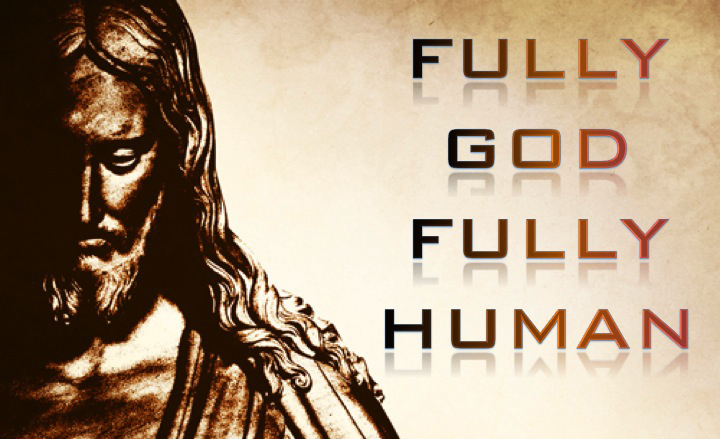
I’ve been looking at this verse a lot this week as I discuss it with some people online.  You know how it is.  The more you look at a passage of Scripture, the more you see.  We’ve been talking about Jesus’ natures, how He is both God and man.  This verse shows both natures side by side.

Jesus is called the Son of God 45 times in the New Testament and by everyone from Satan himself to Jesus’ personal claim to the title.  Demons, Jews, His disciples, even an angel call Him the Son of God acknowledging His divinity.

In John 5:18, the Jews saw a man before them, and He is a man, but that man claimed God was His Father which, according to John, also requires that He is equal with God.

So, the Jews got angry at the apparent blasphemy and wanted to kill Jesus. 

Lev. 24:36   Whoever blasphemes the name of the Lord shall surely be put to death. All the congregation shall stone him. The sojourner as well as the native, when he blasphemes the Name, shall be put to death.

We see this issue for the Jews repeated here:

John 10:31-33  The Jews picked up stones again to stone him. 32 Jesus answered them, “I have shown you many good works from the Father; for which of them are you going to stone me?” 33 The Jews answered him, “It is not for a good work that we are going to stone you but for blasphemy, because you, being a man, make yourself God.

And Jesus, after they had earlier (John 5:18) recognized his claim of equality with God, then in John 10:33, they accuse Him again, he didn’t deny it but doubled down saying the claim is proven through His works:

John 10:36,37  do you say of him whom the Father consecrated and sent into the world, ‘You are blaspheming,’ because I said, ‘I am the Son of God’? 37 If I am not doing the works of my Father, then do not believe me;

Why is this important?

The title “The Son of God” in the New Testament is loaded with meaning.  It is the powerful claim that Jesus and the Father are equal in nature.  This did not go over well with the Jewish leaders nor does it go over well with those who wish to deny Christianity and its claims.

I know I point to Philippians chapter two maybe too often but only because the passage is so important concerning Who Jesus is.

Phil. 2:5-8  Have this mind among yourselves, which is yours in Christ Jesus, who, though he was in the form of God, did not count equality with God a thing to be grasped, but emptied himself, by taking the form of a servant, being born in the likeness of men. And being found in human form, he humbled himself by becoming obedient to the point of death, even death on a cross.

Jesus’ claim to be equal with God (the Father) is clarified here.  He existed in the same form as the Father before He emptied Himself of His glory (John 17:5), this included the use of His divine attributes, and took human form.  Jesus was and is both human and divine.

Though God by nature, Jesus became voluntarily submissive to the Father.  He is inferior currently in position or rank.  Apparently this was necessary for God’s plan to be accomplished.

We as Christians, need to understand well the two natures of Christ.  He took on human form so He might pay the ultimate price for our sins, yet He never ceased to be God.  Had He been able to do that, there would have been a time with the trinity would not have existed.

There isn’t a lot of application to this posting.  But, a better understanding of the God we serve is always a new arrow in our quiver of defenses.