Listening

Anyone who saw A Beautiful Day in the Neighborhood, saw a man who listened.  In fact the subject, Mister Rogers, listened until the person he was listening to was done speaking.  Not only did Fred Rogers hear what he was being told, but he listened deeply enough to respond having understood what the person was telling him.

When I saw the movie, it truly struck me how little I listen, and when I do listen, I listen to respond more than to understand.  The movie changed the way I listen to people.

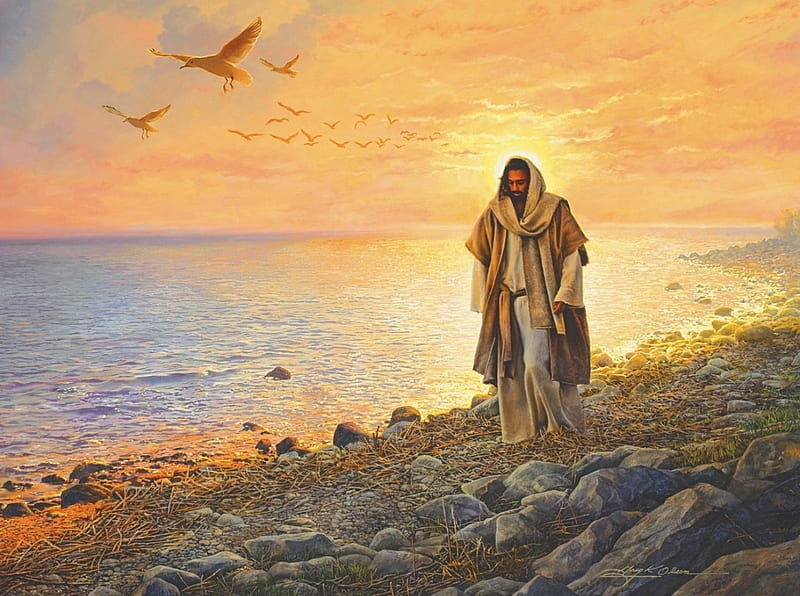
Mister Rogers was a Presbyterian Minister, not just a television personality.  His listening was a form of the kindness we are to show to all people, and he did it well.  It struck me during the movie how much Jesus must have listened to sincere people in that way.  Then it struck me that I should do this as well.

When we listen to people to understand what they are trying to tell us, we earn the respect of that person in our responses.

I’m currently teaching a class on witnessing.  This is a very difficult class for me since I’m not very good/successful at sharing the gospel.  To teach others, we need to know how to do things.  Most of what I’ve been sharing is about my failures, the people I’ve seemed to turn off with my approach.  And, I think this is my very problem, I don’t listen well.

When I do listen, the conditions change.  Some people will talk for five or ten minutes about something I really could care less about.  I used to turn away or look for an excuse, an escape from the conversation.  God has used the Beautiful Day film to change my life and how I approach people, for a lack of a better word.

So much of the literature I’ve gone over in preparing the Witnessing class shares a lot of approaches, how to enter into a conversation, tricks to pull to get a person to hear what you’re saying.  I really don’t see that in Scripture.  Jesus didn’t use tricks.  He listened to people and explained how He could provide for their needs.

The number of people I’ve directly led to the Lord are very few, but the ones I have led to the Lord were done as I listened to them in order to understand them and their needs. I was also calm when sharing with these people because I was more interested in what they had to say than my nervousness.

Listening calms us.  Rather than feeling the pressure to jump into a powerful witnessing session, listening can overcome our nervousness.  We feel a bond beginning between us and the speaker.

Psalm 31:13 is God talking about how He so wishes we would listen to Him.  Oh, that my people would listen to me, that Israel would walk in my ways!  I guess we’re just not the listening people we should be. But, God has so much to say to us if we would listen:

Jer. 33:2,3 2 “Thus says Yahweh who made the earth,Yahweh who formed it to establish it— Yahweh is his name: 3 Call to me and I will answer you, and will tell you great and hidden things that you have not known

Listening doesn’t just effect us.  It effects those we listen to. In the class, I tell a true story of a college student who approached his psychology professor telling him about a girl he was interested in, but she didn’t know he existed.  “How can I get her to like me?” he asked.  The professor’s advice was this: “Ask her questions, listen to the answers, then ask more questions about those answers.”  The young man returned a couple of weeks later and told the professor “I tried what you said, and boy she loves me!”

Listening is a powerful thing.  In witnessing, it gives the listener a sort of credit and credibility.  When the one talking finishes what they had to say, they want to hear a response and will listen as you have.  Sometimes, that’s the opening we need to share the Truth that changed our lives and can change theirs.  Sometimes, it’s just a chance to help, build a foundation of trust, so you can share that gospel at a more opportune time.

Why is this important?

This same bond we have between us and others can be had with our Lord and will grow the more we listen to Him by reading His Word and listening in prayer.  Often I shoot up a prayer in a hurry and fail to listen for an answer.  Mister Rogers always listened for an answer from the people he spoke with.  Should we do less when we talk with our Lord?

How about we decide to spend a little less time talking – to friends, relatives, strangers, and most importantly to Jesus – and a little more time listening.  Maybe we’ll grow more, learn more, and who knows we might make a few more friends as well as brothers and sisters in the Lord. We might even please God.

Jesus’ Dad

Joseph gets left behind by many Bible students, so it would be good to shine some light on what we know of this wonderful man God saw fit to charge with the upbringing of His Son, Jesus.

The biblical information for this post was taken mostly from the first two chapters of Matthew and the second chapter of Luke.  Points from elsewhere will be noted.

First let’s settle some confusion.  According to Matthew’s genealogy of Jesus, Joseph’s father’s name was Jacob.  In Luke’s genealogy, his father is said to be Heli (Luke 3:23).  The difference is because Matthew records Jesus’ genealogy through Joseph, and Luke presents Jesus’ genealogy through Mary.  The Jews consider a son in-law a son, so Joseph is said to be the son (in-law) of Heli in Luke.

Joseph was a good guy, a simple, honest, hard working, God fearing man, and an observant Jew.  When he learned of Mary’s pregnancy, he could have held her up to public ridicule, but he didn’t.  He had compassion on her since he knew her well.  The betrothal he and Mary had entered into was a Jewish tradition where they would be committed to each other but would not consummate their marriage for a year when the actual marriage would take place.  The commitment was as binding as marriage and even considered as such.  That’s the reason he had the right to divorce her rather than just walk away.

This godly man had an angel come to him in dreams three times to direct his path concerning the life of Jesus and His protection.  The angel came to Joseph to tell him Mary was pregnant of the Holy Spirit, so he shouldn’t divorce her.  Later an angel told Joseph to leave Nazareth and go to Egypt because the young Jesus was in danger.  He did that.  The third time the angel came to him was to tell him Herod had died, so they could return to Israel.  He did that too but didn’t move back to Bethlehem for fear Herod’s son, Archelaus, might find them.

Joseph was kind-hearted and sympathetic.  He and Mary raised Jesus in a traditional observant Jewish home. 

Other than the fact Joseph was a carpenter and had four sons and some daughters with Mary (Mark 6:3), we really don’t know much more about him. At least two of his sons became Christians, and they penned books of the Bible (James and Jude).   

Joseph’s last appearance in the Bible is with Mary when Jesus was twelve and questioning/teaching the priests in Jerusalem.  After this, Luke 2:51 says, they all returned to Nazareth, and Jesus was submissive to both Joseph and Mary as children are to be to their parents.

After this event, Scripture tells us nothing more about Joseph.  The consensus of opinion is he died before Jesus began His earthly ministry.  Otherwise, the reasoning goes, he should surely have been mentioned as attending the wedding at Canaan where Jesus performed His first miracle.   

How did Joseph die, then?  The Bible doesn’t tell us.  It could have been an accident or disease, natural causes.  We just don’t know.

The Catholic and Orthodox churches teach the eternal virginity of Mary and so  believe Joseph was an old man when he married Mary, that he was appointed by God to care for the young Mary and her Child.  He was not to be a husband to her and that he simply died of old age.  Of course, you then have the issue of the four brothers of Jesus mentioned in Mark 6:3.  The answer given by the Catholics and Orthodox is Joseph had these children before marrying Mary or they are cousins (the term for both cousins and brothers is the same in the Hebrew culture).  Then you’re faced with Matthew 1:24 which strongly implies their marriage was consummated.

The idea Joseph was an old man would not have lived long enough or been able to work long enough to be well known as a carpenter in Nazareth.  If he were just in his twenties when he married Mary, he would have been in his fifties when Jesus’ ministry began, not a young man in New Testament times.

Why is this important?

Joseph didn’t retreat from the awesome task God set before him.  He seems to have taken it up readily and with Mary successfully raised and provided for the young Jesus.  He kept the secret all those years.  The people of Nazareth were surprised when Jesus taught with power and authority in the synagogue of Nazareth for the first time.

Joseph is a model for us all to listen to God’s direction, and do exactly what we are told.  He was an average man who dedicated his life to obeying his God.  He had a job to do, and he did it just as God wanted.  Oh that we might apply that example in our lives.

Thinking Christian

Col. 2:8 (ESV)  See to it that no one takes you captive by
philosophy and empty deceit, according to human tradition, according to the
elemental spirits of the world, and not according to Christ.

Having been trained in philosophy, especially logic, this verse always makes
the hair on the back of my neck stand up a bit.  Of course, Paul here is
not addressing Christian philosophy but philosophy that centers on the
traditions of men and the elemental spirits of the world. Paul himself argued
with the philosophers of Athens and won some to Christ. He did that using
Christian philosophy.

“Christian philosophy?” you ask?  Certainly! God even asks us to reason
together: In Isa 1:18, He begins with “Come let us reason together, says
the Lord.

When I was in school, I was often asked who my favorite philosopher was.  My responsewas always “Jesus of Nazareth.”  What sort of a philosopher is
Jesus?  He is the greatest Philosopher ever to walk the earth. In fact one
of His names actually points to philosophy.

John 1:1 (ESV)  In the beginning was the Word, and the Word was
with God, and the Word was God.

Of course we know the “Word” is Jesus Himself.  John 1:14 tells us the
Word became flesh and dwelt among us.  Some of us even know the Greek word
for “Word” here is logos?  But did we know we get our word
“logic” from logos.  In Greek, it means even more than that.  It
means an intelligent discussion, even a philosophical debate, it means reason.
Jesus came here for a lot of purposes. One of those was to reveal God to us in
Person and that often through reason.

Jesus constantly used logic in His ministry.  “What would happen if you
built your house on the sand?  Blessed are the poor in spirit for they
shall see God.”

God didn’t just use logic in the New Testament either:

Ex 19:5 (SV)  Now therefore, if you will indeed obey my voice and
keep my covenant, you shall be my treasured possession among all peoples, for
all the earth is mine;

God gives a condition, a consequence, and a supporting premise: inductive
logic.  That’s philosophy.

Jesus told stories philosophers call thought experiments, stories that
prompt thought and a conclusion.  He held debates with the
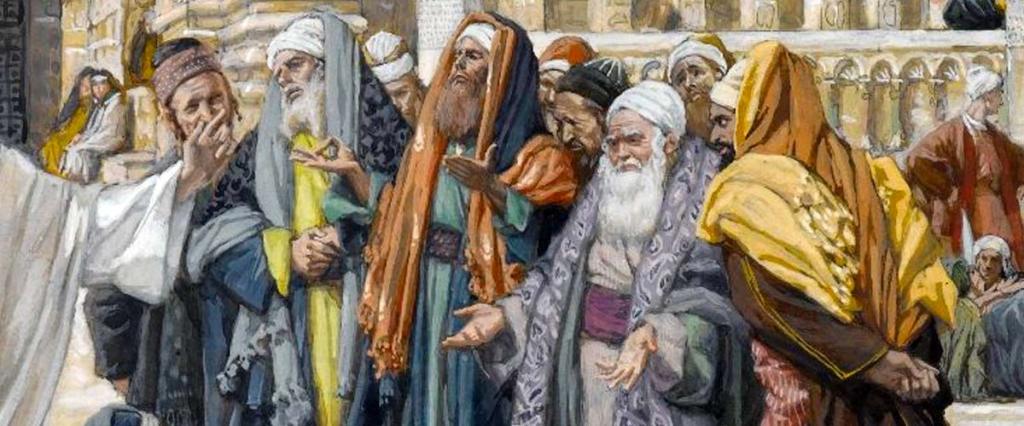
Pharisees.  John chapter 8 is mostly a long debate about who Jesus is.

The early church followed in this example.  When the persecutions
began, church leaders wrote public letters arguing philosophy for the benefits of Christian citizens to the empire.

1 Peter 3:15 (ESV)  but in your hearts honor Christ the Lord as
holy, always being prepared to make a defense to anyone who asks you for a
reason for the hope that is in you; yet do it with gentleness and respect,

In Christian philosophy, there is even a discipline called
“apologetics.”  The verse above uses the word “defense.” That is the word apologia from which we get our word “apologetics.”  This is an area where
Christians enter into logical civil discussions, arguments, reasoning, giving a
good defense for the truth of Christ.  There are clear evidences for the
truth of the Bible.  There is powerful evidence the Bible is not only true
and reliable but also inspired by the God of the universe, and Christian
apologists attempt to show this evidence to a lost world.

Jesus was not above giving evidence:

Luke 24:38,39 (ESV)  And he said to them, “Why are you troubled, and why do doubts arise in your hearts? 39 See my hands and my feet, that it is I myself. Touch me, and see. For a spirit does not have flesh and bones as you see that I have.”

Why is this important?

Thinking is not a bad thing as a Christian.  In fact, we’re told to think continually. 

When we start listening to traditions that draw us away from the truth,
we need to watch our step.  The way this often works is some
simple statement like “the church created the Bible, so the Church alone can
tell you what it says.  We are the church, so we’ll tell you what it says.” That’s a lie.

 The Bible stands alone as our source of truth.  God has given it to us to understand.  Sure there are pastors and teachers who help us, but what they teach should always be examined according to God’s Word.  They should tell you that themselves.

Philosophy like so many other things, can be used to serve man or to serve
God.  We need to be careful.  The purest philosophy is to love the
Lord your God with all your heart, soul, mind, and strength, and to love your
neighbor as yourself.  Anything we hear that does not align with that
should be ignored or corrected.  God has revealed Himself to us in His
Word.  There is no need to look elsewhere.

Unworthy

John 1:1-3, 14 (ESV) In the beginning was the Word, and the Word was with God, and the Word was God. He was in the beginning with God. All things were made through him, and without him was not any thing made that was made. And the Word became flesh and dwelt among us, and we have seen his glory, glory as of the only Son from the Father, full of grace and truth.

The Word is, of course, Jesus, the Creator of all things.  He is the God Who spoke and all that exists came into being.  He is equal to God (the Father and Holy Spirit – John 5:18), yet He emptied Himself and took the form of a human (Phil. 2:5-8).

Jesus, the God of the universe, walked with men, even washed their feet.  Imagine that.  God Himself washing your feet.  How humble is our God.

For revealing the grace of God, He was captured and held for trial.  While waiting, He was beaten and humiliated:

Luke 22:53-65 (ESV)  Now the men who were holding Jesus in custody were mocking him as they beat him. 64 They also blindfolded him and kept asking him, “Prophesy! Who is it that struck you?” 65 And they said many other things against him, blaspheming him.

Then the God of the universe stood before men to be tried and further humiliated.  He was convicted in the court of men, the very men He had created (John chapter 18).

Then Jesus was scourged and further humiliated. 

John 19:1-3 (ESV)  Then Pilate took Jesus and flogged him. And the soldiers twisted together a crown of thorns and put it on his head and arrayed him in a purple robe. They came up to him, saying, “Hail, King of the Jews!” and struck him with their hands.

Roman flogging -scourging – was so severe the victim’s back would be torn open by the scourge, a whip with two or three strands of rope or leather.  These strands would contain bits of sharpened metal and bone intertwined so when applied and pulled away from the victim, the whip would rip chunks of skin and muscle.  Forty or more blows were typical tearing muscle down to the bone.  Most victims died from the scourging alone, but Jesus survived.

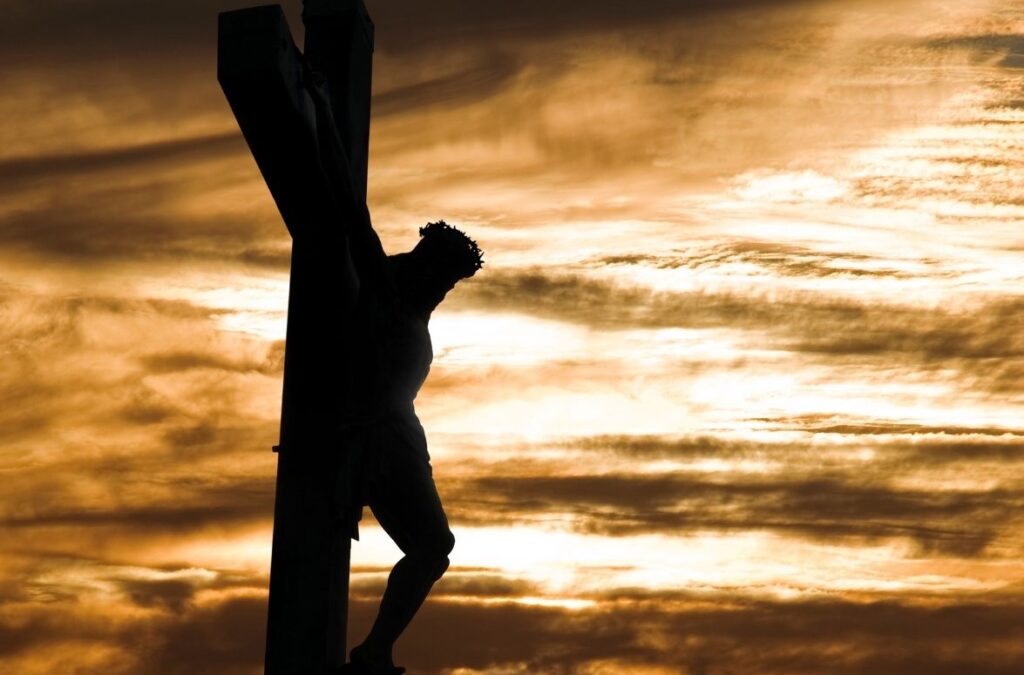
Finally, Jesus was sentenced to be crucified, the cruelest form of execution of the day.  On top of this, in His severely weakened state, Jesus was forced to carry His Own cross to Calvary:

John 19:16, 18 (ESV)  So they took Jesus, 17 and he went out, bearing his own cross, to the place called The Place of a Skull, which in Aramaic is called Golgotha. 18 There they crucified him, and with him two others, one on either side, and Jesus between them.

Why is this important?

Before all this happened, Jesus knew:

Mark 10:33, 34 (ESV)  [Jesus said]  “See, we are going up to Jerusalem, and the Son of Man will be delivered over to the chief priests and the scribes, and they will condemn him to death and deliver him over to the Gentiles. 34 And they will mock him and spit on him, and flog him and kill him. And after three days he will rise.”

Jesus knew it all, yet He went.  In fact, this was the main reason He came.  God Himself understood the torture and humiliation He was about to face, but came went anyway.

I have one more verse to share:

Heb. 12:2 (ESV)  looking to Jesus, the founder and perfecter of our faith, who for the joy that was set before him endured the cross, despising the shame, and is seated at the right hand of the throne of God.

God the Son did this all for us and is filled with joy we will be able to join Him forever because of it. 

We are not worthy of our God.

Judge Not?

Matt. 7:1-3 (ESV)  “Judge not, that you be not judged. For with the judgment you pronounce you will be judged, and with the measure you use it will be measured to you. Why do you see the speck that is in your brother’s eye, but do not notice the log that is in your own eye?

We hear this passage quoted more often by non-believers than by fellow Christians.  It’s usually shared with us when we point to some sort of sin or evil deed, some behavior the Bible speaks against.  So, are we really not supposed to judge?  Is that what Jesus is saying here?  Are there times when judging is allowed or even commanded?  Let’s see.

Matt. 7: 15-16a (ESV) 5 “Beware of false prophets, who come to you in sheep’s clothing but inwardly are ravenous wolves. 16 You will recognize them by their fruits.

This is interesting.  Within just a few verses, Jesus tells us not to judge then gives us the criteria for judging false prophets.  Can there be differences in how we are to judge?

In verse one, Jesus is speaking against judging people as unworthy because of sin in their lives.  That is God’s job, not ours.  We are to love them and point them toward the gospel with our words and deeds.

However, there are practices and beliefs that can damage the Christian or the church as a whole.  False prophets are attractive to some but can do damage to Christians who are distracted by them and may even fall and become followers.  The majority of new cult members are previous church attenders.  Someone came to their door or at work and convinced them of a lie.  Jesus tells us to watch out for these folks and tells us how to spot them: we’ll know them by their fruit.

What fruit will help us identify these folks?  Jesus continues in Matthew chapter seven to say a good tree produces good fruit, a bad tree produces bad fruit.  What fruit is He talking about?  I think He’s talking about the fruit of the Spirit.  That fruit is love, and that love brings joy, peace, patience, kindness, goodness, faithfulness, gentleness, and self-conrol (Gal5:22-23).  If we don’t see this in the people claiming to be God’s servants, we need to watch out for them.

We also need to watch ourselves.  We ar not immune from false teachings.

2 Cor 13:5 (ESV) Examine yourselves, to see whether you are in the faith. Test yourselves. Or do you not realize this about yourselves, that Jesus Christ is in you?—unless indeed you fail to meet the test!

We are also to keep an eye out at our own churches for people who might mislead some.  The entire book of Jude tells us there will be people who will come into the church and corrupt the body.  Some of these folks can even gain leadership roles before they show themselves as corrupt.

Why is this important?

While we should not judge people for their way of life, shun them rather than tell them of Jesus, we are to watch for those who might mislead us and others.  There is no one we must exclude from hearing the gospel.  The people living in sin are exactly the people God wants to hear the gospel.  For us to snub them because we think them unworthy is to exclude the truth from those who need it most.

Luke 5:31,32 (ESV)  And Jesus answered them, “Those who are well have no need of a physician, but those who are sick. 32 I have not come to call the righteous but sinners to repentance.”

With all you and I have been forgiven of, we have no right to hold the sins of others against them.

No, the judgment we are instructed to make does not concern the sin of others.  We are to seek to rescue those folks.  The judgment we are to make is to watch for those who would corrupt the body or the individual believer, and even they should be introduced to the gospel.

One last note: We mustn’t start seeing false prophets under every bush, false teachers in every classroom or pulpit.  Our job is to allow time for the false gospel to reveal himself.  When it does, make it known to an elder or pastor.  Then it is the church leadership’s job to deal with it.  Leave it to them and them alone.

So, we need to be careful.  Judging others can be destructive.  Love is our response for all people.  As Jude ends his letter, he shows his love even for those disrupting and dividing the church and their followers:

Jude 22, 23 (ESV)  And have mercy on those who doubt; 23 save others by snatching them out of the fire; to others show mercy with fear, hating even the garment stained by the flesh

God’s Rest

Have you ever had one of those weeks when things just seem to be against you?  This past week has been one of those for me.  It ended quite differently, though.

I lost my wallet last week.  It seems every five or ten years, I lose my wallet.  This time was different, though.  I had a copy of my Social Security card in it along with my driver’s license. That means a dishonest person would have all the information needed to take out loans in my name. I would be responsible for those. They might even borrow on our house.  My mind began to fill with all the things evil people might do with this information.

To say this stressed me out is an understatement.  I’m the man of the family.  I was responsible for making this right.  As a result, my time was consumed with trying to right this error.  Getting my credit cards replaced was the easiest part.  It was subscribing to a credit protection agency that became difficult.  I needed to protect our home. The people I spoke with were in India.  While the language was the same, I had difficulty explaining concepts.  My frustration grew even higher. 

I was so busy trying to fix everything, I forgot Who really is in charge of ALL THINGS!  Finally, Thursday, God tapped me on the shoulder and reminded me He is the Fixer.

I confessed I was wrong not to call on Him first and asked Him to forgive me and take over.  Of course the next time I called the agency, I got a lovely woman in Tennessee who said, “Oh certainly.  I can help you with that,” and ten minutes later all was right with the world.

I’m sure you don’t have this problem, ignoring God in time of need.  I’m probably the only one.  But we’re Christians.  We’re supposed to rely on our Lord.  That’s somewhere in the contract we signed when we asked Him to take control of our lives.  Let me repeat that for my own future benefit, “to take control of our lives!

Psalm 46:1-3 (ESV)  God is our refuge and strength, a very present help in trouble.      Therefore we will not fear though the earth gives way, though the mountains be moved into the heart of the sea, though its waters roar and foam, though the mountains tremble at its swelling. Selah

That last word in verse 3, “Selah.”  That means “rest.”  It’s a musical term meaning to wait, pause, take a breath.  In times of stress and trouble even greater than my issue with the lost wallet, our refuge and our strength is the Lord.

Why is this important?

I must say I’m ashamed of myself and really didn’t want to write this blog.  But, as was mentioned earlier, I’m not in charge.

In times of stress and times of sadness or anger, our heads become so full of so many things we forget to look to the One Who can give us rest.  Really.  How many of us have Matthew 11:28 memorized without knowing it because either we’ve quoted it repeatedly to someone else, or they have quoted it to us?  And still we choose to suffer:

Matt. 11:28 (ESV)  Come to me, all who labor and are heavy laden, and I will give you rest. 

As humans, we strive to be in charge.  As Christians we should strive never to be in charge.  Don’t let me be the example, let my reaction to trouble be a warning.  Don’t do it, and I know that I will most likely do it again and so might you.  We’ll suffer needlessly when our God stands next to us, arms open, trying to break through all the unnecessary noise with His still small voice saying “I love you.  Let Me help.”

The Bible and Archaeology

As Christians, we depend on the Bible as God’s inspired communication with us.  Some of the evidences the Bible is reliable are internal.  That means the statements made in Scripture can be checked against world history and especially archaeology to see if these claims are accurate.  Is there hard evidence for the reliability of Scripture?  Let’s look at a few of the more recent discoveries.

The Dead Sea Scrolls.  The first of these scrolls were found sometime between November of 1946 and February of 1947.  They contain manuscripts of the entire Old Testament along with some manuscripts of other types.  All together, there have been 972 manuscripts found thus far – they’re still looking..  These scrolls are dated from the third century b.c. to about 68 a.d.   The Isaiah Scroll, one of the first scrolls found and the most intact, is radiocarbon dated at least 100 years before Christ.

The importance of the Dead Sea Scrolls is at least two fold.  The first is the fact the manuscripts we had prior to the discovery are nearly exact duplicates of the Dead Sea Scrolls manuscripts. This shows the accuracy of the copying process of the Old Testament scribes.

The second is that scholars prior to 1947 claimed Isaiah chapters 52 and 53 were inserted by Christians since they so clearly describe Jesus as the suffering Messiah..  Isaiah chapters 52 and 53 appear in the Isaiah Scroll in their entirety.  The Scholars were wrong.  Physical evidence exists for the accuracy of Scripture.

 Pontius Pilate.  Prior to 1961, Pilate’s name was mentioned only in a very few ancient manuscripts.  Since liberal scholars believe ancient Christians inserted the names of Biblical characters into manuscripts of their time to prove the existence of these characters, these scholars doubted whether Pilate ever lived and demanded proof when challenged.

In 1961, a stone was unearthed in Caesarea Maritima with the name of Pilate etched into it.  It seems the stone was a part of an important building dedicated to Tiberius called a Tiberium and dated 26 to 37 a.d.  Physical evidence exists of Pilate.

King David.  Prior to the mid 1990s, the name of King David appeared nowhere in the ancient world but in the pages of the Old Testament.  Then at Tel Dan Stele in Northern Israel, a triumphal inscription was found written by Hazael of Aram-Damascus boasting of the king’s victories over the king of Israel and his ally the king of the “House of David.”

This stone shows both both Israel and Judah were separate kingdoms at the time and David the King did exist contrary to some “biblical scholars” prior to the discovery.  Physical evidence exists of David and his kingdom.

Crucifixion.  In 1968, the ossuary (burial box) of “Jehonanan ben Hagkol” found in East Jerusalem was opened.  Inside was a full skeleton.  Both the wrist and right heel bone still had the Roman seven-inch crucifixion spikes intact. 

Prior to this find, crucifixion was only recorded in ancient documents.  Wooden crosses did not survive 2,000 years of decay, so there was no physical evidence for crucifixion.  Of course, scholars doubted.  Jehonanan’s skeleton is dated to the first century.  This is evidence of first century crucifixion and of crucifixion being done just as the Bible describes it.  Physical evidence exists for biblical crucifixion.

Ebla.  Ebla is an ancient city now in Northern Syria and one of my favorite finds.  Ebla’s hay day was around 2,300 b.c. and had a population of about 260,000. The location or population are not so impressive as are the 15,000 tablets found there in 1975.  It appears at one time,  the King of Ebla was a little obsessive compulsive.  He kept written records of everything, of trade with other cities, major events, even the furniture purchased for his palace.

In these tablets Sodom and Gomorrah are mentioned as well as Carchemish (Isa 10:9).  The tablets record dealings with the Hittites of the time.  Hittites were doubted until these tablets were found.  According to Dr. Clifford Wilson, one of the first to work on these tablets, the tablets also record a prophet who entered the city of Ebla and preached the God, Yah.  “Yah”, we know, is an abbreviation of the name of God, “Yaweh.”  We see it most commonly in the word “alleluia” (Rev. 19:1-6) and in many Jewish names such as Elijah.  Physical evidence exists of Sodom and Gomorrah and of prophets of our God 400 years before Abraham.

Why is this important?

 Many will doubt the validity of the Bible.  They believe Scripture is nothing more than fairy tales, that it’s made up, even that the Person, Jesus, never existed.  Because God has led the archaeologists to digs, we have physical evidence of the Bible’s reliability. 

We need to stand by our Bible and our faith, it is being validated almost daily as scholars dig in the Holy Land.  God is Good!

Eternal Security

Two guys were arguing whether a Christian can lose his salvation.  The one arguing pro-eternal security said “When do we receive our eternal life, when we’re saved, or when we die?  If we gain eternal life at the time of salvation when we are justified and are capable of losing it, we never had eternal life to begin with.  We had eternal life temporarily. Does temporary eternal life make logical sense?” This fellow seemed to have a point.

If we can lose our salvation by sinning, which is the argument, then salvation is a works sort of thing.  If we can lose our salvation by works we have done, then we can be saved by the works we do.  That’s not what the Bible teaches:

Titus 3:5 (ESV)  he saved us, not because of works done by us in righteousness, but according to his own mercy, by the washing of regeneration and renewal of the Holy Spirit,

God is all loving. Our salvation rests on His love for us and His love for endures forever: Psalm 136:1  Give thanks to the Lord, for he is good, for his steadfast love endures forever.

In Old Testament times, one could lose God’s spirit.  We only need to look at Samson and how the Spirit of God came and left him (Judges 16:20).  This is no longer true.  Christians are sealed by the Holy Spirit

Eph 1:13,14 (ESV)  In him you also, when you heard the word of truth, the gospel of your salvation, and believed in him, were sealed with the promised Holy Spirit, 14 who is the guarantee of our inheritance until we acquire possession of it, to the praise of his glory.

So, according to Ephesians, when we heard the truth and believed, we were sealed with the promise of the Holy Spirit and guaranteed our inheritance of which we will take possession either at our death or at the Lord’s coming.

1 Peter 1:3-5 (ESV)   Blessed be the God and Father of our Lord Jesus Christ! According to his great mercy, he has caused us to be born again to a living hope through the resurrection of Jesus Christ from the dead, to an inheritance that is imperishable, undefiled, and unfading, kept in heaven for you, who by God’s power are being guarded through faith for a salvation ready to be revealed in the last time.

We are being guarded through faith for a salvation and that salvation is sealed by the Holy Spirit in us. 

Why is this important?

Sometimes Christians doubt whether they’re saved or if they have lost their salvation.  God has promised our salvation is sealed for us along with our heavenly inheritance.  We have no need to doubt, no need to wonder.  We are God’s children the moment we receive Him:

John 1:12 (ESV)  But to all who did receive him, who believed in his name, he gave the right to become children of God,

God’s love for us cannot be broken nor can His adoption of us as His sons and daughters.  Paul uses the Roman adoption ceremony as an example of our adoption as children in Rom. 8:15.  In the ceremony, all preparations and fees were paid for by the Father.   All the prospective adoptee , most often a servant, needed to do was at the end of the ceremony cry out “Abba Father,” and the adoption was complete.  Interestingly, that adopted child could never be disowned though the natural children could be.  We as adopted children of God are His forever.

Rom. 8:15 (ESV)  For you did not receive the spirit of slavery to fall back into fear, but you have received the Spirit of adoption as sons, by whom we cry, “Abba! Father!”

So, when we wonder if we’re really saved or if we have done something we think might cause God to break His promise to us, remember God never breaks a promise or an adoption.  We are His forever.

How are the Lost Saved?

I once asked my pastor what exactly someone needed to do to be saved from his sin.  His response was “Why don’t you look into it and get back to me.”

This wasn’t a harsh remark.  He knew me pretty well and knew if I did my own research it the result would be more meaningful and more memorable.

I spent a week or so considering some problems with my question.  “What of people who can neither speak nor hear?”  They may not know an actual language.  Can they be saved?  What of people who lay dying, slipping away and at the last moment decide to give their lives to Christ without being able to speak?”

I finally settled on the thief on the cross as my primary example.  He didn’t say a “Sinner’s Prayer.”  He just asked Jesus to remember him when He came into His kingdom.

There are three facets to the thief’s request, though.  He knew he was a sinner and needed to repent, so he recognized Jesus as Lord and knew He would rise to set up His kingdom.  But, I don’t think the thief’s statement saved him.  I believe he was saved before he said it.  It was his acceptance of the truth and change of heart that opened heaven’s gates to him.

Romans 10:9 says “because, if you confess with your mouth that Jesus is Lord and believe in your heart that God raised him from the dead, you will be saved.”  The thief did both of these.  His repentance is implied.. 

Jesus said we also need to repent in Mark 1:14,15 Now after John was arrested, Jesus came into Galilee, proclaiming the gospel of God, 15 and saying, “The time is fulfilled, and the kingdom of God is at hand; repent and believe in the gospel.”

So, most adults need only repent, confess Jesus as Lord, and believe God raised Him from the dead.  But what about others?

For children, I believe there is an age of accountability.  Isaiah hints at this in chapter 7, verse 16: For before the boy knows how to refuse the evil and choose the good, the land whose two kings you dread will be deserted.  Many believe Paul also hinted at it as well in Romans 7:9: I was once alive apart from the law, but when the commandment came, sin came alive and I died.”

So, it may be we are not responsible for our sinful acts before we are old enough to recognize them as sin and as rebellion against God.  At what age might this be?  I don’t think there is a specific age.  I think it’s just a matter of how conscious the individual is of sin.

The next point I’d like to address follows naturally from this: what about special needs children and adults.  What if they cannot understand the concepts of sin, salvation, repentance?  I believe the same rule of accountability applies no matter what the age. 

And what about people who’ve never heard the gospel?  What about them?  Paul addresses this in Romans 1:20 :For his invisible attributes, namely, his eternal power and divine nature, have been clearly perceived, ever since the creation of the world, in the things that have been made. So they are without excuse.

Those who have never heard the Gospel are still accountable for what they can see in creation.  From creation we can recognize God as greater than this universe, a God of order and beauty, a God who provides and thus cares for us, and much more.  Salvation is available to those who would only look.

Why is this important?

The requirements for salvation are dependent on if the individual is capable of understanding the Gospel or if they have ever heard the Gospel.

When it comes down to the absolute essentials, Romans 14:11,12 brings the message home.  We are all responsible to God and will be required to give Him an account of ourselves for what we know:  “As I live, says the Lord, every knee shall bow to me, and every tongue shall confess to God.” So then each of us will give an account of himself to God.”

We can’t let people fool us into believing in an unloving god who rejects those who haven’t heard or haven’t understood.  Our God loves us all.  It is our hearts which need to turn to Him.  He is already reaching out to us.

Redemption

When I was a kid, we had Blue Chip and S&H Green stamps.  You were given these when you bought groceries, and when you had collected enough stamps, you could redeem them for merchandise at Redemption Centers.  I think these are a good example of how redemption, the idea of just payment to receive something valuable, works.

Ruth’s final chapter exhibits redemption in the time of the Judges.  In the first three chapters, we’ve seen Ruth married one of Naomi’s sons.  Naomi’s husband died as did her sons died in Moab.  Ruth, a Moabitess, returned with Naomi to Bethlehem.   She had gleaned in the field of  of a relative to Naomi, Boaz, and performed a simple rite of submission at his feet. This started a chain of events leading to Ruth and Naomi’s redemption.

The process of redemption was taken care of solely by Boaz.  Boaz was not the next in line with rights to the land of Elimelech, Naomi’s dead husband.  There was a closer relative, a “redeemer” who had the right.

Boaz wanted the land and along with it, Ruth as his wife.  But, being a righteous man, he went through the process of offering the purchase of the land to a closer relative.  Once the man refused, Boaz was free  to buy it.  As a result, Boaz did so and married Ruth resulting in a son, Obed, the grandfather of David the King.

So, some of the lessons here are that God is perfectly willing to take gentiles into His family as we see Him demonstrating this in Peter’s vision (Acts 10:13-17, 28).

My biggest take away, though, is the parallel to the story of our redemption.  Naomi and Ruth as widows were in dire straits.  There was no man to work and keep the household funded.  The widows’ lives would have been meager, lives of struggle and hunger.  They needed someone to step in and save them. As we did before we met Jesus.

Boaz, looked favorably upon Ruth as a fine and deserving woman and upon Naomi as a widow who needed a provider.  He became the bridegroom once he paid the necessary price to gain a wonderful bride, Ruth.  This part of the story reminds me of Jesus’ parable:

Matt. 13:44  (ESV)   “The kingdom of heaven is like treasure hidden in a field, which a man found and covered up. Then in his joy he goes and sells all that he has and buys that field

Boaz was willing to pay the price necessary to gain Ruth as his wife.  Jesus is also the Bridegroom who paid a great price in order to gain His bride, the church (Eph. 5:25-32).

We know Jesus is the Bridegroom since when He was asked why His disciples didn’t fast, He responded:

Mark 2:19 (ESV)   And Jesus said to them, “Can the wedding guests fast while the bridegroom is with them? As long as they have the bridegroom with them, they cannot fast.

Why is this important?

The story of Ruth is a wonderful, even romantic, story of two people who become husband and wife through God’s providence.  It is also a wonderful description or type of the wonder of God’s Son taking His bride as well.  Just was Ruth was redeemed, so are we redeemed by our Redeemer.

Gal 3:13,14 (ESV)  Christ redeemed us from the curse of the law by becoming a curse for us—for it is written, “Cursed is everyone who is hanged on a tree”— 14 so that in Christ Jesus the blessing of Abraham might come to the Gentiles, so that we might receive the promised Spirit through faith.

As with the parable of the treasure in the field, Jesus paid it all to gain His bride.