Trials

Some of us thought when we became Christians, “Wow.  Now that I accepted Christ, my life will be perfect.”  Sadly, that’s not so.  We are all tested in our Christian walks. So, why do Christians have trials in our lives?

The first thing that comes to my mind is if Christians had perfect and peaceful lives, everyone would want to become a Christian without the commitment.  This would leave out the sin issue.  It would be a purely personal and selfish act. That’s not the sort of thing God is looking for.

Another reason might be because Jesus said the rain falls on the just and the unjust (Matt. 5:44-45)

But I say to you, Love your enemies and pray for those who persecute you, 45 so that you may be sons of your Father who is in heaven. For he makes his sun rise on the evil and on the good, and sends rain on the just and on the unjust.

God is not a respecter of persons (Acts 10:34).  He shows no partiality.  The few decades we spend here on earth mean so little compared with eternity with Christ.  And, God has things for us to learn while here through trials.

James chapter one is pretty much about trials, and it tells us to “Count it all joy when you fall into various trials.”  The Greek there tells us to embrace our trials as friends.  Why would that be?  James answers that for us: “For the testing of your faith produces endurance, and let endurance have its perfect result that you may be perfect and complete.” (James 1:2-4)

A friend told me years God is like an old piano teacher.  He will give you the same test over and over again until you’ve learned your part and then move on.  Sound familiar? So, we need to try and learn from our trials so we don’t repeat them.

Sorry. No time off for good behavior.  We will all face trials.

There is still another reason for trials.  Look at Deut. 4:34

Or has any god ever attempted to go and take a nation for himself from the midst of another nation, by trials, by signs, by wonders, and by war, by a mighty hand and an outstretched arm, and by great deeds of terror, all of which the Lord your God did for you in Egypt before your eyes?

How would a god draw a nation to Him through the use of trials?  Well, we tend to turn to God when we’ve reached our lowest point.  So, trials in our lives cause us to draw nearer to God.  He likes us, you know.  He wants our attention and will get it in whatever way necessary.

There’s a story of John Wesley, the famous founder of the Methodist Church and circuit rider/preacher.  John didn’t feel he’d had any trials in a few days and thought maybe God had left him.  So, he got off his horse, knelt down next to a wall in a town.  The guy on the other side of the wall was cleaning up his yard and threw a brick over the wall hitting John.  Wesley smiled, returned to his horse, and continued on his way thanking God.

Why is this important?

The Christian should expect trials.  Jesus Himself told us we would face trials

I have said these things to you, that in me you may have peace. In the world you will have tribulation. But take heart; I have overcome the world.” (John 16:33)

Trials are not a problem but a blessing.  God uses them in the life of the Christian to mold him into a better ambassador for Christ.  The things we go through that test us are things we can use later on to help those who will go through the same things.

So, count it all joy when you fall into various trials.  It’s God speaking to you making a new you out of the old one.

Basic Teachings (Communion)

“Communion”, or “The Lord’s Supper”, is the remembrance of Christ’s sacrifice through the taking of bread and wine.  This is celebrated regularly by Christian churches worldwide with only a few exceptions.  The early church called this “the Eucharist” (taken from the Greek word, eucharistia meaning “thankful” or “grateful”).  It has been a Christian practice since the Last Supper.

The Protestant church has represented communion as an ordinance – a prescribed religious rite.  At the Last Supper, Jesus commanded us to do this in remembrance of His sacrifice (1 Cor. 11:25).  It is symbolic.  The Eastern Orthodox and Catholic churches celebrate the Eucharist as a sacrament, a practice that bestows grace on the participant.

To most Protestants, Communion is symbolic of Christ’s sacrifice.  He gave His blood as a ransom for us (Rev, 5:9).  He bore our sins upon His body at Calvary (1 Peter 2:24).  So, communion is a serious practice, a time when we remember what Christ gave up for us so we might qualify to spend eternity with Him.

There are those who see more than a remembrance in the Lord’s Supper, though.  Lutherans, for instance, believe in “consubstantiation.”  This is the doctrine that the substance of the bread and wine remain bread and wine, but Christ is somehow present “in and around” the elements. 

The Orthodox and Catholics believe in forms of “Transubstantiation” which is the belief the “host,” the elements of bread and wine, actually become the flesh and blood of Christ but not in form.  The elements still appear as bread and wine.  There are some minor differences between the Orthodox view and that of the Catholic Church, but not enough to go into here.

The Bible doesn’t describe the bread and wine as anything more than symbols of Christ’s sacrifice.  When Jesus held up the bread and broke it, He said “This is my body . . . ,“  was that really His body?  No.  When He held up the cup and said “This is my blood . . . ,“ was that His blood?  No.  Jesus was giving us a practice we were to repeat whenever we ate bread and wine to remember what He has done for us.

The early church was actually accused of cannibalism due to many Christians quoting what Jesus said in John 6:53-56:  “ So Jesus said to them, “Truly, truly, I say to you, unless you eat the flesh of the Son of Man and drink his blood, you have no life in you. Whoever feeds on my flesh and drinks my blood has eternal life, and I will raise him up on the last day. For my flesh is true food, and my blood is true drink. Whoever feeds on my flesh and drinks my blood abides in me, and I in him.”

This was just one of the misunderstandings the world had about Christians even then.  The Romans also believed Christians were incestuous since we would marry a “brother” or “sister” in the faith.  All this helped the Roman leadership influence the citizens against the Christians.

So, Communion is a simple thing but certainly not a meaningless practice.

Why is this important?

As the church has always understood, communion is a time for reflection on what has been done for us, for the grace which has been bestowed upon us through Christ’s sacrifice.  It is a time to be thankful, a time for gratitude.

Let us remember that cup of juice and the cracker mean more than just a habit we perform every so often.  It is a physical remembrance of a spiritual reality.

Basic Teachings (Baptism II)

Baptism II

I thought I’d address infant baptism and where it comes from then some teachings of why we baptize.

The idea of infant baptism comes from an assumption made from Scripture and not a direct command.  A passage in Acts speaks of the entire household of Lydia being baptized (Acts 16:15).  The assumption is that “household” in these two verses must include infants.  The passage itself does not say anything about infants in Lydia’s home, yet many Christians believe it should be assumed. 

A major rule of biblical interpretation is not to assume anything.  Just go with what the text says.  Reading your opinion into a passage is known as eisegesis and leads to error.

There is nothing in Scripture prohibiting infant baptism, so there’s no reason to criticize others who want to do this.  Some churches who practice infant baptism see it as more of a dedication to Christ while others see it as something more meaningful.  My opinion is that it is not a salvation issue and therefore should not be condemned.  We can discuss it, but don’t condemn those who disagree on this.

Baptism is a command (Matt. 28:18-19) and is an ordinance in Protestant churches.  Eastern Orthodox and Catholics see it as a sacrament.  The difference is an ordinance is something God has commanded us to do to symbolize something such as rebirth in the case of baptism.  A sacrament is something which carries great spiritual value.  For instance, the Orthodox and Catholics believe salvation begins with baptism.

Protestants restrict themselves to the Bible alone and what it says.  That is the position of this blog, and is the view expressed here.  Baptism is simply a public declaration of an inward change.  When we are baptized, no matter in what form, we are telling the world we have accepted Jesus as our Savior and He has changed us.  We are new creatures resurrected from our dead life of sin into our glorious new life In Christ.

Baptism was so important in the early church, particularly once the persecutions began, that those who were under instruction and not yet baptized, catacumens, were not allowed to hear the message during the service.  They were asked to leave after the worship portion.  However, all churches had training for the catacumens, some required as much as three years of training before the candidate could be baptized and welcomed into the family of God.  So, baptism was an important issue in the early church.

The Romans were killing Christians just because of their faith.  What seems to be extremely long training for new believers was a commitment to make sure they knew what they were getting into, the reasons why they should believe, to prepare them to defend the faith, and for death if necessary. 

Some denominations still do something like this.  My wife was raised in a Lutheran church.  She was baptized as a child but went through two years of confirmation as a young adult where she had weekly classes at the church and daily lessons she needed to complete.  The first year was learning the Old Testament, the second year the New.  Finally, she was tested by the pastoral staff before she was “confirmed” and able to take communion.  Certainly, this is something carried over from the early church and something that would benefit churches today.

Why is this important?

While baptism is not a condition of our salvation, it is extremely important, and should be considered as such.  Baptism is not something one should enter into lightly.  Self-examination, certainty of what you believe, and much fasting and prayer would prepare you for this wonderful ordinance.

Rom. 6:1-4What shall we say then? Are we to continue in sin that grace may abound? By no means! How can we who died to sin still live in it? Do you not know that all of us who have been baptized into Christ Jesus were baptized into his death? We were buried therefore with him by baptism into death, in order that, just as Christ was raised from the dead by the glory of the Father, we too might walk in newness of life.

In a real sense, baptism shows exactly what Romans 6:1-4 describes.  We have been dead and buried to sin.  This is exemplified by putting us under the water, burying us.  Then when we come out of the water, we show symbolically we are a new person, raised from death and sin into new life in Christ.

Next week communion.

Basic Teachings – Baptism I

Baptism is one of those Christian rituals that are often disagreed upon within the church.  Some Christians believe we must be baptized to be saved, others believe baptism was for the early church alone.  Some believe infants should be baptized, others believe only those who are believers should be.  The forms of baptism are often disagreed upon from sprinkling to pouring to immersion.  So, the common and usually simple act of baptism has become one of the more controversial teachings of the church.

The Greek word for “baptize” (baptizo) means “to dip or to immerse” which would lend itself to baptism by immersion.  But, what do you do if you don’t have a large amount of water nearby?  A Baptist church in Texas during a drought several years ago had to roll the newly converted in the local river because it had so little water, and they had no baptistery. 

In the early church, there was a document called the Didache, a sort of church instruction manual dated around the end of the first century.  Chapter seven of the document addresses baptism:

“Concerning baptism, baptize in this way. Having instructed him in all of these teachings, baptize the catechumen in the name of the Father, and of the Son, and of the Holy Spirit, in running water. But if you do not have running water, then baptize in other water. And if you cannot in cold water, use warm. But if you have neither, then pour water on the head three times, in the name of the Father, and of the Son, and of the Holy Spirit. And before the baptism, let both the baptizer and the catechumen fast, and also any others who are able. And be sure that the catechumen fasts a day or two before.”

So, it looks like pouring water on the convert was acceptable but not the first choice.  No doubt convenience took charge, and pouring became more popular especially since public baptism during the persecutions would have brought danger to all in attendance.  Later sprinkling became acceptable as well even after the persecutions ended.

During the reformation, a group formed called the “Anabaptists.”  The name means roughly to be baptized again.  Since most of Europe was Catholic prior to the Reformation, pretty much everyone was baptized as infants.  The Anabaptists believed baptism was for believers alone and that all believers should be baptized again.  They were persecuted by both the Protestant and Catholic churches but still about four million exist worldwide today.  Two of the best known Anabaptist sects are the Mennonites and the Amish.  They see themselves not as Protestants but as their own division within Christianity.

An error in the church – Baptismal Regeneration, salvation through baptism – is s group of beliefs: all our sins are washed away when we are baptized, baptism saves you, or baptism is simply necessary for salvation.  This was also practiced very early in church history.  Rome’s first Christian emperor, Constantine, would not agree to be baptized until just a few days before he died because he believed this and wanted all his sins to be forgiven prior to stepping into glory.

The problem with Baptismal Regeneration is it requires a work for salvation, something other than the blood of Christ to save us.  True, baptism is a command (Matt. 29:18-19).  To ignore or to break one of God’s commands is a sin but does not result in God’s rejection of the believer. 

Paul says this in 1 Cor. 1:17: “For Christ did not send me to baptize but to preach the gospel, and not with words of eloquent wisdom, lest the cross of Christ be emptied of its power.”  So, baptism was not a part of the gospel and, therefore, no required for salvation.

Why is this important?

When presenting the gospel to the lost, we need to tell them about baptism and relate it to them accurately.  Baptism is not required for salvation.  Acts 10:44-48 speaks of a Centurion who was saved along with his family.  They displayed spiritual gifts as a sign of being filled with the Holy Spirit, itself a sign of their salvation.  Only after these things happened was the idea of baptism presented.  Baptism is not required, but it is a command.  We should be baptized soon after accepting Christ as a sign, a public declaration, of  our new life in Christ.  More on this next week.

Resurrection Denials?

Over the centuries, there have been many denials of the bodily resurrection of Jesus.  I’d like to look at some of these in case you run into them.

The Swoon Theory – This is the belief Jesus didn’t die on the cross but fainted (swooned).  Once in the tomb, He revived due to the cool damp conditions and escaped.  He then claimed resurrection and remained with His disciples for a time.

     Let’s go through this briefly.  There was the Roman scourging. This was done with a sort of “cat of nine tails.” The whip had sharpened pieces of stone, metal, and glass embedded in the strands meant to tear the flesh from the bone of the victim. The Jews allowed only 39 stripes when scourging. The Romans had no such limitation. The soldier could lay as many stripes on Jesus as he wished. The men who did the scourging usually enjoyed their job. Many who were scourged died from it even before they reached the cross.

Additionally, we know Jesus was crucified, nailed to a cross, and a spear pierced His side reaching His heart, but was He dead?  Pilate himself ordered Jesus’ body be checked to be sure He was dead. He was inspected and pronounced dead by a Roman soldier who’s assigned duty was pronouncing the victims dead after crucifixion. (Mark 15:44-45). Jesus was definitely dead.

       He was then left wrapped in strips of cloth, immobile, for three days, somehow He revived, and moved a 1.5 to 2 ton stone aside by Himself in a weakened state and stepped into history?  Silly, don’t you think?

It was the Wrong Tomb – This is the idea the women went to the wrong tomb on Easter morning and found it empty.  This would mean Joseph of Arimathea, the owner of the tomb, went to the wrong tomb.  Nicodemus went to the wrong tomb. The Romans went to the wrong tomb, the Jews went to the wrong tomb, and John and Peter went to the same wrong tomb (John 19:38-42).  And, we still have the problem of Jesus showing Himself alive to more than 500 people (1 Cor. 15:6).  Highly unlikely!

The Twin Theory – This is one of my favorites.  It states that Jesus had a twin brother He knew nothing about.  It happened on the third day, this twin brother entered Jerusalem and was mistaken for Jesus and went with it fooling Jesus’ disciples who had spent every day for three years with Jesus.  He carried no scars from the scourging, no marks of the nails or crown of thorns, and the disciples did not go to the tomb to verify He was gone. Really?

Someone Stole the Body – This is the answer the Jews had thought of (Matt. 28:13).  The Jews started the story the disciples had stolen the body.  There are a lot of problems with is one.  The disciples were huddled in fear of the Jews (John 20:19).  They weren’t going to steal the body.  They were scared to death they would be next. Then there was the 1.5 to 2 ton stone to move quietly so as not to wake the Roman guard.

The tomb had been sealed with a Roman seal and guarded by Roman guards (Matt. 27:66).  The penalty for breaking a Roman seal was death.  The punishment for a Roman soldier sleeping on duty was to be burned to death in a fire started with his own clothes.  These soldiers were tough.  They used the Roman soldiers’ training manual to train our Green Berets.  Roman soldiers proudly claimed the Emperor could be defended by only nine of them.  Tough guys.  Notice the soldiers didn’t run to their commander but to the Jewish leaders (Matt. 28:11).  They knew telling their commander meant death. 

     So, the disciples didn’t steal the body nor did the Romans.  Who was left, the Jews?  No.  They wanted the body to stay in the tomb because they knew Jesus had predicted raising it (John 2:18-22).  The only one remaining who could have removed the body is Jesus.

Why is this important?

The biggest problem all of these theories need to face is the fact within a few weeks of Christ’s crucifixion, in the very city where He was crucified, men and women began to claim Jesus had risen, and thousands believed this and came to Jesus as their Savior.  Over the next few decades, all but one of the apostles, the eye witnesses, died telling the same story of the death, burial, and miraculous resurrection of Jesus. None testified otherwise even to save their own life.

Jesus’ resurrection is the one central doctrine upon which our faith rests.  This is why so many have attacked this miracle.  We need to have answers for those who would discount this grand miracle.  I hope I’ve provided some.

If there is no resurrection, we are all to be pitied:

17 And if Christ has not been raised, your faith is futile and you are still in your sins (1 Cor. 15:7)

If you would like to see some of the evidence for Christ’s physical resurrection, look at my blog from last Easter: He is Risen Indeed.

Basic Teachings (Gospel)

The word translated “gospel” in the New Testament is euangelion from which we get our word “evangelism.”  Long before Christ, euangelion meant the gift you gave to someone who brought you glad tidings.  By the time of Jesus, the word came to mean simply glad tidings, and that’s what it means in the New Testament, “good news” or “glad tidings.”

 There are four ways we Christians use the word “gospel.

First, we use “gospel” when we speak of the death, burial, and resurrection of Jesus Christ.  This is the central truth and core of our Christian faith.  This use of the word “gospel” speaks of  a perfect man, Adam, having fallen into sin and, as the sole representative of humanity, giving that sin nature to us all.  Because it was a perfect man who fell, there needed to be a perfect man to pay the price for Adam’s sin. 

God didn’t create another perfect man to pay the price.  He didn’t even send an angel and make that angel into a perfect man to die for man’s sin.  He gave His all. God the Son came Himself.  He emptied Himself of His glory, took on the form of man, and became obedient to the Father, obedient to the point of death, even death on the cross (Phil. 2:5-8).  Then God raised Jesus from the dead (Acts 2:24).  This meant God the Father raised Jesus(Gal. 1:1), God the Son raised His own dead body (John 2:18-22), and God the Holy Spirit raised Jesus from the dead (Rom. 8:11).

This use of the word “gospel” speaks of the miracle of Christ’s resurrection.  Believe it or not, this miracle is the best documented event in ancient history.  We have documents of eye witnesses who saw it.  We have enemies who admit the tomb was empty on Easter morning, we have non-Christian historians who acknowledge the resurrection was taught in the early church. The evidence is there.

The second use of the word is as in “the gospel of the kingdom,” the good news of the kingdom.  There are two parts to this.  The first is the gospel of the kingdom from the beginning of John the Baptist’s preaching to the rejection of Jesus by the Jews.  This gospel of the kingdom gave us a Mediator in Christ (1 Tim. 2:5) This was promised in 2 Sam. 7:16.  The second part is the kingdom to be established in the future, the Gospel of Grace which begins with the rapture of the church.

The third use of the term “gospel” is a negative use, a “different” gospel  (2 Cor. 11:4) or a “false” gospel.  This was prevalent even in the early church when “certain men have crept in unnoticed who long ago were marked out for this condemnation, ungodly men who turn the grace of our God into licentiousness, who deny the only Lord God and our Lord Jesus Christ” (Jude 4).

We see these people in our churches today as well.  These are people who are convinced they have found new truth, have a “new spin” on an “old doctrine.”  The church needs to be on the watch (Acts 20:28-30).  Whether meaning well or knowing just what they are doing, they will rob the church of its unity and purity.

The fourth use of the term “gospel” is of the four biographical writings of the life and ministry of Jesus of Nazareth.  These are writings by eye witnesses to the miracles of Christ or, as in the case of Luke, were testimonies personally relayed from eye witnesses to the writer (Luke 1:1-4). 

The Gospels are divided into two parts, the synoptic and John.  “Synoptic” means of the same view.  Even a casual reader has to admit the gospels of Matthew, Mark, and Luke are very similar.  Many scholars even believe Mark was written first, and the writers of Matthew and Luke used Mark to prompt their memories of the acts of Jesus of Nazareth.  John, on the other hand, is very different.  It was written some thirty years after the other three, nearly seventy years after the crucifixion and resurrection of Christ.  No doubt John had read the other three, and the Holy Spirit had prompted him to add more to the story.  John is written to another audience as well, to the Greek speaking world.  He speaks of Jesus existing with the Father in eternity past (John 1:1).  He calls Jesus the “Word,” the “Logos.”  This is a term used by the Greeks meaning “the Revealer.”  John wrote in His gospel how Jesus revealed Himself to be God (1:1, 1:14, 5:18, 8:58, 10:33, 20:28).  The entire world would know God had visited us in the Person of Jesus.

Why is this important?

It is our task as Christians to go into all the world and proclaim the gospel (Matt. 28:19).  There is a gospel we need to use to encourage each other of the kingdom now present with its Mediator Jesus Christ.  We also must encourage one another of the kingdom yet to come but promised to us.  We need to warn each other of false gospels, different gospels which can draw us away from the truth.  Last of all, we need to devote ourselves to the teachings of the apostles as did the early church (Acts. 2:42).  When we hold the New Testament, we hold the very teachings of the apostles given to us.  Together, let’s share this good news, this gospel, with a blind world.

Basic Teachings (Incarnation)

From the looks of it, I haven’t even used the word “incarnation” in a blog post for over a year.  The last post directly addressing this wonderful doctrine was three years ago.  So, I’m going to include it in this series of Basic Teachings.

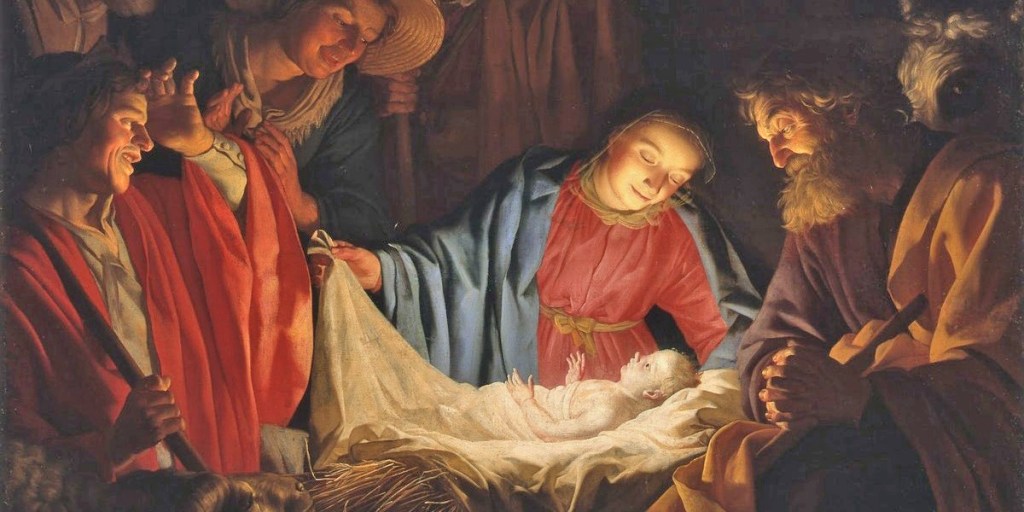
The incarnation is the biblical doctrine that God came to earth in the form of a man (Phil 2:5-11).  According to this passage, Jesus was initially in the form of God but emptied Himself and took the form of a man.  Now what did He empty Himself of?  If He were to empty Himself of His deity, the nature of God would change, and the trinity would no longer exist.  That can’t happen (Mal. 3:6).  So, it must have been something else.

In the garden just before Jesus was dragged off to trial, He asked the Father to restore His glory to Him, the glory He had with the Father before creation (John 17:5).  So, Jesus emptied Himself of His glory.  The emptying of His glory seems also to have required strongly limiting or eliminating the use of His divine attributes.

When Jesus walked the earth, He said He could do nothing Himself.  It was the Father working through Him (John 5:19, 30).  If Jesus emptied Himself of His glory, then that’s why He was unable to do anything without the Father.  He was still God.  He still had His divine nature.  But, He couldn’t act as God.   I like to use the example of our eyes to explain this.  By nature, our eyes see, but if we drape them in flesh as Jesus did His divine nature, the eye can no longer see, but its nature hasn’t changed.  God’s full glory is so great it cannot exist in a frail human body.

Yes, Jesus still has a human body today, but it has been changed to a glorious spiritual body (1 Cor. 15:42-44).  “What is a spiritual body,” you might ask.  I don’t know.  If our spiritual bodies are to be like Jesus’, they will be bodies able to thrive in heaven and will have a different set of aspects and abilities.

Back to Jesus’ incarnation, though.  God became man.  How can someone be both God and man at the same time?  The answer is the two are not mutually exclusive.  A stapler can be both black and plastic at the same time. Two natures together. A human form as we have could not contain God’s glory, certainly.  !t wasn’t until after Jesus was raised that He regained His divine attributes.

The fact Jesus is both human and God explains a lot of passages in Scripture.  Jesus prayed to the Father (Matt. 11:25).  He called Someone else (the Father) His God (John 20:17), He said the Father is greater than He (John 14:28).  If Jesus is God, then how can He say these things?  It’s because He is God in human flesh.  He took on human form, so He was limited to doing only what a sinless man with a loving Father in heaven could do.  He told us we could do the same things and even greater works than He did (John 14:12).  Jesus, as a human being, had a God. 

This is a hard point to understand.  In John 2:18-22, Jesus predicts He would raise His own body from the dead.  Pretty good trick if you are only human.  How could a dead human raise Himself?  It was the divine nature of Jesus which raised His body, and Jesus calls it His body.  The Person we know as the Son is the Person we know as the Word (John 1:1) who has always existed and He is the human being we know as Jesus who began to exist in Mary’s womb.  Both the Word and Jesus are the same Person.  He just has two natures. His human nature did not always exist.

Why is this important?

We as Christians need to realize God did not die on the cross at Calvary.  It was Jesus’ human nature, His body which died.  It was Jesus’ divine nature, God the Son Who raised that body.  Along with that, we need to realize Jesus didn’t just enter into a “human envelope” at the incarnation and that envelope died.  Jesus was fully man and felt death just as all humans do (Phil. 3:10). While God the Son did not die, He tasted death for us all (Heb. 2:9)

Jesus humbly emptied Himself and became a man. Hesacrificed His life for us.  The very least we can do is give our life to Him. 

Basic Teachings (New Testament)

The New Testament is a set of 27 ancient Greek documents representing directly the teachings of the apostles.  In Acts 2:42, we’re told the early church followed the teachings of the apostles.  So, if we want to follow the teachings of the early church, we need only find them in the New Testament.

By 68 a.d., though, all the writers of the New Testament were dead but two, Luke and John.  Up until then, if there was a doctrinal disagreement of any note, the local church would seek out or write to an apostle for an answer.

Of course, this couldn’t be done after they were gone, so the church needed to find another way.  They followed two paths.  First, they decided to form local councils of pastors.  The head of each of these councils would become the bishop, the catholic authority for the local area – the word “catholic” is an early term used to identify the true teachings verses the heretical doctrines.  It was not the beginning of the Roman Catholic Church.  The RCC simply applied the term to itself much later.

Secondly, there were the Apostolic Fathers, the disciples’ disciples: Polycarp, Ignatius, and Clement of Rome

Speaking of heresies, the early bishops had to deal with lots of them in and out of the church.   Some of the bishops became heretical themselves, and some of the doctrines of the Apostolic Fathers changed

.  Well, the early church had enough of this and looked for another standard for sound doctrine.  They turned to the writings of the apostles.  Another problem arose.  There were a lot of documents by then claiming to be genuine apostolic writings like the Gospel of Thomas, the Acts of Peter, the Gospel of Barnabas.  Some were Christian, some heretical claiming to have been written by the apostles.  So how did they sort out the inspired books from the heretical.  They were actually very organized.  The bishiops agreed on tests of each document to tell if it was genuine. 

Did the document carry apostolic authority?  We have at least two books of the New Testament, Mark and Luke, which were not written by apostles.  However, Mark was a constant companion of Peter and wrote down what he heard Peter teach.  Luke was a constant companion of Paul and met church leaders and apostles in his travels.  Both carried apostolic authority.  Both James and Jude were half brothers of Jesus, so they had credentials.  James later was called an apostle (Gal. 1:19).

Other tests were if the church as a whole had accepted it, did it doctrinally match the books which were already accepted, did the message tell the truth about God?  These farmed out a lot of the fake books (pseudepigrapha).

Of the 27 New Testament books we now know, 22 were known to be inspired by the middle of the second century, at least by 170 a.d when we see the Muratorian Fragment.  This is the earliest list of recognized inspired books.  The Books of  Hebrews, James, Peter’s epistles, and one of John’s epistles were not listed, we believe.  The document was torn and some of the list may be missing.  There are reasons books were not include: Hebrews was not signed, so it was not immediately included.  James was seen as contradicting salvation by faith alone, and the authorship of Peter’s and one of John’s epistles were questioned.  Most of these five were accepted locally but not universally until the fourth century.

Even with just these 22 books, the church was well armed to fight against the heretics of the first century.

Unlike the Old Testament documents, the documents of the New Testament were not copied by scribes for the most part, at least not in the beginning.  This is because, unlike the Jews, Christians did not see the New Testament documents as a book, a collection of accepted books by the church  Peter himself stated Paul’s epistles were Scripture at a time when Paul was still writing them (2 Peter 3:14-16).  So, many books were recognized as Scripture.

Most of these documents were shared with other Christians.  They would be copied by a pastor or learned person in the church and the original returned from whence it came.  If you were wealthy or important, you might have your own copy of a New Testament document.  Your friend could borrow it and copy it and then return it.  This made for errors and additions in many of the 24,000 manuscripts of the New Testament documents we have today.

To deal with these issues, we have textual critics who study these manuscripts along with other early church writings and try to decide what exactly the original documents said.  We do not have the originals.

As a result of these textual critics, scholars are now sure 98% of what see in our New Testament was the same as the originals.  The two percent contains nothing of doctrinal importance.  Since the Church Fathers wrote so much and quoted so much nearly the entire New Testament could be reconstructed just from their writings.  What is missing is some of the genealogies for the most part.

Why is this important?

Over the last 2,000 years God has protected the teachings of the apostles for us to read today.  We can be confident that what we read is as close to the original as 2,000 years of continual scholarship can make it.

God has given us a rule, a standard, for how we are to run our lives.  He has given us guidelines on nearly every facet of the Christian life, and we hold it in our hands today.  Not only that, but we can pray when we read and have the author explain what He has preserved for us.

The Bible is a remarkable book.  It was given to us as holy men of God were moved by the Holy Spirit (2 Peter 1:21).  It is God breathed to teach us how we are to obey Him (2 Tim 3:16).  It is God speaking to the ages through the written word. 

CORRECTION: In the first publishing of this page, I said all the apostles except John had been martyred by the end of 68 a.d. That was incorrect. All the apostolic writers of the New Testament documents except John were dead by 68 a.d. Other apostles were not martyred until into the 70s a.d., and John died near the end of the first century.

Basic Teachings (Old Testament)

The Bible is not a book.  It’s a library of 66 ancient documents written by more than 40 authors over 1500 years.  All those books by all those authors, over all that time, and they all testify to a personal experience with the same God of the universe Who wants a personal relationship with us.

How do we know the Bible we hold in our hands is reliable?  After all, it’s been around for thousands of years.  Maybe it has been altered.  It’s been through translation after translation, copies upon copies.  How do we know what we have is accurate?

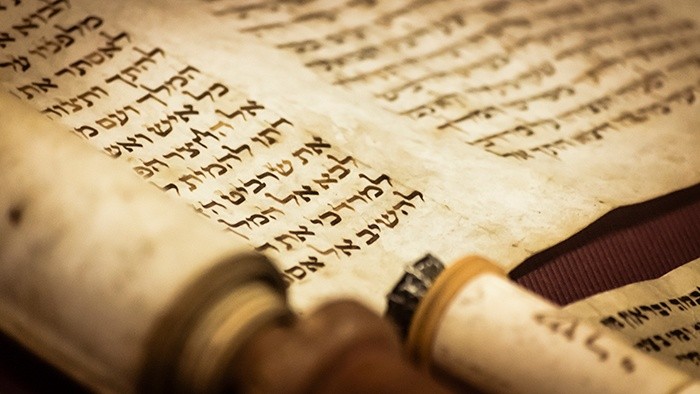
What Christians call the Old Testament has been around for a long time.  In 1946/47 the Dead Sea Scrolls were found.  These are copies of the Old Testament books (except Esther) copied around the time of Christ and are 1,000 years older than our next earliest copies of the Old Testament books.  The funny thing is though these copies are nearly 1,000 older, they read almost exactly the same as the more recent ones.  Why is that?

The Old Testament scribes had a job.  That job was to copy the books of the Old Testament, and they took it very seriously.  Tradition tells us the scribe would sit at his worktable with the document he had just copied and his copy.  He would count the letters in the original and the copy.  If they both didn’t have the same number of letters, the copy was destroyed.  If they had the same number of letters, then the scribe would stretch a string across the copy from corner to corner making an “X”.  He would do the same with the original.  If the strings didn’t cross at the same letter, the copy was destroyed.

When copying the text to a new document, if the scribe came across the Tetragrammaton, the divine name, he could not write the name until he had taken a bath, put on freshly laundered clothing, used a new pen and new ink.  Then he could write the divine name.  Verses like Isa. 44:6 contain the divine name twice, so it took some time to copy some of these verses.

As you can imagine, this method produced an extremely accurate set of copies.  This same method resulted in the Dead Sea Scrolls matching so well to the later copies.

The Bible, Old and New Testaments, are not in chronological order.  The Old testament is set in sections.  The first five books, the books written by Moses, are called the Pentateuch.  The next section is the historical books, Joshua through Esther.  Then come the poetic books, Job through Ecclesiastes.  After Ecclesiastes come the Major Prophets, Isaiah through Daniel.  And, last of all are the Minor Prophets Hosea through Malachi.  The Minor Prophets are in no way minor as to content, they’re just shorter than the Major Prophetic books.  Also, the oldest book in the Old Testament comes close to the middle of the Bible, the book of Job.  Some scholars even believe Job may have come with Noah on the ark.

There are 39 books in the Protestant Old Testament.  While the Jews use the same books we do, they are in a different order.  The Catholics have more  books in the Old Testament than the Jews or the Protestants since seven additional books were added to the Catholic Old Testament at the Council of Trent in the sixteenth century.  They now have 48 books in their Old Testament.  Protestants call these additional books The Apocrypha (meaning “spurious”), and are not seen by Protestants as inspired.

The Old Testament was written for us all.  It is the same God presented.  Some would disagree and say the Old Testament presents a harsh and wrathful God while the New Testament presents a kind and gentle God.  Some think the Father is the God presented in the Old Testament but the Loving and gentle Son is the one given prime placement in the New.

The Father is very active in the New Testament.  Jesus could do nothing without the Father directing and working through Him (John 14:10). And,  Jesus is very much the God of the Old Testament.  He even tells the Pharisees He is the God of the burning bush (Ex. 3:14; John 8:58).

Why is this important?

Our God is the same yesterday, today, and forever.  He is unchanging, immutable (Mal. 3:6).  We learn much about our God from the Old Testament: His love for His people, among which are His concern for individuals, His justice, and His mercy.

Christians need to understand what the Old Testament is, how it was handed down, and have confidence in the reliability of God’s Word. 

Next Week: The New Testament

Basic Teachings (Salvation)

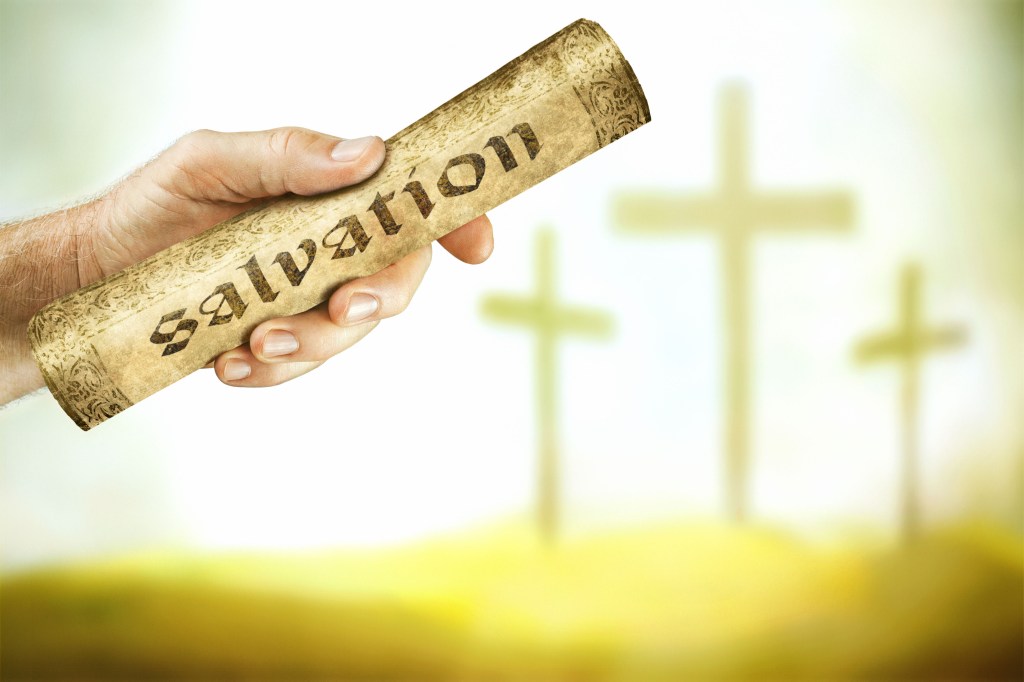
A hand that shows the message of salvation from the cross of the Lord Jesus.

Last week I was talking with a guy on Facebook, and he said he could never believe in a God who sentenced people to hell.  I told him I couldn’t either.  This man had a very skewed view of God’s grace.

God is holy (Isa. 6:3).  Nothing unholy can stand before God (Rev. 21:22-27).  Man is unholy.  Only one sin, no matter how large or small, is all that is needed to make us unholy (Rom. 3:23).  We can’t help it.  We carry the sin nature (Gal 5:27).  That means it is in our nature to sin. 

So, what can we do about this?  That’s the problem.  We can’t! 

But, God is love (1 John 4:8), and loves us infinitely.  He has made a path for us to follow, a system for us to be made clean of unholiness.

God set up a system in Old Testament times whereby animals would take on the unholiness of an individual or the entire nation of Israel.  The animal would then be killed, give his life as punishment or payment for sin (Lev. 4).  The High Priest represented the entire nation of Israel in the annual sacrifice, the Day of Atonement (Lev. 23:26-32).  On that day, the sacrifice made by the High Priest cleansed the sins of all the people of Israel.

The problem is the next day the people would sin and have to wait a year before they were corporately cleansed again. 

Israel fell into sin and away from God often.  The system didn’t work, not because it was flawed but because the people were (Rom. 8:3,4).

The Old Testament system, the Law, also showed us we could not do it on our own.  We were and are unable to reach perfection, holiness.  Attempting this is futile.  We need a new system to take care of our unholiness.

What God has provided is not so much a new system but a completion of the old system (Matt. 5:18).  A sacrifice was still required.  A High Priest had to give it (Heb. 7:27). I suppose God could have created a perfect man to become the sacrifice.  A perfect man brought sin into the world after all (Rom. 5:12).  There must have been a lot of reasons He decided to come Himself.  I think He didn’t want to short-change His children by sending a created being even if He loved that being infinitely.  It still would mean more to His beloved children to come Himself.  His love is shown in no greater way than to offer Himself for us (John 15:13). 

This sacrifice fulfilled the old law and gave us a new one (Rom. 8:1,2), a law based on Christ’s sacrifice.  Now we could be holy if we wanted by accepting Christ as Lord of our lives.  How simple is it to accept Jesus gift of salvation? 

“For you did not receive the spirit of slavery to fall back into fear, but you have received the Spirit of adoption as sons, by whom we cry, “Abba! Father!” (Rom. 8:15).

This passage was written by Paul to Roman Christians, and there is a lot of Roman tradition behind it.  In the Roman culture, a wealthy man could adopt a slave if he wanted.  It didn’t matter if the slave were an adult or a child.  He could follow the ceremony I’ll describe.  At the end of the ceremony, the adoptee became the master’s child forever.  While the master could disown his own natural child, he could never disown an adopted child.  So, it was a big deal to be adopted by your master.  Here’s how the ceremony went:

The one in charge of the ceremony was always to be the head of the family, usually a wealthy and often a powerful family.  A fee was paid by the adoptive family to the family of the adoptee.  The adoptee took the new family name as his own.  In effect, the adoptee was given a new identity, became a new person, an heir.  New rights and responsibilities were taken by the adoptee as the son of a ruler.  No prior commitments or debts would be recognized.  The adoptee did nothing during the ceremony except at the end.  After everything else was finished, it was ultimately up to the adoptee if he wanted to be the master’s child.  If he did, he simply turned to the perspective father and said, “Abba!  Father!”  This closed the ceremony, and the child was now a full heir of his new family.

This is such a beautiful example of God’s salvation plan.  He wishes all men to come to Him (1 Tim. 2:7).  He has paid the price (1 John 2:2).  He has made all the arrangements and completed His part of the ceremony.  All that remains is for us to turn to God and say, “Abba! Father!”  to accept God as our Father, our Lord.  Accept the gift of salvation He offers if you haven’t already.  It is free.

Why is this important?

There are many lost people who have an incorrect idea of Who God is.  They think of Him as Someone who is watching for us to step out of line so we can be punished.  Nothing could be further from the truth, and we need to understand the process ourselves in order to better explain it to the lost.

There are also people in the church who do not fully grasp what salvation entails.  They need to understand as well.

God’s gift comes from the fact He is love, He is loving by nature and wants us to join Him in His kingdom as fellow heirs with Jesus.  My wife shared a wonderful verse with me this week that sums this up beautifully:

“Fear not, little flock, for it is your Father’s good pleasure to give you the kingdom.” (Luke 12:32)