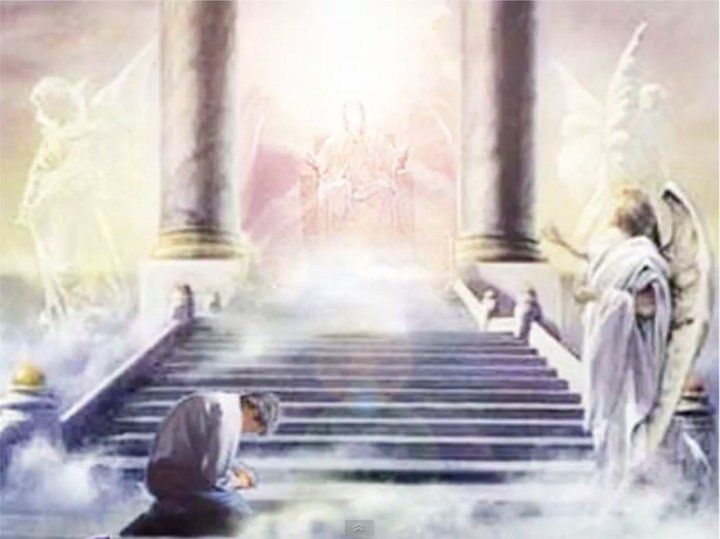

Doubt

In the first chapter of James, he describes the man who doubts what God has said and promised as “like the surf of the sea, driven and tossed by the wind.  Let not that man expect that he will receive anything from the Lord being a double minded man unstable in all his ways.”

From that we might expect God’s reaction to our doubts will be quick and severe.

I did a little research, though, on the Greek word used for “doubt,” diakrino, in the passage and found other places this word is used.  At the tomb when the women entered the tomb not finding a body, they were “perplexed.”  This is the same Greek word.  They were not judged for their lack of understanding.  In fact the angel told them not to be afraid. Their doubt, perplexity, was not sin.

At Pentacost, the disciples spoke in tongues to the crowd, and the crowd was confused.  The word for doubt is translated as “confused” here.  Confusion can be a form of doubt yet not sin.

Doubt which seeks an answer, a resolution for the doubt, perplexity, or confusion is honored in Scripture.  In Acts 17:10f, the Bereans were called “noble” not for their doubt but for seeking to belay that doubt through evidence.

In John 20:26-29, Jesus didn’t condemn Thomas’ doubt that He was risen.  He presented evidence to alleviate Thomas’ doubts.  He did the same for the other disciples in Luke 24:36-49 and used the evidence He presented to help the disciples understand the Scriptures.

Doubt is not always a bad thing, then.  Someone once said doubt is the first step to understanding.

I think the important thing here is what we do with doubt.  I doubted the gospel until I was convinced of its validity.  After that, I doubted nearly every major doctrine in the faith.  That doubt, though, drove me as it did the Bereans to seek the resolution to those doubts.  The result was a stronger faith founded on evidence.

Jude 22 says we are to have mercy on those who doubt.  If doubt truly is the first step to understanding, then I can see why God has such a special place in His heart for doubters.

Why is this important?

In Luke 7:18-23, John the Baptist was beginning to doubt Who Jesus was.  John was in a prison awaiting execution.  He wanted to make sure what he believed was true, so he sent messengers to Jesus asking if He were truly the Messiah.  Down deep, John knew He was.  He had seen the Holy Spirit descend on Him at His baptism.  He had heard the very voice of the Father saying “This is My beloved Son in Whom I am well pleased.”  He had told others Jesus was the Lamb of God Who takes away the sins of the world.  But, doubt was arising in his heart.

Jesus’ response is interesting.  He performed miracles in the presence of John’s messengers then sent them back to John with evidential confirmation that He was the Messiah.

John sought confirmation.  He was not dwelling on doubt, he was not giving in to his doubt.  He was seeking confirmation for what he already believed was true.

When we doubt we have not yet sinned.  It is when we dwell on the doubt without seeking to resolve it that it becomes sin.  It is similar to how James described temptation earlier in that same first chapter.  Temptation is not a sin in itself but can lead to sin.  There are steps involved.  James says we are first tempted, but when we dwell on the temptation until it becomes desire.  It is that desire to yield to the temptation that becomes sin.  In the same way, yielding to our doubts gives birth to sin.  We are to resolve our doubts, not yield to them.

Tenacity

Tenacity

Galatians 6:9 (ESV)
9  And let us not grow weary of doing good, for in due season we will reap, if we do not give up.

Some weeks are harder for us than others.  Sometimes even those in ministry get tired once in a while.  I taught an adult Bible class for over 35 years every week.  I probably averaged fewer than two Sundays off per year.  I have to confess I sometimes had taken on too much and didn’t feel like preparing a lesson or even getting up to teach that lesson.  We can just get burned out at times.

Once in the classroom, though, I was energized and thrilled to see the happy faces of my friends learning the concepts I was presenting.

Certainly those in ministry need a break.  God created a day of rest for us for just that reason. Tenacity is something that needs recharging.

The years I served on the elder board of a church, I got to see the job of a pastor.  I’ve seen it, and I don’t want it.  Pastors spend long hours preparing their messages for mid-week and Sunday.  A pastor friend of mine told me he spent an hour of study for every minute of his sermon.  That means a typical 45 minute sermon took more than an average workweek.  And that’s just Sunday’s message.  For many churches, there is also a mid-week service and other duties on top of that.

A few years ago I asked my pastor how many hours he spent preparing for Passion Week.  He had a Wednesday study to do, a Good Friday service, plus Easter Sunday’s message to prepare for.  In addition to those hours of preparation, he had the sick to visit, marriages to counsel, and home life to attend to.  As I’ve said, I’ve seen the job, and I don’t want it.

The pastors I’ve had over the years have all understood the value of taking time from the pulpit.  They need to unwind.  They need time away. This isn’t a sign of weakness. It provides energy to pursue the ministry with vigor.

This goes for the average ministry volunteer as well.

Back when I was a pretty new Christian, my wife and I volunteered for anything we were asked.  After a few years, this became so burdensome we left the church to get out from under the pressure.  Though we loved our church and the people there, I thought it unspiritual to just say “no.”  I was so wrong.

My wife and I discussed the issue and resolved to take it slower. We returned to that church a year or so later with a new attitude.  We had made a pact that we would only volunteer for things after prayer and then only if we felt God leading us to that ministry.  What a total relief!  Our whole view of ministry changed and so did our effectiveness.

Why is this important?

Bruce Wilkinson in his book The Seven Laws of the Learner tells a story of a time when he needed to fire an employee.  He figured the woman was fully aware she wasn’t fulfilling her duties and could be easily persuaded to “fire herself” if he just asked her about how her job was going.

He did that, and the woman enthusiastically recited a series of duties she was performing and loved every minute of it.  Wilkinson said he wanted to give her a raise after hearing her.  He snapped back to reality, though, and explained to her that he was glad she was doing all those things, but it wasn’t what she was hired to do.

Do we really want to stand before God with a list of things we’ve done for Him that doesn’t match the list He had for us?

Christians who want to please God and others in the church, might take on too much.  We want to do all we can to serve God, but are we taking regular breaks and doing only what we should?  We could be robbing someone of a blessing if we do their job. We could even be neglecting the ministry God has called us to do.  We need to be careful we do only what God has asked of us and leave the rest for those God has called for the other tasks.  That way, we can continue to do our jobs effectively, consistently, and tenaciously.

His Lordship

John 20:28 (ESV)
28  Thomas answered him, “My Lord and my God!”

There is a controversy among Christians today concerning what it means to be a Christian.  Do we just believe that Jesus is God?  Is that all it takes, or is there more?  Or do we need to make Him Lord of our lives?  This is called the “Lordship Controversy.”

The Greek word for “Lord” Thomas used in John 20:28 is kurios and means lord, master, and even owner.  “Sure,” someone might say, “That was Thomas.  He was an apostle.  They turned their lives over to Christ.  Their’s was a super heavy commitment.  We’re not required to have that sort of relationship with Christ, are we?”  Let’s see.

Those who argue against lordship will often point to Acts 16:31 “And they said, ‘Believe in the Lord Jesus, and you will be saved, you and your household.’”  “So,” they say, “only belief in Jesus is needed for salvation.”  Pisteuo is the Greek word there for “believe,” and it means to believe, but is belief all that is involved.  Is a simple belief enough to assure one’s salvation?  The Greek word can mean a variety of things from simple belief something is true to belief that is so strong, so deep, that someone would commit their whole life to that belief.  Which sort of belief is Acts 16:31 talking about?

The story surrounding Acts 16:31 is about the Philippian jailer.  The verses following show that he didn’t just accept the message was true.  He acted on it.  He was baptized, and rejoiced in his newfound faith.  His life had been changed. 

What sort of belief changes our lives?  Is it just acceptance of a truth, or is it a belief so strong it forces us to commit to that truth?

In Acts 8, we are introduced to an interesting character in Church history, Simon Magus, Simon the magician.  According to the passage, Simon believed and was even baptized (vs 13), but was his life changed? Verses 18 through 23 of Acts 8 tell us in fact Simon’s life was not changed.  He had not truly made that commitment required for a life changing relationship with Christ.

Our churches have people in their pews who have accepted the gospel as true but never acted on that truth, never committed their lives to Christ.  I know because I attended church and counted myself as a Christian for five years before I was shown a commitment was needed, and my life changed.

Why is this important?

Matthew 7:21-23 (ESV)
21  “Not everyone who says to me, ‘Lord, Lord,’ will enter the kingdom of heaven, but the one who does the will of my Father who is in heaven. 22  On that day many will say to me, ‘Lord, Lord, did we not prophesy in your name, and cast out demons in your name, and do many mighty works in your name?’ 23  And then will I declare to them, ‘I never knew you; depart from me, you workers of lawlessness.’

Matthew 7:21-23 should be the scariest verse in Scripture.  Certainly, it speaks of cultists and followers of false religions, but I think it is speaking to some in the church today as well.  God doesn’t want them to rest on a mere acceptance of the gospel as true.  He wants them to act on it.

When I was in this situation, I didn’t think there was something more than just belief.  If you have belief without commitment, church is a club of likeminded members.  It’s not much different than the Elks or Masons.  God wants more than that for us.  He wants a personal relationship with each and every one of us.

If you are only holding a belief that Jesus is God and Savior but have not committed your life to that truth, like Simon the Magician you are still lost.  A Christian is not someone who is independent of God.  We are God’s servants, God’s property.  We are not our own.  We have been bought and paid for.  Something to think about.

1 Corinthians 6:19-20 (ESV)
19  Or do you not know that your body is a temple of the Holy Spirit within you, whom you have from God? You are not your own, 20  for you were bought with a price. So glorify God in your body.

God Speaks to Us

Hebrews 1:1-2 (ESV)
1  Long ago, at many times and in many ways, God spoke to our fathers by the prophets,  but in these last days he has spoken to us by his Son, whom he appointed the heir of all things, through whom also he created the world.

We read of all the incredible miracles in the Bible, the Red Sea is parted as Moses raises up his rod, ten plagues were inflicted on Pharaoh’s Egypt, God created the heavens and the earth by only speaking.  But, is that how God speaks to us as today’s Christians?

There are lots of ways He speaks to us.  There are dreams, visions, the advice of a fellow Christian, and especially by His Word.  But, when we need to decide if God is leading us and the Bible doesn’t seem to give a clear answer, how do we know?

I have friends who wanted to be missionaries.  They prepared from their youth, trained, and were educated to do the job effectively.  They later discovered the mission field was not for them after all.  How can you spend so much time preparing for something God doesn’t want you to do?  God sometimes uses preparation for one thing to be applied somewhere else. 

My friend ended up with a Masters degree in theology.  Today, he’s a pastor blessing his congregation and those in the surrounding community.  His wife uses her education to home school their children and minister to others in their community. Sometimes God speaks to us like that.

Much of what I do to serve the Lord hasn’t come directly from my youth, though some has.  I have to say mostly God just nudges me to do something.  If there’s something I see that might further God’s kingdom, I wait for God’s nudge.  He tends not to be aggressive anymore to get me to do things.  He’s had to throw me up against the wall a couple of times over the years to spiritually get my attention, but He hasn’t had to lately. I like to think I’ve started to listen more.

That nudge toward something is what I depend on for His direction.  Let’s say I feel led to go on the mission field (which I don’t).  What’s the next step?  Pray, of course.  Then, if I still feel led, I might ask a few spiritually mature friends what they think.  If they think it’s God’s will, I might be tempted to sell everything and head on out, but I have a wife.  God has her phone number, too.  Is He telling her the same thing I think He’s telling me?  God is all for keeping marriages together, so if my wife doesn’t feel led to the mission field, that door is closed.  God is saying “no.”  Suppose she says, “Okay.”  Then maybe it’s time to sell everything, and it turns out you just can’t sell your house.  That could be a sign you’re misreading the nudge as well.  Step by step, take it slow. Rely on the Lord.

Why is this important?

If we act without God’s prompting, we may end up acting against His will.  What we do might turn someone away from the Truth and make it harder for the next brother or sister to witness to him.

God has a plan.  He wants to use each of us in it.  He doesn’t want to use only me or you, though.  He has individual jobs for each of us.  I have friends who are driven to walk the streets and tell people about Jesus.  That’s not my calling, though. And, they would never consider teaching a class or writing a blog either.  That’s not what God has equipped them to do. 

Just as God spoke to Elijah in that still small voice (1 Kings 19:9-12) He talks to each of us the same way.  So next time we feel God nudging us or whispering to us, we should take the first step toward completing what we believe God wants us to do, then the next step and the next.

Many times God asks us to do things that are outside of our skill set.  As has been said before, “God doesn’t call the equipped, He equips the called.”  If God is calling us to do something, and it truly is God calling us, He will provide all that we need in skills and resources to accomplish His will.  He’s just happy to include you and me in His work.

Humility

Philippians 2:4-8 (ESV)
4  Let each of you look not only to his own interests, but also to the interests of others.
5  Have this mind among yourselves, which is yours in Christ Jesus, 6  who, though he was in the form of God, did not count equality with God a thing to be grasped, 7  but emptied himself, by taking the form of a servant, being born in the likeness of men. 8  And being found in human form, he humbled himself by becoming obedient to the point of death, even death on a cross.

When I was a kid, there was a “Character Development” section in every bookstore.  Individuals were interested in become better human beings.  They sought to learn where the sharp edges of their character were and how to round them.  That section of the bookstore has now been replaced with books on self-love and how to influence others.   JFK’s famous statement just 60 years ago, “Ask not what your country can do for you.  Ask what you can do for your country” now falls on deaf ears.

The passage above from Philippians tells us Christians we are not to think like that.  The idea of God the Son emptying Himself of the use of His divine attributes in order to come to be with us is staggering.  The God who spoke and all that exists came into existence from nothing came to wash the feet of men (John chapter 13).  The Person Who had never known pain, endured the horrible pain of a Roman flogging and then of crucifixion.

He saw a world in need of salvation and humbled Himself in order to provide it.

If we’re to be Christlike, we’re to humble ourselves in order to provide for the needs of others.  Is that the sort of concern you and I have for others in need?  Do we ask “how can I help spiritually and physically?” 

“Maybe this is just one of those impossible goals like Jesus telling us to be perfect.”  We tell ourselves that, but is it true?  Even if it were, can’t we do better?  Are we yielding to the Spirit of God?  That would be humbling.

Humility means to bring ourselves low, lower than we think we ought to be.  C.S. Lewis defined humility as not thinking less of ourselves but thinking of ourselves less.  We are a selfish people.  Humbling ourselves is hard, harder for some than for others, but it’s not a suggestion.  It’s a command.  No loopholes.

Why is this important?

The United States is currently seeing cities burning, people killed randomly, and corrupt officials standing by allowing this to happen.

Isaiah saw Jerusalem in the same situation, and God noticed:

Isaiah 1:21 (ESV)
21  How the faithful city has become a whore, she who was full of justice! Righteousness lodged in her, but now murderers.

God told Isaiah the reason He didn’t destroy the land was that there were still survivors, sincere followers of God there.

Isaiah 1:9 (ESV)
9  If the LORD of hosts had not left us a few survivors, we should have been like Sodom, and become like Gomorrah.

 It turns out humility is a powerful defense for the Christian. The very presence of humble believers had kept God’s total wrath from the city of Jerusalem.  The city was destroyed by the Babylonians a hundred years later but only because the people failed to humble themselves.

There are survivors here, sincere followers of God in our nations today holding back the total wrath of God.  But, God wants more from us.  God honors our faithfulness, but humbling ourselves before God can have an even greater effect:

1 Kings 21:29 (ESV)
29  “Have you seen how Ahab has humbled himself before me? Because he has humbled himself before me, I will not bring the disaster in his days; but in his son’s days I will bring the disaster upon his house.”

2 Chronicles 7:13-14 (ESV)
13  When I shut up the heavens so that there is no rain, or command the locust to devour the land, or send pestilence among my people, 14  if my people who are called by my name humble themselves, and pray and seek my face and turn from their wicked ways, then I will hear from heaven and will forgive their sin and heal their land.

Let us humble ourselves before the God of Abraham, Isaac, and Jacob.  Let us have the mind of Christ and reach out humbly to those in need.  In doing so, God may heal our land.

Be Perfect

“Be perfect?”  That’s a pretty big bite to chew.  How in the world can we humans be perfect?  And, we’re not just to be perfect as we understand it but as God the Father is perfect.

Christians are “perfect” in the eyes of God through the cleansing of Christ’s blood, but I don’t think this is what Jesus is talking about in Matthew 5:48.  The Greek word here for “perfect” is teleios.  It means perfect in the sense of being mature, and it is translated several times in the New Testament as “mature.”

Ephesians 4:11-13 (ESV)
11  And he gave the apostles, the prophets, the evangelists, the shepherds and teachers,
12  to equip the saints for the work of ministry, for building up the body of Christ,
13  until we all attain to the unity of the faith and of the knowledge of the Son of God, to mature manhood, to the measure of the stature of the fullness of Christ,

The Greek word translated “mature” here is the same teleios.  I think that’s what Jesus is saying in Matthew 5:48.  We are to grow into maturity.

2 Peter 3:18 (ESV)
18  But grow in the grace and knowledge of our Lord and Savior Jesus Christ. To him be the glory both now and to the day of eternity. Amen.

How do we become more mature?  Growth toward maturity is simple but not easy.  Prayer is certainly a path to maturity.  We are to pray without ceasing (1 Thess. 5:17).  Some Christians don’t know Who exactly to pray to.  God is triune.  In the Lord’s Prayer, Jesus taught us to pray to the Father, so we should certainly pray to Him.  In John 14:14, Jesus tells us to pray to Him, so He is another Person we should pray to.  In Acts 13:2, the Holy Spirit speaks to the faithful in answer to their prayer, so I think we should pray to Him as well. 

I do think there are basics to prayer.  We should approach God cleansed of sin.  We do that by confessing our sins to Him (1 John 1:9).  From there on, we’re free to ask, adore, praise, and thank or whatever we wish.  Sometimes, it’s nice to just hold a conversation.  Don’t you like that from your kids?

Bible study is also an important element of becoming mature.  We don’t’ become Christlike solely by talking with Him.  We need to see what He is told us to do.  In 2017, I presented several methods of personal Bible study.  They are Topical, ABCD, Character, and Word Studies.  If you would like to learn more about how to study the Bible for yourself from a plainly written and extremely valuable book, you might pick up a copy of the Navigator’s book on Bible Study methods.

One more thing adds to our Christian maturity: church attendance and mingling with other believers.  We learn from one another, comfort one another and are comforted by one another.

Hebrews 10:24-25 (ESV)
24  And let us consider how to stir up one another to love and good works, 25  not neglecting to meet together, as is the habit of some, but encouraging one another, and all the more as you see the Day drawing near.

Why is this important?

To become more Christlike is to fulfill the will of God.  Like the rich man in Matt. 19:21, we need to put Christ-likeness first over all other things we love. 

Christ-likeness is the goal set before us.  We will never achieve it this side of heaven, but we are to try and to work toward it.

Some will do better than others in our quest to become more like Christ, mature.  Don’t be discouraged.  I like the analogy of standing on the Santa Monica Pier and trying to jump to Catalina Island, 26 miles away.  Some will jump closer to the island, but no one will reach it.  Still, God is telling us to jump as far as we can, become as mature in Him as we can.  Our relationship with God is personal.  It is not our friend’s relationship, it’s ours.  We should follow what God has for us. 

The Great I Am

Exodus 3:14 (ESV) 14  God said to Moses, “I AM WHO I AM.” And he said, “Say this to the people of Israel, ‘I AM has sent me to you.’”

At the end of Exodus 3:14, the God of the Bible tells us His name, at least one of His names, is I Am.  He is called the Great I Am in literature and hymns.  In Exodus 3:14, the Hebrew word is ehyeh which is a form of the familiar Yahweh. 

The name Yahweh appears 6,519 times in the Old Testament.  “I Am” is as much God’s name as Yahweh.  He used it to identify Himself through Moses to the Egyptians and to God’s people.  To both Jew and Gentile, the God of the Bible can be known as the Great I Am.

Yahweh is based on the Hebrew word “to be.”  In the first part of Exodus 3:14, God calls Himself “I Am That I Am.”  Hebrew scholars Keil and Deilitzsch in their commentary on this passage say Moses almost certainly knew God’s name, the name of the God of his fathers.  They believe Moses was asking about God’s nature.  “I Am that I Am” means “The Becoming One” or that God can be whatever is needed.

Now let’s move on to the New Testament.  In John chapter 8, Jesus is in a long argument with the Pharasees.  He embarrasses them with the woman caught in adultery by asking the one without sin to cast the first stone.  They accuse Jesus of being illegitimately born, but Jesus continues to tell them He is the Light of the World, that He is the Messiah Who will die for our sins, and what He is teaching is true.  Then Jesus tells them they are of their father, the devil. And the Pharisees’ angry accusations continue.

The Jews accuse Jesus of being demon possessed, and Jesus says Abraham saw Jesus’ day and was glad.  The Jews accused Him of having a demon again since Jesus was still a fairly young man and claimed to have known Abraham.  Jesus’ answer was interesting.  He said, “Truly, truly, I say to you, before Abraham was, I Am” (vs.58).  Jesus used the divine name and applied it to Himself.  How do we know?  In the very next verse, we’re told the Jews picked up stones to stone Jesus.  This was the punishment for blasphemy.

Just two chapters later in John, the Jews once again pick up stones to stone Jesus.  Why?  John tells us:

John 10:33 (ESV) 33  The Jews answered him, “It is not for a good work that we are going to stone you but for blasphemy, because you, being a man, make yourself God.”

Jesus used the divine Name and applied it to Himself.  Look at one more passage in John:

John 18:4-6 (ESV) 4  Then Jesus, knowing all that would happen to him, came forward and said to them, “Whom do you seek?”   They answered him, “Jesus of Nazareth.” Jesus said to them, “I am he.” Judas, who betrayed him, was standing with them. 6  When Jesus said to them, “I am he,” they drew back and fell to the ground.

Have you ever wondered why they fell to the ground?  Was Jesus’ reply so overwhelming?  Who were these guys who came to arrest Jesus anyway?  John 10:3 says these were the chief priests, soldiers and officers who came with them.  Were these soldiers Romans?  Luke tells us who they were:

Luke 22:52 (ESV) 52  Then Jesus said to the chief priests and officers of the temple and elders, who had come out against him, “Have you come out as against a robber, with swords and clubs?

So, all these guys who came for Jesus were Jews and officers in the Temple.  They knew God’s Name.

What’s interesting is that “he” is not in the Greek In John 18:6.  Jesus didn’t say “I am he.”  He said “I Am” using the divine name.  This was so powerful and so shocking to the Jewish officials and soldiers they fell to the ground in fear.

Why is this important?

We as Christians need to understand who Jesus really is.  I’ve spoken with some who believe Jesus is God but a sort of lieutenant god; that He’s certainly called God but just doesn’t rise to the level of the Father. 

That’s not true.  The Jesus who stood before the soldiers and Pharisees proclaiming He was the I Am is the same God who spoke from the burning bush in Exodus 3:14, the God who delivered the Jews from the Egyptians, the same God who walked with Abraham in Genesis 18 and destroyed Sodom in Genesis 19.

Our God in the Person of Jesus Christ is equal in power and authority to the Father and the Holy Spirit.  So, when we pray to Jesus we pray to the God who brought the universe into being (Col. 1:16).  The wonderful truth is that same power lives in us (Rom. 8:9-11).  The Jesus we know is the same Jesus who carries the divine Name.  He is the Great I Am!

Infinity

There are lots of words in the Bible describing the concept of infinity: everlasting, forever, eternity, and such.  But, what is infinity?  “Well, infinity is something which will never end,” we think.    But, I don’t think that statement really grasps what infinity truly is.  Maybe we can never grasp it, but we can get a bit of a handle on it.

To begin with, there are two kinds of infinity.  There is actual infinity, something which has no beginning or end.  God is the only One in this category.

Then there is potential infinity, something which begins to exist but will never cease to exist.  This is called “potential” because we will always have a numbered amount of days we have lived, but our days will never end.  

Infinity is a difficult number to comprehend, and, in fact, no infinite number of things exist in our universe.  There is a specific number of electrons at any precise moment in time in the universe, for exazmple.  That number is 1 followed by 80 zeros.  It’s a pretty large number but still a number.

Infinity is a number that is too large to count.  Nothing can be added to it that will increase its size and nothing can be subtracted from it to reduce its size other than itself.

My point is infinity is unfathomable.  Still the Bible uses the term to describe God.  He is an actual infinite (Ps. 90:2, Mic. 5:2).  The idea of an actual infinite amount of something is present in Rom. 1:20 where God’s power is described as infinite.  The Greek Word (aidios) means without beginning or end.  God’s power has always been and always will be.

In the New Testament, the word “eternal” is nearly always used to describe human beings and is, therefore, speaking of a potential infinity, a condition which will continue forever.  The Bible speaks both of infinitelife and infinite punishment.

Matthew 25:44-46 (ESV)
44  Then they also will answer, saying, ‘Lord, when did we see you hungry or thirsty or a stranger or naked or sick or in prison, and did not minister to you?’  45  Then he will answer them, saying, ‘Truly, I say to you, as you did not do it to one of the least of these, you did not do it to me.’  46  And these will go away into eternal punishment, but the righteous into eternal life.”

Why is this important?

Infinite life for us is a promise as is infinite punishment for those who do not know Christ personally and intimately.  Infinite life will include constant joy and praising of our Savior.  The other side of the coin should frighten us all.

The Bible describes what infinite punishment will be for non-believers.  Matt. 8:18 says it is utter darkness and torment.  This will also go on for infinity.

Our job as Christians is not to save people, the Holy Spirit does that.  Our job is to inform people, to warn them of the consequences of turning from acceptance of the free gift of God’s Son.

We often hear Christians say, “Just believe in Jesus, and you will be saved.”  They get that from John 6:29 (ESV) 29  Jesus answered them, “This is the work of God, that you believe in him whom he has sent.”    That’s a beautiful verse, but the word “believe” there involves commitment to that belief, to live your life as Christ commanded, to follow Christ’s words, to live the life He modeled. 

James tells us just a belief in the fact that God exists or even that Jesus is our Savior is not enough:

James 2:19 (ESV)
19  You believe that God is one; you do well. Even the demons believe—and shudder!

If we are telling people a simple faith in Christ without commitment is the path to salvation, we are misinforming them.  The Christian life is not based simply on a belief but involves a commitment to Him in Whom we believe.  Otherwise the joyful eternity we expect may not come to pass.

Matthew 7:21-23 (ESV)
21  “Not everyone who says to me, ‘Lord, Lord,’ will enter the kingdom of heaven, but the one who does the will of my Father who is in heaven. 22  On that day many will say to me, ‘Lord, Lord, did we not prophesy in your name, and cast out demons in your name, and do many mighty works in your name?’ 23  And then will I declare to them, ‘I never knew you; depart from me, you workers of lawlessness.’

Are we shortchanging those with whom we share the Truth and perhaps condemning them to a different infinity than we’re promising them?

Persecution

The 2018 World Watch List compiled by OpenDoors where Christians are most persecuted. Map courtesy of OpenDoors

It’s 300 a.d.  Your pastor and his wife along with 100 church members have been arrested.  They’re being held for trial for the crime of sedition, a crime that carries a 15 year sentence.  Your church has been stripped clean.  The pulpit and cross have been torn down and burned, and a business has taken the place where your church rented space.  Roman soldiers stand outside the building where your church met turning people away with a warning and taking names.

Many of those who escaped are in hiding.  Some who were caught have been exiled never to return to their home town. After almost a year of waiting, your pastor is sentenced to 9 years in prison, and his assets are seized.

This is what life was like under the Great Persecution, 250 until 314 a.d.  It is also the story of what is happening in Communist China today.  The scene above is actually taken from an article in The Guardian of January of 2019 and another article from The Federalist this last December.  Only the time and names are different.

The pastor’s name is Wang Yi, pastor of the Early Rain Covenant Church in the city of Chengdu, China.  He was sentenced just this past December.  His wife and others arrested have been released but their movements are monitored and restricted.

The Chinese government is very aware that Christianity is growing swiftly in China.  Currently, about a fifth of the population is Christian. The government’s idea is to turn the church into a government-friendly and regulated movement.

Since I began this blog three years ago, it has reached 47 different countries with more than 5,000 views.  Even some in Mainland China view our blog.  The first year (2016), Communist China was seventh on our “hit list.”  Last year, it was fourth.  So far this year, China is second only to the United States in the number of views.  Amazing considering English is not their common language.  Something is going on there.

I wanted to let the readers in China know we are aware of some of what they are going through and ask you, the reader, to please pray for these people being persecuted in their own country.  Many Christians must meet in secret in fear of being arrested, tortured, and killed.  Even so, Protestant Christianity is the fastest growing religion in China.  Christianity is not technically illegal in China but is supposed to operate under the authority of the municipal and Provincial council.  In other words, the legal church is government ruled.  It is one without denomination or any overarching church authority.  The government has authority to censor and control local churches if they wish to meet openly.

Because of the restrictions on church teachings, the House Church Movement arose where congregations will meet after hours in bars and restaurants and homes.  These churches are, of course, illegal and openly persecuted, but there is no oversight from the Communists.  To these congregations, Christ should still the Head of the church.

The Gospel Coalition puts it this way:  “The church in China is often lauded in the West as the pinnacle of modern Christian discipleship and church planting. And in some ways it’s a reputation well deserved. The church in China has been forged through the fires of persecution, and the Christians there are men and women of immense faith with great joy in the Lord.”

Why is this important?

Christ spoke of persecution.  We should expect it.

John 15:18-21 (ESV)
18  “If the world hates you, know that it has hated me before it hated you. 19  If you were of the world, the world would love you as its own; but because you are not of the world, but I chose you out of the world, therefore the world hates you. 20  Remember the word that I said to you: ‘A servant is not greater than his master.’ If they persecuted me, they will also persecute you. If they kept my word, they will also keep yours. 21  But all these things they will do to you on account of my name, because they do not know him who sent me.

I have to say I admire the Chinese Christians who hold fast to their faith through terrible persecution.  I wish that I had the depth of faith they must possess.  We need to pray for our persecuted brothers and sisters.  They are most certainly on the front line of the battle. 

2 Thessalonians 1:11-12 (ESV)
11  To this end we always pray for you, that our God may make you worthy of his calling and may fulfill every resolve for good and every work of faith by his power, 12  so that the name of our Lord Jesus may be glorified in you, and you in him, according to the grace of our God and the Lord Jesus Christ.

We in the west can pray, and we can do everything possible to help the persecuted around the world.  China is only one battleground.  In some Islamic countries, you can be killed for preaching on the street.  In India, Christians are persecuted and killed by Hindu nationalists. 

Persecution of Christians didn’t end with Constantine ending the Great Persecution in 314.  It’s alive and well today.

I don’t usually give outside sources of information, but might I suggest you look here: Open Door. ChristianPost

Angels

Angels — Just what or who are they?  Are they just people who have gone to heaven as we were told when we were kids – or are they something very different?  Last week I wrote on demons.  I thought it only fair to discuss the other team this week.

In both the Old and New Testaments, “Angel” simply means messenger, someone who has been sent.   In the case of angels, they are sent to announce something, comfort and direct a believer, and to fight battles for God.  They are members of God’s army.  Angels were manifest both at Jesus’ birth and His resurrection.

The first appearance of the word “angel” in the Bible is in Genesis 16:7 when Hagar was fleeing Sarai.  The Angel of the Lord came to her to tell her to return to Sarai and submit to her and that He would make a great nation of her son, Ishmael.

The term, “The angel of the Lord” has special meaning, and we’ll look at that later. 

We believe just three angels are named in Scripture: Gabriel, Michael, and Lucifer.  Gabriel gave the vision to Daniel in Daniel chapter 8.  He came to Zechariah in Luke chapter 1 telling him his aged wife would bear a son, John the Baptist.  When Zechariah doubted, Gabriel also told him he wouldn’t be able to speak again until John was born.  Gabriel , in Luke 1:26-33, announced to Mary that she would conceive and bear a Son Who would be the Messiah.

Gabriel isn’t the only superstar.  Michael is pretty important, too.  He fought with the demon prince of Persia in Daniel 10.  In Jude 1:9 we find Michael argued with the devil about the body of Moses, and in Revelation 12:7 we see him in command of an army of angels fighting against the dragon.

We looked at Lucifer last week, but suffice it to say he was and still is powerful but fell from heaven along with a third of the angels as they rebelled against God.

Now for “The Angel of the Lord.”  Remember this is “The” Angel of the Lord and not “An” angel of the Lord.  The difference is “The.” It seems to imply one of a kind.  Most theologians believe this to be Jesus Himself in the Old Testament.  In Exodus 3:2, the person in the burning bush is called “The Angel of the Lord” but is identified as God Himself in the following verses.

In Genesis 22:11-12, The Angel of the Lord stopped Abraham from sacrificing Isaac and said he now knew Abraham would not hold his son from Him.  Sacrifices are made to God not to angels.

In Judges 2:1-4, The Angel of the Lord says He is the one who made a covenant with Israel.  Only God has made covenants of this sort.  So, there is pretty good evidence Jesus, God the Son, is in fact The Angel of the Lord.

What about guardian angels?  Are they real?  Some of us can’t believe we’ve done all the things we’ve done and survived without a guardian angel (or more) helping out.   In Daniel 10:21, Michael is called Daniel’s angel.  In Acts 8:26, Philip seemed to have an angel sent to direct him.  There are lots of other places in Scripture where angels seem to be watching out for the believer.  Hebrews 13:2 says we’ve entertained angels unawares. 

We certainly have angels watching us and what we do.  1 Cor. 4:9 says we’re a spectacle to the angels, and 1 Cor. 6:9 says we’ll be judging the angels.  Even though they are these fierce powerful beings, we will be the ones holding them accountable.

1 Peter 1:12 says angels are fascinated by our salvation through the work of the Holy Spirit. 

Why is this important?

Angels are instrumental and important in the life of the Christian.  They watch us and accompany us in our battles.  I think the most fascinating and impressive thing about angels is they are not just on our side but were created to minister to us:

Hebrews 1:14 (ESV)
14  Are they not all ministering spirits sent out to serve for the sake of those who are to inherit salvation?

The God who created you and me sees our need for protection and guidance, and He has sent angels to serve Him for our sake.  Pretty cool if you ask me.  God is Good!

In case you were still wondering, yes, angels were created by God the Son, Himself:

Colossians 1:15-16 (ESV)
15  He is the image of the invisible God, the firstborn of all creation. 16  For by him all things were created, in heaven and on earth, visible and invisible, whether thrones or dominions or rulers or authorities—all things were created through him and for him.