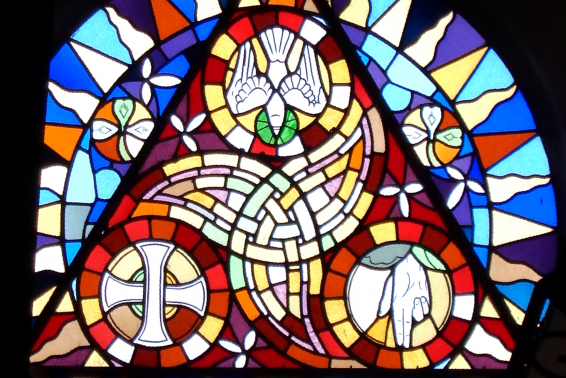
Little Red Schoolhouse

In the pioneer days, the small town school had every child from first grade to high school taught by the same teacher.  Can you imagine what it must have been like trying to teach simple arithmetic to one child then turn to read English Literature with another?  You would think the teachers would go crazy, but they didn’t. 

Teachers back then used the older children to teach the younger ones.  The 8th graders might teach the fifth graders.  The same 8th graders would then learn from the high-schoolers and hear the high school material taught.  Kids learned faster that way.  If you watched Ken Burns’ Civil War documentary, you heard beautiful poetry written by soldiers with an 8th grade education.  The Federalist Papers were written to and understood by farmers many of whom lacked even a high school education.  Law students in Ivy League colleges today have difficulty understanding them.  The small schoolhouse education method worked.

Churches are much like that little red schoolhouse.  There are people in the congregation who are new to the faith, at first grade level.  There are those 8th graders able to help the new Christians and still strive to advance to high school or further.

The pastor/teacher usually gives sermons/lessons at levels across the spectrum.  He tries, usually, to reach the majority of the congregation, not just a specialized group.  Still, many will not catch much of what is taught because it’s new to them, or to some it’s what they’ve heard for years.

A lot of churches offer adult Bible studies at homes or at church.  These give us an opportunity to ask questions and to share what we know with those who aren’t yet as far along the path as we might be or to learn from others who are.

Years ago, I was having trouble finding much that challenged me in our pastor’s sermons.  I told him so, and his response struck me and seared into my mind.  He said “I would expect you to be able to feed yourself by now.”  I had been a Christian for about ten years by then, I was graduating into a new grade.

My whole view of church changed then.  While I am still challenged by sermons I hear, it doesn’t happen as often.  Where church used to be a place to be fed and ministered to, as a “high-school,”  I should be helping others.  Church has become a place for me to minister more than be ministered to.

Like the pioneer schoolhouse, we should be reaching out to one another with love and education:

Matthew 28:19-20 (ESV)
19  Go therefore and make disciples of all nations, baptizing them in the name of the Father and of the Son and of the Holy Spirit, 20  teaching them to observe all that I have commanded you. And behold, I am with you always, to the end of the age.”

The Great Commission wasn’t given just to the apostles; it was given to us all.  We make one another into disciples by teaching one another.

Why is this important?

Many long term Christians grow weary with church.  They’ve “heard it all before.”  They don’t see the need to attend services.  I think they’re missing the point.  I think God is telling them they need to take what they’ve learned and share it.  Attend a home Bible study or an adult Bible class at church.  They aren’t just for learning but for sharing as well.  If you’ve heard it all before, there are those who haven’t and would profit from you telling them.

That same pastor I mentioned earlier came into a class I was attending as a fairly young Christian and pointed out three of us as teachers in the class.  The guy at the head of the class was one, but there were two others he mentioned.  And we never thought of ourselves as teachers, just attendees who shared what we knew.

He told me teachers are not always in front of a class.  He said many in the class are teaching and just as effective as the guy who prepared the lesson.  Teaching others doesn’t require the gift of teaching, or God wouldn’t have command us all to do it.  Teaching doesn’t need to be academic either, or He would have given us all the drive for constant study.  Teaching can be sharing life experiences, the wisdom God or godly people have shared with you.

We all need to become like those kids in that schoolhouse.   We need to reach out to those who haven’t traveled down the Christian path as we have and listen to those who are father along.  Christianity is not made up of hermit monks.  It’s made up of God’s children who should be striving to prepare one another.

Racism

Way back when I took physical anthropology, in a circle around the classroom hung a series of photographs of dozens of individuals of all races and mixtures.  Because of their order, no matter where you started in the series, as you followed the photos around the room, you noticed the changes gradually went from African, to Western European, to Asian and back to African in such a way that you realized we’re all just variations of the same race, the human race.

Currently, race has been all over the various media.  It seems to be the topic of most conversations with friends and even strangers.  Here, we’ll look at the question, “Has God given us His view of racism?”

Actually, He has.    In Numbers chapter 12, we see the story of Moses’ siblings angrily arguing with him.  He had taken a Cushite woman as his wife.  Cush was where Ethiopia lies today.  She was a black woman, an African, and it is clear this was the basis of Aaron and Miriam’s anger with Moses (vs. 1).  Moses had married a black woman.

God called Moses, Aaron, and Mariam out and told them He approved of Moses’ mariage:, “He is faithful in all my house.”  Then God turned to Mariam in His anger at her bigotry.  He said, “You don’t like black.  I’ll give you white,”, and turned Mariam white with leprosy.  Moses asked God to heal her, but God said, “I’ll let her think about what she’s done,” and He put her outside the camp for seven days before healing her.  I paraphrased these verses a bit, but you get the idea.  God did not put up with racism then, and He doesn’t do it now.  We are all people for whom Christ died. Racism is condemned directly by God.

In the Mosaic Law, equality among races was commanded.  Leviticus 19:34 states “the stranger who dwells among you shall be to you as one born among you, and you shall love him as yourself; for you were strangers in the land of Egypt: I am the Lord your God.”  So, God wanted all people treated equally in Israel no matter where they came from or what their race was.  Though it’s true God had chosen a people of His own, they were not to treat others as inferiors. 

By the time of Christ, though, the Jewish leaders saw Jews as superior to all other peoples.  The word, “Gentile” does not appear in the Bible until the New Testament.  It was used by Jewish leaders to separate the Jews from non-Jews viewing them as unclean, even evil and untrustworthy. 

Once again, God steps in. Paul tells us in Ephesians that Jesus tore down the wall of hostile separation between the Jews and Gentiles.

Ephesians 2:14 (ESV)
14  For he himself is our peace, who has made us both one and has broken down in his flesh the dividing wall of hostility

In church history, the fiercest advocate for the Trinity doctrine at the Nicene Council in 325 a.d. and probably the greatest theologian in the fourth century church was Athanasius, a black man.  He spent his life defending his beliefs.  He was lovingly and respectfully nicknamed “the black dwarf” by many of his contemporaries because of his color and stature, but he achieved the highest recognition in the church at the time, that of bishop of Alexandria.  He held that office for more than 40 years and fought to keep the faith pure.

We know of so few black church fathers because race was irrelevant through most of church history.    Color simply isn’t mentioned.  Many great theologians and church philosophers were African, though.

Why is this Important?

As Christians, we are watched constantly as to how we react to the evil in the world.  If we don’t stand against the evil of racism where we see it, we’re seen as endorsing it.  The Christian role is instead to endorse righteousness and justice.

It has been my policy never to get political on this blog, and I won’t here.  Let me wax a little philosophical, though.  It is a common human trait to impulsively follow what seems like a noble cause without checking thoroughly what sort of baggage comes with the groups surrounding that cause.  The cause may be noble, the groups and their agenda may not be.  The life of a black human being does not matter because he is black but because he is a human being. 

To the Christian, race should be as irrelevant as eye color.  We are all descended from the same two people.  We have very much the same history and purpose in life.  We have the same wishes to provide for and protect our families.  We want a safe place for our children to play and where our wives and daughters can walk safely at night.  We all hurt when someone is killed unjustly.  We are one people.

God loves us all, cherishes us all, provides for us all, and seeks the hearts of us all.  We are all His children, after all.  We are all descended from the same boatload of people.  We should act like it.

Holy Spirit Ins and Outs

The Holy Spirit is kind of a mystery and much more difficult to study than are the Father and the Son.  This is probably because the Holy Spirit was responsible for writing the Bible, and being humble (one of God’s attributes), He doesn’t mention Himself as much.

First I’d like to address the question as to whether we can lose the Holy Spirit once we’re saved.  Is He always in us and active in our lives?

Old Testament saints’ like Samson had a different relationship with the Holy Spirit than Christians’.  Prior to Christ, a believer could be indwelled by the Holy Spirit, and the Spirit could leave them.  Samson is a good example of this.  In Judges 15:14, the Spirit of God (God Himself) rushes upon (fills) Samson. Judges 16:20 then says the Spirit of the Lord had left Him.  So, we see the Holy Spirit entering and leaving Old Testament saints.

We don’t see this in Christians.  Once Jesus paid the price for our sins, we are sealed with the Holy Spirit never to lose Him.

Ephesians 1:13 (ESV)  13  In him you also, when you heard the word of truth, the gospel of your salvation, and believed in him, were sealed with the promised Holy Spirit,

So, once the Holy Spirit has entered us, has sealed us, He will never leave.  This is also good evidence Christians can never lose their salvation.

Now there is another odd thing about the Holy Spirit for us as Christians.  The Bible speaks of the Holy Spirit being in, on, upon, and filling us.  What is all that about?

We see “upon” relating to the Holy Spirit used in the Old Testament quite a bit.  It’s even used this way speaking of Samson in Judges 15:14.  But since most of the interest in how the Holy Spirit works in our lives as Christians and I have limited space, let’s concentrate on how these terms are used in the New Testament.

The Holy Spirit is often spoken of as “on,” “upon,” “in,” even “unto.”  One of the most common words in the Greek New Testament is “epi.”  It appears 896 times in the New Testament and means “on,” “upon,” “in,” and even “unto.”  So, whenever we see the Holy Spirit coming upon someone or on someone or in someone, it’s the same thing. 

 The question sometimes arises, “Why would the Holy Spirit need to refill us?”   The verse cited for this is usually Acts 4:31 And when they had prayed, the place in which they were gathered together was shaken, and they were all filled with the Holy Spirit and continued to speak the word of God with boldness.

The word “filled” means to be filled in the sense of being inspired, affected, or influenced by something.  It is not a refilling but an inspiration.

There is another interesting phrase connected with the  Holy Spirit: “in the Spirit.”  In the Spirit speaks of the overpowering of the Holy Spirit.  Simeon is described as being in the Spirit in Luke 2:27.  Paul was under the power of the Holy Spirit when he resolved to go to Macedonia (Acts. 19:21).  Romans 8:9 tells us we are no longer under the power of the flesh but “in the Spirit, under His power.  Most clearly, we see this phrase describing God’s power through the Person of the Holy Spirit in 1 Peter 3:18 where we see Jesus was raised by the power of the Holy Spirit and in Revelation 1:10 where John tells us the vision he records in that book was given through the power of the Holy Spirit influencing him.

Why is this important?

This is important to understand for a lot of reasons among which is the need to know and understand God better especially the Spirit. 

A friend told me of a message outlining the different “fillings” of the Holy Spirit.  This is a bit silly since the words in, on, upon, and unto all are translations of the same Greek word and mean the same thing in the originals.  Use of “in,” “on,” “upon”, and “unto” varies among translations, so there is ground for a teaching on a variety of implications.

It is important to better understand how the Person we know as the Holy Spirit works in our lives, that He will never leave us or forsake us, that He is the Third Person of the Trinity sharing the same power, essence, and authority as the Father and the Son.  Sometimes we make less of the Holy Spirit because He is spoken of less obviously in Scripture.  It is important to see Him there and how He acts.

The Christian should be filled, heavily influenced, by the Holy Spirit and pray for that daily.  He is the Person of the godhead who lives in us, guides us, and reaches the world through us.  May we always live our lives in the Spirit.

Faith and Science

In the beginning, God created the heavens and the earth.

Christians are often asked by skeptics to prove God’s existence scientifically.  Our answers are seldom satisfying to the non-believer and often frustrating to the Christian offering them.  We show the order of the universe as evidence of His planning and intellect.  We point to the universe itself to show it must have a cause.  But, these attempts so often fall short and we blame ourselves as poor representatives for our Lord. 

It turns out the non-believer is asking for something very unreasonable.  He’s asking for physical evidence, scientific evidence of a non-physical Being.  That’s the core reason for the frustrations of both the believer and skeptic.  Science is wonderful.  It has provided so many answers over the centuries, but it is not the be all and end all.

Trying to prove God’s existence scientifically is what philosophers call a category error.  We do this all the time in figures of speech.  We say “my car doesn’t want to start.”  But, my car is incapable of “wanting”.  It’s not in the “wanting” category. 

A Category Error is when something in one category [God] is represented as belonging to another category [the physical universe].  It’s irrational to try and use one category to explain another unless the spiritual realm steps into it as Jesus did when He took on human form.

Jesus told us of the spiritual world.  He said God exists, that He loves us, and that He would pay the price for our sins so we might enter His realm and join Him forever.  But why should people have believed Him?  He may have been just another itinerant preacher telling stories.

The difference, of course, was that Jesus gave physical proof of what He claimed by combining the spiritual with the physical.  He used the superiority of the spiritual to heal, to walk on water, to change lives.  Likewise, some of the most powerful evidences of God’s existence are the changed lives of His followers.  We call these anomalies in nature “miracles.”

Because science won’t look outside the box, outside the physical universe, it can’t deal with many things Christianity has the answer for.   J.P. Moreland gives some examples of these in his book, Scientism and Secularism:

  • Science alone cannot explain the origins of the universe.  It believes there was an origin but can’t explain even the existence of matter, where did it come from.  Examination shows it’s not eternal.  And if energy and matter are interchangeable as Einstein said, where did the energy come from as well?
  • Science alone cannot explain the fundamental laws of nature.  There are laws keeping nature in check.  Those laws are not physical.  So, where did they come from and how do they govern physical matter?
  • Science alone cannot explain consciousness.  Consciousness is a mystery to science.  They can measure it, observe it, even see the evidence of it working , but they can’t tell us how molecules in motion [the origin of life/evolution] became conscious and arrived at E=mc2.
  • Science alone cannot explain objective moral values.  Why does the most pious priest and the most backward native both agree torturing babies for the fun of it is wrong?  How did they arrive at the same morality if there is only the material world?  Where does morality come from then?
  • What science cannot explain, philosophy and theology can.  Theology tells how God is responsible for all the items listed above, yet science will discount that answer because it limits its area of study to the physical.

Scientists take these issues as matters of faith.  They have faith that someday a woman in a white lab coat will solve these issues and show science as supreme over the metaphysical.  They’re wrong, though, because none of these involve the examination of the material world.  If a scientist stands on his faith, a faith in science alone, disappointment will be the result.

 “For the scientist who has lived by his faith in the power of reason, the story ends like a bad dream. He has scaled the mountains of ignorance, he is about to conquer the highest peak; as he pulls himself over the final rock, he is greeted by a band of theologians who have been sitting there for centuries.”   

NASA scientist, Robert Jastro, in his book God and the Astronomers

Why Tax Exempt?

Some ask why churches should be exempt from taxes.  “They do nothing,” they say.  “They just sit there in their ivory towers telling everyone how to live and thinking they’re better than we are.”

That’s a very cynical and – it turns out – incorrect view.  Churches are much more valuable to the community and perform more services to our society than would the tax money they would otherwise have paid. 

The local church offers marital counseling lowering the divorce rate, domestic violence, child abuse, and since most criminals grow up in single parent families, it lowers crime.  Churches have programs for youth to help them see a better way of life and help keep them from drugs, crime, and just plain getting into trouble.  These programs often give a male role model to children from families with a single mom.

Church youth programs offer car washes, barbecues, and work days where young people can learn to work and earn money to pay for events like camps and concerts.  One church had a “Rent a Kid” program where church members rent a teen for a day to do yard work, baby sitting, simple household repairs, you name it.  Again, this taught the young people the life value that work produces benefits. 

There are young adult ministries to help college-age people in their drive to become more productive adults.  This helps prevent these folks from losing their dream due to drug addiction, alcohol dependence, or having to leave school or work due to unwanted pregnancies.

Then there are ministries for older adults.  They have problems too.  Many are parents with no experience handling children.  Counseling and classes on child rearing are offered.  Churches are a community in themselves, too.  People who are having family issues have access to other adults who have gone through the same struggles.

Many of the problems and issues mentioned above are also addressed on Sunday mornings along with messages telling Christians to reach out to those who are hurting and in need.

“And the pastor who leads these people, he must make a fortune.”  The average Baptist pastor in Arizona where I live makes just over $47k per year.  That’s not much for a guy who works an average or 60 hours a week and typically has a Masters degree.

When I was a young man, I worked in a paint plant.  One of my fellow workers was a pastor who worked on his sermons during lunch and on breaks.  His congregation was small.  It couldn’t support him and his family.  He had to work in a warehouse driving a forklift 40 hours a week in order to provide for both his family and for his congregation.  Most pastors aren’t in it for the money because it just isn’t there.

Why is this important?

First, the church needs to know it is the visible and physical representation of our Savior.  When we act as He would, we bring glory to Him and to His church.  When we don’t, we bring shame and strengthen the stereotype that churches are a drain on society.

Secondly, the community needs to know the local church is not a building where Christians  hide to separate from the “unclean.”  We’re God’s servants, and as such we are to serve those around us, the homeless, the sick, the lonely, the hurting.  “And such were many of us.”  The larger the church, the more it can help.

There’s an old story that makes this point here. It’s of a stranger who wandered into a church and asked a member, “When does the service start?”  The member answered, “The service starts when the meeting is over.”

The Holy Spirit tells us through James that this is our mission:

James 1:26-27 (ESV)
26  If anyone thinks he is religious and does not bridle his tongue but deceives his heart, this person’s religion is worthless. 27  Religion that is pure and undefiled before God, the Father, is this: to visit orphans and widows in their affliction, and to keep oneself unstained from the world.

So, why should churches remain tax exempt?  Those in need are more accurately identified by the church.  Attention to their needs is personal and addressed by concerned people anxious for the welfare of others.  To put it practically, government keeping churches tax exempt is cost effective.

Ignorance of the Gospel?

“What about the lost natives who never heard the gospel.  Can they be saved?”

I wish I had a dollar for every time I’ve heard that question.  “Didn’t Jesus say no one comes to the Father except through Him (John 14:6)?  Does God not love everyone equally?”  Of course He does.

If God didn’t love everyone, no one could have been saved prior to the Law of Moses.  That would mean Job who God called “blameless and upright, one who feared God and turned away from evil” (Job 1:1).  Others like Noah and Enoch, who walked with God, would have to be condemned to hell.  There was no New Testament gospel or even Mosaic law for them.  So, what was there? 

It turns out God has no thrown aside those who don’t have the advantage of missionaries or Bibles.

Romans 2:14-16 (ESV)
14  For when Gentiles, who do not have the law, by nature do what the law requires, they are a law to themselves, even though they do not have the law. 15  They show that the work of the law is written on their hearts, while their conscience also bears witness, and their conflicting thoughts accuse or even excuse them 16  on that day when, according to my gospel, God judges the secrets of men by Christ Jesus.

The Law is written on the hearts of Gentiles who have not heard the truth.

There are two types of revelation, General Revelation (Creation), and Special Revelation (The Bible).  General revelation is the fact God has shown Himself in nature.  A native who looks at the world around him and sees the intricacy involved in creation, the design, and the vastness can understand there must be a greater God than the one he has fashioned out of a log or stone.  Paul addressed this again in Romans.

Romans 1:20 (ESV)
20  For his invisible attributes, namely, his eternal power and divine nature, have been clearly perceived, ever since the creation of the world, in the things that have been made. So they are without excuse.

Granted, there aren’t a lot of these people, and that’s why so many Christian missionaries seek to enter dangerous parts of the world to share the life-giving Truth with people who have never heard.  God gifts these missionaries with special drives and with endurance. 

People who are “civilized” but following another god or no god at all must also often be led to the Truth.   There are people like this in our own communities with whom we can share.  We can acts as home missionaries and seek to lead these people to a saving knowledge of Christ.

One more point I want to address before I finish this post is the children who die before they are old enough to know Christ.  What happens to them?  This issue is called the age of accountability.  Are children who are not old enough to understand their need for salvation held accountable for their sin nature?  I believe this question also applies to special needs children and adults.  If they are unable to understand the concept of sin, will God hold them accountable?

The Bible says we need to recognize we are sinners and need a Savior.  If a person or child cannot understand that, can they truly accept Christ to save them from a sin they don’t recognize?

The answer is that there is usually there is an age children reach when they will understand and then come under the Law.  This is taken from another remark Paul makes in Romans:

Romans 7:9 (ESV)
9  I was once alive apart from the law, but when the commandment came, sin came alive and I died.

Therefore, many theologians believe Paul is speaking of when he was a child then understood the Mosaic Law. It is my belief children and special needs adults, who have not been able to recognize that they are sinners cannot understand their need to seek a Savior and cannot be held accountable.

The Scriptural evidence is somewhat slim, but I know the God Who saves us.  I understand He is just, merciful, and is love.  I rely on God’s grace for those who are unable to ask Christ into their hearts because of the limitations mentioned above.

Why is this important?

It is important for Christians to know God is the God of everyone.  He watches over us all whether it’s a native who has never heard or a child who could not understand, whether it’s a Muslim who seeks grace or an atheist who is bitter against God.  He loves them all and has made provision for their salvation.  For those who can make the decision, God wishes to use you and me to show them the Way.  For those who cannot, He has also made provisions.

Why God In Flesh?

Ever wonder why God chose to take on human form, why God the Son needed to become the man, Jesus?  I’ve wondered about that.  Here’s what I found.

I first looked at the holiness of God.  God is absolutely holy, absolutely pure.  In order to stand in God’s presence, one needs to be absolutely pure as well.  But we’re sinful people.  How can we do this, and how could the people prior to Christ stand before God?

Until the Mosaic Law, men would sacrifice for themselves and/or their families.  Able sacrificed to please God (Gen. 4:3) but for himself alone, no one else.  Job sacrificed for himself and his family (Job 1:5).  In Genesis 8:20, we’re told Noah sacrificed after the flood waters subsided.  Things changed, though, when Moses climbed Mt. Sinai and received the Law from God.  Now God would use an individual to represent His people before Him, the High Priest.

In that Law it as clear the shedding of blood was needed for forgiveness of the sins of Israel (Lev. 16; Heb. 9:22).  Indeed, God requires every human be purified by blood before it can enter His presence.

The High Priest was a sinful man.  He could only stand in the presence of God’s glory once a year.  He could step behind the veil of the temple into the Holy of Holies to offer blood for the sins of God’s people (Lev. 16).  There was a purification ritual before the High Priest was purified enough to be entitled to enter into the Holy of Holies.  This involved blood.

Even then, the High Priest needed to purify the altar upon which the sacrifices for God’s people would be made.  That was done with blood.  When the High Priest was holy enough to offer sacrifice for the sins of Israel by sprinkling blood on the Mercy Seat of the Ark of the Covenant, he could enter the Holy of Holies.  All this so Israel could have a mediator between God and the people for their sins.

Considering the lengths the High Priest had to go through, it seems clear even after all that ritual, the High Priest was still living on the edge.  According to Lev. 16:13, if the High Priest did something wrong God could strike him dead.  No one else was holy enough to pass through the veil into the Holy of Holies to retrieve him if that happened.  Because of this, Jewish tradition tells us bells were attached to the tassels on the High Priest’s robe and a rope tied to his waist when he entered past the veil.  If no bells were heard for a period of time, the other priests would assume the High Priest had made an error and God had struck him down.  They could retrieve his body by pulling it out using the rope.

So, the point is that God’s mediator must be pure and perfect in his duty.  For man to fulfill that role, he must be unique and pure and that purity only remains for a brief period.

Then Jesus entered our world physically. According to Hebrews 4:14, He is now our High Priest.  He represents God’s people before God.  He is also the perfect sacrifice, the perfect Lamb of God Who paid the price for all our sins.  His blood covers us as the blood ritual the High Priest needed to perform.  The difference is Jesus, our High Priest, is not in danger of error.  He is so pure, He may remain in the Father’s presence indefinitely.  In fact, His sacrifice made us Christians all holy enough to enter the Holy of Holies too and without the priestly rituals.  The veil has been torn to gain us access directly to God (Matt. 27:51).  It was torn from top to bottom, from God to us, welcoming us into God’s presence under the credentials of His Son.

Why is This Important?

The importance of this is that the Mediators between God and man is no longer just a man who was made just holy enough to stand in God’s presence briefly.  Our Mediator is God the Son in human form.  He knows what it is like to be a man and to be God.  Jesus is the only one who is fully qualified to argue our case before the Father.  He is our Advocate (1 John 2:1) who argues for our forgiveness as He stands before the Father, Himself payment in full for our transgression.

God didn’t create some being and send him to take on human form.  He could have sent an angel, a perfect being, but no one is good enough but God.  His love for us is such that He came Himself.

We no longer have to wait a year for someone to sacrifice in the temple for our sins.  We no longer have to wait a year for forgiveness.  Now we have access to the throne of God (Heb. 4:16) to ask forgiveness or to ask for mercy or for healing.

Jesus is the perfect go-between, the perfect Mediator.  He connects each realm, God’s and man’s.

Jesus paid that price for us around 30 a.d.  Just forty years later, the Jerusalem Temple was destroyed by the Roman general, Titus.  It was of no use anymore.  The needed ultimate sacrifice had been made.  The price had been paid.

1 Timothy 2:5 (ESV)
5  For there is one God, and there is one mediator between God and men, the man Christ Jesus,

Grace

What is grace, and why is it so important to the Christian life?

Until several years ago I didn’t believe in altruism, giving without desire for personal benefit.  I believed even Jesus’ death on the cross wasn’t altruistic.  He died on the cross because He wanted something.  He wanted us.  The promise that we would dwell with Him eternally was reason enough for Him to suffer torture and death.  Paul puts it this way, “looking to Jesus, the founder and perfecter of our faith, who for the joy that was set before him endured the cross, despising the shame, and is seated at the right hand of the throne of God” (Heb. 12:2).  Did you know this is the only verse in the Bible where “joy” and “cross” appear together?  And, it speaks of Christ’s love for us.

I’ve come to realize grace is something else.  It gains nothing for God but everything for the Christian.  God blesses us for no other reason but that He loves us.  There are no conditions set upon God’s grace.  It is one of the truly free things in the universe, maybe the only truly free thing.

C.S.Lewis told a story of walking into a room at Oxford where several professors were discussing how Christianity differs from other world religions.  Lewis broke in and said “Grace is the difference.”  And Lewis was right.  The other world religions depend on the works of their followers to gain mercy from their gods.  Christianity does not.  The God of Christianity offers forgiveness for simply believing in Him and making Him Lord of our lives.  That’s grace.

God’s grace has no limits or conditions.  How could it.  What could sinful man ever do to please a holy and infinite God or qualify even to stand in His presence?  The answer, of course, is nothing.

But just what is grace?  Grace is God’s unconditional gift.  We are all sinners.  We’ve all fallen and still fall.  For a holy God to bless us daily, to love us deeply, and use us greatly is what grace truly is.  And, it’s even more.

What about the grace we are to show others?  We as Christians are to be gracious to others, aren’t we?

Proverbs 16:24 (ESV) Gracious words are like a honeycomb, sweetness to the soul and health to the body.

But there are people out there that just push our buttons.  How can we be gracious to them?  We all have these people, people who seem to just tick us off by their very presence.  How do we show grace to them?  While I don’t do all that well in this area, I do ask myself, “With all that God has forgiven me of, how can I hold anything at all against other people?”

Why is this important?

There are actually a lot of reasons an understanding of grace is important.  No one is more aware of who we are and how much we desperately need a Savior than we do.  As a result, we often beat ourselves up, we are convinced we’re unworthy to do God’s bidding, to represent Him in public, to teach His Word, to share His love.  With grace involved, though, worth is irrelevant.  It simply doesn’t come into the equation.  We are used by God not because of our worth but because of His gracious love for us.

It takes a long time for most of us to truly understand God’s grace in our lives.  I know I’m still working on it.  My present level of understanding takes a load off of my heart and mind when I see something God wants me to do.  When I look at how God has used me in areas I’m totally unqualified for, I can only think of one word: “Grace!”

The Trinity

In the last blog, I talked about how we as Christians are united.  I also mentioned there is a line, a doctrinal line, between orthodox Christianity and cults.  One of the essential doctrines that set apart Christianity from cults is the Trinity, so I thought I’d look at there here.

Definition

The trinity doctrine is described like this:  In the nature of the one true God there are three divine Persons, God the Father, God the Son, and God the Holy Spirit.  The three Persons are the one true God.  But, where do we find this in Scripture?  Here are some passages:

The Father is God: Gal. 1:1

The Son is God: Heb 1:8

The Holy Spirit is God: Acts 5:3-4

Yet there is only one God: Isa. 44:6; Acts 2:24.

Three persons are called God, yet there is only one God.  Therefore the three Persons are the one God.  It’s defined as simply as that.

Within the trinity, the Son and Holy Spirit are submissive to the Father.  They are not inferior in any way except positionally.  Their submission is voluntary.  We’ll look at that more when we look at the deity of Christ in a future post.

Some History

Throughout church history there have been disagreements on this doctrine.  Mostly the arguments centered around the deity of Christ.  For now, just understand the orthodox (standard) belief was that Jesus is God, equal to the Father.

The trinity has always been understood within Christianity.  Look at how early the trinity appears in Christian writings.  Polycarp, the Bishop of Smyrna, a disciple and coworker with the Apostle John for years, wrote this:  ” I have collected these things, when they had almost faded away through the lapse of time, that the Lord Jesus Christ may also gather me along with His elect into His heavenly kingdom, to whom, with the Father and the Holy Spirit, be glory for ever and ever. Amen.

So, not only does the trinity appear in Scripture but also in the writings of the early church.

There have been several misunderstandings concerning the trinity and how it works however.

Modalism: This idea was championed by a guy named Sabellius who died around 215 a.d.  The belief didn’t die with him, though.  It continued for several centuries and still appears in sects like the United Pentecostal Church. This is the belief that God is just one Person who wears three hats.  There are two major forms of this.  The first is dynamic modalism where one believes God acted as the Father in the Old Testament times, as the Son when Jesus walked the earth, and as the Holy Spirit today.  Static modalism, the second major form, says God acts as the Father in His creation, as the Son in redemption, and as the Holy Spirit in our sanctification.  This doctrine was attractive to early believers since it solved the problem of three Persons but one God.

Tritheism:  This is the belief that the trinity is actually three separate gods.  It was briefly the teaching of Dionysius the bishop of Alexandria (d. 264 a.d.) trying to disprove the Sabellian heresy.  The church pointed out his error.  He then admitted his error and returned to orthodoxy.  Mormons believe a form of Tritheism.

Arianism:  This doctrine is named after Arius of Alexandria (c. 250-336 a.d.).  Arianism is the teaching which brought about the Nicene Council (325 a.d.) which issued the Nicene Creed. 

Arianism is the belief that only the Father is God.  The Son is His first and greatest creation through which He created the universe.  Normally, very little attention is paid to the Holy Spirit, but some Arians believe He is just God’s force.  Many in the early Eastern church believed God could not be involved with matter.  This solved that problem by teaching it was not God but His creation (Jesus) which created matter.  Jehovah’s Witnesses are modern day Arians.

The church’s orthodox stand on the trinity was not officially and fully settled until the Council of Nicaea in 325 a.d. though, as I said above, it was believed much earlier.  Brave men stood strongly and boldly against the misinterpretations of this doctrine.  Athanasius (300-373) Bishop of Alexandria, spent most of his life combating Arianism.  Arianism was a huge threat to orthodox theology for several centuries.  Even at age 25, Athanasius was a major player at the Council of Nicaea but suffered exile five times throughout his life for defending the Nicene Creed and the trinity doctrine it presented.

So, while the trinity may be a little hard to understand, it is clear from Scripture that God exists in three divine Persons, Father, Son, and Holy Spirit yet is one holy and everlasting God.

Why is this important?

Knowing God better is always important, and understanding Who and What He is adds to that.  Also, God is triune and chooses to exist that way.  He is a God Who is communal.  Maybe that’s why He made us.  I’m sure that’s why He encourages us to gather in families, friends, and churches.  The more we understand God, the easier it will be to relate to Him.

Christian Unity

Philippians 2:1-2 (ESV)
1  So if there is any encouragement in Christ, any comfort from love, any participation in the Spirit, any affection and sympathy, 2  complete my joy by being of the same mind, having the same love, being in full accord and of one mind.

Philippians we should be of the same mind, same love, and in full accord.  There are two facets to this.  The first is how do we differentiate between the ones who are of the same mind and love and those who aren’t?  The second is the fact many in the church will have nothing to do with brothers and sisters with differing views.

How do we know who is “of the same mind?”  In my current series of blog posts, we’re looking at some of the basic Christian doctrines we can use to test if someone or some organization is Christian or not.  Things like accepting Jesus Christ as Lord of your life and His bodily resurrection are good tests for an individual to gauge if they are a believer.  According to Romans 10:9, those are the required qualifications.

To tell if an organization is Christian we can add two more tests, does the group believe in the trinity as accepted by the church as a whole, and do they believe salvation comes through grace alone?  Those four doctrines are primary tests for an organization that presents itself as Christian.

But, what about all the other teachings in the Bible besides Jesus’ deity and resurrection?  It’s true the Bible teaches lots of things, hell, water baptism, Jesus’ virgin birth, the inspiration of the Bible.  What about those? 

While those are important, they are not essential for salvation.  As I mentioned earlier, a Christian is someone holding a belief in the Lordship of Christ in their life and in His bodily resurrection.   

A quote that’s been attributed to almost every church leader since Luther goes like this: “In essentials, unity.  In non-essentials, liberty, and in all things charity.”  I think that’s a great rule to live by in our discussions with other Christians and even with non-believers.

When I talk with people with whom I disagree, I have to admit I get a little hot under the collar at times.  The flesh grabs ne, and I have to pause and regain my composure.  Self-control, after all, is one of the fruit of the spirit.  I often put that fruit to the test. Thinking of what Paul said in 2 Timothy helps:

2 Timothy 2:24-26 (ESV)
 And the Lord’s servant must not be quarrelsome but kind to everyone, able to teach, patiently enduring evil, correcting his opponents with gentleness. God may perhaps grant them repentance leading to a knowledge of the truth, and they may come to their senses and escape from the snare of the devil, after being captured by him to do his will.

Why is this important?

We need to keep our composure when discussing our faith no matter with whom.  Years ago my wife and I visited the Los Angeles County Fair.  The International Bible Students,  had a booth there to recruit folks into their organization.  They’re a spin off group of Jehovah’s Witnesses that left when their founder died and new leadership took over.

I stopped to talk with them and share the gospel.  While we deeply disagreed on essential doctrines, God kept me calm and reasonable to the point that the person I was speaking with asked others in the booth to join us.  “He’s not yelling at us!” she said which made me ashamed this had been their experience with other Christians.  My demeanor made it possible to hold their attention, and we had a wonderful time.  Most importantly, I was given the opportunity to share the gospel.  Peace often can open doors.

I belonged to a Baptist church that stopped supporting a missionary when they learned she spoke in tongues.  Was the missionary a Christian?  Most definitely!  Was she doing God’s work?  Of course she was.  Stopping her support was the wrong thing to do. Brotherhood and sisterhood aren’t just words.  They’re important in the church.  We’re a family.  I sometimes think the Holy Spirit’s most difficult task is not to bring non-believers out of darkness but to bring us Christians. 

1 John 2:9-11 (ESV)
Whoever says he is in the light and hates his brother is still in darkness.  Whoever loves his brother abides in the light, and in him there is no cause for stumbling.  But whoever hates his brother is in the darkness and walks in the darkness, and does not know where he is going, because the darkness has blinded his eyes.