The Old Testament God

16 But in the cities of these peoples that the Lord your God is giving you for an inheritance, you shall save alive nothing that breathes, (Deut 20:15)

We’ve all heard critics say the God of the Bible is inconsistent because the Old Testament God was vengeful, but the New Testament presents a loving and merciful God.  I thought it would be good to look at this.

Yes, Deut. 20:15 sounds harsh to say the least.  “. . ., you shall save alive nothing that breathes.” God chooses to punish evil because He is just.  He destroyed the Canaanites and others not just because he wanted to make room for His people but also because of the chance of contamination as well:

17 but you shall devote them to complete destruction, the Hittites and the Amorites, the Canaanites and the Perizzites, the Hivites and the Jebusites, as the Lord your God has commanded, 18 that they may not teach you to do according to all their abominable practices that they have done for their gods, and so you sin against the Lord your God. (Deut 20:17-18)

The gods of these peoples were immoral and destructive.  Both male and female prostitution was just one of the practices of Baal worshippers.  Molech (Lev. 20:5), one of these gods, was a god to whom many of these people sacrificed their children burning them to death.  The oldest example of Molech was a bronze figure with outstretched arms.  He would be heated to bright red, then children would be placed in his arms and horribly burned to death.

Another practice was to bury a newborn child under the steps to the house to assure a blessing from these gods.  In their past, the Israelites were enticed by these gods and walked away from YHWH committing spiritual adultery. 

God wants His people to stay away from the draw of false teachings, immorality, and spiritual corruption.  He always has.  He strikes out against those who would lead His people astray but is also loving toward those who seek Him. He tells us this continually in the Old Testament:

The Lord is righteous in all his ways and kind in all his works. (Ps. 145:17)

Therefore the Lord waits to be gracious to you, and therefore he exalts himself to show mercy to you. For the Lord is a God of justice; blessed are all those who wait for him. (Isa. 30:18)

22 The steadfast love of the Lord never ceases; his mercies never come to an end;  23 they are new every morning; great is your faithfulness.  (Lam. 3:22-23)

Why is this important?

The God of the Old Testament is the same God described in the New.  He still desires to bless those who seek Him and is still angry with those who seek to destroy or mislead His people.  He hasn’t changed. The New Testament God is the same:

This is evidence of the righteous judgment of God, that you may be considered worthy of the kingdom of God, for which you are also suffering— since indeed God considers it just to repay with affliction those who afflict you, and to grant relief to you who are afflicted as well as to us, when the Lord Jesus is revealed from heaven with his mighty angels in flaming fire, inflicting vengeance on those who do not know God and on those who do not obey the gospel of our Lord Jesus. They will suffer the punishment of eternal destruction, away from the presence of the Lord and from the glory of his might,  (2 Thess 1:5-9)

That’s the God of the Old and New Testaments.  While He loves us and is merciful, He is also just.  Those who will not turn to Him risk eternal punishment.

Sin

Prior to the introduction of the Tora, sin was seen in the ancient world as acting against cultural norms much like in the West today.  Then it was called sin.  Today we know that as Cultural Relativism: the need to adhere to the cultural norms.

When I was in school, I took an Introduction to Business class.  The instructor defined ethics as whatever is legal.  I disagreed and said it was legal for minorities and women to be paid a lower wage in 1950s America and asked her if that was ethical since it was legal.  She said no but she had to teach what was in the book.

The instructor pushed an interesting point though.  She said whatever is legal is ethical.  That means, since laws change, ethics are subjective and open to interpretation.  Ethics should be based on moral standards, objective moral standards.  They shouldn’t change. 

The serial killer, Ted Bundy, recorded his killings which began with discussions with the victims about morals before he killed them.  He believed morality was subjective and could be founded on an individual’s preferences.   Since his preference was to take pleasure in raping and killing young women, he felt it was completely ethical to do so.

Communist cultures like China and the Soviet Union believe their culture sets the ethical standard. As a result, they collectively killed 94 million people in the 20th century.

When humans no longer believe ethics are based on objective moral values, and this happens with the rejection of God, then they can do as they wish.  This ends in sin and eventually in the destruction of a culture.

Sin, according to the Lexham Bible Dictionary is “Human activity which is contrary to God’s will.”  I think that’s a nice short definition we can work with.

The Hebrew word for “sin” is hatta and is a very general word meaning “transgressions” of many kinds.  The Greek word for “sin” is much more specific.  It is harmartia and means “missing the mark” or “not a martyr.” 

 Anyone who has read about the martyrs of old who were fed to wild beasts, burned on crosses, and tortured to death might wonder if they could ever withstand such a thing. We must.

Paul puts it this way in Romans 6:11

So you also must consider yourselves dead to sin and alive to God in Christ Jesus. 

So, if we’re not dead to sin, we’re not martyrs, we’re in sin.  That’s pretty shocking.  Breaking the sin habit is pretty tough (impossible) especially now that even our thoughts can be sinful.  But thanks to 1 John 10:9, we can be restored to our martyr position by confessing our sins.  God has promised He will forgive them and cleanse us from all unrighteousness.

God has a set of rules.  The two most important are these:

And [the lawyer] answered, “You shall love the Lord your God with all your heart and with all your soul and with all your strength and with all your mind, and your neighbor as yourself.” 28 And [Jesus] said to him, “You have answered correctly; do this, and you will live.”  (Luke 10:27-28)

That’s pretty simple huh, two short commands.  Heck, the Old Testament had over 600 commands.  We have it pretty easy. The moral portion of those Old Testament commands, though, are condensed into these two.  Most of us know them by heart having heard them so often. 

The issue for us is living up to these two commands.  They are so broad when you think about them.  Imagine all that is involved in loving God and loving everyone else.  Anything less, though, is sin.  I’m exhausted just thinking about it.  It makes me want to sit home and never go out.  It’s so hard to love everyone. 

Loving God, I’m foolish enough sometimes to think I can do, but I fall into loving myself instead. That’s where that battle lies.  The other commandment, love everybody else is tough as well. Some of the people out there are not so lovable.  Some are downright scary. There isn’t a loophole in the command, though. It’s ours to do.

Why is this important?

We don’t get to be like the world and decide for ourselves what moral standard if any we want to follow.  We have bought into this whole Jesus deal lock, stock, and barrel. We aren’t the first who have fallen and broken God’s heart:

 And the man Micah had a shrine, and he made an ephod and household gods, and ordained one of his sons, who became his priest. In those days there was no king in Israel. Everyone did what was right in his own eyes. (Judges 17:5-6)

It’s human nature.  Without a King, we do what we want.  Without a king, there’s chaos. But we Christians have a King.  It’s when we ignore our King that we miss the mark, that we’re not martyrs.

Isa. 9:6

For to us a child is born,to us a son is given;  and the government shall be upon his shoulder,and his name shall be called Wonderful Counselor, Mighty God,Everlasting Father, Prince of Peace. (Isa 9:6)

I was asked this week how Jesus could be the “Everlasting Father” in Isa. 9:6.  The passage is obviously talking about Jesus: “a child is born, a son is given.”  But how does the title Everlasting Father make sense?  This has bothered me for years, but this week I was reading in Genesis, the creation account, and  I saw this:

20 The man called his wife’s name Eve, because she was the mother of all living. (Gen. 3:20)

Here in Genesis, Eve is described as the mother of all living when she was not yet a mother.  So, the word “mother” must be figurative as the source of all humans who follow.  The Hebrew tradition can call a source by a parental name.  It works the other way, too.  Jesus is called the “Son of David” while He is not really David’s son but a descendent of David.

So, when Jesus is called “Everlasting Father” in Isa. 9:6, He is simply being called the Source or Creator of Eternity.  This title is not referring to the Trinity but to Jesus alone Who is Creator of all things:

All things were made through him, and without him was not any thing made that was made.  (John 1:3)

16 For by him all things were created, in heaven and on earth, visible and invisible, whether thrones or dominions or rulers or authorities—all things were created through him and for him. 17 And he is before all things, and in him all things hold together. (Col 1:16-17)

The Septuagint even translates the term in question as “Father of Eternity.”  So, all this would seem to prove Jesus as the eternal Creator.

Secondly, I’d like to look at the first phrase in this verse:

For to us a child is born, to us a son is given;

Note it was the child which was born.  It was the Son which was given.  This speaks of the two natures of Christ: the promised child Jesus is the reason we celebrated Christmas last week.  Jesus was a human just like us but perfect.  In His human form, He walked the earth just as you and I do.  He had the same temptations but without sin.  Our salvation required a sacrifice that corresponded to Adam’s sin.  Adam gave up the sinlessness of our race when He fell.  The wages of sin is death, so death was required, death of the same sort as the sinner.  That perfect human died for us on the cross and rose again to prove His power over death.

“A Son is given.”  This points to God’s Son, the Word (John 1:1, 14). He was given to show us God.  In Him all the fullness of the Godhead dwelt. (Col. 2:9) He told Philip, “If you have seen me, you have seen the Father.”  (John 14:9)

The child and Son natures suffered through the pains of humanity and the pain of His sacrifice.  The Son, though, the divine nature of Jesus, did not die. God cannot die. It was His divine nature which raised His human nature from the tomb (John 2:18-22).

Why is this important?

We as Christians need to understand our Lord as best as we can.  When I teach Bible study methods, I tell my class, we need to understand our study result well enough to explain it to someone else.  It is the same thing with understanding our God.  We cannot know Him wholly, but we must be able to explain Him within our own limits.

One of our assignments here on earth is to answer questions for those who ask about Jesus and our salvation (1 Pet. 3:15).  In order to do that, we need to understand well enough to pass on what we know to others.

Jesus is God the Son.  He is not the Father or the Holy Spirit, but He is every bit as much God as the Father and Spirit.  The Nicene Council said the three Persons are all of the same essence, the same substance.  That same God in the Person of the Son emptied Himself, took on human form, and died for us horribly by execution.  We need to tell others about such a humble and sacrificial act.

Christmas

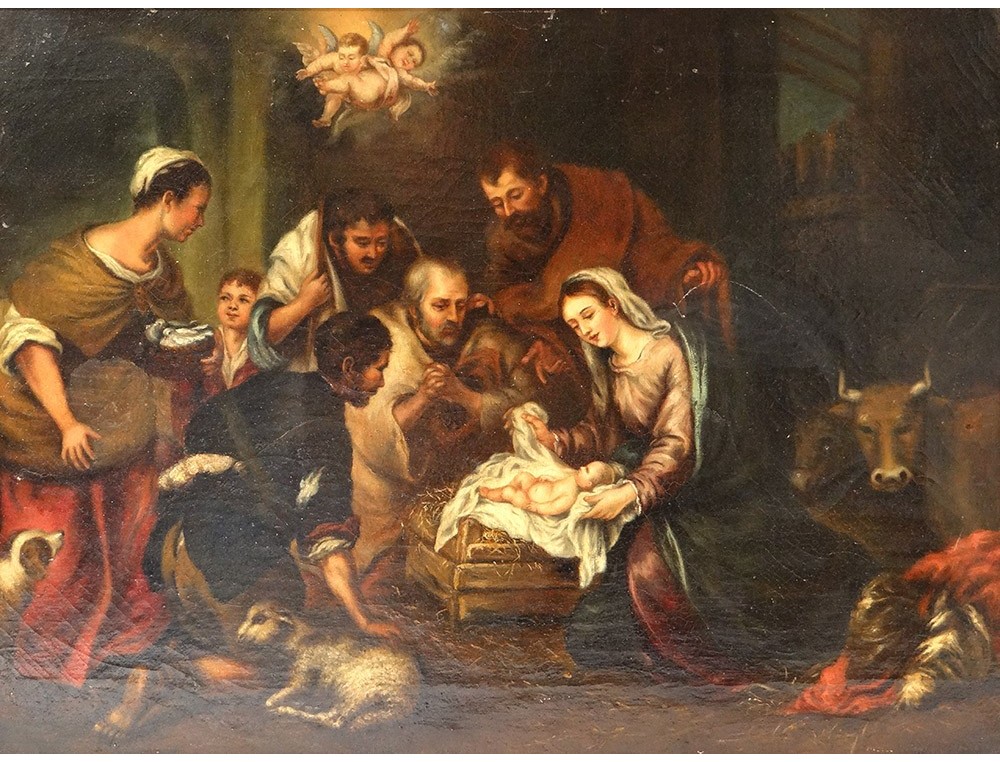
When the angels went away from them into heaven, the shepherds said to one another, “Let us go over to Bethlehem and see this thing that has happened, which the Lord has made known to us.” 16 And they went with haste and found Mary and Joseph, and the baby lying in a manger. 17 And when they saw it, they made known the saying that had been told them concerning this child. 18 And all who heard it wondered at what the shepherds told them.  (Luke 2:15-18)

Today is the day we celebrate the birth of Jesus.  Pretty much every Christian knows Jesus was almost certainly not born on December 25th. In Bethlehem, the winters can grow cold.  Shepherds have come inside well before the end of December.  Jesus may well have been born in the Spring, but there is no definite birth date. Yet, this is the day agreed upon by most of the Christian world to celebrate that great event. 

To the early Christians, Christmas wasn’t observed. Easter was the main day to remember.  After all, it was that day things changed for us.  We now had the opportunity to receive eternal life by asking Jesus to take charge of our lives.

Christmas wasn’t recognized as an important day until in 350 a.d. Julius I, Bishop of Rome, declared December 25th the birth date of Jesus.  History isn’t too clear as to whether it was actually Julius, but it was widely recognized around this time.

The reasoning behind why December 25th was chosen varies, though we can be pretty sure it wasn’t an attempt at accuracy.  Most think it was an attempt to bring pagans to Christ.

There were ancient pagan celebrations in many cultures around the Winter solstice.  The Scandinavians celebrated “Yule” on December 21st by cutting down a huge log and setting it on fire.  During the time it burned, the Scandinavians would celebrate their upcoming new year.  At this time, the wine had fermented and the animals had been slaughtered for market, so all was available for a huge party that lasted as long as the log burned: sometimes as long as 12 days.

The Romans celebrated the passage of the sun through the winter in a month-long celebration called Saturnalia.  This honored the Roman god, Saturn, the god of agriculture.  Many other pagan traditions continued worldwide.  Julius I supposedly decided to offer a Christian holiday so the pagans could still celebrate but this time celebrate Jesus’ birth.

As a result, until somewhat recent history, Christmas was celebrated much like Mardi Gras with drinking, dancing in the streets, the exchanging of gifts, and singing. 

Because of the decadence and the fact no one really knows Jesus’ birth date, the Puritans under Oliver Cromwell cancelled Christmas in England in 1645 until Charles II took the throne in 1661.  Christmas was even banned in Boston from 1659-1681.  The celebrations were just too perverted.

Raucous celebrations continued in America until after the American Revolution when British celebrations became unpopular.  It wasn’t until 1870 that Christmas became a national holiday in the United States.

In 1819, Washington Irving wrote a series of short stories titled The Sketchbook of Geoffrey Crayon, Gent.  These stories presented the celebration of Christmas as a quiet family affair, and Christmas changed in the U.S to what we see today.

Why is this important?

There are those both in the church and outside who tell us we shouldn’t celebrate on December 25th.  After all, it’s derived from pagan celebrations, and we really aren’t sure of the date anyway.  When we criticize people for celebrating on a certain day of the year, month, week, or not celebrating at all, we go against Scripture:

One person esteems one day as better than another, while another esteems all days alike. Each one should be fully convinced in his own mind. The one who observes the day, observes it in honor of the Lord. The one who eats, eats in honor of the Lord, since he gives thanks to God, while the one who abstains, abstains in honor of the Lord and gives thanks to God. (Rom. 14:5-6)

December 25th is just a date to the Christian.  It’s a day we set aside each year to worship our Savior and to thank God for sending Him.  It could be any date.  The Eastern Orthodox calendar designates Christ’s birth on or around our January 7th.  They use a different calendar, but the date doesn’t really matter so long as we spend time praising God for His greatest gift to man.

1For unto you is born this day in the city of David a Savior, who is Christ the Lord. 12 And this will be a sign for you: you will find a baby wrapped in swaddling cloths and lying in a manger.” 13 And suddenly there was with the angel a multitude of the heavenly host praising God and saying, “Glory to God in the highest, and on earth peace among those with whom he is pleased!” (Luke 2:11-14)

Adoption

I used to think the passage below was speaking of pretty much one thing, becoming a child of God and adopted into His family.  It sounds like it doesn’t it:

14 For all who are led by the Spirit of God are sons of God. 15 For you did not receive the spirit of slavery to fall back into fear, but you have received the Spirit of adoption as sons, by whom we cry, “Abba! Father!” 16 The Spirit himself bears witness with our spirit that we are children of God, 17 and if children, then heirs—heirs of God and fellow heirs with Christ, provided we suffer with him in order that we may also be glorified with him. (Rom. 8:14-17)

In looking more into biblical adoption, I found this passage is talking about two different things.  And there is in fact an important difference.

We become children, sons and daughters, of God (vs. 14) at the moment we turn our lives over to Christ.  We’re adopted as sons and daughters, heirs of the kingdom, at the same time.  The difference is in the meaning.  When we become children of God, part of the family.  Adoption is different.

Adoption described in Romas 8 is about the time and culture when Romans 8 was written.  Let’s say you were a successful first century Roman businessman.  You have several children you love, but none of them are capable of running your business when you die nor do they want to.  You start looking for someone else to take over the responsibility, an heir.  This could be a slave, a neighbor, a business associate, pretty much anyone.  You would adopt them as the heir to the family business.

This is different than just having your own children.  The Greek word for “adoption” is huiothesia.  It means “son placement.”  Adopting a son in the Roman and Greek culture was not just bringing someone into the family but placing them in a position of authority. As adults, they are hired to do a job.

Why is this important?

Just to be clear, both becoming a child of God and being adopted as a son or daughter happen at the same moment, when we accept Christ.  We become one of the family of God at that moment.  That means we have a loving intimate relationship with God and will spend eternity with Him serving Him.

Our being adopted is not a relationship thing at all, it is a positional one.  When adopted, we are assigned a job in God’s kingdom we will fulfill as heirs when we go to be with Him. 

God has given us jobs here to do.  These are training for what is to come.  Jesus spoke of this in the parable of the talents (Matt. 25:14-30).  We are being prepared for the job God has for us to do in glory.

Last week we looked at the overwhelming joy we will experience in heaven when we’re with God.  Imagine that joy increased all the more by serving Him there.  We’ve been given talents here by God Who expects us to use them and increase what we’ve been given.  What a thrill it is go serve our Lord. What joy we will have then in serving Him in much greater capacities than we do here.  No wonder we will be overwhelmed.

There is a lot more to this idea of adoption by God. This is just a short summary.

Eternal Joy

“For behold, I create new heavens and a new earth, and the former things shall not be remembered or come into mind. “ (Isa. 65.17)

Ever come across a verse or passage of Scripture that just stuns you?  If you don’t you should.  Maybe you should read your Bible more.  Well, I came across Isa 65:17 this week, and it startled me to say the least.

I’ve always believed when we get to heaven, we’ll be at least as smart as we are now, probably much smarter.  God may erase our lost relatives and friends from our minds, but we would still remember the good times, the good Christian brothers and sisters and our saved family members.  Then I saw Isa. 65:17, and that was all blown away.  “. . . the former things shall not be remembered or come to mind?”

There seemed to be no getting around this.  The context around the verse didn’t seem to help in my search for loopholes to get out of this verse.  Could my family and friends really not come to mind?  I needed to dig into Scripture.

As always happens, the more I dig into God’s Word, the more blessed I become. This was no exception.  From my study it doesn’t look like God will rob us of any memories.  Isa. 65:17 doesn’t say that.  It says we won’t remember our wonderful memories and events of our present lives or the earthly lives we have ahead of us.  We won’t remember the trips with family, the day I met my wife, the day we were married, the days we had each of our children.  We won’t remember them. 

Why?  The verse says those memories simply won’t come to mind.  How can they not come to mind?  These are things I’ll want to remember, surely.  These are times I love to recall now, and they won’t come to mind?  You can see my concern by now.

Part of my process when I see one of these verses that “pokes the bear” is to pray first then search the Scriptures:  Look at the cross references – this verse had no apparently relevant cross references in my Bible.  Next I start to read the contest over a few times – no help.  Then I start looking at key words in the original languages – I’m not an ancient languages scholar, there are helpful tools, though.  Nothing!

My next step is to see what others say about this verse.  I usually bury myself in commentaries, but for some reason, this time I went to YouTube and searched for teachings on this verse.

Jon Courson’s message on this just struck me like a hammer.  It’s not so much that we won’t remember, it’s that those memories just won’t come to mind as the verse says.  Well, that got me digging again to see if what Jon was saying was true. The context was telling me something.   Look at this:

Verse 18 says this: But be glad and rejoice forever in that which I create; for behold, I create Jerusalem to be a joy, and her people to be a gladness. The Hebrew word for “glad”(siys) means a jubilant celebration.  The word for “rejoice” (giyl) is the sort of joy a child has when opening their presents on Christmas morning, an overpowering joy.  It is the joy we feel when we rejoice in His salvation.  Finally, the word for “joy” (masos) is an inner happiness, a constant condition of joy.  I think God made His point here. We were created for this. The verse says we should have this joy forever!

Why is this important?

Let’s look back for a moment at the joy we had as children opening presents on Christmas morning.  You may have been in trouble the day before for roller skating in the house, picking all the green fruit off the trees to have a war with neighbor kids.  You may have been grounded for a week.  Maybe you weren’t in trouble.  Maybe you got your first kiss the night before.  No matter.  It was Christmas morning.  All that stuff was pushed out of your mind at the joy of the moment.

That is what it will be for us in the new heaven and the new earth, constant joy infinitely greater than a child’s Christmas morning.  It won’t be perhaps that the events of our earthly lives aren’t still in our minds and hearts. We will experience so overwhelming a joy to finally be with Him, with Jesus, that as Isaiah said, the things of the past won’t even come to mind.  Try and imagine what that might be like.

Evangelism

15 “Beware of false prophets, who come to you in sheep’s clothing but inwardly are ravenous wolves. 16 You will recognize them by their fruits. Are grapes gathered from thornbushes, or figs from thistles? 17 So, every healthy tree bears good fruit, but the diseased tree bears bad fruit. 18 A healthy tree cannot bear bad fruit, nor can a diseased tree bear good fruit. 19 Every tree that does not bear good fruit is cut down and thrown into the fire. 20 Thus you will recognize them by their fruits. (Matt. 7:15-20)

This passage used to really stress me out.  Until fairly recently, I read this thinking Jesus Himself was telling me my main job in the body of Christ was recruitment.  Surely we need new souls hearing about Jesus, more people learning of the joy of the gospel message, more people turning their lives over to Christ.  I thought that must be the “fruit” Jesus was talking about: “Bad people drag others to hell with them.  Christians should bring converts with them to heaven,” I thought.

At times the guilt and stress I felt over this passage dragged my Christian life, participation, and even my relationship with Christ down.  Finally, a friend pointed out the fruit Jesus is talking about in the believer are the fruit of the Spirit, and the guilt and stress cleared. 

Jesus is saying here we need to spend time with Him and in His Word to grow stronger in the fruit listed in Gal. 5:22-23:

But the fruit of the Spirit is love, joy, peace, patience, kindness, goodness, faithfulness, gentleness, self-control; against such things there is no law. (Gal 5:22-23)

As we yield more of our lives to God’s Spirit,  grow in grace through prayer, Bible study, and Christian fellowship; we grow in the fruit of the Spirit.  Our love, joy, peace, and, so on grow in us as we become more like Jesus.  And as that happens,  evangelism becomes so much more natural.  When we are filled to overflowing with the joy of our relationship with Him.  We can’t help but share that joy with others.

A couple of weeks ago, I finished the final week of a five session class on Christian apologetics.  That final week, we talked about the deity of Christ, the incarnation, and the bodily resurrection of Jesus.

Just before class a friend asked me how I was.  I smiled and said, “I get to talk to people about Jesus for an hour and a half.  What’s better than that?”  What is better than that? 

How many people have I seen come to Christ through my sharing?  I’ve never really sat down and thought about it, but I’m sure (not counting church events) I could count them on both hands and still have a couple of fingers left.  And, I’ve been a Christian for 46 years.

Why is this important?

How many people have I shared  God’s truth with?  More times than I can count. 

At my previous church I taught a Bible class.  When each class was finished, I would sometimes write something on the board to stimulate the class that filled the room next.  Once I wrote “It is not our job to save people.”  They were a little shocked, and I heard about it the following week. There is a lot of truth in that, though.  It is our job to share, to inform, not necessarily to cut notches in our Bibles.

I planted, Apollos watered, but God gave the growth. So neither he who plants nor he who waters is anything, but only God who gives the growth. (1 Cor. 3:6-7)

Sometimes we’re plangers, sometimes we’re waterers.  Some of us tell someone of Jesus for the first time.  Some of us add to that act by sharing more.  It’s God who does the work to bring someone to His Son. True, He usually uses us to do that.

Some of us are evangelists.  I am so fascinated by these folks who seem to be able to start a discussion about the Lord and have a stranger repeating the Sinner’s Prayer a few minutes later.  It’s their gift and God blesses it.  I don’t have that gift.

Isn’t it just like God, though, to present us with the opportunity to share, gives us the words to say, touches the heart of the lost person, then gives us the reward.  We serve an awesome God.

The Good Fight

12 Fight the good fight of the faith. Take hold of the eternal life to which you were called and about which you made the good confession in the presence of many witnesses. (1 Tim. 6:12)

This past week, I’ve been in a sometimes heated discussion with a cultist on Facebook.  He called my end of the discussion a part of the “Christian war culture on Facebook.”

As I went back over our discussion today, I think he was right in how he viewed my remarks.  I’m not always kind or gentle with my “opponents.”    The tragedy is my life verse speaks against this very thing, being combative with those who disagree:

but in your hearts honor Christ the Lord as holy, always being prepared to make a defense to anyone who asks you for a reason for the hope that is in you; yet do it with gentleness and respect, (1 Peter 3:15)

Christians are told we should put on the full armor of God as a defense against the evil day (Eph. 6:13-20).  Sounds like we should be ready to be combative, doesn’t it? Interesting the only offensive weapon is in verse 17, “. . . the sword of the Spirit, which is the word of God.”  When we fight with anger or self-righteousness, we turn many away from the message.  And that’s what we’re here for, to spread the message of Christ.

Disagreements need not be combative.  The people we deal with are often lost but are still people for whom Christ died.  We should treat them as such. We are all equally valuable in God’s eyes and should be in our own eyes.

When Jesus fought against Satan himself during His temptation, He didn’t use divine powers but used Scripture to fight.  Scripture is a powerful weapon against the lies we face.  Sometimes we think “If I could just bring down fire and brimstone out of heaven as God did on Sodom and Gomorrah:  Then the Lord rained on Sodom and Gomorrah sulfur and fire from the Lord out of heaven. (Gen. 19:24)  But, that’s not for us to do. 

As Christians, our position is plain.  We are to share the Truth in love.

How important and how powerful is Scripture?  I sometimes forget and rely on language and logic to win arguments, but again, God has not asked me to win arguments but to share the truth.  That truth, God’s Word, is so powerful that when Jesus began His ministry, He didn’t bring down thunder and lightning from heaven.  He didn’t wave His hand and thousands fell at His feet.  He read Scripture (Luke 4:16-21).

Why is this important?

If Christ relied on Scripture to stand against Satan himself and to show Himself to be the Messiah come to save men, who am I to step away from that example and use the logic and anger of man.

God has given us a mission here on earth, to share the gospel and to defend it when it is attacked.  When we step away from the pattern set by Jesus, we are hurting the cause.

Pass It On

“I do not ask for these only, but also for those who will believe in me through their word, (John 17:20)

A friend of mine read this today at a men’s prayer group, and it struck me how Jesus prayed for us to continue to tell others what He’s told us.

I don’t think Jesus is just talking about sharing the gospel with the lost since He says “their word” and not “My Word.”  We are often confronted by people who need to hear an encouraging word from us or guidance of some sort.  What we share to encourage them or guide them comes from principles discovered in our study of God’s word.  We use our words to share the wisdom God has given us through our similar experiences to theirs.

I think there is still another facet to this.  God uses “our word” to guide us in raising our children.  Prov. 22:6 tells us to Train up a child in the way he should go; even when he is old he will not depart from it.  Much of that training comes from teaching our children God’s word, but it also comes from the wisdom we as parents learned through God teaching us through experience.

One reason Jesus came to earth as a man was to experience what we experience, our temptations, our trials, our pain, and our joys.  Jesus was as much a human being as you and I but still retained His divine nature.  As a man He learned through more than God’s Word:  Although he was a son, he learned obedience through what he suffered. (Heb. 5:8)

Don’t we learn obedience through suffering, too?  Don’t trials teach us more about God and our relationship with Him?  Don’t we learn not to “touch the hot stove” once we’ve been burned?

Not everything God teaches us comes from His Word alone.  Much of it comes from others and where God has worked in their lives and taught them.

So, some of what we pass along from Jesus through the apostles through the ladder of Christians in time past up until we came to know Jesus came by word of mouth. 

When the church was young, they relied on the apostles to tell them the truth.  And they devoted themselves to the apostles’ teaching and the fellowship, to the breaking of bread and the prayers. (Acts 2:42)

Look at all the sources of learning just in that one verse.  We have the teachings of the apostles (the New Testament even though it didn’t exist at the time), fellowship of believers, and prayers (direct communication with God Himself).

Yes, no doubt witnessing was included in Jesus prayer in John 17.  We are to go into all the world and preach the good news, the truth that we can be cleansed of our sin through a simple yielding of ourselves to Christ.  But let’s not forget to build one another up as well.

Proverbs 27:17 says “Iron sharpens iron, and one man sharpens another.”  This isn’t talking only about sharing the word with others but discipling one another, working with one another, watching and learning from one another. 

Why is this important?

We have people in our lives that need to learn from us how to live as Christians.  Paul did this with Timothy and Titus.  He first taught them head knowledge through God’s Word and Paul’s past experiences.  Then he took them into the mission field with him to see how it’s done.  Only after that did he send them out alone to learn by doing.

It’s the same with us.  We too often think simple Bible teaching alone is enough to create an effective evangelist or a powerful Christian.  It’s not.  Experience adds to our arsenal when we share, counsel, or guide as believers. 

When my wife and I visited Colonial Williamsburg, we stopped at the cabinetmaker’s shop and saw men at different skill levels working together.  Those who were less experienced and less skilled were being taught the basics by those further along.  It was a wonder to see.  There was only one master cabinetmaker there, though.  He knew what was to be done and was ready to help the less experienced when needed.

We are all in different levels of our Christian experiences.  Some of us are apprentices.  Some are journeymen.  Still there is only one Master who sees the overall picture and is willing and able to help us.  He relies on the journeymen, though, to help the apprentices through knowledge and experience.

Faith & Reason

Many non-believers and even many believers think Christianity is simply a matter of faith.  I’ve given quite a number of blogs here on the evidences for the truth of Christianity.  But, still I hear many say “Religion is just a belief.  There is nothing reasonable about it.”  I think they’re wrong.

In Isa. 1:18, Isaiah asks people to reason with him.  In 1 Peter 3:15, we’re told to have a reason for what we believe and a defense for that belief.  Jude 3 tells us to earnestly contend for our faith.

There are certain words used in reasoning logically.  “So”, and “therefore,” are words that indicate a logical conclusion.  “Since” indicates a logical premise.  Let me give an old example:

Since every man is mortal

And Aristotle is a man

Therefore, Aristotle is mortal.

 “Since” is used in 196 verses of Scripture.  “Therefore” is used a whopping 798 times.  The Scriptures are certainly not without logical conclusions.

In Acts 17:17, we’re told Paul “reasoned” with the Jews in the synagogue at Athens.  The word for “reasoned” here means to hold an intelligent discourse, a debate.  A little further in that chapter, Paul stands in the Aeropagus in the midst of a number of Greek philosophers and logically walked through a series of arguments for the Christian Creator God using the evidence easily available to the Athenians.

Just before this episode, Paul had been preaching in a synagogue in Berea.  The Bereans listened to Paul then checked to see if what he said was so.  They were called noble for this.

Throughout the New Testament we are told not to hold our faith blindly:

Do not despise prophecies, 21 but test everything; hold fast what is good. (1 Thess. 5:20-21)

Looks look at 1 Peter 3:15:

15 but in your hearts honor Christ the Lord as holy, always being prepared to make a defense to anyone who asks you for a reason for the hope that is in you; yet do it with gentleness and respect,

The word translated “defense” is apologia and is a legal term.  It means to be able to defend your faith at the level of a legal defense in a court of law.  This presupposes there is enough reason behind such a defense to be victorious.

Historically, Christianity has been represented by some of the finest minds ever to put pen to paper.  Origen of Alexandria is a good example of a Christian genius.  He was so brilliant his bishop employed several scribes to follow him around and write down all that he had to say.  Fortunately (and maybe unfortunately) we have a lot of that today.

Origen wasn’t 100% in his theology, but he was extremely instrumental in bringing Christianity center stage in the theater of ideas.  Christianity was never reasonably assumed to be a blind faith.  Since Origen, such great minds as Augustine, Ambrose, Jerome, Francis, Anselm, Thomas Aquinas, Martin Luther and many others have stood firmly before critics and have prevailed.

Why is this important?

We as Christians have no reason to bow our heads in the presence of intellectual persecution.  There is good historical evidence for Jesus of Nazareth being Who He said He was.  Eyewitnesses recorded His miracles.  Lives were changed then and now.

Over the years, I’ve had people approach me saying we can’t believe the gospels because they are biased.  After all, they were written by Christians.  I try to keep my composure and point out they would be more suspect if eyewitnesses had seen the miracles they recorded and did not become Christians.

We rightly hold a strong position in the marketplace of ideas.  Ours is not a blind faith but a faith founded on fact and reason.  Don’t let anyone try and convince you otherwise.