
When Did the Church Begin?

Christmas will be here in less than two weeks, and some of us will be sitting around the table with assorted family and friends who think Christianity is some sort of fairy tale, a fraud perpetrated on simple, illiterate, and naïve followers two thousand years ago.  So, maybe it would be good to brush up on some of the facts to present to these skeptics. 

Did Jesus exist, and did He rise from the dead?  While some are educated well enough to know there was a historical figure named Jesus who walked the earth back around 30 or 40 a.d., some will deny He even existed at all.  Well, Jesus is mentioned by such early historians as these:

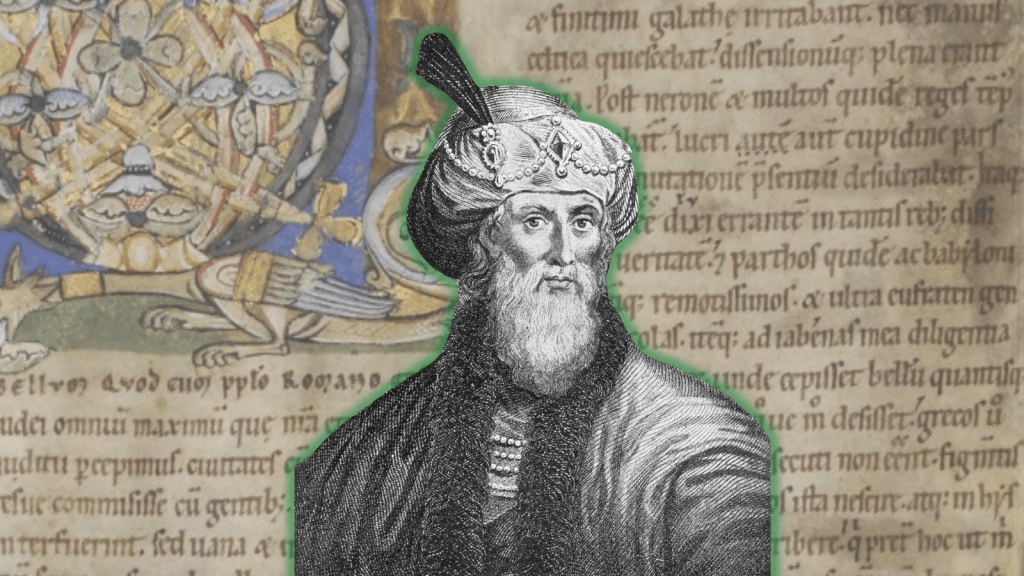
Flavius Josephesus (37-100 a.d.) who mentions Jesus as a teacher and even speaks of His brother, James. 

Tacitus (56-120 a.d.) who speaks of Jesus’ execution. 

Pliny the Younger (61-113 a.d.) who confirms the worship of Jesus as a common Christian practice.

These three are especially important since they are non-Christian historians and wrote within the lives of the apostles or their followers and could have been checked and denied if incorrect.

Then there is a near-consensus of well-known and respected modern secular Greek New Testament scholars as well who believe at least seven of  Paul’s letters are genuine.  Here are ten:

  1. Bart D. Ehrman (agnostic / atheist-leaning, Greek textual critic)
  2. Gerd Lüdemann (atheist, German Greek scholar)
  3. Paula Fredriksen (Jewish historian, secular)
  4. E. P. Sanders (secular historical scholar)
  5. James D. G. Dunn (critical scholar; widely used in secular universities)
  6. Maurice Casey (atheist, Aramaic & Greek specialist)
  7. Raymond E. Brown (critical scholar, non-evangelical)
  8. Dale C. Allison Jr. (critical historian)
  9. Martin Hengel (critical historian, Greek philologist)
  10. Larry Hurtado (critical scholar of early Christianity)

“Genuine” here means: written in the 1st century, substantially authentic texts (what Paul actually wrote and not medieval forgeries), and—where applicable—authored by the traditionally named author (Paul).  It does not mean inspired, miraculous, or theologically true.  These are the seven books:

  • Romans
  • 1 Corinthians
  • 2 Corinthians
  • Galatians
  • Philippians
  • 1 Thessalonians
  • Philemon

The book of Galatians is of particular importance in that it speaks of Paul going to Jerusalem three years after his conversion to compare notes with Peter for a couple of weeks (Gal. 1:18).  Then Paul began his missionary journeys.  In the same book, Paul tells us he returned 14 years later to compare what he was teaching to make sure it was still consistent with the gospel Jesus had taught (Gal. 2:1-2).  Paul recorded in another of his books, which is considered genuine, exactly what he was teaching during those 14 years:

1 Cor. 15:3-8 (ESV)  For I delivered to you as of first importance what I also received: that Christ died for our sins in accordance with the Scriptures, that he was buried, that he was raised on the third day in accordance with the Scriptures, and that he appeared to Cephas, then to the twelve. Then he appeared to more than five hundred brothers at one time, most of whom are still alive, though some have fallen asleep. Then he appeared to James, then to all the apostles. Last of all, as to one untimely born, he appeared also to me.

Most historians believe Paul was converted about three years after the crucifixion of Jesus.  Since he waited three years in personal study and preaching before meeting with Peter, that would make his first visit just six years after the crucifixion, not enough time for a legend to develop.  There were too many people still living who were aware of the truth, and the teaching of Peter was being done in the very city where Jesus was crucified.

Consider this: It’s 1969, and you’re in Houston, Texas, and someone comes to you and says he is starting the Church of the Risen John F. Kennedy.  You would laugh him to scorn because the whole idea was silly.  We saw JFK die and buried.  We can go to the tomb and show you he’s still there.  The whole city knows this.

Now, it’s 39 a.d., and you’re in Jerusalem.  One of Jesus’ followers comes to you and says Jesus of Nazareth was crucified.  This isn’t news.  The whole city was aware of this.  But then the man takes you to the empty tomb and introduces you to over 500 men who saw Him risen from the dead many of whom saw Him do miracles while He walked the earth.  Maybe you could even meet Lazarus and his family and listen to their story.  That’s how the church started, but it started even earlier than that (Acts chapter 2).

I’d like to make one more point.  We’ve pretty much settled that Paul met with Peter in Jerusalem only about six years after the crucifixion of Jesus.  Look at Galatians again and what had happened during the six years:

21 Then I went into the regions of Syria and Cilicia. 22 And I was still unknown in person to the churches of Judea that are in Christ. 23 They only were hearing it said, “He who used to persecute us is now preaching the faith he once tried to destroy.” 24 And they glorified God because of me.

Within those six years, there were already churches outside of Jerusalem in Judea. 

So, here is some evidence which can be presented to the skeptics at your Christmas dinner – or anywhere, for that matter.  The Church began at Pentecost, and Peter and Paul taught Jesus rose from the dead. God has not left us with a blind faith but with a faith founded on fact.

The Law Before the Law

Rom. 5:13 (ESV)  for sin indeed was in the world before the law was given, but sin is not counted where there is no law.

The Bible talks a lot about The Law, and mostly the law it is referring to is the Mosaic Law, but were there laws given before that?  Did God give laws concerning life prior to the laws He gave Moses?  It seems He did.

Let me define a law as opposed to an instruction.  I think a law is a long-term command covering generations.  It must not apply to just one person but to a large group.  So, let’s take a look at some that are suggested.

Gen. 9:5-6 (ESV)  “And for your lifeblood I will require a reckoning: from every beast I will require it and from man. From his fellow man I will require a reckoning for the life of man.  “Whoever sheds the blood of man, by man shall his blood be shed, for God made man in his own image.”

Genesis 9:5-6 is a good start.  It was a law given to Noah after the flood.  Interesting that we are told to kill even an animal that takes the life of a human.  This law is very direct and is a principle of life, not just a guide for Noah to tend the earth.  If you kill someone, you will be killed.  This doesn’t qualify how someone kills another without meaning to, and if that should bring a lesser charge, if a charge at all.  That does come with the introduction of the Mosaic Law, though, with the introduction of Cities of Refuge (Num. 35:6) where a man who kills another can plead his case and be protected if judged innocent.

Gen. 26:4-5 (ESV)  I will multiply your offspring as the stars of heaven and will give to your offspring all these lands. And in your offspring all the nations of the earth shall be blessed, because Abraham obeyed my voice and kept my charge, my commandments, my statutes, and my laws.”

So, laws were given to Abraham.  The Bible doesn’t tell us about how Abraham received those laws, but we do see some consistency with some of the laws of Moses.  For instance, when Abraham fought with the kings in Genesis chapter 14 in order to save Lot, he very much followed the instructions later laid down in the instruction to the Israelites in Deut. 20. 

We see the laws against homosexuality enforced in Genesis chapter 19 with the destruction of Sodom and Gomorrah.  Some more “progressive” pastors say this was the lack of hospitality, but Jude tells it straight:

Jude 7 (ESV)  just as Sodom and Gomorrah and the surrounding cities, which likewise indulged in sexual immorality and pursued unnatural desire, serve as an example by undergoing a punishment of eternal fire.

Back to Genesis chapter 14, we see Abram tithing to Melchizedek, the priest of the God Most High – verse 18 – as king of Salem, whom some believe was the preincarnate Christ. So, tithing seems to have been understood prior to Moses.

Why is this important?

Some theologians believe Christ’s freeing us from the Law only applies to the Mosaic Law and that laws initiated prior to Moses are still in effect. I’ll leave that up to you to wrestle with.

There are other laws implied before Moses and many which were followed, indicating some of the Mosaic Law was at least understood before the Exodus.  We just don’t have them listed or really mentioned.  Perhaps the principle and promise of Jeremiah 31:33 was active even before the Law:

Jeremiah 31:33 (ESV)  For this is the covenant that I will make with the house of Israel after those days, declares the Lord: I will put my law within them, and I will write it on their hearts. And I will be their God, and they shall be my people.

Even after the Law was given through Moses, there was more work God wanted to do in us.  His promise was to the Israelites and to us.  May God circumcise our hearts.  May this be our prayer today:

Deut. 30:6 (ESV)  And the Lord your God will circumcise your heart and the heart of your offspring, so that you will love the Lord your God with all your heart and with all your soul, that you may live.

The Holiness of God

The Bible says God is holy. Just what exactly does it mean to be holy?  Let’s look at some of the ways God is holy:

  •   He is set apart, distinct, unlike any other.  He is not just better than creation, He is other than creation.  He is absolutely unique:
    Ex. 15:11 (ESV)  “Who is like you, O Lord, among the gods? Who is like you, majestic in holiness, awesome in glorious deeds, doing wonders?”

God is above and beyond all created things.

  • He is morally perfect in that He is pure, undefiled, and without sin. 

1 John 1:5 (ESV)   This is the message we have heard from him and proclaim to you, that God is light, and in him is no darkness at all.

God’s character is unblemished; His moral purity is absolute.

  • God’s essential nature is holy.  It is not just one of His many attributes.  It is the beauty of all His attributes combined:

            Isa. 6:3 (ESV)  And one called to another and said: “Holy, holy, holy is the Lord of hosts; the whole earth is full of his glory!”

In Hebrew, repeating a word three times expresses perfection and infinite intensity.  God is not just holy, He is perfectly and infinitely holy.

  • God is separate from all evil, He is perfectly opposed to sin.

                Habakkuk 1:13a (ESV)  You who are of purer eyes than to see evil and cannot look at wrong,

God is morally incapable of tolerating or participating in evil.

Now that we’ve looked at how holy God is, let’s look at the holiness connected with the things and people of God.

  •  Objects, people, and places that are set apart for God’s use are called holy

Lev. 20:26 (ESV)  You shall be holy to me, for I the Lord am holy and have separated you from the peoples, that you should be mine.

1 Peter 2:9 (ESV)  But you are a chosen race, a royal priesthood, a holy nation, a people for his own possession, that you may proclaim the excellencies of him who called you out of darkness into his marvelous light.

Holy here means to be set apart for God’s purpose.  We are not perfect, but we should practice moral purity, obedience to God, separation from sin, and devotion to Him.  In short, we need to grow in Christlikeness through the Spirit.  Yes, we never truly can reach this holiness on our own, but only in a life transformed by grace.

  •  Lastly, but certainly not least important, is the holiness of God’s covenant with us:

Heb. 10:10 (ESV)  And by that will we have been sanctified through the offering of the body of Jesus Christ once for all.

                We are holy and set apart, sanctified, through the sacrifice of Jesus Christ forevermore.

Why is this important?

This is important to us as Christians because we need to better know the God with whom we share a personal relationship.  Just as we can learn more about our spouses, children, friends, and even enemies, to understand them and thus relate to them better, we can know the one true God in a very personal.  This is true with God. 

Understanding His holiness gives us insight into how to worship Him more fully.

Christian Unity

Psalm 133 (ESV) 

Behold, how good and pleasant it is

when brothers dwell in unity!

      It is like the precious oil on the head,

running down on the beard,

       on the beard of Aaron,

running down on the collar of his robes!

      It is like the dew of Hermon,

which falls on the mountains of Zion!

       For there the Lord has commanded the blessing,

life forevermore.

Christian unity is a blessing both for the Christian and for our Lord.  Verse 2 tells us we are anointed in that unity.  I attend two men’s groups each week: one is a prayer group of maybe 50 men.  The other is a discussion group of about 40.  Each group is obviously anointed by God to bring out truth, mutual concerns, and personal issues needing prayer.  I think we all realize these are the benefits of such groups, but verse 3 tells us that such groups are also pleasing to our God.  They are as refreshing to both him and to us as the dew of Hermon which falls on the mountains of Zion

A guest speaker at our church once told us one reason our church is so vibrant and successful is the Men’s Prayer Group that meets on Saturday mornings.  It brings blessings and anointing to the entire church, which otherwise might be missed.

These benefits can also be experienced in worship services, of course, but not as much interaction between individuals takes place.

A historical event came to mind when I was preparing this, so I thought I’d share it.  It is the Forty Soldiers of Christ and took place in a.d. 320.

The Roman Twelfth Legion was stationed near the city of Sebaste in the northern portion of Armenia, which is now modern-day Turkey.  The Roman governor for Armenia, Agricola, ordered all Roman soldiers to sacrifice to the emperor.  There were forty members of the Twelfth Legion who were Christians and refused to perform the sacrifice.  “We belong to Christ, and Him we serve,” they said.

Though their commander tried earnestly to persuade them to relent, they stood firm.  So, the commander put them under guard and sent a messenger to Argicola asking what discipline should be handed out.  The sentenced was to be death.

The commander then had the forty men stripped to the skin and marched out onto a nearby frozen lake to die.  He also erected a shrine where the men could come at any time.  Should they change their minds, they could sacrifice there, and a hot bath was also waiting.  All would be forgiven, and they could return to their ranks.

During the night, the men encouraged each other with Scripture and prayers for strength.  At one point a single man left the group and ran to the shrine to sacrifice, but the extreme temperature change from the freezing cold to the hot bath was too much and killed him.

From the group, it could be heard, “Now there are 39.”  At that moment, the jailer who had kept them in custody while the men awaited sentence, tore off his clothing and ran to join the group still on the ice.  He was heard to shout “No.  There are 40 Christians.”

In the morning, those still living were executed except one, a young man who had been recruited from the village.  His mother was asked if she could nurse him back to health.  She flew into a rage.  “How could I deprive my son the honor of standing before his Savior together with his fallen comrades to receive their crowns.  Let him have the privilege of dying with them.”

Why is this important?

Christians in unity can provide strength and courage to one another.  God will provide the anointing offered in Psalm 133 and loves those who stand for Him both in life and in death.

Matt. 10:32-33 (ESV)  So everyone who acknowledges me before men, I also will acknowledge before my Father who is in heaven, but whoever denies me before men, I also will deny before my Father who is in heaven.

Thinking About God

Silhouette of a thoughtful man sitting by the ocean – copyspace

Years ago, I promised to show an adult Sunday School class I taught that there was an unbroken line of reason from “Do I exist?” to “Jesus loves you and died for your sins.”  I’ve always wanted to put that down on paper, and here is my meager attempt:

Do I exist? Philosopher, Rene Descartes, wondered what he knew for sure, so he spent a week in a mountain retreat looking for reasons to doubt all he knew.  By the end of his time there, he was convinced he knew nothing absolutely except that someone was doubting.  In other words, he knew for certain he existed, but nothing more.  We can know we exist, but can absolutely prove nothing else.

How did my existence come about?  Since I know I didn’t create myself, I had to come from somewhere or someone else.  My mind is a very complex thing, so a being with a mind more complicated than mine must have created it.  My mind is also very organized, self-reflective, and personal.  The entity that created it must at least have the same qualities.  What we would be looking for, then, would be a metaphysical being – a being because it would have to think and be self-aware as I am, and metaphysical because it would need to have existed outside the universe.

I perceive the universe around me.  Truth is consistent; falsehoods are inconsistent.  So, since my understanding of the universe tells me it appears to be consistent, it must be very much as I perceive it, rather than my being, say, simply a brain in a vat.  There is a chance I am a brain in a vat, but the probabilities are extremely small.  Since we can safely say there is a being who brought about both me and the universe I perceive, we now have a Creator who is greater than the human and the universe it created. 

A question then arises, “Could it be that the Creator might have communicated with its creation, maybe to let us know more about itself or how to take care of what it created?”  What way could such a being communicate with its creation that would be preserved for centuries upon centuries for all to learn from it?  Written documents would be good, especially if this communication needed to be preserved in the most accurate form, able to be repeated over long periods of time, and in a plethora of cultures.

There are several major organized philosophies centered around belief in metaphysical beings.  We call them religions.  One or more of these could be what we’re looking for.  But how could we weed out those who are mistaken or untrustworthy? 

Astrophysicist, Dr. Hugh Ross, faced this conundrum and sorted through the various writings of the world’s major religions.  He found that only the Bible contained the correct description of the universe around us and saw that as a good test for which of these major religious writings is the one from the Creator.

In this blog over the years, we have looked at reasons to believe the Bible is reliable and accurate: the New Testament, for instance, has the greatest manuscript authority by far of any other ancient writings.  It predicts events yet to happen when written, the destruction of the Jerusalem Temple in 70 a.d, for instance.  The entire Bible is a collection of 66 ancient documents written by more than 40 authors over a period of 1500 years. It agrees throughout.  This is powerful evidence that while the Bible was written by men, it is not a man-made book.

The Bible instructs us on how to live, how to treat one another, and what God wants of us.  It also tells us much more about the God who created us and the universe in which we live.  It tells us of His love for us to the point He was willing to humble Himself greatly and join His creation as a man, to die in our place to settle our debt and allow us to spend eternity with Him in holiness.  In short, Jesus loves you and died for your sins.

Why is this  important?

Ours is a reasonable faith.  We, as Christians, rest on logic, reason, and the world around us to come to the conclusions we do.  God has not asked us to believe in some dream or some illusion.  He has given us a faith that is comparable to the universe around us in our perception of reality.

We need not fear reasonable discussion in the marketplace of ideas.  Christianity can stand above the best of them in what we believe and why we believe it.

1 Peter 3:13-15 (NASB)  And who is there to harm you if you prove zealous for what is good? 14 But even if you should suffer for the sake of righteousness, you are blessed. And do not fear their intimidation, and do not be troubled, 15 but sanctify Christ as Lord in your hearts, always being ready to make a defense to everyone who asks you to give an account for the hope that is in you, yet with gentleness and  ereverence;

Questions Christians Can’t Answer?


The “Questions Christians Can’t Answer” has appeared on this blog in the past and have rated in the top ten blog posts I’ve done over the years  So I’ve decided to add one today:

Why did God create angels that could defy him?
Freewill is necessary for an individual to express true love.  God is not interested in fake or forced love from sentient beings.  There seems to have been a time with angels had freewill just as humans have always had.  It is the freewill that got Satan and his angels into trouble.  Most theologians see a few passages of Scripture as addressing the pride and self-involvement which caused the angel Lucifer (Satan) to fall. This might give some insight as to why the other angels did. (Isa. 14:12-15; Ezek. 28:12-17)


Why is there so much divorce in Christian marriages? Since it was put in God’s hands, it should not be harmed.
A study by Shaunti Feldhahn showed about 15-20% of Christian marriages end in divorce.  About 18% of those married and divorced again, so Christian divorce is not the 50% often cited.  Counting divorces rather than the individuals skews the results.  But the divorce rate is still high for a faith that frowns on divorce. 
Part of the issue is the definition of “Christian.”  Studies vary widely in the numbers because the qualifications to be included in the “Christian” category are different with each study.


Still, freewill is the culprit here.  Christians are people.  People marry for the wrong reasons especially today.  Some marry out of desperation, some marry for love alone without looking for shared values, religion, even the definition of what a marriage is, some don’t consider marriage as a lifetime commitment in the first place and easily give up with the going gets rough.  Some do not seek counseling prior to the wedding.

Even if the percentage of Christian divorce were as low as 15%, it is too many.  Christians as well as non-believers, need to understand marriage more and fully commit to a lifetime relationship before the wedding day.  Divorce should not be an option.


If Jesus is God, why did he beg himself at Gethsemane?

Jesus is both God and man.  At Gethsemane He was fully human and facing separation from the Father to whom He prayed (Matt. 27:46) for the first time in all eternity.  Jesus didn’t want that separation, but He had to endure it in order to take upon Himself the sins of the world.


Are wealthy Christians condemned already? Since the Bible says it is easier for a camel to pass through a needle eye than for a rich man to enter heaven.

No, wealthy Christians are not condemned because of their wealth.  If that were true, nearly all Americans would be condemned as we are wealthy compared with much of the rest of the world.  Jesus, in the context of the passage, is saying God can do this, but man cannot do it on his own.  Notice the disciples asked the same question in verse 25:


Matt. 19:23-26 (ESV)  Again I tell you, it is easier for a camel to go through the eye of a needle than for a rich person to enter the kingdom of God.” 25 When the disciples heard this, they were greatly astonished, saying, “Who then can be saved?” 26 But Jesus looked at them and said, “With man this is impossible, but with God all things are possible.”

If everything God created is perfect, why must he use heaven to motivate us to believe in him?
Creation was perfect but is no longer.  It is the Fall which brought about evil and decay.  While heaven is a reward and a motivation for some, it is the forgiveness of our sins which is our motivation to believe in Him (Eph. 2:8-9).
Since we have carnal reasoning, why did God say, “Come now and let us reason together?”


God gave us a brain and the ability to reason.  Even fallen man is perfectly able to do a cost/benefit analysis. 


The quote is from Isa. 1:18-20 where God is laying out a logical if/then/else proposition.  “If you obey, then your sins will be forgiven, else they won’t be.”  While God was speaking to the Israelites at the time, the same is true today.


Is God of one mind since the Bible says he has two wills?
If this is referring to Gethsemane again, it is the same answer: Jesus was both man and God.  His will as man was to avoid suffering, but He yielded to the perfect will of the Father.


God is one being existing in three persons, three centers of consciousness, but not three minds.  Since God is perfect and infinite in these three persons, there can be no conflict in thought.


Can our good actions make us live forever?
No. Titus 3:4-5 (ESV)  But when the goodness and loving kindness of God our Savior appeared, he saved us, not because of works done by us in righteousness, but according to his own mercy, by the washing of regeneration and renewal of the Holy Spirit,

It is faith in Christ alone that gives us eternal life.


Will infants who die at birth make it to heaven?
Yes.  Deut 1:39 says there is a time when we are children when we do not know good or evil.  We cannot be held responsible for evil if we do not understand it.  Some believe this is what Paul is talking about in Rom. 7:9 (ESV)  I was once alive apart from the law, but when the commandment came, sin came alive and I died.
2 Sam. 12:22-23 tells us babies will go to heaven as David said he would see his dead infant son again.


Isn’t it true that the devil and his works will be destroyed?
No.  The devil will not be destroyed.  He and his bunch will suffer in the lake of fire forever:  “And the devil who had deceived them was thrown into the lake of fire and sulfur where the beast and the false prophet were, and they will be tormented day and night forever and ever.”  Revelation 20:10 (ESV)
His fallen angels will join him there:  Matt. 21:41 (ESV)  “Then he will say to those on his left, ‘Depart from me, you cursed, into the eternal fire prepared for the devil and his angels.’”


Why is this important?
We need to have ready answers for those who would challenge our faith with questions they think have no Christian answer.  This blog post is meant to help us do just that.

From Just One Verse

John 13:1 (ESV)  Now before the Feast of the Passover, when Jesus knew that his hour had come to depart out of this world to the Father, having loved his own who were in the world, he loved them to the end.

Ever read a passage and wonder over how much there is in just a few words?  I feel that way about the first verse of John chapter 13. Each phrase has so much meaning and brings such a blessing to the reader and scholar

Now before the Feast of the Passover, . . . This phrase gives us the context of the rest of the chapter.  It’s when Jesus is in the upper room.  This is the beginning of what theologians call the “Upper Room Discourse” which runs through chapter 17.  This particular passage in chapter 13 runs through verse 20 and describes Jesus’ washing of the disciples’ feet.  But that starts in verse 4.  Look at the wealth before that story is related:

when Jesus knew that his hour had come… Jesus had many ways to support His claims of being God’s Son: fulfilled prophecy, miracles, and foreknowledge as we see here.  Jesus knew He was about to die and told this to His disciples in order to show them once more Who He was.  He tells us this in verse 19 (ESV)  I am telling you this now, before it takes place, that when it does take place you may believe that I am he.

A truly interesting point about verse 19 is the fact there is no Greek word at the end for “he.”  The translators inserted the “he” there to improve the flow. Jesus said I am telling you this now, before it takes place, that when it does take place you may believe that I Am.  Of course, earlier in John (8:24, 58), Jesus proclaims Himself to be the God of the burning bush through the use of the divine name, I Am:

Ex. 3:13-14 (ESV)  Then Moses said to God, “If I come to the people of Israel and say to them, ‘The God of your fathers has sent me to you,’ and they ask me, ‘What is his name?’ what shall I say to them?” 14 God said to Moses, “I am who I am.” And he said, “Say this to the people of Israel: ‘I am has sent me to you.’ ”

Jesus took on the divine name of the I Am as God the Son to convince His disciples of exactly who He was, to make absolutely sure they understood.

to depart out of this world to the Father … This is important in that Jesus, again, is satisfying any doubts the disciples may have had that he came from the Father and is returning there. This is clarified in verse 3:

John 13:3 (ESV)  Jesus, knowing that the Father had given all things into his hands, and that he had come from God and was going back to God,

This, again, is proof Jesus is giving to show He is both the invisible Creator God (the I Am) and man (Jesus of Nazareth who stood before them physically)

… having loved his own who were in the world, he loved them to the end.  And here is the gospel message in 15 words.  God’s love for us is unending and unconditional.  The phrase, “he loved them to the end” is John’s note that Jesus loved His disciples as long as His ministry on earth.  God’s love for us all, of course, is never ending:

1 Chron. 16:34 (ESV)  Oh give thanks to the Lord, for he is good; for his steadfast love endures forever!

Why is this important?

I hope this encourages you in your personal Bible study. God’s Word is so rich and full.  Look at what just one hour’s study on one verse can produce.  As my pastor continually tells us (and rightfully so), we need to be scholars of God’s Word.  It’s our duty as Christians:

2 Tim. 2:15 (KJV)  Study to shew thyself approved unto God, a workman that needeth not to be ashamed, rightly dividing the word of truth.

As our study increases, so does the richness of our fellowship with God and His church.

LDS Archaeology – Book of Abraham

The Book of Abraham is a part of the Pearl of Great Price, one of the four sacred Scriptures of the LDS (Mormon) church.  Here is the statement at the introduction of the Pearl of Great Price telling us portions (including the Book of Abraham) were translated and are “sacred scripture:”

“The Pearl of Great Price is a selection from the revelations, translations, and narrations of Joseph Smith, first prophet, seer, and revelator to The Church of Jesus Christ of Latter-day Saints. Portions of it were translated from ancient records and are considered sacred scripture by members of the Church.”
Pearl of Great Price, Introduction (current LDS edition, 2013).

So, this is a sacred and inspired book to the LDS. But what exactly is the Book of Abraham (BOA)?  I think we need to understand some foundational events first.  Archaeology was in its infancy in the early 1800s but American interest was growing about Egyptian history in particular.  The Rosetta Stone had only been discovered in 1799 enabling scholars to translate Egyptian hieroglyphics. Around 1820, some mummies and papyrus rolls (see image above) were discovered near Thebes in Egypt and found their way to the shores of America. These were sold to Michael H. Chandler who began touring America exhibiting the artifacts for profit.

In 1835, Chandler’s exhibit passed through Kirtland, Ohio, where the LDS church was headquartered at the time.  The exhibit piqued the interest of Joseph Smith who, with the finances (about $88K today) of some friends, purchased some of the mummies and a few of the scrolls.  Smith soon claimed the scrolls had been written by the very hand of the Bible’s Abraham some 4,000 years earlier and began to miraculously translate these scrolls into the Book of Abraham. 

The “translation” describes Abraham’s life in Ur and Egypt and contained a supposed vision of the cosmos, including a teaching that the stars and planets are governed by great spirits.

The doctrine of the pre-existence of souls (that humans existed before this life) is also taken from the BOA.  This is a controversial teaching historically used by LDS leaders regarding priesthood restrictions based on race (though the LDS church today rejects that application).  These doctrines appear only in the BOA. If it isn’t what Joseph Smith claimed it to be, there is no other “sacred” source for these doctrines.

After the “translation” was completed, the original scrolls disappeared.  For many years, they were thought to have been destroyed in the Great Chicago Fire of 1871.  However, in 1967, portions of the papyri were rediscovered in the Metropolitan Museum of Art in New York and returned to the LDS Church.

“On November 27, 1967, the Metropolitan Museum of Art presented to the Church as a gift certain Egyptian papyri once owned and studied by the Prophet Joseph Smith. This was a far more momentous transaction than might appear on the surface, for it brought back into play for the first time since the angel Moroni took back the golden plates a tangible link between the worlds. What we have here is more than a few routine scribblings of ill-trained scribes of long ago; at least one of these very documents was presented to the world by Joseph Smith as offering a brief and privileged insight into the strange world of the Patriarchs. It was such a strange world that the Egyptologists who were asked to express their opinions of the Prophet’s teachings could only snort and sputter with disgust. And they will probably do the same again, for the Lord plainly does not intend to let the matter rest there.” (Prolegomena to Any Study of the Book of Abraham, BYU Studies Winter 1968, p.171)

The ecstatic church leaders ran to Egyptologists to examined the papyrus. What they found was the fragments are common Egyptian funerary texts (the Book of Breathings and Book of the Dead), written about 1,500 years after Abraham.  The Book of Abraham was a fraud.  The Egyptian texts do not mention Abraham at all.  Joseph Smith’s “translation” of the hieroglyphs does not match what modern Egyptologists know the papyrus tells us.  This is a major issue because Joseph Smith claimed a divine gift of translation. If his translation is not accurate, it challenges and disproves his claim to prophetic authority.

Why is this important?

The foundation of the LDS church is based firmly in thin air.  There is absolutely no evidence at all of the claims of their faith.  This is most plane when looking at the Book of Abraham.  It is not at all what the LDS prophet claimed it to be.  It does not say what the prophet said it said, and yet it is a part of “sacred scripture” of the LDS church.

By contrast, Christianity is founded on a real historical person, Jesus.  His bodily resurrection is the best document event in ancient history.  Dozens of characters mentioned in the Bible have been proven to exist through archaeological digs and by non-believing writers of the times.

The LDS church claims the Book of Mormon is an accurate description of great civilizations living in the Americas, of huge cities, and great battles fought over centuries of history.  Yet there is not one shred of archaeological evidence to support their claims.  The LDS church owns the very property where the golden plates were supposedly hidden centuries ago.  Their archaeologists have examined that very land where the last and greatest battle took place.  They have found nothing.

In the Broadway play The Book of Mormon, there is a song titled I Believe.  That song lists some of the odd doctrines the LDS Church teaches without evidence.  There is a repeated line in the song that well describes the LDS faith without facts: “A Mormon just believes.”

The Significance of the Resurrection

I’ve always heard, as I’m sure you have, “Jesus died for our sins,” but I don’t often hear much about the significance of the resurrection.  Sure I’ve heard “Jesus showed His power over sin and death” or “It showed His victory over Satan,” but I’ve never really read a systematic study of this.  After all, the focus has always seemed to be we’re forgiven through His sacrifice.  That’s always been what we share when we offer the gospel to others.  What’s the significance the resurrection?  So, I decided to see what I could find about this, and here are six significant points:

1.  Jesus’ resurrection Confirms Jesus’ Deity

Rom. 1:4 (ESV)  and was declared to be the Son of God in power according to the Spirit of holiness by his resurrection from the dead, Jesus Christ our Lord,

It was the resurrection that declared Jesus to be the Son of God.  We know to be God’s own Son is the same as being God the Son and equal with the Father:

John 5:18 (ESV)  This was why the Jews were seeking all the more to kill him, because not only was he breaking the Sabbath, but he was even calling God his own Father, making himself equal with God.

So, the bodily resurrection of Jesus declared to the world of mankind that Jesus is God the Son.

2.  Jesus’ resurrection validates the atonement

Rom. 4:23-25 (ESV)  But the words “it was counted to him” were not written for his sake alone, 24 but for ours also. It will be counted to us who believe in him who raised from the dead Jesus our Lord, 25 who was delivered up for our trespasses and raised for our justification.  

Jesus was “delivered up for our trespasses.”  He was raised to show His sacrifice has been approved and we are justified.  Not only was this sacrifice approved, the approval is shown to have been endorsed by all three persons of the trinity: Father (Gal. 1:1), the Son (John 2:18-22), and by the Holy Spirit (Rom. 8:11). 

3.  Jesus’ resurrection guarantees our resurrection

1 Cor. 15:20  (ESV)  But in fact Christ has been raised from the dead, the firstfruits of those who have fallen asleep.

Jesus is the firstfruits, the first of many who will die in Christ, so we will be raised as He was raised:

Rom. 8:11 (ESV)  If the Spirit of him who raised Jesus from the dead dwells in you, he who raised Christ Jesus from the dead will also give life to your mortal bodies through his Spirit who dwells in you.

4.  Jesus’ resurrection grounds our future hope

1 Cor. 15:14 (ESV)  And if Christ has not been raised, then our preaching is in vain and your faith is in vain.

This is a form of negative affirmation.  Paul is arguing against those in the church at Corinth who believed the dead would not be raised.  He says the resurrection is the center of our faith.  Without it our faith is pointless, empty, worthless.  But because Christ is raised, our hope is secure.  We are justified and will spend eternity with Him in His kingdom.

5.  Jesus’ resurrection establishes Christ’s Lordship

Phil. 2:8 -11 (ESV) And being found in human form, he humbled himself by becoming obedient to the point of death, even death on a cross. 9 Therefore God has highly exalted him and bestowed on him the name that is above every name, 10 so that at the name of Jesus every knee should bow, in heaven and on earth and under the earth, 11 and every tongue confess that Jesus Christ is Lord, to the glory of God the Father.

One day every knee will bow to our Lord, Jesus, every tongue will confess that He is Lord.  This could only happen if Jesus did not remain in the tomb but was raised in power and glory, His lordship there for all to see.

6.  Jesus’ resurrection empowers the believer’s new life

Rom. 6:4 (ESV)  We were buried therefore with him by baptism into death, in order that, just as Christ was raised from the dead by the glory of the Father, we too might walk in newness of life.

We Christians carry that same power that raised Jesus from the dead (Rom. 8:11) within us.  Because of Jesus resurrection, we have new life.  We have peace with God and are justified to approach His throne unafraid.

Why is this important?

Ours is a wonderful God. He died horribly for our sins and has risen from the dead to show His love for us. He then raised that same body from the dead, to assure us of our hope, our permanent and guaranteed place in His kingdom. He has done this by a public display, His public execution on Calvary and His gloriously rising bodily as seen by at least 500 people at one time (1 Cor. 15:6).

You Are Charlie Kirk

2 Tim. 2:24-26 (ESV)  And the Lord’s servant must not be quarrelsome but kind to everyone, able to teach, patiently enduring evil, 25 correcting his opponents with gentleness. God may perhaps grant them repentance leading to a knowledge of the truth, 26 and they may come to their senses and escape from the snare of the devil, after being captured by him to do his will.

1 Peter 3:15 (ESV)  but in your hearts honor Christ the Lord as holy, always being prepared to make a defense to anyone who asks you for a reason for the hope that is in you; yet do it with gentleness and respect

With the assassination of Charlie Kirk ten days ago and so many wanting to take his place, I thought I would make share some Biblical points to help us become as effective as he was in sharing the gospel.

  • Don’t be quarrelsome.  We need to flavor the conversation the same attitude we want to taste from the other side.  Now we may not often get that same attitude back, but Scripture still tells us not to be quarrelsome.
  • Be kind to everyone.  That means everyone from the kindest person we speak with to the most belligerent.  Being kind doesn’t mean we can’t be firm in our position.  The Bible simply says we are to show Christ to them.
  • We need to be able to teach, to know our subject well enough to express it clearly and succinctly.  I often tell my adult Bible classes they need to understand a topic well enough to be able to explain it to others.  That’s what it means to be able to teach.
  • We need to patiently endure evil.  Some people are in a debate or discussion for no other reason than to combat the gospel.  They have no intention to hear what we have to say or what the Bible says.  They could care less.  They are just there to try and stump us or make us look foolish.  The best way to handle these folks is let them talk, ask pointed questions, and let them finish.  When they see they’re getting nowhere, they will usually move on. When the discussion is in a group or on social media, our intent should be to convince the others watching.
  • We are to correct our opponents with gentleness.  Many of the debates I find myself engaged in are the result of bad information.  Sometimes this is me, and I’ll address that below.  When it is our opponent’s mistaken belief, we need to be gentle pointing this out to them sometimes explaining the logic of their mistake or asking them for the evidence they can provide to support their view.  So much of the Charlie Kirk discussion/debate is with people who were told he was a fake Christian, racist, misogynist, or hater.  His most effective response to this has been to ask for evidence of this.  I’ve watched hours of Charlie Kirk’s debates and seen none of the things he is accused of.  Often opponents have been given half-truths about a subject or quotes taken out of context and they try to present these as facts.  If the conversation is worth pursuing, find the original quote in full and show it to them.
  • Our discussions as with our walks with Christ, should be with a heart that honors Him.  The old What Would Jesus Do model holds true here.  Think of what you’re sharing and how.  If it is not with a desire to honor Christ, we’re out of line and should correct yourself. We also need to learn how to say “I don’t know” or even to admit when we’re wrong.
  • Last of all, I’d like to mention respect as Peter does.  Be respectful.  Be quiet and let them speak their piece.  In doing so, you’ll earned their attention when it’s your turn to talk.  Respect means to treat the other person as you would like to be treated yourself.  That’s the golden rule after all:

Matt. 7:12 (ESV)  “So whatever you wish that others would do to you, do also to them, for this is the Law and the Prophets.”

Why is this important?

I was speaking with some cultists at the Los Angeles County Fair quite a few years ago.  After a few minutes, they came closer to hear the discussion I was having with one of their folks because we weren’t shouting.  We were having a civil rational discussion.  One remarked that I wasn’t yelling but was treating them as equals.  My attitude helped in the discussion.  They were more open, more willing to share because the discord and contention simply wasn’t present.  They were safe to present their views and evidence they used to support them.

In our discussions, we need to do this if for no other reason than to let our opponents know we are thoughtful, reasonable, peaceful, and Christian.  It also paves the way for the next Christian they encounter.