Problems of Evil

It’s been three years since I’ve written about the problem of evil.  Some of you have joined us in that time, so I’ll summarize the problem for you:

If God is all knowing, He would know how to end evil.

If God is all powerful, He would be able to end evil.

If God is all loving, He would want to end evil.

Evil exists.

Therefore, an all knowing, all powerful, all loving God does not exist.

The problem of evil (POE) has been around since three hundred years before Christ.  So long as someone believes there is a good, powerful, and loving God, the POE stands as an issue that needs to be dealt with.

This particular form addresses what is called the Moral Problem of Evil.  There are others, but this is the form most often presented to Christians to answer. 

“How can God allow planes to fly into towers and let 3,000 people die without cause?”  Usually it goes something like that.  There is something called the Freewill Defense first developed by the professor of philosophy, Alvin Plantinga of Notre Dame in his book, God, Freedom, and Evil.  He said that God loves us and wants us to love Him back.  True love must be freely given, so God would need to give us the ability both to love Him and to reject His love for us.  Those who reject God’s love are capable of doing ungodly things.  This would include flying into towers and killing people.

Another POE is The Natural Problem of Evil:

God is all-powerful

God is perfectly good

God knows all suffering

Natural disasters and diseases cause immense suffering

Therefore, such a God probably does not exist.

Natural disasters and diseases are not necessarily the result of someone’s sin:

Luke 13:4-5 (ESV)  Or those eighteen on whom the tower in Siloam fell and killed them: do you think that they were worse offenders than all the others who lived in Jerusalem? No, I tell you; but unless you repent, you will all likewise perish.”

Here are some biblical reasons for the Natural Problem of Evil:

Creation was originally “very good” – Gen. 1:31

Human sin brought a curse upon creation – Rom. 8:20-22

God sometimes uses suffering for His purposes – John 9:1-3

God promises to remove natural evil – Rev. 22:3

Why is this important?

The problem of evil is the most frequently asked question of Christians and the question that most often goes unanswered.  We are to have an answer for those who ask of us:

1 Peter 3:15 (ESV)  15 but in your hearts honor Christ the Lord as holy, always being prepared to make a defense to anyone who asks you for a reason for the hope that is in you; yet do it with gentleness and respect,

One Nation Under God

Today is the 250th anniversary of the signing of the Declaration of Independence, so I thought it would be fitting to look at the role of Christianity, if any, in the founding of the United States.

There were 95 signers in total of the Declaration of Independence and the Constitution.  91 were Protestant, 3 were Roman Catholic, and one is uncertain – probably Ben Franklin, who was raised as a Protestant but did not live the life or proclaim a Christian belief later in life. 

Some claim Jefferson was a deist.  Jefferson himself said, “I am a sect by myself.”  It is true, though, that Jefferson denied the Trinity, the bodily resurrection, and the deity of Christ: three major doctrines of the Christian faith.  So, it is probable that Jefferson was not a Christian.

Prior to the Declaration of Independence, at least six of the colonies had official state-recognized denominations: Massachusets, Conneticut, New Hampshire, Maryland, Virginia, and South Carolina.  North Carolina had no official denomination but required a man to be a Protestant in order to hold office.

After the Declaration was signed, ten of the 13 states required a person to be a Christian in order to hold office.  By the Civil War, though, no state had an “official church,” but they still promoted moral education and Christian values informally in schools, politics, and public life.

This is all so different than what we see in 21st-century America, of course.  The reason is the definition of “church” began to change in the 1940s when the Supreme Court applied the Fourteenth Amendment to states.  The understanding of “Free Exercise” was broadened to define religion rather than denomination.  Then, some of the military draft conscientious objections of the 1960s went before the Supreme Court, and “Free Exercise” was broadened even more to mean a “sincere and meaningful belief occupying a place parallel to belief in God.”  This meant religion was no longer limited to traditional denominations or formal churches.

The Court, by the 1990s, defined “Religion” as “any sincerely held belief system about ultimate meaning,” and “Church” in law was defined as “any religious organization, not just Christian congregations.”  These definitions now included Native American religious practices, Non-theistic belief systems, and small or nontraditional religious groups.

There have been some attempts at turning the direction of America back toward being a Christian nation, though.  Promoting “In God We Trust” in schools and government buildings, expanding voluntary school prayer or Bible study programs in schools, and such.

In 2022, the Kennedy v. Bremerton School District decision by the Supreme Court allowed public school coaches to pray on the field under the banner of “historical practices and understandings.”  That same year, in Carson v. Makin, states were allowed to fund religious schools in tuition assistance programs if secular schools also qualified.

Still in dispute and headed for the Supreme Court are cases involving The Ten Commandments in classrooms, Religious charter schools, and prayer in public institutions.  Some things we can pray about.

Why Is This Important?

America’s historical laws and cultural moral standards ideally align well with those of the Bible.  Some examples:

Justice and Fairness-

Lev. 19:15 (ESV)  You shall do no injustice in court. You shall not be partial to the poor or defer to the great, but in righteousness shall you judge your neighbor.

Prov. 31:8-9 (ESV)  Open your mouth for the mute, for the rights of all who are destitute. Open your mouth, judge righteously, defend the rights of the poor and needy.

The Moral and Criminal Law-

Ex. 20:13-16 (ESV)  “You shall not murder. 14 “You shall not commit adultery. 15 “You shall not steal. 16 “You shall not bear false witness against your neighbor.

While we have lost many of the Christian standards our Founding Fathers gave us, there are still some Christian basics out there.  Our culture values helping one another, taking the hot seat for values we believe in, and fighting for the freedom of the oppressed.  On top of this, there is currently a movement to turn America back to God. Turning Point is active in this.

I heard someone say this morning that American was not formed against anything.  It was formed for things: for liberty, freedom, rights.  I like that.  We argue so much with people against what they believe, we forget the positives God has given us that still reside here in America.  We may have lost our footing a bit, but we are still the finest nation on earth.

To turn society toward God, the people need to be pointed His way.  This is done one individual at a time.  We have lost a lot, but God is still the one in charge.  His ability to change hearts is our best bet if we wish to move America forward to a more Biblical culture.  God still has people here; He’s still working here; His love is still apparent here.  Let’s rejoice that God has not given up on us, that this is still one nation under God.

Testing Everything

1 Thess. 5:15-22 (ESV)  See that no one repays anyone evil for evil, but always seek to do good to one another and to everyone. 16 Rejoice always, 17 pray without ceasing, 18 give thanks in all circumstances; for this is the will of God in Christ Jesus for you. 19 Do not quench the Spirit. 20 Do not despise prophecies, 21 but test everything; hold fast what is good. 22 Abstain from every form of evil.

Sometimes we read through passages, and suddenly God is commanding us to do something we aren’t equipped to do.  Take verse 21 above.  How do we test everything

Now this could just be telling us just to test spiritual things.  That narrows the field quite a bit, at least.  We can test prophecies, sermons, and the guys at the door telling us what they think the Bible says by simply studying the Bible further.  What is our test, our rule of thumb? The Bible itself.  God has given it to us to teach us, to reprove us, to correct us, to instruct us in righteousness (2 Tim. 3:16).  That’s simple enough (not easy, but simple – as in “not complicated”). 

If you don’t know how to search through your Bible to find answers, I’d suggest the book The Navigator Bible Studies Handbook.  It’s less than $10 on Amazon.com and is written at a sixth-grade level, not some scholarly, high-and-lofty text.  It will change your Christian life by walking you through how to dig deeper into Scripture.

I don’t think, though, Paul is telling the Thessalonians just to check spiritual messages.  He gives a short shopping list that suggests we should test all things, even worldly things brought to us.  Let’s look at how we might do that.

In epistemology, we learn that we can only truly know things if we hold a justified true belief.  This is reasonable.  If we don’t believe it, we can’t know it.  If it isn’t true, we may believe a falsehood, but we can’t be said to know it.  And, if what we believe isn’t justified, we can’t really say we know it.  So, let’s see how we can arrive at these qualifications.

Justification.  Beliefs are justified in just a few ways, through testimony: we believe something because someone we trust tells us it’s true.  Through personal experience: we know something because we actually saw it happen.  What is called a priori evidence: this means we justify a belief because it aligns with something we already believe is true.  And, we can justify our belief logically:  If we can’t see the street from our window, but we can see it’s raining, it is logical to believe it is true that the street below is wet.

The most solid evidence for justification is personal experience.  This is because we want to seek out the closest source to the actual event or thought.  If we saw the rain, we are a very close source.  Only by going downstairs to see if the street is wet can we come closer to a more solid justification.

The poorest justification is hearing something from a third party, someone who tells us things not because they saw the event, but because they believe the event took place.  This is something like the old “Telephone Game” we used to play at grammar school parties.  We all sat in a circle and whispered something to the person next to us, then they whispered to the next person and so on.  Almost always, the message is misconstrued by the time it makes it through the circle.  We see this when watching the nightly news and an anchor is interviewing another anchor about an event they didn’t witness but have an opinion on.

Cults do this all the time as well.  They convince their followers that only the head of the cult should be trusted and to discount all other outside sources.  Limited information results in poor beliefs.

We should seek out sources as close as possible to the event, statement, or action in question and seek as many sources as possible, both pro and con, if you can find them.  Years ago, there was a news story of a shop owner in Los Angeles who shot a young woman in her store.  One evening news program showed security video of only the shooting.  Another program showed the young woman had been beating the shop owner, and the shop owner feared for her life.  That was why she shot the young woman.  Same story, two different presentations.  Because the young woman was of another race than the shop owner, the first program made it look like a racial shooting.  The second showed it was self-defense.  So, context matters as well as several reliable sources. Check all sources available.

Phil 4:8 (ESV)  Finally, brothers, whatever is true, whatever is honorable, whatever is just, whatever is pure, whatever is lovely, whatever is commendable, if there is any excellence, if there is anything worthy of praise, think about these things.

“Whatever is true.”  Let’s look at truth.  I have had people tell me, “It must be true.  The guy telling me this used the Bible.”  Over the past two thousand years, the Bible has been twisted and contorted by experts to make people believe almost anything (2 Peter 3:14-16). We need to be careful what we take in (Prov. 4:23).

I’d like to make a quick differentiation between opinion and fact here. They are not the same thing. Opinion is, “XYZ makes the best hot dogs in the world.” Fact is, “There are no married bachelors.” Opinions are subjective. They are not the truth. Facts are true.

Whoopie Goldberg once told Bill O’Reily, “My opinion is as valid as your facts.” That simply isn’t true. Opinions carry very little weight in finding truth. Facts do.

Two of the major theories of truth are the Correspondence Theory and the Coherence Theory.  The first states that something is true if it corresponds to reality.  The second says something is true if it coheres with beliefs you already hold.  Naturally, the Correspondence Theory is much less subject to error since it is based on reality alone. Still, most things we believe are based on the Correspondence Theory: things we hear that match what we already believe to be true.  What if we’re wrong to begin with, though?  Then we are subject to accepting information that agrees with our error.

Why is this important?

We need to be careful in what we accept as true.  Is it justified?   How certain can we be that it is true?  Once we find an idea, a report, or a testimony is well justified because it comes from a variety of sources, especially if they are both pro and con, we would be compelled to believe it – until further notice. We must be open to having our minds changed if the evidence against our belief is more certain and more objective.

It isn’t what you don’t know that gets you into trouble.  It’s what you know for sure that just ain’t so.– anonymous

Twisting Scripture

2 Peter 3:15-16 (ESV)  And count the patience of our Lord as salvation, just as our beloved brother Paul also wrote to you according to the wisdom given him, 16 as he does in all his letters when he speaks in them of these matters. There are some things in them that are hard to understand, which the ignorant and unstable twist to their own destruction, as they do the other Scriptures.

Sometimes I get questions from other Christians asking how those of certain non-Christian organizations can call themselves Christian and keep their followers in the dark concerning what the Bible plainly says.  So, I thought it might be good to look at one specific passage in Colossians 1:15-19 that is often abused and see some of the deception the Watchtower uses to persuade its followers that what the organization teaches is actually biblical.

Col. 1:15-19 (NWT)  He is the image of the invisible God, the firstborn of all creation; because by means of him all other things were created in the heavens and on the earth, the things visible and the things invisible, whether they are thrones or lordships or governments or authorities. All other things have been created through him and for him. Also, he is before all other things, and by means of him all other things were made to exist, and he is the head of the body, the congregation. He is the beginning, the firstborn from the dead, so that he might become the one who is first in all things; because God was pleased to have all fullness to dwell in him,

First, I should say the Watchtower organization teaches that Jesus is a created being in order to deny His deity. A Jesus who isn’t God is a Jesus who can’t save you: “Since Jesus as the firstborn of all creation is a created person, he cannot be Almighty God.” (Awake 4/8/79, p. 29)

The first point I need to make in the passage here is the meaning of the word Firstborn.  We have talked about the equivocation fallacy here before.  Equivocation is to assign a single meaning to a word when it has more than one definition.  We intuitively recognize this in humor: “The difference between a hippo and a Zippo is one is very heave and the other is a little lighter.”   The word lighter has more than one meaning, of course.  We know that and so might laugh at how it is implied here.

The same fallacy is at work with “firstborn” in the mind of a Jehovah’s Witness.  They think firstborn always means the first one born.  In both Greek and Hebrew culture, the firstborn was both the first one born and the preeminent one in a family or over a particular group.  Jesus was Mary’s firstborn son (Luke 2:7), the first son born to Mary.  That is a clear definition as the first one born.  But does it always mean that?

In Psalm 89, the word is used differently:  Ps. 89:27 And I will make him the firstborn, the highest of the kings of the earth. Who was the firstborn mentioned here?  It was David, the youngest of Jesse’s eight sons.  So, what does firstborn mean in Psalm 89?  It means that although David was not the first son born of Jesse, he will have preeminence over the kings of the earth as God’s firstborn.

In Genesis 48:14, we’re told Manasseh is the firstborn son and Ephraim, his brother is the youngest, yet Jeremiah 31:9 tells us Ephraim has become the firstborn, the preeminent one.

So, how do we know there true meaning of the word in a specific passage?  We look at the context.  Colossians 1:18-19 (ESV) says this:  And he is the head of the body, the church. He is the beginning, the firstborn from the dead, that in everything he might be preeminent. 19 For in him all the fullness of God was pleased to dwell,

Verse 18 says the passage is speaking not of birth order but of preeminence. It also can’t mean the first one born of the dead, since there were others raised from the dead before Jesus. He Himself raised Lazarus, for instance.

Now, on to another change made by the Watchtower’s translation to mislead the reader.  The word other has been inserted into the passage four times.  It is not in the Greek, yet in the original 1950 publication of their New Testament, it was inserted as if it were supposed to be there, making Jesus one of the things created. 

In the 10/15/1950 Watchtower Magazine (p. 400) they said this about their translation:  “This translation, accomplished by the New World Bible Translation Committee, is highly accurate, taking into account the latest Bible research.”

Yet, in their comment on Colossians 1:16 in New World Translation Study Edition, they admit they have changed the text to suit their own doctrine:  “A literal rendering of the Greek text would be “all things.” (Compare Kingdom Interlinear.) However, such a rendering could give the impression that Jesus was not created but was the Creator himself.” They wouldn’t want anyone to understand the true meaning of the text.

Why is this important?

There are many groups out there who are more than willing to change Scripture to suit their bias and need for power over others.  Jehovah’s Witnesses are constantly telling us how dedicated they are to God’s name, Jehovah.  Scripture tells us God values His name above or on an equal level with His own Word:

Ps. 138:2 (NKJV)  I will worship toward Your holy temple, And praise Your name For Your lovingkindness and Your truth; For You have magnified Your word above all Your name.

Yet the Watchtower is willing to change the very Word of God to support doctrines that aren’t in the text.

What an Awesome God

Some evenings I go into the backyard of my house before heading to bed. Out there under the star-studded Arizona sky, I often feel the presence of God. “Thank You” is all I can say to Him, but it seems to be enough. The God of all that I see and more has loved me enough to not just notice me but to join me. What an awesome God He is.

In a couple of previous posts, I’ve covered a little about God being infinite, and I thought I’d expand on that a little today.  Forgive me if my math is wrong.  I wasn’t a math major but a philosophy major, although some philosophers were great mathematicians like Pascal and DesCartes, it isn’t true of me. 

This post stems from an interesting discussion I’ve been having with a Jehovah’s Witness about the Trinity and how God can be three Persons but one God.  During this discussion, I have been trying to explain as best I can God’s infinity.

In past blogs, I’ve defined infinity as a number so great it cannot be counted.  There are a lot of atomic particles in the universe, but there is not an infinite number of particles.  They could be counted if we only had the time.  It is estimated that the number is 10^80.  That’s a lot.  Not a weekend project, counting those.  But infinity is even greater, and it comes with seeming contradictions.  Infinity cannot be divided, added to, or multiplied with the result being a greater or lesser number.  It can be subtracted from, but only infinity from itself, resulting in zero.

So, if God is infinite and He has three “parts” (I’ll use that word since there isn’t a word I know that describes a part of infinity), then each of the three parts is the same number as the combination of the parts.  Each of the three parts/Persons is exactly equal to the other two.

To add to the issue, God is neither limited temporal nor is He limited spatially.  On top of all that, God is equally and fully present at any spot in the universe.  God is actually infinite, meaning He is infinite by nature, has always been infinite, and will always be infinite.  You and I are potentially temporally infinite.  We had a beginning, but we will potentially live an infinite amount of time going forward.

To get back to the contradictions involved, if the Son is infinite, then He is fully equal to the Father and the Holy Spirit, and with God as a whole.  He is not equal to the Trinity since He is distinct from the other two Persons of the Trinity.

They are all equal in essence, equal in nature, equally infinite.

The reason this is so difficult to understand, besides my still thinking it through and not fully understanding it myself, is because we have no infinity to experience or observe ourselves to place it up against. 

Time past is not infinite because infinity is a number that is beyond counting; we would have to cross an uncountable number of events to reach today.  There could not even be a starting point for an infinite series of events.

It appears we don’t have an infinite in space either.  Space is measured as the distance between two points.  Once we run out of things (points), we might run out of space and enter a void. Some cosmologists believe there is a void outside of our universe.  No matter the theory, the universe is still pretty big.  According to the NASA/WMAP, the current estimate of the observable universe is about 93 billion light-years across.  That still isn’t infinity. 

Why is this important?

Our God is an awesome God.  He is located in every inch of that 93 billion light-years spatially and was there when the universe began (Gen. 1:1; John 1:3).

As you can see from the confusion I’ve laid out, and probably added to, anything our finite minds might create in an attempt to understand an infinite God ends up approaching babble.  I don’t think we should stop trying to understand Who and What God is, though.  He gave us a mind to use in our love and worship of Him (Matt. 22:37).  I think He sees our meager attempts as acts of love.  We’re trying to draw nearer to the great and awesome God of all.

Christ Our Nurishment

John 15:1-5 (ESV) “I am the true vine, and my Father is the vinedresser. Every branch in me that does not bear fruit he takes away, and every branch that does bear fruit he prunes, that it may bear more fruit. Already you are clean because of the word that I have spoken to you. Abide in me, and I in you. As the branch cannot bear fruit by itself, unless it abides in the vine, neither can you, unless you abide in me. I am the vine; you are the branches. Whoever abides in me and I in him, he it is that bears much fruit, for apart from me you can do nothing.”

This is part of the Upper Room Discourse, where Jesus is giving His final encouragement and instructions to His disciples.  Jesus knows He will be captured this evening and crucified the following day.  What do you think He would have to say?

In these five verses, Jesus is telling His disciples that their strength to bear fruit comes only from Him.  He is the source of our spiritual nourishment, and Him alone.  It also speaks of the Father as the vinedresser, the one who tends the vineyard, pulls the weeds, cleanses the branches and leaves, harvests the fruit, and prunes the vines to produce more fruit and better fruit.

I don’t believe this is speaking of the power of the Holy Spirit within us.  I think it is speaking of the strength Jesus gives us to accomplish the ministry (produce the fruit) He has for us to do.

The fruit we produce can manifest itself in at least two ways: it can be found in our lives as the fruit of the Spirit we see in Galatians 5:22: love, joy, peace, patience, kindness, goodness, faithfulness, gentleness, and self-control.  I personally see this as a sort of dashboard with gauges, one for each of the fruits, and needles pointing to a level I am at.  They show whether I am progressing or losing ground.  I check these gauges frequently to see how I’m doing and if I’m allowing God to produce fruit in me.

Turning back to the vinedresser, He prunes the branches.  He cuts away the “sucker” growth, the growth that draws away the nourishment from the branches and causes the fruit to be of poorer quality.  We Christians are often drawn from the work God has for us.  We’re pulled away by competing interests.  Some are good, some are bad.

My wife and I were anxious to serve God in the church we attended years ago, and as a result, we said “yes” to just about everything that was asked of us.  Before long, we were burned out.  Yes, God had areas where He wanted us to serve, but not in all the areas where we were serving.  Unsure what to do, we left that church. Though we had joined another church, we missed the people and returned more than a year later.  We had made an agreement between the two of us, though, to only work in ministries where we were sure God had called us.  This gave us renewed strength, renewed nourishment from the vine, to accomplish the things we were called to do.

I think God gives us just the nourishment to do these things.  Doing much more saps the strength we’ve been given, and our callings suffer.  These other things may even be God’s work, but for someone else’s service, not ours.  In taking on that ministry, we may be robbing a brother or sister of the joy of serving where God wants them.

Why is this important?

Drawing our nourishment from the Vine, Jesus, gives us the strength to do His will in our lives.  When we venture into someone else’s area of service, we can lose some of that strength, and our own ministry suffers.  It can even cause others to lose the reward of God’s grace and power in performing the service where God has called them. 

Of course, we Christians are anxious to serve our Lord.  Because we love him, we want to please Him.  What we don’t want is to do several things poorly – some of which are not ours to do – when we should do only the few things God has asked of us and do them well.

Being a Branch

John 15:5-6 (ESV)  I am the vine; you are the branches. Whoever abides in me and I in him, he it is that bears much fruit, for apart from me you can do nothing. If anyone does not abide in me, he is thrown away like a branch and withers; and the branches are gathered, thrown into the fire, and burned.

I’ve been studying John chapter 15 lately for a study I’ll do later this month, and I thought this passage would be good for our blog.  There is a lot of stuff in just these two verses, so let’s take a look.

First, it would be good to define roles: the Vinedresser (verse 1) is the Father, Jesus is the Vine, and Christians are the branches.  So, since that’s our role, I thought it would be interesting to look at branches and what branches are supposed to do.

First of all, of course, a great Owner/Operator is overseeing the entire vineyard.  He is interested in fruit production.  To produce fruit, the Father (Owner/Operator) has done all the prep work.  He’s the owner of the vineyard. He has planted the vine in the midst of that land where He wants the fruit to be produced, and He cares for both the vine and the branches.

We as branches have a simple (not easy) job.  We are the portion of the vineyard that produces fruit.  The Vinedresser prunes dead and unnecessary growth.  Branches produce more fruit if they are not distracted from their duties by wasting their strength on unnecessary shoots, which produce nothing fruitful.

According to verse 6, the Vinedresser also cuts off those who look like a branch but aren’t.  How does He know they aren’t genuine branches?  They aren’t producing fruit.  How do they produce fruit?  They must abide in the Vine (Jesus), and Jesus must abide in them.

In the church, there are those who look a whole lot like branches.  They dress nicely, they don’t swear, they look like good scrubbed Christian brothers and sisters, yet they are not.  Jesus tells us here that we can know them by their lack of fruit.  They aren’t producing.

While the job of a branch, a good healthy branch, is to produce fruit, there is another use.  When it is found not to be producing, it is placed on the fire to produce heat.

From my own life experience, I think many of these people believe they are branches.  Before I gave my life to Christ, Christianity appeared to just be a sort of club for nice people.  It wasn’t until my faith was challenged and I had to defend it that I found I was wrong.  This whole Christianity thing turned out to be as true as gravity, as a brick will fall if you drop it.  I was lost in my ignorance for five years.

If you’re a Christian, however, you won’t be thrown into the fire (vs. 6).  If you read the four verses preceding these above, you’ll see the Father prunes us so we will produce more fruit and produce it more easily.  After all, since a healthy branch has only one purpose, that’s what God does in us.

It is the Vine (Jesus) from which we gain our strength.  It is His life flowing into us that builds us up, that causes us to grow and to become productive.

Why is this important?

Knowing and understanding our role in God’s kingdom is beneficial.  We’re fruit producers.  That’s our one and only job.  Fruit production, however, does produce interest in others to know more about what makes us so healthy.

The fruit Jesus is talking about here is that Galatians 5:22-23 fruit we’ve talked about recently:  But the fruit of the Spirit is love, joy, peace, patience, kindness, goodness, faithfulness, 23 gentleness, self-control; against such things there is no law.

Our abiding in Christ, in the Vine, will expand His love, joy, peace, patience, kindness, goodness, faithfulness, gentleness, and self-control in us.  These are all produced, according to John 15, through abiding in (making our home in) Christ and He abiding in us.  It is a natural product of that life which flows through Him into us.

So, we all need to be branches willing to be pruned of those things in our lives that lessen our abiding in Him.  We need to allow the Father to prune us to make us clean from all those distractions and the false trails we are tempted to follow.

A lot of grape vines are ugly, crusty, wrinkled, and colorless.  Like with the branches that produce beautiful grapes, God doesn’t care what’s on the outside of us but if we draw our life from His Son.

Peace: It’s Free

John 15:4 (ESV)  Abide in me, and I in you. As the branch cannot bear fruit by itself, unless it abides in the vine, neither can you, unless you abide in me.

The Summer of Love in 1967 was the peak of the hippy movement.  People came from all over to the Haight/Ashbury District of San Francisco.  The hippies wanted to love everyone, to be kind, peaceful, and gentle.  The problem was that they had no basis for this, no foundation to build upon, except the wish for a better world.  They would work for something not achieved through work.

It took just a few months for many of them to become disillusioned with the idea of inner peace.  It wasn’t working.  Most fell into what Paul calls the “works of the flesh.”  Haight/Ashbury became one of the more dangerous areas of San Francisco. Free sex, heavy drug use (Paul calls this sorcery, pharmakiea), violent crime, all the works listed in Gal. 5:19-22:

Gal. 5:19-21 (ESV)  Now the works of the flesh are evident: sexual immorality, impurity, sensuality, 20 idolatry, sorcery, enmity, strife, jealousy, fits of anger, rivalries, dissensions, divisions, 21 envy, drunkenness, orgies, and things like these. I warn you, as I warned you before, that those who do such things will not inherit the kingdom of God.

The search for meaning in the hippy movement brought disillusionment to many, but an estimated one to two million came to Christ out of the failures they experienced with self-willed inner peace.  These people found Jesus alone could fulfill the promise of the changes they sought:

Gal. 5:22-24 (ESV)  But the fruit of the Spirit is love, joy, peace, patience, kindness, goodness, faithfulness, 23 gentleness, self-control; against such things there is no law. 24 And those who belong to Christ Jesus have crucified the flesh with its passions and desires.

As with false religions, seekers often considered works as the path to peace: “If only I could just do . . . I would be at peace.”  But that peace never comes.  Works are futile.  They will lead you nowhere.  Fruit, the kind of fruit Jesus and Paul talk about, comes to us organically.  It is produced in the Christian by the Holy Spirit within us.  It isn’t something we do. 

Fruit comes from dependence on the true vine (John 15:1).  Without the food from the vine, the branches die, are cut down, and thrown into the fire (John 15:6).  A branch cannot produce fruit by itself.  Likewise, a man or woman cannot produce love, joy, peace, patience, kindness, goodness, faithfulness, gentleness, and self-control without the Spirit of God in them.

Every day, we see those seeking these traits through effort rather than reliance on our Lord.  It is man trying to produce what God produces in us naturally through our abiding in Him.  It is man laboring for something that can only be received as a free gift.

Why is this important?

Even today, unhappy people are marching through the streets of our nation demonstrating for or against one cause or another – often for several.  They are seeking purpose in their works but finding very little.  They want personal peace but are looking for it in the wrong places.  Only the Holy Spirit can bring true peace. 

As Christians, we carry the secret to share with those seeking peace through works.  Only we know the God of grace who can bestow what they seek.  All they need is to be told and to ask God themselves.

How simple it is, yet it is so often rejected as “just too simple.”  So the lost continue to work for something that is only found through yielding to the God of majesty, who offers it freely and is anxious to see all people accept it.

Is Jesus an Angel?

Today, many people believe the word angel means only one thing: the beings we see once in a while in Scripture who appeared at Jesus’ tomb (Matt. 28:2-7) or the angels who visited Abraham (Genesis chapters 18-19).  But the mistake is often made that this is the only type of angel mentioned in Scripture.

It turns out the word angel means messenger in both Hebrew and Greek.  The beings we know as angels are messengers of God created to perform the tasks God calls upon them to do.  In the Old Testament (ESV), the Hebrew word for angel (malak) is translated in 110 verses as angel, 98 verses as messenger, four times as envoy, and once as ambassador.  In the New Testament (ESV), the Greek word for angel (angelos) is translated 168 times as angel and 7 times as messenger.

So, neither the Hebrew nor the Greek word translated as angel always means the creature we call an angel.  Sometimes the original language is describing an envoy, messenger, or even an ambassador.  It is a logical fallacy known as the equivocation fallacy which confuses many people.  The equivocation fallacy is switching the meaning of a key term mid-argument to make the logic seem valid when it isn’t.  

Here’s a really silly but accurate example:

“Feathers are light.
What is light cannot be dark.
Therefore, feathers cannot be dark.”

With that understood, let’s move on to the original question, “Is Jesus an Angel?”

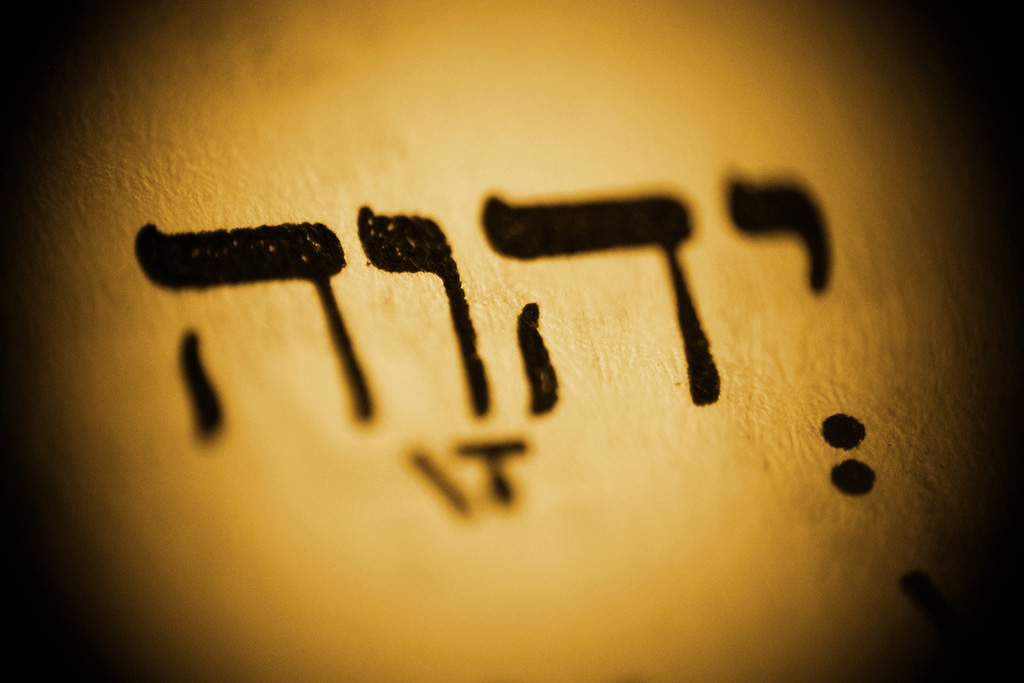
Most conservative theologians believe Jesus appeared in the Old Testament and was called The Angel of the Lord (not an angel of the Lord, by the way).  This term appears in Gen. 16:7 where He speaks with Hagar, in Genesis 22:11-12 when the Angel of the Lord speaks to Abraham and identifies Himself as YHWH: “But the angel of the Lord called to him from heaven and said, Abraham, Abraham!” And he said, “Here I am.” 12 He said, “Do not lay your hand on the boy or do anything to him, for now I know that you fear God, seeing you have not withheld your son, your only son, from me.” Abraham was not sacrificing to a created angel.

Most obviously, the Angel of the Lord is God Himself.  This is  clear in Exodus 3:2-6  And the angel of the Lord appeared to him in a flame of fire out of the midst of a bush. He looked, and behold, the bush was burning, yet it was not consumed. And Moses said, “I will turn aside to see this great sight, why the bush is not burned.” When the Lord saw that he turned aside to see, God called to him out of the bush, “Moses, Moses!” And he said, “Here I am.” Then he said, “Do not come near; take your sandals off your feet, for the place on which you are standing is holy ground.” And he said, “I am the God of your father, the God of Abraham, the God of Isaac, and the God of Jacob.” And Moses hid his face, for he was afraid to look at God.

We looked at a few weeks ago at how the equivocation fallacy confuses some to believe that claiming someone to be God is claiming they are the Father.  No, this is just pointing to the deity of the person and that His nature is equal with the Father but not the Father.

Now that we’ve seen The Angel of the Lord is God Himself, we need to identify The Angel of the Lord.  Who is exactly He?  The Angel of the Lord (YHWY) identifies Himself as the I AM in Exodus 3:14-15.  That is His name:

14 God said to Moses, “I am who I am.” And he said, “Say this to the people of Israel: ‘I am has sent me to you.’ ” 15 God also said to Moses, “Say this to the people of Israel: ‘The Lord, the God of your fathers, the God of Abraham, the God of Isaac, and the God of Jacob, has sent me to you.’ This is my name forever, and thus I am to be remembered throughout all generations.

Then in John 8:58-59 Jesus says He is that Person, and the Jews wanted to kill Him for what they saw as blasphemy:

58 Jesus said to them, “Truly, truly, I say to you, before Abraham was, I am.” 59 So they picked up stones to throw at him, but Jesus hid himself and went out of the temple.

Jesus identified Himself as the same person who appeared to Moses in the burning bush.  Have you ever wondered why the temple guards who came to arrest Jesus in the Garden fell back when He identified Himself:

John 18:4-6 (ESV)  Then Jesus, knowing all that would happen to him, came forward and said to them, “Whom do you seek?” They answered him, “Jesus of Nazareth.” Jesus said to them, “I am he.” Judas, who betrayed him, was standing with them. When Jesus said to them, “I am he,” they drew back and fell to the ground.

The temple guards fell back because Jesus did not say “I am he” but “I AM.”  The “he” is not there in the Greek.  The guards fell back at the use of the divine name.  Jesus identified Himself as God by nature, the same God who spoke to Moses.

Why is this important?

The Son (Jesus) voluntarily became obedient to the Father (Phil. 2:5-8).  He is equal to the Father in nature and all other ways but took a submissive role to accomplish God’s plan. Jesus is greater than all the angels (Heb. 1:4-8)

To be confused concerning just who Jesus is to be wrong enough to spend eternity without God.  The Bible warns us to beware of this:

2 Cor. 11:3-4 (ESV)  But I am afraid that as the serpent deceived Eve by his cunning, your thoughts will be led astray from a sincere and pure devotion to Christ. For if someone comes and proclaims another Jesus than the one we proclaimed, or if you receive a different spirit from the one you received, or if you accept a different gospel from the one you accepted, you put up with it readily enough.

A created angel you call Jesus is not the Jesus of the Bible.  To ask that angel for salvation will do nothing but result in you praying to another God than the God of the Bible.  Beware.

The Glory of God

The word glory appears 359 times in the English Standard Bible, nearly once for every day of the year.  Have you ever wondered exactly what the word glory means and how it is used in Scripture?  I have.

The Hebrew word most often translated as “glory” is kabod.  The word literally means weight or heaviness.  We most often think of glory as the visible display of God’s holiness, as when God’s presence filled the tabernacle:

Ex. 40:34-35 (ESV)  Then the cloud covered the tent of meeting, and the glory of the Lord filled the tabernacle. And Moses was not able to enter the tent of meeting because the cloud settled on it, and the glory of the Lord filled the tabernacle.

We can see how that definition might apply since God’s glory is weighty, significant, and worthy of honor.  It also refers to God’s reputation and honor among the nations. 

1 Chron. 29:11 (ESV)  Yours, O Lord, is the greatness and the power and the glory and the victory and the majesty, for all that is in the heavens and in the earth is yours. Yours is the kingdom, O Lord, and you are exalted as head above all.

His glory is not something added to God but is inseparable from His nature.  It is God’s invisible excellence made visible, His power, wisdom, and honor.

Moving to the New Testament, we see God’s glory most fully in Jesus Christ, He embodies it:

John 1:14 (ESV)  And the Word became flesh and dwelt among us, and we have seen his glory, glory as of the only Son from the Father, full of grace and truth.

Heb. 1:3 (ESV)  He is the radiance of the glory of God and the exact imprint of his nature, and he upholds the universe by the word of his power. After making purification for sins, he sat down at the right hand of the Majesty on high,

The word radiance (apaugásmatos) here means Jesus shines forth God’s glory from within. 

Why is this important?

As I write this, most of the Christian world is about to celebrate Easter, Resurrection Sunday, the last day of Passion Week.  It is the death and resurrection we honor that makes one of the greatest and humanly unfathomable promises of God possible:

2 Cor. 3:7-18 (NLT)  The old way, with laws etched in stone, led to death, though it began with such glory that the people of Israel could not bear to look at Moses’ face. For his face shone with the glory of God, even though the brightness was already fading away. Shouldn’t we expect far greater glory under the new way, now that the Holy Spirit is giving life? If the old way, which brings condemnation, was glorious, how much more glorious is the new way, which makes us right with God! 10 In fact, that first glory was not glorious at all compared with the overwhelming glory of the new way. 11 So if the old way, which has been replaced, was glorious, how much more glorious is the new, which remains forever!

12 Since this new way gives us such confidence, we can be very bold. 13 We are not like Moses, who put a veil over his face so the people of Israel would not see the glory, even though it was destined to fade away. 14 But the people’s minds were hardened, and to this day whenever the old covenant is being read, the same veil covers their minds so they cannot understand the truth. And this veil can be removed only by believing in Christ. 15 Yes, even today when they read Moses’ writings, their hearts are covered with that veil, and they do not understand.

16 But whenever someone turns to the Lord, the veil is taken away. 17 For the Lord is the Spirit, and wherever the Spirit of the Lord is, there is freedom. 18 So all of us who have had that veil removed can see and reflect the glory of the Lord. And the Lord—who is the Spirit—makes us more and more like him as we are changed into his glorious image.

We, who have turned to the Lord Jesus, alone can see the glory of the Lord and are being changed daily into His glorious image. Glory be to God!