
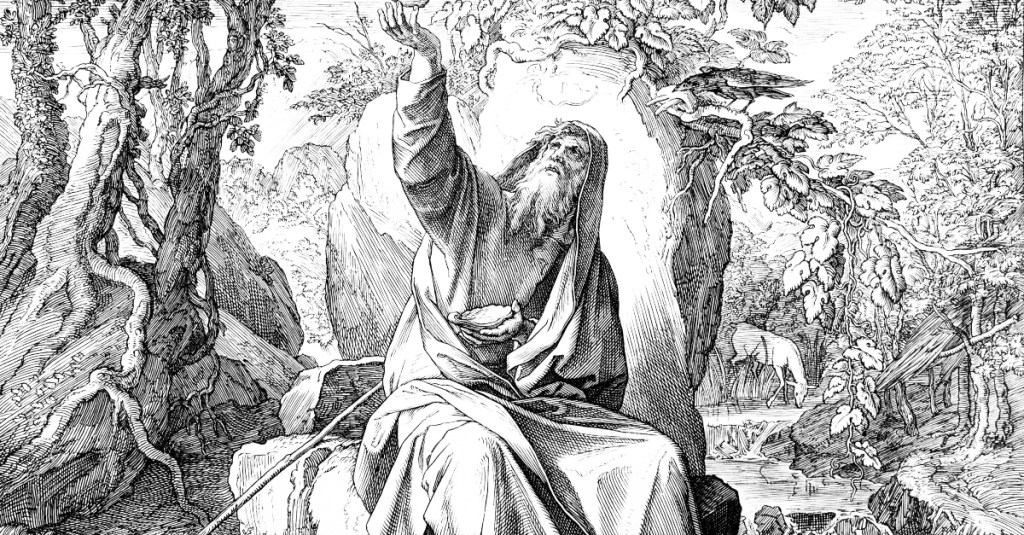
In recent years , The Book of Enoch has gained something of a cult following, so I thought we would look at it a little here, maybe answer some questions, and point out some problems.
What is it? The Book of Enoch presents itself as a record of revelations given to Enoch, the seventh generation from Adam (Jude 14), concerning angels, heaven, human wickedness, divine judgment, and the future vindication of the righteous.
The central historical distinction is this: the book claims to preserve revelations associated with the biblical patriarch Enoch, but scholars generally conclude that the surviving work was composed by multiple authors centuries after the patriarch’s lifetime.
Is it genuine? The question of the Book of Enoch’s genuineness needs to be divided into three separate questions:
- Authentic authorship: Did Enoch, the seventh generation from Adam, actually write the book?
- Historical reliability: Does the book preserve genuine ancient Jewish traditions or accurate accounts of spiritual realities?
- Canonicity and inspiration: Is the book divinely inspired Scripture that belongs in the Bible?
We will look at the arguments for the genuineness of the book first:
Argument 1. Probably the strongest argument offered in favor is Jude 14–15 (ESV): 14 It was also about these that Enoch, the seventh from Adam, prophesied, saying, “Behold, the Lord comes with ten thousands of his holy ones, 15 to execute judgment on all and to convict all the ungodly of all their deeds of ungodliness that they have committed in such an ungodly way, and of all the harsh things that ungodly sinners have spoken against him.”
This matches very closely to Enoch 1:9: “And behold! He cometh with ten thousands of His holy ones to execute judgment upon all, And to destroy all the ungodly: And to convict all flesh of all the works of their ungodliness which they have ungodly committed, and of all the hard things which ungodly sinners have spoken against Him.”
The argument is that if an inspired apostle identifies Enoch as the source of a prophecy, Christians should take the book seriously.
The two main objections to this reasoning are that a book with a prophecy associated with a Biblical prophet does not mean that prophet Enoch actually wrote those words. And even if the words Jude quoted were inspired, this does not indicate the rest of the Book of Enoch was inspired.
Some of the understanding or misunderstanding rests on one’s philosophy of inspiration. Was the text from the Book of Enoch which Jude quoted inspired, or was Jude inspired to include them? It is probably the latter. We have several quotes in the New Testament of secular, non-inspired works which, upon being quoted, became a part of the inspired text: Paul quotes Epimenides (Titus 1:12), Menander (1 Corinthians 15:33), and Aratus (Acts 17:28). These quotes were not inspired in their original works, yet Paul and Luke were inspired to quote them, and they became a part of the inspired text.
Argument 2. The book is genuinely ancient. Sections of the Book of Enoch were found among the Dead Sea Scrolls, so the book is not a medieval fabrication, as are some books we find. It was known more than a century before the Christian era. This fact does not point to anything more than the book being old, neither genuine nor inspired. Scholars date its composition to well after the flood and the age of Enoch, so it is almost certainly not genuinely the Book of the Enoch, seventh from Adam.
Argument 3. Some early Christians accepted it and defended it. Tertullian (160-225 A.D.) defended the Book of Enoch as inspired. The Epistle of Barnabas mentions the Book of Enoch in a way favorable to Scripture. There are a few others who followed some Enochic traditions as well, but the majority of early church Fathers did not recognize the book as inspired. Origen, for instance, said it was not inspired.
Why is this important?
For as long as the Church has been in existence, people have looked for “special” revelation or “secret” knowledge concerning our faith. In the first century and for a few centuries thereafter, the Gnostics offered “Secret Knowledge” to those who would pay to learn it. In the late 20th century, writers were obsessed with the “Bible Code,” hidden messages in the Bible. Christians are often distracted by these things, and I think the Book of Enoch is just the latest installment in the greater knowledge search.
A personal hero of mine, Dr. Walter Martin, was once asked what he thought of the Bible Code writers. His answer was “I have enough trouble learning and living the Bible as it exists.” I think that’s wise. We know God has given us the 66 books of the Bible. Let’s look at the Book of Enoch with interest if we want, but the absolute guidance for the Christian life comes from the Bible alone.

