
Mark 1:16–20 (ESV)
Passing alongside the Sea of Galilee, he saw Simon and Andrew the brother of Simon casting a net into the sea, for they were fishermen. And Jesus said to them, “Follow me, and I will make you become fishers of men.” And immediately they left their nets and followed him. And going on a little farther, he saw James the son of Zebedee and John his brother, who were in their boat mending the nets. And immediately he called them, and they left their father Zebedee in the boat with the hired servants and followed him.
Most people probably think of Peter, Andrew, James, and John as ordinary fishermen who left their nets to follow Jesus. However, there is good reason to believe that at least some of these men were involved in established, reasonably prosperous fishing businesses. They were not necessarily poor men with nothing to lose. Consider some of the evidence:
- They had fishing boats, business partners, equipment, including expensive nets, and employed other people (Mark 1:20; Luke 5:1–11).
- This appears to have been an established family business, with Zebedee and his sons working together (Mark 1:19–20).
- John apparently had connections in Jerusalem and was known to the high priest:
John 18:15–16 (ESV)
Simon Peter followed Jesus, and so did another disciple. Since that disciple was known to the high priest, he entered with Jesus into the courtyard of the high priest, but Peter stood outside at the door. So the other disciple, who was known to the high priest, went out and spoke to the servant girl who kept watch at the door, and brought Peter in.
Consider some other men throughout history who made similar choices:
Anthony the Great (c. 251–356) was orphaned at a young age and inherited his family’s property and possessions. After making provision for his sister, he distributed much of his inheritance to the poor and withdrew into the Egyptian desert to devote his life to seeking Christ.
Francis of Assisi (1181–1226) was the son of a successful cloth merchant. He grew up in considerable wealth and social privilege, enjoying the lifestyle of a wealthy young man. He eventually renounced his inheritance and possessions to serve Christ, care for the poor, and preach the gospel.
Hudson Taylor (1832–1905) received medical training and could have pursued a respectable professional career. Instead, at age 21, he left England for the mission field of China. He later returned to England, completed additional medical training, and obtained his surgical qualification before returning to China.
C. T. Studd (1860–1931) was born into a wealthy British family and became a celebrated cricket player at Cambridge. He inherited a substantial fortune from his father, yet chose to distribute his inheritance to missionary and charitable work. He subsequently devoted his life to serving Christ on the mission field.
William Borden (1887–1913) was heir to a fortune associated with the Borden dairy business. He graduated from Yale and could have enjoyed a life of tremendous wealth and comfort. Instead, he prepared for missionary work among Muslims in China. He died in Egypt at age 25 before reaching his intended mission field.
Why Is This Important?
I think there is an excellent apologetic in considering these examples.
Imagine asking average, reasonably successful people a question:
“What would it take for you to give up your success? What would be so important to you that you would willingly leave behind a life of comfort, financial security, and position to travel to an unknown land and face an equally unknown future?”
I suspect most would say they would only do it for something they believed was considerably more valuable than what they were leaving behind.
I agree.
These men believed they had found something of immeasurably greater value than the wealth, security, and opportunities they were surrendering. They believed that knowing and serving Christ was worth more than anything this world could offer.
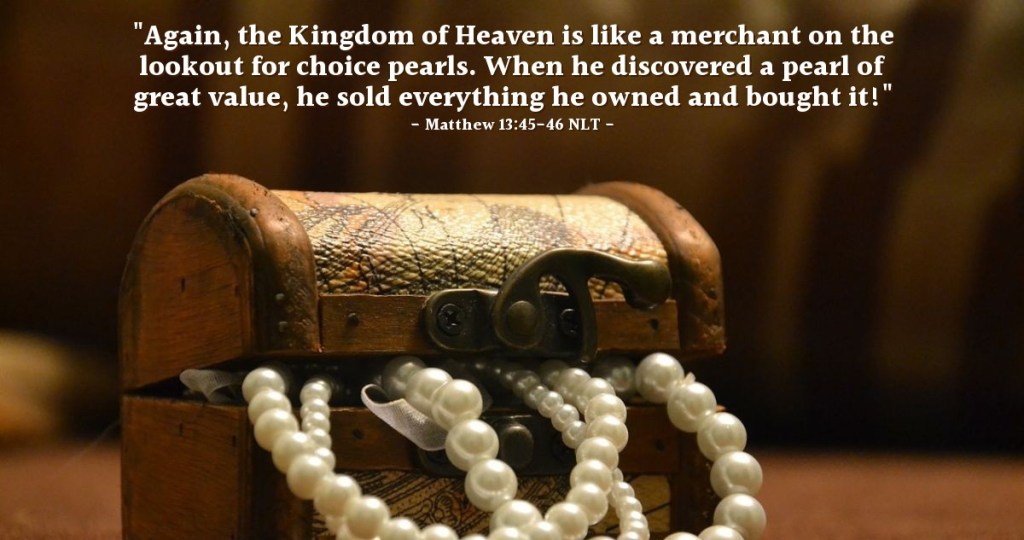
Jesus illustrated that very principle:
Matthew 13:44 (ESV)
“The kingdom of heaven is like treasure hidden in a field, which a man found and covered up. Then in his joy he goes and sells all that he has and buys that field.”
Notice that the man did not sell everything reluctantly. He did it in his joy because he had discovered something of far greater value.
What would it take for you?

