
Loving God

“Not with doubting, but with assured consciousness do I love you, Lord.  You have stricken my heart with your Word, and I loved You.  Yes also heaven, and earth, and all that is therein, behold on every side you ask me to love You; nor cease to say to everyone, that they may be without excuse.  But more deeply will You have mercy on whom You will have mercy and will have compassion on whom You have had compassion: else in deaf ears do the heaven and the earth speak Your praises.  But what do I love, when I love You? Not beauty of bodies, nor the fair harmony of time, nor the brightness of the light so gladsome to our eyes, nor sweet melodies of varied songs, nor the fragrant smell of flowers, and ointments, and spices, not manna and honey, not limbs acceptable to embrace the flesh.  None of these I love, when I love my God; and yet I love a kind of light, and melody, and fragrance, and meat, and embrace when I love my God, the light melody, fragrance, meat, embrace of my inner man; where there shines into my soul what space cannot contain, and there sounds what time bears not away, and there smells what breathing does not disperse, and there tastes what eating does not diminish, and there clings what fullness does not divorce.  This is it which I love when I love my God.” (Confessions, Augustine of Hippo 354-430 a.d.)

When I read the writings of some of the important spiritual figures in history, I feel ashamed to compare my relationship with God to theirs.  I think to myself “These guys spent all their waking hours in praise and in communion with God.  I don’t have time for that.”  But, that’s not really valid.  Brother Lawrence, a French monk known for his deep relationship with our Lord, was a dishwasher at a monastery.  Yet he was sought by Europe’s nobles and paupers for spiritual counsel.  Where did he find time to build his relationship with God? He spent all of his time in relationship with God.

Augustine was a simple monk but forgiven of much.  He was a womanizer and drunk before God got a hold of him.  He didn’t have computer Bible study software.  He didn’t have the great libraries available to us to help us grow in our knowledge of our God.  He sat in a garden and contemplated God’s beauty.  He experienced the taste of a good meal and thought of God, he felt a loving embrace and thought of God.  He knew life with God could be so much more.  We can do that.

The French monk, Brother Lawrence, saw everything he did as an act of worship, praise, and communion with God.  Cooking and cleaning were things he did to God’s glory and talked with God while doing so.  We can do that, but somehow bad drivers, unpleasant customers, loud neighbors draw us away from that.  Brother Lawrence, if he rode with me, shopped with me, or lived with me, would praise God for those folks and pray for them.  He would love them.  Again, we can do that.

Maybe we could slow down a bit and appreciate the things around us God has supplied for us.  Our attitude can be changed by our gratitude for what God has done, to seek to understand God’s plan for us and for the world.

God has provided much for us both now and in the future.  By recognizing what God has done, we can recognize God Himself more easily.  His plan has been accomplished for all who wish to join us in His glorious realm.  We tend to take that for granted, though.  We now hear “Jesus loves you and died for you” much less gratefully than we did when we first heard it.

Ephesians chapter 1 gives us a good idea of what we should be grateful for and what we can look forward to.  God has given much in order to gain our presence in heaven.  Read all of Ephesians today if you can.  Here is just a taste:

Ephesians 1:3-5 (ESV)  Blessed be the God and Father of our Lord Jesus Christ, who has blessed us in Christ with every spiritual blessing in the heavenly places, even as he chose us in him before the foundation of the world, that we should be holy and blameless before him. In love he predestined us for adoption to himself as sons through Jesus Christ, according to the purpose of his will[1]

Why is this important?

We are His children through a wonderful but also terrible plan that included the death of the Father’s most beloved Son.  Our love for God should be a simple reaction to the grand plan He executed to gain us.

“Men invent means and methods of coming at God’s love, they learn rules and set up devices to remind them of that love, and it seems like a world of trouble to bring oneself into the consciousness of God’s presence. Yet it might be so simple. Is it not quicker and easier just to do our common business wholly for the love of him?”  (The Practice of the Presence of God – Brother Lawrence  1614-1691 a.d.)

Hallowed be Thy Name

       “Our Father in heaven, hallowed be your name.”  (Matt. 6:9b)

We all know the Lord’s Prayer from Matthew chapter 6, but when Jesus mentions we are to “hallow” God’s name what does it mean?  After all, if Jesus is telling us to lift up the name Yahweh,” would He use “Father” rather than “Yahweh?”  The word “name” must mean other things than just a label we place on someone.

Let’s Just look at a couple of facts about God’s name, “Yahweh” before we get into this, though.  The tetragrammaton (the four Hebrew letters that make up YHWH) appears more than 7,000 times in the Old Testament though never in the New.  It isn’t the transliteration issue like Joshua to Jesus, for instance.  God’s formal name does not appear at all in any Greek manuscripts of the New Testament.  The divine name is represented in the New Testament by the Greek words kurios which simply means Lord or theos which means God.

Another interesting point is that Jesus uses the Greek word kurios to identify the Father only 22 times in the New Testament.  20 of those are in quotes Jesus recites from the Old Testament.  The other two times are only in the gospel of Mark and only said in passing.  Jesus never uses the word kurios in addressing God in prayer.  He consistently used pater or “Father” except once when Jesus just looks to heaven and says “open” to heal a deaf man (Mark 7:34). He doesn’t verbally address the Father at all. He knows the Father so intimately, He is always in contact.

So, if Jesus doesn’t see the divine name as of primary importance, what is He saying in Matt 6:9, “hallowed be you name?  Acts 4:7 gives us some insight into the meaning of the word onoma, or “name.”

Acts 4:7 (ESV) And when they had set them in the midst, they inquired, “By what power or by what name did you do this?”

So, like saying “open in the name of the law,” the name of God means more than just a label.  It can mean God’s power and authority.  Matt. 7:22 adds support for this:

 On that day many will say to me, ‘Lord, Lord, did we not prophesy in your name, and cast out demons in your name, and do many mighty works in your name?’

These false prophets were not using the divine name but claiming they were speaking with the authority of Jesus.  In Matt. 10:22, Jesus says we will be hated for His name’s sake.  That doesn’t mean because we have His name on our tee shirts but because we identify our lives with Him in so many ways.

It is our complete relationship with God and His complete devotion to us that is included in the idea of God’s name, not just the divine name but the divine relationship with His children.

Why is this important?

Sometimes a single word in Scripture loses its meaning in translation to the point we look to it in it’s common meaning and move on.  Jesus said this about how important every word, every minor seeming point is to each of us:

Matt. 5:18 (ESV)  For truly, I say to you, until heaven and earth pass away, not an iota, not a dot, will pass from the Law until all is accomplished

2 Timothy 3:16 says all Scripture is profitable for doctrine and instruction, all Scripture!  One of my favorite books of the Bible is one of the shortest, Jude.  One commentary on Jude included a story about a monk who decided to devote his entire life to the study of Jude.  On his death bed decades later, he told the others around him that he had only just begun to scratch the surface of the book of 25 verses.

God’s Word is deep.  Look closely and dig deeply.  Treasures are buried everywhere. 

Ps. 20:7  Some trust in chariots and some in horses, but we trust in the name of the Lord our God.

  • If you don’t know how to study your Bible, the Navigator Bible Studies Handbook is the small text I use to teach folks to study God’s Word.  It might be profitable for you as well.

Jesus’ Family

Every family has a number of great folks and, inevitably, a few odd balls and crackpots.  My grandfather was a member of the Independent Order of Odd Fellows club.  That may clear up some doubts for more than a few of you.  “But, certainly”, we should think, “the Son of God would have nothing but stellar citizens in His earthly genealogy.”  That isn’t exactly true, though.  In fact, He had a few rogues.

The genealogy given in Matthew is Jesus’ genealogy through Joseph’s side of the family.  A Jewish rabbi would need a full genealogy to be taken seriously. 

Matthew begins with Abraham.  While Abraham is certainly a hero of the faith and the one who God used to begin the Hebrew family, he was no angel.  He was called directly by God out of the land of Ur to a place he didn’t know.  Abraham was told he was to leave his kindred and his father’s house and just go (Gen. 12:1).  So, he was to leave his family – except his wife, I assume – and head out no doubt to learn on God alone. In verse 4 of Genesis chapter 12, we see Abraham is accompanied by Lot, his nephew, so the family member thing didn’t happen. 

Abraham took Sarah, his wife to Egypt and lied to Pharaoh saying Sarah was just his sister.  Pharaoh nearly slept with her because of this, but the lie was found out.  Abraham did the same thing again later with King Abilelech and was found out.  From Genesis chapter 12 to chapter 22, we see Abraham continually disobeying God.  He even slept with Sarah’s servant and had a son by her against God’s promise. Abraham was no gem.

Then there is Isaac in Jesus’ genealogy.  Isaac pulled the same stunt Abraham did with the King Abimelech of his time, probably the previous king’s son.  Isaac claimed his wife, Rebekah, was his sister for fear the king would kill him to gain the beautiful Rebekah.  He was found out like his father.

Next we have Jacob, a scheemer who talked his older brother into selling his birthright to him for a pot of stew. 

Then there is Tamar who disguised herself as a harlot persuading Judah to have a son with her since he would not allow his youngest son to marry her and give her a son as the Law commanded.

There’s also Rahab the harlot who hid the Israelite spies in Jerico and Ruth, the gentile from Moab who came to Israel with her mother in-law Naomi.

Later we have Bathsheba who with King David committed adultery.  Her name isn’t even mentioned, only as the “wife of Uriah” who David murdered.

There are a lot of other folks in this family, but you can see the point.  There are foul ups and screw balls in every family including Jesus’ family.

Why is this important?

Abraham, even with his twelve chapters of sins, was called God’s friend.  David, an adulterer and murderer, was the apple of God’s eye. All these characters were favored by God.  Four of them: Abraham, Isaac, Jacob, and Rahab are mentioned in the “Hall of Faith” of chapter 11 of Hebrews as great examples to us. Why? Because they repented and wanted to please God.

Our lives are a struggle.  Our dedication to God is what matters.  God is more interested in our hearts than our acts.  Forgiveness is available for those who want it.  If there is great sin in our lives we feel unworthy, and we are.  But, God loves unworthy people and draws them into His family.  If you feel you’ve had too much sin in your life, look at the people in Jesus’ family and how God used them greatly.  He will do the same for you.

Your God

You know how something just hits you out of the blue, God points something out to you in a moment you didn’t expect?  That happened to me this morning.  A song on the radio had a lyric that mentioned God was the God of Jacob.

Well, I thought about Jacob and what a schemer he was.  He wrangled the birthright from his older brother, Esau, getting him to sell his birthright for a simple bowl of stew (Gen. 25:29-34).  Then when their father, Isaac (we’ll get to him in a minute) thought he was about to die and needed to give the blessings to his sons, Jacob disguised himself and pretended to be Esau in order to get the double blessing of the firstborn from their father.

Speaking of Isaac, he was a schemer as well.  A famine had risen in Israel, and Isaac sought safety and success in the land of the Philistines after God had told him to stay in the Promised Land, and He would be with Isaac and bless him. 

Isaac thought he “knew better.”  When he arrived at the area of Gerar, he was told by King Abimelech to leave as the king had heard of the strength of the Israelite army and wanted no part of it.  In order to gain favor with the king, Isaac pulled the same stunt as his father did to the son of the same king.  He lied and told the king Rebekah, Isaac’s wife, was really his sister.  Abimelech quickly discovered the deception, but they were allowed to stay.

Isaac’s sins were ignoring the will of God, and lying to protect his own life – a practice he learned from his father.

Abraham, Isaac’s father, was a real character too.  He started out well.  God came to Abraham and told him to leave his home country, his father’s house, and head out to a place “where I will show you.”  That’s a real step of faith.

Once Abraham and family arrived, a famine arose.  He decided to head to Egypt to look for food.  Before he entered Egypt, he pulled the same deal his son would years later.  He told the Egyptians his wife, Sarai was really his sister.  Sarai was apparently a very beautiful woman, so beautiful Abraham feared the locals would kill him to get to her if she were his wife.

God had promised Abraham his descendents would fill the nations and be blessed.  Abraham again doubted the Lord and took Sarai’s servant, Hagar, and had a son with her.  But, God waited until they were so old it was absolutely impossible to have children, then Sarah became pregnant.  She delivered a son, Isaac.  So, Abraham’s real sin was doubt and not listening to God.

Why is this important?

When God first revealed Himself to Moses, the Law giver, He presented Himself as the God of Abraham, Isaac, and Jacob:

Ex. 3:6 (ESV)  And he said, “I am the God of your father, the God of Abraham, the God of Isaac, and the God of Jacob.” And Moses hid his face, for he was afraid to look at God.

These were all sinners, yes, but they were also people of promise just as you and I are.  We’re also people of promise – dozens of them:

2 Peter 3:13 (ESV)  But according to his promise we are waiting for new heavens and a new earth in which righteousness dwells.

Jesus is coming back.  He is the God of Abraham, Isaac, and Jacob, sinners but lovers of God.  No matter the sins for which you think God will hold you accountable, if you are His child,  a sinner but a lover of God. He will identify Himself to the heavenly host as the God of Abraham, Isaac, and Jacob, and (Your name here).

Knowing God

John 17:3 (ESV)  And this is eternal life, that they know you, the only true God, and Jesus Christ whom you have sent.

Knowing God?  What a concept to not just learn about God but to have a personal intimate relationship with Him – God!  An awesome privilege.  But how can we really know God and be intimate with Him?

We can study the Bible all our lives and never know God.  Did you know that?  Jesus Himself tells us this:

John 5:39,40 (ESV)  “You search the Scriptures because you think that in them you have eternal life; and it is they that bear witness about me, yet you refuse to come to me that you may have life.”

So, we can study as much as we want, and we should study, but that’s not the way we know God

As someone who is compelled to study God’s word, I find it strangely comforting that we don’t need to study as a condition for our salvation.  And it’s through our salvation that we come to know this wonderful God.  The moment we receive Christ, we become a part of God’s intimate family, His child.

John 1:12,13 (ESV)  But to all who did receive him, who believed in his name, he gave the right to become children of God,who were born, not of blood nor of the will of the flesh nor of the will of man, but of God.

To go back to John 17:3 for a moment, let’s look at what it means to know God.  “Know” is the same Greek word, ginosko, as in Genesis 4:1 in the Septuagint.  There we’re told Adam knew his wife Eve.   The Greek word means more than just an introduction to someone.  Ginosko means to study that person in order to better understand who and what they are.

In May of 1968, I met the young woman who would become my wife.  As we courted and then married, we learned more and more about each other.  The Bible tells us to actually study our spouses to know them better.  Some of that is finding out how they think, how they act, and their likes and dislikes.  But there is something in all our successful marriages besides just knowing about our spouse.  There’s a first person involvement we can’t define.  We become part of one another.  It’s more than just love.  This is a greater connection.  It’s something we experience but can’t explain.  God tells us we actually become one, and I believe it.

This is the same relationship we want with God.  We want to look at something He’s done and say “Isn’t that just like Him?”  The more we get to know God the more often we find ourselves saying that.

Why is this important?

Christians try to please God.  We work hard to “help Him out.”  We study beyond what is expected to get God’s attention.  We pray all day to seek His acceptance.  These aren’t bad things until they’re taken to extremes.

Luke 10:40-42 (ESV)  But Martha was distracted with much serving. And she went up to him and said, “Lord, do you not care that my sister has left me to serve alone? Tell her then to help me.” 41 But the Lord answered her, “Martha, Martha, you are anxious and troubled about many things, 42 but one thing is necessary. Mary has chosen the good portion, which will not be taken away from her.”

There’s a time to work, don’t get me wrong.  But, there’s a time to sit at Jesus’ feet to get to know Him better.  When we get too busy pleasing God, we get too busy to spend time hearing God, getting to know Him better.  No matter how much we work to know Him, though, there will be a day when we shall know Him fully.

1 Cor. 13:12 (ESV)  For now we see in a mirror dimly, but then face to face. Now I know in part; then I shall know fully, even as I have been fully known.

Redeemed

Ruth 4:9,10a  (ESV)  Then Boaz said to the elders and all the people, “You are witnesses this day that I have bought from the hand of Naomi all that belonged to Elimelech and all that belonged to Chilion and to Mahlon. Also Ruth the Moabite, the widow of Mahlon, I have bought to be my wife,

Rev 5:9 (ESV)  And they sang a new song, saying, “Worthy are you to take the scroll and to open its seals, for you were slain, and by your blood you ransomed people for God from every tribe and language and people and nation, and you have made them a kingdom and priests to our God, and they shall reign on the earth.”

Okay.  You’ve read these two passages and are wondering how in the world do these two verses come together.  Let’s look and see.

The  Book of Ruth is a story of a gentile woman who, through God’s hand, is brought to Bethlehem so she might enter into the line of both David the king and Jesus our King.

In the final chapter of the story, Boaz (the son of Rahab, by the way) has, through legal maneuvering, won the right to buy the land originally owned by Ruth’s father in-law then, after he died, by her husband.  Then her husband died leaving her as a widow and destitute.  Boaz was what is called a Kinsman Redeemer.  He had the right to redeem the family property and the bride that came with it.

Boaz went through a lot of trouble to gain the hand of Ruth. When he was finished he had gained the right to marry her. She was all in favor of the deal as well, just in case you thought this wasn’t on the up and up.

“How does all this relate to Revelation chapter five?” you might ask.  When Boaz took Ruth as his wife, there was a scroll that needed to be opened and new information recorded in it. It was was a family scroll similar to Family Bibles many people keep to record family weddings and deaths.  The scroll was sealed after each entry and needed to have the seal broken in order for the new entry to be made.

When Ruth was redeemed, the scroll was fetched, the seal was broken, the new entry was recorded.

In Revelation, we see the Lamb, Jesus taking the scroll and opening the seal.  In that scroll, he enters our names as His bride.  This is the official record of our marriage to Jesus.  Just as in the scroll in Ruth included the marriage information, Revelation also lists legal grounds of our redemption and the benefits of the bride:

“for you were slain, and by your blood you ransomed people for God from every tribe and language and people and nation, and you have made them a kingdom and priests to our God, and they shall reign on the earth.”

Why is this important?

We as the bride of Christ are sealed forever by the Holy Spirit to remain His bride.

Eph 1:13 (ESV)  In him you also, when you heard the word of truth, the gospel of your salvation, and believed in him, were sealed with the promised Holy Spirit, 14 who is the guarantee of our inheritance until we acquire possession of it, to the praise of his glory.

The two verses at the beginning refer to the same legal practice.  It’s official.  We are betrothed to the Lamb.  We are His.

Rom. 8:38, 39  For I am sure that neither death nor life, nor angels nor rulers, nor things present nor things to come, nor powers, 39 nor height nor depth, nor anything else in all creation, will be able to separate us from the love of God in Christ Jesus our Lord.

We have been redeemed!

Listening

Anyone who saw A Beautiful Day in the Neighborhood, saw a man who listened.  In fact the subject, Mister Rogers, listened until the person he was listening to was done speaking.  Not only did Fred Rogers hear what he was being told, but he listened deeply enough to respond having understood what the person was telling him.

When I saw the movie, it truly struck me how little I listen, and when I do listen, I listen to respond more than to understand.  The movie changed the way I listen to people.

Mister Rogers was a Presbyterian Minister, not just a television personality.  His listening was a form of the kindness we are to show to all people, and he did it well.  It struck me during the movie how much Jesus must have listened to sincere people in that way.  Then it struck me that I should do this as well.

When we listen to people to understand what they are trying to tell us, we earn the respect of that person in our responses.

I’m currently teaching a class on witnessing.  This is a very difficult class for me since I’m not very good/successful at sharing the gospel.  To teach others, we need to know how to do things.  Most of what I’ve been sharing is about my failures, the people I’ve seemed to turn off with my approach.  And, I think this is my very problem, I don’t listen well.

When I do listen, the conditions change.  Some people will talk for five or ten minutes about something I really could care less about.  I used to turn away or look for an excuse, an escape from the conversation.  God has used the Beautiful Day film to change my life and how I approach people, for a lack of a better word.

So much of the literature I’ve gone over in preparing the Witnessing class shares a lot of approaches, how to enter into a conversation, tricks to pull to get a person to hear what you’re saying.  I really don’t see that in Scripture.  Jesus didn’t use tricks.  He listened to people and explained how He could provide for their needs.

The number of people I’ve directly led to the Lord are very few, but the ones I have led to the Lord were done as I listened to them in order to understand them and their needs. I was also calm when sharing with these people because I was more interested in what they had to say than my nervousness.

Listening calms us.  Rather than feeling the pressure to jump into a powerful witnessing session, listening can overcome our nervousness.  We feel a bond beginning between us and the speaker.

Psalm 31:13 is God talking about how He so wishes we would listen to Him.  Oh, that my people would listen to me, that Israel would walk in my ways!  I guess we’re just not the listening people we should be. But, God has so much to say to us if we would listen:

Jer. 33:2,3 2 “Thus says Yahweh who made the earth,Yahweh who formed it to establish it— Yahweh is his name: 3 Call to me and I will answer you, and will tell you great and hidden things that you have not known

Listening doesn’t just effect us.  It effects those we listen to. In the class, I tell a true story of a college student who approached his psychology professor telling him about a girl he was interested in, but she didn’t know he existed.  “How can I get her to like me?” he asked.  The professor’s advice was this: “Ask her questions, listen to the answers, then ask more questions about those answers.”  The young man returned a couple of weeks later and told the professor “I tried what you said, and boy she loves me!”

Listening is a powerful thing.  In witnessing, it gives the listener a sort of credit and credibility.  When the one talking finishes what they had to say, they want to hear a response and will listen as you have.  Sometimes, that’s the opening we need to share the Truth that changed our lives and can change theirs.  Sometimes, it’s just a chance to help, build a foundation of trust, so you can share that gospel at a more opportune time.

Why is this important?

This same bond we have between us and others can be had with our Lord and will grow the more we listen to Him by reading His Word and listening in prayer.  Often I shoot up a prayer in a hurry and fail to listen for an answer.  Mister Rogers always listened for an answer from the people he spoke with.  Should we do less when we talk with our Lord?

How about we decide to spend a little less time talking – to friends, relatives, strangers, and most importantly to Jesus – and a little more time listening.  Maybe we’ll grow more, learn more, and who knows we might make a few more friends as well as brothers and sisters in the Lord. We might even please God.

Jesus’ Dad

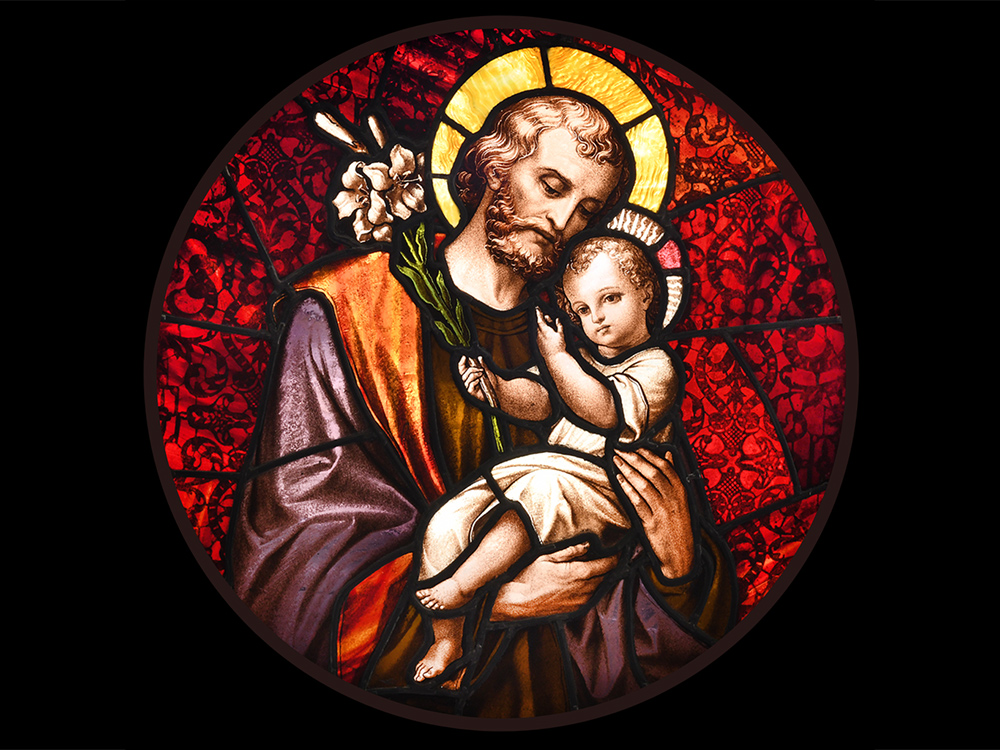
Joseph gets left behind by many Bible students, so it would be good to shine some light on what we know of this wonderful man God saw fit to charge with the upbringing of His Son, Jesus.

The biblical information for this post was taken mostly from the first two chapters of Matthew and the second chapter of Luke.  Points from elsewhere will be noted.

First let’s settle some confusion.  According to Matthew’s genealogy of Jesus, Joseph’s father’s name was Jacob.  In Luke’s genealogy, his father is said to be Heli (Luke 3:23).  The difference is because Matthew records Jesus’ genealogy through Joseph, and Luke presents Jesus’ genealogy through Mary.  The Jews consider a son in-law a son, so Joseph is said to be the son (in-law) of Heli in Luke.

Joseph was a good guy, a simple, honest, hard working, God fearing man, and an observant Jew.  When he learned of Mary’s pregnancy, he could have held her up to public ridicule, but he didn’t.  He had compassion on her since he knew her well.  The betrothal he and Mary had entered into was a Jewish tradition where they would be committed to each other but would not consummate their marriage for a year when the actual marriage would take place.  The commitment was as binding as marriage and even considered as such.  That’s the reason he had the right to divorce her rather than just walk away.

This godly man had an angel come to him in dreams three times to direct his path concerning the life of Jesus and His protection.  The angel came to Joseph to tell him Mary was pregnant of the Holy Spirit, so he shouldn’t divorce her.  Later an angel told Joseph to leave Nazareth and go to Egypt because the young Jesus was in danger.  He did that.  The third time the angel came to him was to tell him Herod had died, so they could return to Israel.  He did that too but didn’t move back to Bethlehem for fear Herod’s son, Archelaus, might find them.

Joseph was kind-hearted and sympathetic.  He and Mary raised Jesus in a traditional observant Jewish home. 

Other than the fact Joseph was a carpenter and had four sons and some daughters with Mary (Mark 6:3), we really don’t know much more about him. At least two of his sons became Christians, and they penned books of the Bible (James and Jude).   

Joseph’s last appearance in the Bible is with Mary when Jesus was twelve and questioning/teaching the priests in Jerusalem.  After this, Luke 2:51 says, they all returned to Nazareth, and Jesus was submissive to both Joseph and Mary as children are to be to their parents.

After this event, Scripture tells us nothing more about Joseph.  The consensus of opinion is he died before Jesus began His earthly ministry.  Otherwise, the reasoning goes, he should surely have been mentioned as attending the wedding at Canaan where Jesus performed His first miracle.   

How did Joseph die, then?  The Bible doesn’t tell us.  It could have been an accident or disease, natural causes.  We just don’t know.

The Catholic and Orthodox churches teach the eternal virginity of Mary and so  believe Joseph was an old man when he married Mary, that he was appointed by God to care for the young Mary and her Child.  He was not to be a husband to her and that he simply died of old age.  Of course, you then have the issue of the four brothers of Jesus mentioned in Mark 6:3.  The answer given by the Catholics and Orthodox is Joseph had these children before marrying Mary or they are cousins (the term for both cousins and brothers is the same in the Hebrew culture).  Then you’re faced with Matthew 1:24 which strongly implies their marriage was consummated.

The idea Joseph was an old man would not have lived long enough or been able to work long enough to be well known as a carpenter in Nazareth.  If he were just in his twenties when he married Mary, he would have been in his fifties when Jesus’ ministry began, not a young man in New Testament times.

Why is this important?

Joseph didn’t retreat from the awesome task God set before him.  He seems to have taken it up readily and with Mary successfully raised and provided for the young Jesus.  He kept the secret all those years.  The people of Nazareth were surprised when Jesus taught with power and authority in the synagogue of Nazareth for the first time.

Joseph is a model for us all to listen to God’s direction, and do exactly what we are told.  He was an average man who dedicated his life to obeying his God.  He had a job to do, and he did it just as God wanted.  Oh that we might apply that example in our lives.

Thinking Christian

Col. 2:8 (ESV)  See to it that no one takes you captive by
philosophy and empty deceit, according to human tradition, according to the
elemental spirits of the world, and not according to Christ.

Having been trained in philosophy, especially logic, this verse always makes
the hair on the back of my neck stand up a bit.  Of course, Paul here is
not addressing Christian philosophy but philosophy that centers on the
traditions of men and the elemental spirits of the world. Paul himself argued
with the philosophers of Athens and won some to Christ. He did that using
Christian philosophy.

“Christian philosophy?” you ask?  Certainly! God even asks us to reason
together: In Isa 1:18, He begins with “Come let us reason together, says
the Lord.

When I was in school, I was often asked who my favorite philosopher was.  My responsewas always “Jesus of Nazareth.”  What sort of a philosopher is
Jesus?  He is the greatest Philosopher ever to walk the earth. In fact one
of His names actually points to philosophy.

John 1:1 (ESV)  In the beginning was the Word, and the Word was
with God, and the Word was God.

Of course we know the “Word” is Jesus Himself.  John 1:14 tells us the
Word became flesh and dwelt among us.  Some of us even know the Greek word
for “Word” here is logos?  But did we know we get our word
“logic” from logos.  In Greek, it means even more than that.  It
means an intelligent discussion, even a philosophical debate, it means reason.
Jesus came here for a lot of purposes. One of those was to reveal God to us in
Person and that often through reason.

Jesus constantly used logic in His ministry.  “What would happen if you
built your house on the sand?  Blessed are the poor in spirit for they
shall see God.”

God didn’t just use logic in the New Testament either:

Ex 19:5 (SV)  Now therefore, if you will indeed obey my voice and
keep my covenant, you shall be my treasured possession among all peoples, for
all the earth is mine;

God gives a condition, a consequence, and a supporting premise: inductive
logic.  That’s philosophy.

Jesus told stories philosophers call thought experiments, stories that
prompt thought and a conclusion.  He held debates with the
Pharisees.  John chapter 8 is mostly a long debate about who Jesus is.

The early church followed in this example.  When the persecutions
began, church leaders wrote public letters arguing philosophy for the benefits of Christian citizens to the empire.

1 Peter 3:15 (ESV)  but in your hearts honor Christ the Lord as
holy, always being prepared to make a defense to anyone who asks you for a
reason for the hope that is in you; yet do it with gentleness and respect,

In Christian philosophy, there is even a discipline called
“apologetics.”  The verse above uses the word “defense.” That is the word apologia from which we get our word “apologetics.”  This is an area where
Christians enter into logical civil discussions, arguments, reasoning, giving a
good defense for the truth of Christ.  There are clear evidences for the
truth of the Bible.  There is powerful evidence the Bible is not only true
and reliable but also inspired by the God of the universe, and Christian
apologists attempt to show this evidence to a lost world.

Jesus was not above giving evidence:

Luke 24:38,39 (ESV)  And he said to them, “Why are you troubled, and why do doubts arise in your hearts? 39 See my hands and my feet, that it is I myself. Touch me, and see. For a spirit does not have flesh and bones as you see that I have.”

Why is this important?

Thinking is not a bad thing as a Christian.  In fact, we’re told to think continually. 

When we start listening to traditions that draw us away from the truth,
we need to watch our step.  The way this often works is some
simple statement like “the church created the Bible, so the Church alone can
tell you what it says.  We are the church, so we’ll tell you what it says.” That’s a lie.

 The Bible stands alone as our source of truth.  God has given it to us to understand.  Sure there are pastors and teachers who help us, but what they teach should always be examined according to God’s Word.  They should tell you that themselves.

Philosophy like so many other things, can be used to serve man or to serve
God.  We need to be careful.  The purest philosophy is to love the
Lord your God with all your heart, soul, mind, and strength, and to love your
neighbor as yourself.  Anything we hear that does not align with that
should be ignored or corrected.  God has revealed Himself to us in His
Word.  There is no need to look elsewhere.

Unworthy

John 1:1-3, 14 (ESV) In the beginning was the Word, and the Word was with God, and the Word was God. He was in the beginning with God. All things were made through him, and without him was not any thing made that was made. And the Word became flesh and dwelt among us, and we have seen his glory, glory as of the only Son from the Father, full of grace and truth.

The Word is, of course, Jesus, the Creator of all things.  He is the God Who spoke and all that exists came into being.  He is equal to God (the Father and Holy Spirit – John 5:18), yet He emptied Himself and took the form of a human (Phil. 2:5-8).

Jesus, the God of the universe, walked with men, even washed their feet.  Imagine that.  God Himself washing your feet.  How humble is our God.

For revealing the grace of God, He was captured and held for trial.  While waiting, He was beaten and humiliated:

Luke 22:53-65 (ESV)  Now the men who were holding Jesus in custody were mocking him as they beat him. 64 They also blindfolded him and kept asking him, “Prophesy! Who is it that struck you?” 65 And they said many other things against him, blaspheming him.

Then the God of the universe stood before men to be tried and further humiliated.  He was convicted in the court of men, the very men He had created (John chapter 18).

Then Jesus was scourged and further humiliated. 

John 19:1-3 (ESV)  Then Pilate took Jesus and flogged him. And the soldiers twisted together a crown of thorns and put it on his head and arrayed him in a purple robe. They came up to him, saying, “Hail, King of the Jews!” and struck him with their hands.

Roman flogging -scourging – was so severe the victim’s back would be torn open by the scourge, a whip with two or three strands of rope or leather.  These strands would contain bits of sharpened metal and bone intertwined so when applied and pulled away from the victim, the whip would rip chunks of skin and muscle.  Forty or more blows were typical tearing muscle down to the bone.  Most victims died from the scourging alone, but Jesus survived.

Finally, Jesus was sentenced to be crucified, the cruelest form of execution of the day.  On top of this, in His severely weakened state, Jesus was forced to carry His Own cross to Calvary:

John 19:16, 18 (ESV)  So they took Jesus, 17 and he went out, bearing his own cross, to the place called The Place of a Skull, which in Aramaic is called Golgotha. 18 There they crucified him, and with him two others, one on either side, and Jesus between them.

Why is this important?

Before all this happened, Jesus knew:

Mark 10:33, 34 (ESV)  [Jesus said]  “See, we are going up to Jerusalem, and the Son of Man will be delivered over to the chief priests and the scribes, and they will condemn him to death and deliver him over to the Gentiles. 34 And they will mock him and spit on him, and flog him and kill him. And after three days he will rise.”

Jesus knew it all, yet He went.  In fact, this was the main reason He came.  God Himself understood the torture and humiliation He was about to face, but came went anyway.

I have one more verse to share:

Heb. 12:2 (ESV)  looking to Jesus, the founder and perfecter of our faith, who for the joy that was set before him endured the cross, despising the shame, and is seated at the right hand of the throne of God.

God the Son did this all for us and is filled with joy we will be able to join Him forever because of it. 

We are not worthy of our God.